2021年7月7日水曜日

Prof. Denise Schmandt-Besserat - Conference Languages in Contact (11-12...

 Prof.  Denise Schmandt-Besserat - Conference Languages in Contact (11-12...

https://youtu.be/JLsygf49cyA


good morning professor how did you find the tokens?

good morning shut it was totally by chance my study was my original study was the use of clay in the ancient Near East I was interested in materials I wanted to know how clay had first been used when where and for what and for that study.
 I went to the Middle East where ever I knew collection of clay objects where kept as early as I could find them about 7,000 7500 BC and I was looking for bricks I was looking for thoughts I was looking for figurines and I found all of that but I also found tiny objects of geometric shapes they were very well done they had to be a meaning they were clay I collected them and then they were everywhere I found them when I was going to Syria.
they were there when I was into Turkey never there when I was going to Iraq they were there when I was going to be wrong they were there so they had to have a meaning and that is how I started to worry about them and try to find everything actually that was exactly how writing came about well that is yet yes yes the obviously the rosetta stone to know what the tokens were where envelopes made of clay that yet that had tokens inside and the marks of tokens on the outside and these marks then are exactly the same as the first tablets and those marks were done with tokens so you can go backwards you start with tablets.
 well where you know this is writing and then you go to envelopes and then you go to before envelopes when it was on the tokens.
and the you know the succession is perfect you have entered evidence you know you have some 350 fam right only early tablets with token impression you have 250 envelopes 16 of them with with markings and then lots of tokens.

 thank you so much because of Azeroth and thank you for being with us.

and I do appreciate the invitation and I have been delighted to be in your beautiful city the pleasure is all ours thank you.

Prof. Denise Schmandt-Besserat - Conference Languages in Contact (11-12...

https://youtu.be/JLsygf49cyA


おはようございます 先生 どうやってトークンを見つけたのですか ?

おはようございます シャットダウン 私の研究は全くの偶然でした 私の最初の研究は古代近東における粘土の使用でした 私は材料に興味がありました 粘土が最初にどのように使用されたかを知りたかったのです いつ、どこで、何のために、その研究のために。
  私は中東に行って、紀元前7,000年から7,500年頃の粘土製品のコレクションを探しました。私はレンガ、思考、置物を探して、それらすべてを見つけましたが、幾何学的な形をした小さな物体も見つけました。
トルコに行ったときもあったし、イラクに行ったときもなかったし、間違ったことをしようとしたときもあった。トークンとは、粘土で作られた封筒の中にトークンが入っていて、外側にはトークンのマークがあります。このマークは、最初のタブレットと全く同じで、そのマークはトークンで作られたものです。
  錠剤から始めて、これが文字であることがわかり、次に封筒、そして封筒の前のトークンに書かれていたものへと進んでいきます。
これは完璧な継承であり、あなたは証拠を入力しています あなたは約350の家族を持っています そう、トークンの印象を持つ初期のタブレットだけです あなたは250の封筒を持っています そのうちの16にはマーキングがあり、たくさんのトークンがあります 。

アゼロスのためにありがとうございました。

 私は招待に感謝し、あなたの美しい街にいることを嬉しく思います 私たちはすべての喜びを持っています ありがとうございました。

www.DeepL.com/Translator(無料版)で翻訳しました。

Denise Schmandt-Besserat
https://sites.utexas.edu/dsb/

Denise Schmandt-Besserat

Denise Schmandt-Besserat is professor emerita of Art and Middle Eastern Studies at the University of Texas at Austin. Her field is the art and archaeology of the ancient Near East. She was trained at the Ecole du Louvre, Paris, France.

Schmandt-Besserat has worked on the origin of writing and counting. Her publications on these subjects include: How Writing Came About, University of Texas Press 1996; Before Writing (2 vols), University of Texas Press 1992; The History of Counting, Morrow Jr. 1999 and numerous articles in major scholarly and popular journals (among which ScienceScientific AmericanArchaeologyAmerican Journal of Archaeology, and Archaeology Odyssey).

Her work has been widely reported in the public media (Scientific AmericanTimeLifeNew York TimesThe Washington PostLos Angeles TimesChristian Science Monitor.) She was featured in several television programs such as Out of the Past (Discovery Channel), Discover (Disney Channel); The Nature of Things (CBC), Search for Solutions (PBS), and Tell the Truth(NBC).
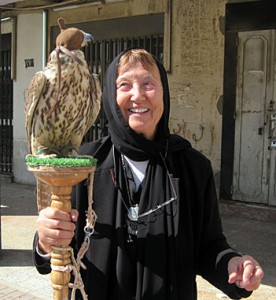
Denise Schmandt-Besserat with a falcon in Ryadh, Saudi Arabia, 2011
Professor Emerita Denise Schmandt-Besserat with a falcon in Ryadh, Saudi Arabia, 2011.

In When Writing Met Art (2007), Denise Schmandt-Besserat investigated the impact of literacy on visual art. She showed that, before writing, art in the ancient Near East mostly consisted of repetitive motifs. But, after writing, conventions of the Mesopotamian script, such as the semantic use of form, size, order and placement of signs on a tablet was applied to images resulting in complex visual narratives. She also shows how, reciprocally, art played a crucial role in the evolution of writing from a mere accounting system to literature when funerary and votive inscriptions started to be featured on art monuments.

Schmandt-Besserat’s present interest is the cognitive aspects of the token system that functioned as an extension of the human brain to collect, manipulate, store and retrieve data. She studies how processing an increasing volume of data over thousands of years brought people to think in greater abstraction.

Denise Schmandt-Besserat edited and is the main contributor of Symbols at ‘Ain Ghazal, Vol. 3 of the ‘Ain Ghazal Excavation Reports, Ex Oriente, Berlin 2013. She authored 10 chapters of the volume, documenting and analyzing tokens, animal figurines, human figurines, a stone statuette, decorated human skulls, plaster statues, mural and floor paintings, and finally, a conclusion on neolithic symbolism.

Denise Schmandt-Besserat has received a Dr. h. c., from Kenyon College, OH.; the Walter J. Ong Award for Career Achievement; the Holloway teaching award; the Eugene Kayden Press Book Award and twice the Hamilton book Award. She has been cited Outstanding Woman in the Humanities by the American Association of University Women. Her book, How Writing Came About, was listed as one of the 100 books that shaped science in the 20th century. She is listed in Who’s Who in America and Wikipedia.


fast and quick counter


iPhoneから送信


デニス・シュマント・ベッセラ
https://sites.utexas.edu/dsb/

デニス・シュマント=ベッセラット(Denise Schmandt-Besserat
Denise Schmandt-Besseratは、テキサス大学オースティン校の美術・中東学の名誉教授。彼女の専門は、古代近東の芸術と考古学である。フランス・パリのエコール・デュ・ルーヴルで教育を受ける。

Schmandt-Besserat氏は、文字の起源や数の数え方について研究してきました。これらのテーマに関する彼女の出版物は以下の通りです。How Writing Came About, University of Texas Press 1996, Before Writing (2 vols), University of Texas Press 1992, The History of Counting, Morrow Jr. 1999などのほか、Science, Scientific American, Archaeology, American Journal of Archaeology, Archaeology Odysseyなどの主要な学術誌や一般誌に多数の記事を寄稿しています。

彼女の研究は一般のメディアでも広く報道されています(Scientific American、Time、Life、New York Times、The Washington Post、Los Angeles Times、Christian Science Monitorなど)。Out of the Past」(ディスカバリーチャンネル)、「Discover」(ディズニーチャンネル)、「The Nature of Things」(CBC)、「Search for Solutions」(PBS)、「Tell the Truth」(NBC)などのテレビ番組でも紹介されています。

サウジアラビアのリャドでハヤブサと一緒にいるデニス・シュマンド=ベッセラット氏(2011年
2011年、サウジアラビアのリャドでハヤブサと一緒にいる名誉教授のデニス・シュマンド=ベッセラ。
デニス・シュマント=ベッセラは、『When Writing Met Art』(2007年)で、識字能力が視覚芸術に与える影響を調査しました。彼女は、文字が書かれる前の古代近東の芸術は、ほとんどが繰り返しのモチーフで構成されていたことを示しました。しかし、文字が書かれるようになってからは、メソポタミア文字の慣習、すなわち石版上の記号の形、大きさ、順序、配置などの意味的な使用が画像に適用され、複雑な視覚的物語が生み出されました。また、文字が単なる会計システムから文学へと進化していく過程で、芸術が重要な役割を果たしたことも明らかにしています。

Schmandt-Besserat氏の現在の関心は、データを収集、操作、保存、検索するために人間の脳の延長として機能していたトークンシステムの認知的側面にあります。数千年の間に増え続けるデータを処理することで、人々がどのようにしてより高い抽象度で考えるようになったのかを研究しています。

Denise Schmandt-Besserat は、『Symbols at 'Ain Ghazal, Vol.3 of the 'Ain Ghazal Excavation Reports, Ex Oriente, Berlin 2013』の編集者であり、主な寄稿者である。彼女はこの巻の10章を執筆し、トークン、動物の置物、人間の置物、石像、装飾された人間の頭蓋骨、石膏像、壁画や床画を記録し、分析し、最後に新石器時代の象徴について結論を述べています。

デニス・シュマント=ベッセラは、米国オハイオ州のケニオン大学から博士号(H.C.)を取得し、ウォルター・J・オング賞(キャリア・アチーブメント)、ホロウェイ教育賞、ユージン・ケイデン・プレス・ブック・アワード、ハミルトン・ブック・アワードを2度受賞しています。また、アメリカ大学女性協会から「Outstanding Woman in the Humanities(人文科学における優れた女性)」として表彰されています。彼女の著書「How Writing Came About」は、20世紀の科学を形作った100冊のうちの1冊に選ばれています。彼女はWho's Who in AmericaとWikipediaに掲載されています。


速くて速いカウンター


iPhoneから送信


The Writing Code 

http://thewritingcode.com/


https://youtu.be/FL5tTyZwgFs

 LANGUAGE MADE US HUMAN. WRITING GAVE US CIVILIZATION.
 

We are born with language, but writing had to be invented. The Writing Code explores the creation of civilization’s greatest achievement. Where was writing created and why?

Join us on this fascinating journey as The Writing Code traces the origins and evolution of writing with authors (Elmore Leonard & Margaret Atwood), linguists (George Miller & Steven Pinker), historians, editors, anthropologists, book makers, a mathematician (Charles Seife) and a physicist who prefers to write with a quill pen—Neil deGrasse Tyson.

The Writing Code is the bookend to The Human Language Series, first broadcast on PBS and now available in the libraries and curricula of more than 2,000 colleges and universities worldwide.  Like The Human Language Series, The Writing Code consists of three, 55-minute DVDs.


言語が人間を作った。書くことで文明が生まれました。
 

人は生まれながらにして言語を持っていますが、文字は発明されなければなりませんでした。ライティング・コード』は、文明の最大の成果である文字の誕生を探る。文字はどこで、なぜ作られたのでしょうか?

作家(エルモア・レナード、マーガレット・アトウッド)、言語学者(ジョージ・ミラー、スティーブン・ピンカー)、歴史家、編集者、人類学者、本の製作者、数学者(チャールズ・シーフ)、羽ペンで書くのが好きな物理学者(ニール・デグラッセ・タイソン)が登場します。

The Writing Code』は、PBSで初めて放送され、現在では世界中の2,000以上の大学の図書館やカリキュラムで利用されている『The Human Language Series』のブックエンドです。 The Human Language Seriesと同様、The Writing Codeは55分のDVD3枚で構成されています。

www.DeepL.com/Translator(無料版)で翻訳しました。


0 件のコメント:

コメントを投稿