オリヴィエ・ブランチャードとインフレ
マルク・ラヴォワ
オタワ大学名誉教授
ソルボンヌ大学パリ北校名誉教授
欧州経済経済政策ジャーナル編集長
そして
ルイ=フィリップ・ロション
ローレンシャン大学准教授
政治経済レビュー編集長
創設編集者名誉、ケインズ経済学のレビュー
「結局、紛争インフレに関するブランチャードの見解は、ポストケインズ人によって受け入れられ、確かに潜在的な対話への道を示すべきです。...私たちは、これは始めるのに良い場所であると主張します:多くの成分がそこにあり、ポストケインズの見解をさらに進める熟した機会を表しています。
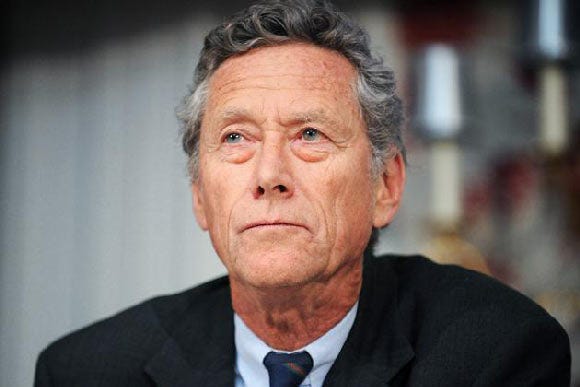
12月29日と30日の一連の最近のツイートで、国際通貨基金の元チーフエコノミストであり、現在はマサチューセッツ工科大学のロバート・ソロー名誉教授であるオリヴィエ・ブランチャードは、インフレは矛盾する主張の結果であり、ポストケインズの見解に非常に近い立場であると主張した。彼は、「インフレは基本的に、企業、労働者、納税者間の分配紛争の結果である」と主張している。さまざまなプレイヤーが結果を受け入れることを余儀なくされたときにのみ停止します」(2022年12月30日)。
この声明は、Twitterで多くのポストケイネシア人とヘテロドックス経済学者を嵐に巻き起こし、この声明でジョニーがケンブリッジ経済学ジャーナルの1977年の記事「紛争、インフレ、お金」で最初に提案されたように、何十年にもわたってヘテロドックス経済学の範囲であった議論に焦点を合わせようとするジョニーが同様に迅速でしたが、インビティコビティカ(仕事。12月31日、別のツイートで、ブランチャードはポストケインズ人の貢献を認めた。
ある意味では、ポストケインズ文学の言及なしで、多くのポストケインズのアイデアが主流のいくつかのコーナーに忍び寄っていることを考えると、Twitterでのこの反応は理解できます。しかし、ラトナーとシムによる最近のFRB論文(「フィリップスカーブを殺したのは誰ですか?殺人ミステリー」、2022)、ローソーンとカレッキへの言及。
このブログでは、2つのことをしたいと考えています。まず、ブランチャードは紛争としてのインフレゲームに遅れているのではなく、40年近くこれらの見解を支持してきたため、その主要な支持者の1人であると主張したいと考えています。第二に、彼の見解は、実際にはエックハルト・ハインやエンゲルベルト・ストックハンマーなどのポストケインズ人の見解に非常に近く、将来的にはオープンな対話の可能性と潜在的な共同研究につながります。
最初の議論に関して、オリヴィエ・ブランチャードはかなり長い間これらの見解を支持しており、彼の賃金設定/価格設定(WS/PSモデル)またはブランチャード清滝モデルの一部です。これらのアイデアのいくつかは、実際には、四半期経済学ジャーナル「賃金価格スパイラル」の著者の1986年の記事にさかのぼり、ブランチャード(p.543)は、ダット(「代替閉鎖再び」、ケンブリッジ経済学ジャーナル、1987年)から始まり、それぞれ企業と労働者の異なる目標賃金シェアを持つロションとセッターフィールド(2007)のモデルを含む、いくつかのポストケインズ
たとえば、ブランチャードからの次の引用を考えてみましょう:「スパイラルは、労働者が実際の賃金を上げたいという願望、または利益率を高める企業からの願望、または不利な供給ショックに直面して同じ賃金と価格を維持しようとする双方の試みから始めることができます。これらはまた、賃金価格スパイラルを開始し、「コストプッシュ」インフレにつながり、インフレが実際の資金収支に及ぼす影響を通じて、不況につながります。著者はさらに、「需要の増加の後、労働者や企業による実際の賃金とマークアップを維持または増加させようとする試みは、生産量が平衡値に戻るまで続く名目価格と賃金の一般的な上昇につながる」と結論付けている(p.560)。
ブランチャードのWS / PSモデルの枠組みの中で、しばしば水平のPS曲線(企業のマークアップに依存する)は、企業が設定した実質賃金を決定し、WS曲線は労働者が熱望する実質賃金を決定します(上記のように、ロションセッターフィールドのように)。すべては、これら2つの実質賃金目標の間のギャップを増加させるタックスウェッジ(失業保険プログラムの寛大さを含む)にもWS曲線は、労働者が標的とする実質賃金率が失業率と逆に関連しているため、失業率は2つの実質賃金を均等化し、インフレを制限することを可能にします。WS / PSモデルは、ラヤード、ニッケル、ジャックマン失業によって販売されているLSEモデル:経済パフォーマンスと労働市場(1991年)、および失業を供給側の影響に起因させ、したがって供給側の政策のみを提唱したOECDによるさまざまな論文でも見つけることができます。
2番目のポイントとポストケインズとの関係に関して、とりわけWS / PSモデルは、主流の経済学者が失業率(またはNAIRU)の自然率であると信じているものを決定するモデルですが、ブランチャードは、従来のフィリップス曲線の定数がこれら3つの決定要因(マークアップ、組合力、税ウェッジ)に依存すると仮定して、インフレが実際の失業率に依存するフィリップス曲線に彼のWS / PS現在のインフレが予想されるインフレに完全に依存していると仮定し、予想されるインフレが過去のインフレであると仮定することで、ブランチャードは垂直フィリップス曲線と自然失業率を回復し、これは定数とインフレが実際の失業の変化にどのように強く反応するかに依存します。説明が残っているのは、実現された失業率を決定するものです。今日の主流経済学では、カーリンとソスキツェ(2015)の紛争インフレマクロ経済学の教科書に見られるように、主に「自然金利」に対する金利のレベルです。
ケインズ後の現代の紛争インフレモデルでは、ハインとストックハンマーによって開発されたモデル(「マクロ経済政策ミックス、ニューコンセンサスモードに代わるポストケインズの雇用とインフレ」、政治経済レビュー、2010年)など、このWS / PS /フィリップス曲線モデルとの親和性があり、閉鎖経済における総需要は主に財政政策と所得分配に依存します。
主流とポストケインズ紛争インフレモデルのもう1つの主な違いは、より高いレベルの雇用と経済活動が技術的な進歩を誘発する傾向があるため、失業率がポストケインズの見解では内生性であり、実際の失業率に惹かれていることです(カルドール・ヴェルドレン効果、生産性成長と経済パフォーマンスを参照してください:ジョン・マッケンのマウリツィオ・プニョ、ブルーノ・ソロが編集)。皮肉なことに、これらのパス依存効果、またはポストケインズの著者によって非常に強調されたヒステリシス効果は、かつてブランチャード自身によって1980年代に強調されました(ローレンス・サマーズと;「失業におけるヒステリシス」、欧州経済ジャーナル、1987を参照)、その後、完全に忘れられ、2008年の大不況中および後に発生した出来事を理解する試みとして、最近、これら2人の著者によって復活しました。
結局のところ、紛争インフレに関するブランチャードの見解は、ポストケインズ人によって受け入れられるべきであり、確かに潜在的な対話への道を示すべきである。ポストケインズ派は、10年前のリーとラヴォアの本で探求されているいくつかの主流または主流の反対派とより強い関係を築く方法をしばらく議論してきました。ポストケインズとヘテロドックス経済学の防衛:彼らの批評家への反応。
私たちは、これが始めるのに良い場所であると主張します:多くの成分がそこにあり、ポストケインズの見解をさらに進める熟した機会を表しています。
https://medium.com/@monetarypolicyinstitute/olivier-blanchard-and-inflation-219f195125feOlivier Blanchard and Inflation
Marc Lavoie
Professor Emeritus, University of Ottawa
Professor Emeritus, Université de Sorbonne Paris Nord
Managing Editor, European Journal of Economics and Economic Policy
and
Louis-Philippe Rochon
Full Professor, Laurentian University
Editor-in-Chief, Review of Political Economy
Founding Editor Emeritus, Review of Keynesian Economics
"In the end, Blanchard's views on conflict inflation should be embraced by post-Keynesians, and represent certainly a path towards a potential dialogue. … We would argue this would be a good place to begin: many of the ingredients are there, representing a ripe opportunity to advance the post-Keynesian views further."
In a series of recent tweets on December 29 and 30, Olivier Blanchard, former Chief Economist at the International Monetary Fund and now the Robert Solow Professor Emeritus at the Massachusetts Institute of Technology, argued that inflation is the result of conflicting claims, a position that is very close indeed to the post-Keynesian view. He argues that "Inflation is fundamentally the outcome of the distributional conflict, between firms, workers, and taxpayers. It stops only when the various players are forced to accept the outcome" (December 30, 2022).
This statement took many post-Keynesians and heterodox economists on Twitter by storm, and the response was equally swift, with many who saw in this statement a Johnny-come-lately attempt to zero in on an argument that has been the purview of heterodox economics for decades, as initially proposed in Bob Rowthorn's 1977 article in the Cambridge Journal of Economics, "Conflict, inflation and money", but which could also be found in the macroeconometric model of the Cambridge Economic Policy Group of Godley and Cripps, as presented in Economica (1976) As usual, some were saying, the mainstream takes our argument without acknowledging our work. On December 31, in another Tweet, Blanchard acknowledged the contributions of post-Keynesians.
In a way, this reaction on Twitter is understandable, given that many post-Keynesian ideas are creeping up in some corners of the mainstream with no mention of the post-Keynesian literature. There are some exceptions, however, as in the recent Fed paper by Ratner and Sim ("Who Killed the Phillips Curve? A Murder Mystery", 2022), with its references to Rowthorn and Kalecki.
In this blog, we wish to do two things. First, we wish to argue that Blanchard is not late to the inflation-as-conflict game, but rather has been one of its leading proponents, as he has been espousing these views for almost 40 years. Second, his views are in fact very close to those of some post-Keynesians, such as Eckhard Hein and Engelbert Stockhammer, leading to the possibility of open dialogue and some potential collaborative research in the future.
Regarding the first argument, Olivier Blanchard has espoused these views for quite a while, and is part of his Wage-Setting/Price-Setting (WS/PS model) or the Blanchard Kiyotaki model. Some of these ideas in fact date back to the author's 1986 article in the Quarterly Journal of Economics, "The Wage Price Spiral", in which Blanchard (p. 543) articulates a position close to the conflicting claims model espoused by some post-Keynesians, starting with Dutt ("Alternatives closures again", Cambridge Journal of Economics, 1987) and including the model in Rochon and Setterfield (2007) with its different target wage shares for firms and workers, respectively.
Consider, for instance, the following quote from Blanchard: "the spiral could start from a desire by workers to increase their real wages, or from firms to increase their profit margins, or from the attempts by both sides to maintain the same wage and price in the face of an adverse supply shock. These would also start a wage price spiral, lead to 'cost push' inflation, and through the effect of inflation on real money balances, lead to a recession." The author concludes further that "After an increase in demand, attempts by workers and by firms to maintain or increase real wages and markups lead to a general increase in nominal prices and wages that lasts until output is back to its equilibrium value" (p. 560).
Within the framework of Blanchard's WS/PS model, the PS curve, often horizontal (which depends on the firms' markup), determines the real wage set by firms, and the WS curve determines the real wage aspired by workers (as in Rochon-Setterfield, as stated above); everything also depends on the tax wedge (including the generosity of the unemployment insurance program), which increases the gap between these two real wage targets. The unemployment rate makes it possible to equalize the two real wages and to limit inflation, because the WS curve is such that the real wage rate targeted by workers is inversely related to the rate of unemployment. The WS/PS model could also be found in the LSE models marketed by Layard, Nickell and Jackman Unemployment: Economic Performance and the Labour Market (1991), and then in various papers by the OECD, which attributed unemployment to supply-side effects and hence advocated supply-side policies only.
Regarding the second point, and the relationship with post-Keynesians, the WS/PS model above all is a model for determining what mainstream economists believe to be the natural rate of unemployment rate (or the NAIRU), but Blanchard links his WS/PS model to the Phillips curve, where inflation depends on the actual rate of unemployment, by assuming that the constant in the traditional Phillips curve depends on these three determinants (markup, union power and the tax wedge). By assuming that current inflation depends fully on expected inflation, and adding that expected inflation is past inflation, Blanchard recovers the vertical Phillips curve and the natural rate of unemployment, which thus depends on the constant and how strongly inflation reacts to a change in actual unemployment. What remains to be explained is what determines the realized rate of unemployment. In mainstream economics today, it is mainly the level of the interest rate relative to the "natural rate of interest", as found in the conflict-inflation Macroeconomics textbook of Carlin and Soskice (2015).
In contemporary conflict inflation post-Keynesian models, there are some affinities with this WS/PS/Phillips curve model, such as in the models developed by Hein and Stockhammer ("Macroeconomic policy mix, employment and inflation in a post-Keynesian alternative to the New Consensus mode", Review of Political Economy, 2010), where aggregate demand in a closed economy will mainly depend on fiscal policy and income distribution.
The other main difference between the mainstream and the post-Keynesian conflict inflation models, is that the natural rate of unemployment, if it exists, is endogenous in the post-Keynesian view, being attracted by the actual rate of unemployment, as higher levels of employment and economic activity will tend to induce technical progress (the Kaldor-Verdoorn effect, see Productivity Growth and Economic Performance: Essays on Verdoorn's Law, edited by John McCombie, Maurizio Pugno, and Bruno Soro). Ironically, these path-dependent effects, or hysteresis effects so much emphasized by post-Keynesian authors, were once also underlined in the 1980s by Blanchard himself (with Lawrence Summers; see "Hysteresis in Unemployment", European Economic Journal, 1987), then entirely forgotten, only to be resurrected lately by these two authors, as an attempt to understand the events that occurred during and after the Great Recession of 2008.
In the end, Blanchard's views on conflict inflation should be embraced by post-Keynesians, and represent certainly a path towards a potential dialogue. Post-Keynesians have for a while debated how to build stronger ties with some mainstream or mainstream dissenters, which has been explored in Lee and Lavoie's book of a decade ago, In Defense of Post-Keynesian and Heterodox Economics: Responses to their critics.
We would argue this would be a good place to begin: many of the ingredients are there, representing a ripe opportunity to advance the post-Keynesian views further.

0 件のコメント:
コメントを投稿