MMTとマクロのミーム化-ノアピニオン
MMTとマクロのミーム化
さようならモデル、こんにちはミーム

MMTは、理論が実際に言っていることを特定するのが難しいため、関与するのが非常に困難です。あなたは通常、同じ種類の漠然とした手を振るポイントを何度も繰り返す途方もないMMTの文章を這うか、発音が互いに矛盾することがある(しかし、その基本的な事実に常に同意しているように見える)不可解な教祖に質問することになります。あなたは軽蔑的な馬鹿です)。MMTの人々が実際に定量的モデルを書き留めるいくつかの機会では、結果は…少し懸念されます。
したがって、MMTに実際の教科書、William Mitchell、Randall Wray、MartinWattsによる「Macroeconomics」があると便利です。まだ読んでいませんが、Scott Sumner(MercatusCenterとBentleyUniversityの)がそれを経験しており、MMTとマクロ経済学の一般的な議論の両方に光を当てると思ういくつかのヒントがすでに出てきています。
Sumnerは、MMTには保存の独特の定義があると述べています。
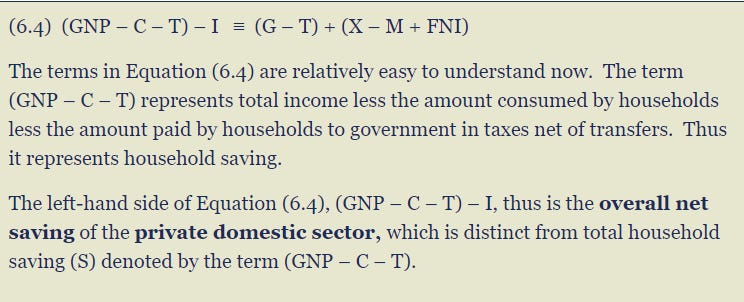
サムナーが指摘するように、これは経済学者が通常私的貯蓄と考えるものではありません。通常、エコノミストは投資が貯蓄の一形態であると考えています。民間企業が工場を建設する場合、それは投資です。その工場を利用して、来年は有用で価値のあるものを作り、それを会社が販売することができます。したがって、その工場の建設にお金を使うことは、後でお金を引き出すので、節約としてカウントされます。
少なくとも典型的なeconの定義では。MMTでは、投資は純貯蓄の一部としてカウントされません。それは差し引かれます。残っているのは、民間部門が他の部門、つまり政府や外国人に貸し出している金額だけです。
経済の他のセクターにお金を貸すことは、民間セクターが節約できる唯一の方法ではないはずなので、それは奇妙です。世界がたった1つの国だったとしましょう(つまり、外国人はいません)。そして、この国の政府がまったく借りたり貸したりしなかったとしましょう(つまり、政府の赤字はありません)。MMTによると、民間部門はまったく何も救うことができないでしょう!しかし、典型的な経済学によれば、民間部門は将来のために投資することによって節約することができるでしょう。
とても良い。私たちは、MMTが従来のeconの概念とどこが違うのかを理解し始めています。
ただし、この違いはセマンティックであることに注意してください。それは定義的なものであり、実質的なものではありません。MMTの人々は、エコノミストが通常「個人貯蓄」と呼ぶものを採用し、投資を差し引いて、その差を「純個人貯蓄」と改名しました。だから何?誰も気にしない?何が「節約」を構成するのかについて議論する代わりに、この新しいオブジェクトの新しい用語を見つけることができませんでしたか?実際、Wynne Godleyらによって開発された部門収支フレームワークは、MMTの教科書が「民間部門の純貯蓄」を定義するのとまったく同じ方法で「民間部門の余剰」を定義しています。では、それが「余剰」と「貯蓄」のどちらと呼ばれるかを誰が気にするのでしょうか。
その答えは、MMTが伝統的な経済分析とは非常に異なる活動に従事しているということだと思います。伝統的なeconは、経済をモデル化して理解しようとしています。しかし、MMTは政策提言に取り組んでいます。彼らの目標は、政府が赤字を実行する意欲を高めることです。
数学モデルは、このクエストではあまり役に立ちません。いくつかのエリートサークルの外では、誰もマシーマクロモデルを理解していません。そして、特に大不況の崩壊後、誰がそれらの少数のエリートに耳を傾けますか?人々は、Twitchストリーム、Twitterフィード、ポッドキャスト、サブレディットからポリシーのアイデアを得ています。政治家が赤字をどれだけ気にするかは、尊敬される政策顧問が耳にささやくノストラムに部分的に依存しますが、ポピュリスト時代には、大衆の情熱も非常に重要になる可能性があります。
そしてこの分野では、MMTの人々は、深く根付いた強力なミーム、つまり家庭としての政府の考えに反対しています。家計がお金を節約する代わりにクレジットカードを使い果たすと、それはますます貧しくなります。そのため、米国政府が国の借金を使い果たすと、アメリカは貧しくなると人々は考える傾向があります。これを緊縮財政ミームと呼びましょう。
実際、緊縮財政のミームは間違っています—国は政府と同じではありません。米国政府が借りているお金のほとんどは、民間人や企業によって貸し出されています。「国債」は実際に国を貧しくするわけではありません(外国人から借りた部分を除いて)。また、国民貯蓄は、私たちが本当に気にかけるべきことである、物質的な生活水準にも対応していません。
そのため、MMTの人々は独自のカウンターミームを作ろうとしています。民間部門の貯蓄は政府の赤字に等しいと人々に伝えることで、政府がお金を借りると国が豊かになるという一般的な認識を生み出すことを望んでいます。結局のところ、家計はお金を節約することで金持ちになりますよね?ですから、民間部門が「節約」する唯一の方法が政府の借り入れであるとすれば、それは私たち民間人をより豊かにするために政府の赤字が必要であることを意味します…そうですか?
もちろん、このMMTミームは、緊縮財政ミーム以上に現実を説明していません。しかし、それには1つのことがあります。それは、ケインズ主義が実際に機能するということです。政府が不況の間にお金を使うとき、それは本当にGDPを増加させます。政府の借入が増加した政府支出と一緒に行くのであれば、生活水準はしばしばん改善します。MMTの人々がここで遊んでいる定義とは実際には何の関係もありませんが、政府の赤字がどういうわけか国を豊かにしたように、MMTのミームは正しいように思えます。
しかし、ポピュリズムの時代では、それは問題ではないかもしれません。マクロ政策が、情報不足のインターネットランドスのグループが戦いに背を向けることによって推進されている場合、「政府の赤字は民間部門の貯蓄と同等」(または黒字など)であるというマントラを繰り返すことで、財政を立てることができるかもしれません。必要な刺激。
もちろん、問題は、そうすることで、MMTミームが人々に税金の重要性を忘れさせるかどうかです。そして、その結果はどうなるのでしょうか。実際、MMTの作成に尽力した人の1人は、サプライサイドの第一人者(そして後にトランプの顧問)であるArt Lafferでした…しかし、それは別の日のトピックです。
(ちなみに、このブログが気に入ったら、ここで購読できます!)
MMT and the meme-ification of macro
Goodbye models, hello memes
MMT is very difficult to engage with, because it's hard to pin down what the theory actually says. You're typically reduced to either crawling through interminable MMT writings that make the same sort of vague hand-waving points over and over, or asking questions of irascible gurus whose pronouncements sometimes contradict each other (but who always seem agree on the basic fact that you're a contemptible idiot). On the few occasions that MMT people actually write down a quantitative model, the results are…a bit concerning.
So it's helpful that MMT now has an actual textbook — "Macroeconomics," by William Mitchell, Randall Wray and Martin Watts. I haven't read it yet, but Scott Sumner (of the Mercatus Center and Bentley University) is going through it, and already a few tidbits are emerging that I think shed some light on both MMT and the macroeconomics debate in general.
Sumner notes that MMT has a peculiar definition of saving:
As Sumner points out, this isn't what economists typically think of as private saving. Normally, economists think that investment represents a form of saving. If a private company builds a factory, that's investment. It can use that factory to make useful, valuable stuff next year, which the company can then sell. Spending money on building that factory therefore counts as saving, because you get money out later.
At least in the typical econ definition. In MMT, investment doesn't count as part of net saving; it gets subtracted out. What's left is just the amount that the private sector lends out to other sectors — government or foreigners.
That's weird, because lending money to other sectors of the economy shouldn't be the only way the private sector can save. Suppose the world was just one country (so, no foreigners). And suppose the government of this country didn't borrow or lend at all (so, no government deficit). According to MMT, the private sector would be completely unable to save anything at all! But according to typical economics, the private sector would be able to save by investing for the future.
So, good. We're starting to get an idea of where MMT diverges from traditional econ concepts.
But note that this difference is semantic. It's definitional, not substantive. MMT people have taken the thing that economists typically call "private saving", and subtracted investment, and relabeled the difference as "net private saving". So what? Who cares? Instead of arguing about what constitutes "saving", couldn't we just find a new term for this new object? In fact, the sectoral balances framework, developed by Wynne Godley and others, defines "private sector surpluses" the exact same way that the MMT textbook defines "net private sector savings". So who cares whether it's called "surplus" or "saving"?
The answer, I think, is that MMT is engaged in a very different activity from traditional economic analysis. Traditional econ is trying to model and understand the economy. But MMT is engaged in policy advocacy — their goal is to make the government more willing to run deficits.
Math models aren't very useful in this quest. Outside of a few elite circles, no one understands mathy macro models. And who listens to those few elites, especially after the debacle of the Great Recession? People are out there getting their policy ideas from Twitch streams, Twitter feeds, podcasts and subreddits. How much politicians care about deficits still partly depends on the nostrums whispered into their ears by respected policy advisors, but in a populist age, the passions of the masses might also matter a lot.
And in this arena, the MMT people are up against a deeply entrenched and powerful meme — the idea of government as a household. When a household runs up its credit cards instead of saving money, it gets poorer and poorer. So people tend to think that when the U.S. government runs up the national debt, America is getting poorer. Let's call this the Austerity Meme.
In fact, the Austerity Meme is wrong — the country is not the same as the government. Most of the money that the U.S. government borrows is being lent by private citizens and companies. "National debt" doesn't actually make the country poorer (except the fraction that's borrowed from foreigners). Nor does national saving even correspond to material standards of living, which is probably what we should really care about.
So the MMT people are trying to make their own counter-meme. By telling people that private sector saving equals government deficits, they hope to create the popular perception that a country gets richer when the government borrows money. After all, a household gets rich by saving its money, right? So if the only way for the private sector to "save" is for the government to borrow, it means that government deficits are necessary to make us private citizens richer…right?
Of course, this MMT Meme doesn't describe reality any more than the Austerity Meme. But it has one thing going for it, which is that Keynesianism really works. When the government spends money during a recession, it really does increase GDP. So if government borrowing goes along with increased government spending, living standards often do improve. That makes it kinda-sorta seem like the MMT meme is right — like government deficits somehow did make the country richer — even though it actually has nothing to do with the definitions that the MMT people are playing with here.
But in an age of populism, that might not matter. If macro policy is now driven by groups of poorly-informed internet randos throwing their backs into the fight, then repeating the mantra that "government deficits equal private sector savings" (or surpluses, or whatever) might be able to help get us the fiscal stimulus we need.
Of course, the question is whether, in doing so, the MMT Meme will also cause people to forget the importance of taxes. And what the consequences of that might be. In fact, one of the people who was instrumental in the creation of MMT was supply-side guru (and later Trump advisor) Art Laffer…But that's a topic for another day.
(By the way, remember that if you like this blog, you can subscribe here!)

0 件のコメント:
コメントを投稿