50 Best Economics Theory Books of All Time
https://bookauthority.org/books/best-economics-theory-books
As featured on CNN, Forbes and Inc – BookAuthority identifies and rates the best books in the world, based on recommendations by thought leaders and experts.
We may earn a commission for purchases made through links in this page. Learn more
Recommendations by Josh Fox Blacklivesmatter, Keith Mccullough, Tiffany Hayden, Randy Bryce and 4 others
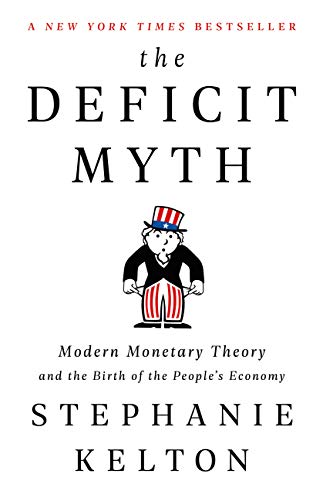
A
New York Times Bestseller The leading thinker and most visible public
advocate of modern monetary theory -- the freshest and most important
idea about economics in decades -- delivers a radically different, bold,
new understanding for how to build a just and prosperous
society.Stephanie Kelton's brilliant exploration of modern monetary
theory (MMT) dramatically changes our understanding of how we can best
deal with crucial issues ranging from poverty and inequality to creating
jobs, expanding health care coverage, climate change, and building
resilient infrastructure.
...moreSee also:Monetary Policy, Growth Economics, Economic Development
財政赤字の神話 ステファニー・ケルトン

In
the beginning, there was Menger. It was his Principles of Economics
that reformulated — and really rescued — economic science from the
theoretical errors of the old classical school.Menger set out to
elucidate the precise nature of economic value, and to root economics
firmly in the real-world actions of individual human beings. In
Principles of Economics, he advances the theory that the marginal
utility of goods is the source of their value, rather than the labor
inputs that went into making them.
...moreGrundsätze der Volkswirtschaftslehre (1871)
メンガー 国民経済学原理 (近代経済学古典選集)
3
Revised edition of the authors' International economics, [2015]
...more
Models
in Microeconomic Theory covers basic models in current microeconomic
theory. Part I (Chapters 1-7) presents models of an economic agent,
discussing abstract models of preferences, choice, and decision making
under uncertainty, before turning to models of the consumer, the
producer, and monopoly. Part II (Chapters 8-14) introduces the concept
of equilibrium, beginning, unconventionally, with the models of the
jungle and an economy with indivisible goods, and continuing with models
of an exchange economy, equilibrium with rational expectations, and an
economy with asymmetric information.
...moreSee also:Economy, Game Theory, Microeconomics
5

A
systematic comparison of the three major economic theories, showing how
they differ and why these differences matter in shaping economic theory
and practice.Contending Economic Theories offers a unique comparative
treatment of the three main theories in economics as it is taught today:
neoclassical, Keynesian, and Marxian. Each is developed and discussed
in its own chapter, yet also differentiated from and compared to the
other two theories. The authors identify each theory's starting point,
its goals and foci, and its internal logic.
...more
Modern
Labor Economics: Theory and Public Policy, now in its thirteenth
edition, continues to be the leading text for one-semester courses in
labor economics at the undergraduate and graduate levels. It offers a
thorough overview of the modern theory of labor market behavior, and
reveals how this theory is used to analyze public policy. Designed for
students who may not have extensive backgrounds in economics, the text
balances theoretical coverage with examples of practical applications
that allow students to see concepts in action.
...moreSee also:Economic Policy
7
This
book presents Ariel Rubinstein's lecture notes for the first part of
his well-known graduate course in microeconomics. Developed during the
fifteen years that Rubinstein taught the course at Tel Aviv University,
Princeton University, and New York University, these notes provide a
critical assessment of models of rational economic agents, and are an
invaluable supplement to any primary textbook in microeconomic theory.
In this fully revised and expanded second edition, Rubinstein retains
the striking originality and deep simplicity that characterize his
famously engaging style of teaching.
...more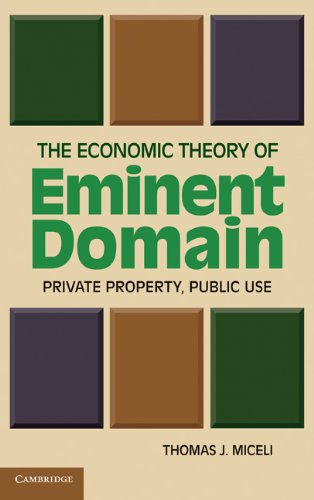
This
book surveys the contributions that economic theory has made to the
often contentious debate over the government's use of its power of
eminent domain, as prescribed by the Fifth Amendment. It addresses such
questions as: When should the government be allowed to take private
property without the owner's consent? Does it depend on how the land
will be used? And what amount of compensation is the landowner entitled
to receive (if any)? The recent case of Kelo v.
...more
Development
Economics: Theory and Practice provides students and practitioners with
the perspectives and the tools they need to think analytically and
critically about the current major economic development issues in the
world. Alain de Janvry and Elisabeth Sadoulet identify seven key
dimensions of development; growth, poverty, vulnerability, inequality,
basic needs, sustainability, and quality of life, and use them to
structure the contents of the text. This book gives a historical
perspective on the evolution of thought in development.
...moreSee also:Economic Development, Development Economics
10
An
introduction to advanced topics in microeconomics that emphasizes the
intuition behind assumptions and results, providing examples that show
how to apply theory to practice.This textbook offers an introduction to
advanced microeconomic theory that emphasizes the intuition behind
mathematical assumptions, providing step-by-step examples that show how
to apply theoretical models.
...moreSee also:Finance, Game Theory, Microeconomics
11
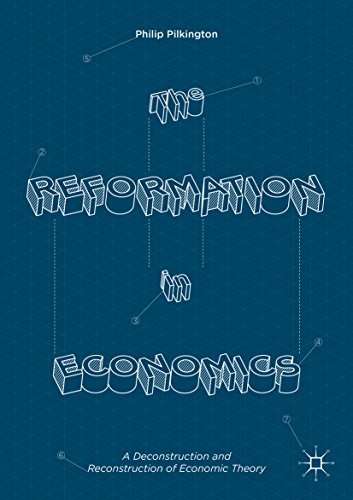
This
book carves the beginnings of a new path in the arguably weary
discipline of economics. It combines a variety of perspectives – from
the history of ideas to epistemology – in order to try to understand
what has gone so wrong with economics and articulate a coherent way
forward. This is undertaken through a dual path of deconstruction and
reconstruction. Mainstream economics is broken down into many of its key
component parts and the history of each of these parts is scrutinized
closely. When the flaws are thoroughly understood the author then begins
the task of reconstruction.
...more12
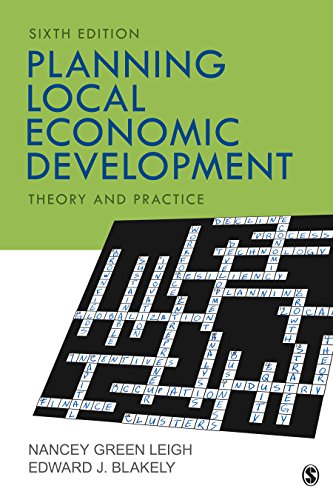
Written
by authors with years of academic, regional, and city planning
experience, the classic Planning Local Economic Development has laid the
foundation for practitioners and academics working in planning and
policy development for generations. With deeper coverage of
sustainability and resiliency, the new Sixth Edition explores the
theories of local economic development while addressing the issues and
opportunities faced by cities, towns, and local entities in crafting
their economic destinies within the global economy. Nancey Green Leigh
and Edward J.
...moreSee also:Sustainability, Economic Development
13
Known
for its clarity, comprehensiveness, and balance, the latest edition of A
History of Economic Theory and Method continues that tradition of
excellence. Ekelund and Hébert's survey provides historical and
international contexts for how economic models have served social needs
throughout the centuries beginning with the ancient Greeks through the
present time. The authors not only trace ideas that have persisted but
skillfully demonstrate that past, discredited ideas also have a way of
spawning critical thinking and encouraging new directions in economic
analysis.
...more14

The
cornerstone of money management and portfolio optimization techniques
has remained the same throughout history: maximize gains and minimize
risk. Yet, asserts Ralph Vince, the widely accepted approaches of
combining assets into a portfolio and determining their relative
quantities are wrong―and will cost you. They illuminate nothing, he
says, aside from providing the illusion of safety through
diversification. Although numerous Nobel Prizes have been awarded based
on some of those widely accepted principles, their popular acceptance
does not constitute real-world validation.
...moreSee also:Hedge Funds
15
Presenting
a thorough introductory exposition of optimal control theory, this work
differs from the existing textbooks on the subject due to its emphasis
on the economic interpretation of the mathematics and the qualitative
properties of the solutions. Moreover, it is a modern exposition of
optimal control theory in that it presents numerous complementary
methods. It is aimed at first-year and second-year PhD students in
economics, agricultural and resource economics, operations research,
management science, and applied mathematics.
...more
Soft
Currency Economics is the little book that could logically, in both
real and nominal terms, legitimately challenge many of the core held
beliefs of the mainstream classical and neo-classical schools of
economics. It is a corner stone publication for the new, widely popular
fresh approach to economics that has come to be called Modern Monetary
Theory (MMT). It explains with actual facts, not theory, and with
non-technical language, the true operational realities of our monetary
system (central banks and private banks).
...more17
Environmental
Economics in Theory and Practice is an ideal text for students taking
advanced courses in environmental and natural resource economics. This
completely revised and updated edition covers all the major topics in
the field, including the economics of sustainable development, market
failure and mechanism design, pollution taxes and tradable permits,
trans-boundary pollution, non-renewable and renewable resources
(including both fisheries and forests), environmental valuation, risk,
and trade and the environment.
...moreSee also:Sustainable Development
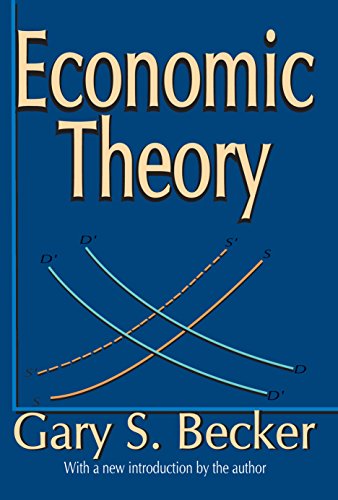
Others
might have called this book Micro Theory or Price Theory. Becker's
choice of Economic Theory as the title for his book reflects his deep
belief that there is only one kind of economic theory, not separate
theories for micro problems, macro problems, non-market decisions, and
so on. Indeed, as he notes, the most promising development in recent
years in the literature on large scale economic problems such as
unemployment has been the increasing reliance on utility maximization, a
concept generally identified with microeconomics
...moreSee also:Microeconomics
19

Keynesian
Economics, Free Market Capitalism, Monetarism, Game Theory and the
Invisible Hand. Sure, you know what they mean. That is, you've certainly
heard of them. But do you know enough about these economic theories to
join a dinner party debate or dazzle the bar with your financial
knowledge? 30 Second Economics takes the top 50 economic theories, and
explains them to the general reader in half a minute, using nothing more
than two pages, 300 words and one picture.
...more20
Unique
in its coverage, Urban Economics and Real Estate allows an instructor
to teach separate courses in either urban economics or urban real
estate, or a blend of the two topics. The portion on urban economics
focuses on urban/suburban growth―physical as well as job growth. The
interplay of federal government and local authorities is discussed, and
the effects of social problems, such as crime, poverty, and education
that often accompany these changes are discussed. While the latest
data sets available are utilized, Urban Economics’ emphasis is on
economic analysis.
...more21

Extensively
revised and updated, this popular text presents an accessible yet
rigorous treatment of environmental and natural resources economics,
including climate change and the economics of sustainability. Completely
revised and updated, the fourth edition now includes new figures and
tables, definitions to assist the reader, and updated policy
information. New advances in the science, economics and policy
approaches to climate change have been integrated into essentially
all-new chapters on incentive regulation and global climate change.
...moreSee also:Environmental Economics
22

Title: International Economics : Theory and Policy
Author: Maurice Obstfeld, Paul R. Krugman, Marc Melitz
Edition: 10th edition
ISBN-13: 9781292019550
Format: Soft Cover / Paperback
BRAND NEW, Color Printed in Acid Free Paper.
Written in English.
Different Book Cover Design and Different ISBN from US edition.
...moreSee also:Economic Policy


23

Schumpeter
proclaims in this classical analysis of capitalist society first
published in 1911 that economics is a natural self-regulating mechanism
when undisturbed by "social and other meddlers." In his preface he
argues that despite weaknesses, theories are based on logic and provide
structure for understanding fact. Of those who argue against him,
Schumpeter asks a fundamental question: "Is it really artificial to keep
separate the phenomena incidental to running a firm and the phenomena
incidental to creating a new one?
...moreSee also:Economic Development, Development Economics
シュンペーター

A concise presentation of the basic principles of political economy.
...more
This
thoroughly revised second edition of an upper-level
undergraduate/graduate text describes many major techniques of
forecasting used in economics and business. This is the only time series
book to concentrate on the forecasting of economic data and to cover
such a broad range of topics.
...moreSee also:Business Forecasting

Keynes
profoundly influenced the New Deal and created the basis for classic
economic theory. “I can think of no single book that has so changed the
conception held by economists as to the working of the capitalist
system” (Robert L. Heilbroner). Index.
...more
Normal wear and tear from moderate use. May not include supplements.
...more28
Available
Open Access under CC-BY-NC-ND Made famous by the Enlightenment thinker
Adam Smith, the concept of an ‘invisible hand’ might be taken to imply
that a government that governs least governs the best, from the
viewpoint of society. Here an invisible hand appears to represent
unfettered market forces. Drawing from this much-contested notion,
Mittermaier indicates why such a view represents only one side of the
story and distinguishes between what he calls pragmatic and dogmatic
free marketeers.
...more29

David
M. Kreps has developed a text in microeconomics that is both
challenging and "user-friendly." The work is designed for the first-year
graduate microeconomic theory course and is accessible to advanced
undergraduates as well. Placing unusual emphasis on modern
noncooperative game theory, it provides the student and instructor with a
unified treatment of modern microeconomic theory--one that stresses the
behavior of the individual actor (consumer or firm) in various
institutional settings.
...moreSee also:Game Theory
30
Offering
the most cutting-edge coverage available, the 11th edition of the
market-leading MICROECONOMIC THEORY: BASIC PRINCIPLES AND EXTENSIONS
11th edition delivers the most clear and accurate presentation of
advanced microeconomic concepts. The book is reader-friendly, designed
to help students truly understand and apply economic models as it
enables them to work directly with theoretical tools, real-world
applications, and the latest developments in the study of
microeconomics.
...moreSee also:Microeconomics
In
his Essays in the Theory of Business Cycle published in Polish in 1933,
Kalecki clearly stated the principle of effective demand in
mathematical form. By 1935 he outlined his theory of employment,
demolished the then-orthodox remedy for a depression-that is, wage
cutting-and pinpointed the importance of investment for economic
dynamics. Thus, although his training had been in Marxist economics, he
succeeded in anticipating the Keynesian system, and, as Joan Robinson
has pointed out, his claim to priority of publication is indisputable
although he never mentioned this fact.
...more
1958年の新評論版邦訳『経済変動の理論』(原著1954年,Theory of Economic Dynamics )
宮崎義一、伊東光晴訳
資本主義経済の動態理論 (ポスト・ケインジアン叢書 (6)単行本 – 1984/12)と一部重複 
This
book contains the most sustained and serious attack on mainstream,
neoclassical economics in more than forty years. Richard R. Nelson and
Sidney G. Winter focus their critique on the basic question of how firms
and industries change overtime. They marshal significant objections to
the fundamental neoclassical assumptions of profit maximization and
market equilibrium, which they find ineffective in the analysis of
technological innovation and the dynamics of competition among firms.
...more33

Provides
an applied, practical approach to environmental economic theory that is
accessible to students who have had minimal exposure to economics as
well as those with an advanced understanding. With a strong focus on
policy and real-world issues, Callan/Thomas's ENVIRONMENTAL ECONOMICS
AND MANAGEMENT: THEORY, POLICY AND APPLICATIONS, Fifth Edition,
complements economic theory with timely, real-world applications.
Undergraduate or MBA students gain a clear perspective of the
relationship between market activity and the environment.
...more34
Now
you can truly understand and apply the latest economic models as you
work directly with theoretical tools, real-world applications, and the
popular new behavioral economics in this reader-friendly, market-leading
book. MICROECONOMIC THEORY: BASIC PRINCIPLES AND EXTENSIONS, 12E takes a
calculus-based approach to provide the ideal level of mathematical
rigor, whether you are an upper-level undergraduate or beginning
graduate student. Insightful graphic presentations help you visually
grasp the connections between the calculus and the algebraic and
geometric approach to the same material.
...moreSee also:Microeconomics
35

Behavioral
economics is everywhere – whether used by governments to shape our
judgement and decision making, advertisers and marketers to sell
products, or even politicians to sell policies, its insights are
important and far-reaching. Behavioral Economics: The Basics is the
first book to provide a rigorous yet accessible overview of the growing
field that attempts to uncover the psychological processes which mediate
all the economic judgements and decisions we make. In seven accessible
chapters, the book answers questions like: What is behavioral
economics? How does it help us to understand economic behavior?
...moreSee also:Behavioral Economics
The
substantially revised fourth edition of a widely used text, offering
both an introduction to recursive methods and advanced material, mixing
tools and sample applications.Recursive methods provide powerful ways to
pose and solve problems in dynamic macroeconomics. Recursive
Macroeconomic Theory offers both an introduction to recursive methods
and more advanced material. Only practice in solving diverse problems
fully conveys the advantages of the recursive approach, so the book
provides many applications.
...moreSee also:Macroeconomics
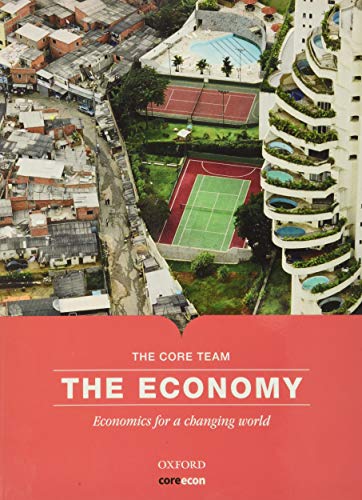
Oxford
University Press has partnered with the international collaborative
project of CORE researchers and teachers to bring students a text and
learning system that complements and enhances CORE's open-access eBook.
...moreSee also:Economy, Macroeconomics
Modern
economics tantalizes historians, promising them a set of simple verbal
and mathematical formulas to explain and even retrospectively predict
historical actions and choices. Colin P. Elliott challenges economic
historians to rethink the way they use economic theory. Building upon
the approaches of Max Weber, R. G.
...more39
Automation
and Its Macroeconomic Consequences reveals new ways to understand the
economic characteristics of our increasing dependence on machines.
Illuminating technical and social elements, it describes economic
policies that could counteract negative income distribution consequences
of automation without hampering the adoption of new technologies.
Arguing that modern automation cannot be compared to the Industrial
Revolution, it considers consequences of automation such as spatial
patterns, urbanization, and regional concerns.
...more40
This
book is a continuation of Corporate Law and the Theory of the Firm:
Reconstructing Corporations, Shareholders, Directors, Owners, and
Investors. The author extends his analysis of contract law, property
law, agency law, trust law, and corporate statutory law and applies that
analysis to defy conventional concepts and theories in economics,
finance, investment, and accounting and expose the artificial boundaries
established by decades of research founded on indefensible assumptions
and fallacious conclusions.
...more41
Economics
is a social science which is concerned with the production, consumption
and distribution of goods and services. The working of an economy and
the interaction of economic agents are the key focus areas of economics.
Economics has two major branches, macroeconomics and microeconomics.
Macroeconomics deals with the structure, behavior, performance and
decision making of an economy as a whole. Microeconomics analyses the
interaction among individuals and firms in making decision regarding the
allocation of scarce resources. It focuses on individual agents and
markets.
...more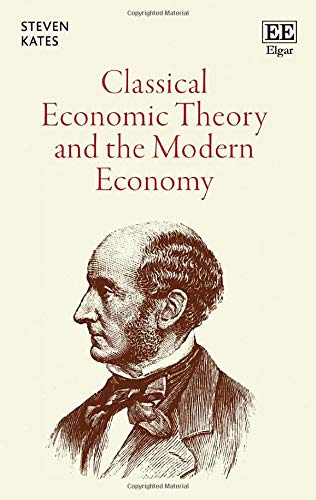
Economic
theory reached its highest level of analytical power and depth in the
middle of the nineteenth century among John Stuart Mill and his
contemporaries. This book explains classical economics when it was at
its height, followed by an analysis of what took place as a result of
the ensuing Marginal and Keynesian Revolutions that have left economists
less able to understand how economies operate. Chapters explore the
false mythology that has obscured the arguments of classical economists,
clouding to the point of near invisibility the theories they had
developed.
...more43
This
book, set out over three volumes, provides a comprehensive history of
economic thought in the 20th century with special attention to the
cultural and historical background in the development of theories, to
the leading or the peripheral research communities and their
interactions or controversies, and finally to an assessment and critical
appreciation of economic theories throughout these times. It takes as
its subject matter the canon of publications by major thinkers who
self-consciously conceived of themselves as 'economists' in the modern
academic sense of the term.
...more
This
book considers three relationships: law and economics; economics and
game theory; and game theory and law. Economists teach lawyers that
economic principles cut across and integrate seemingly different legal
subjects such as contracts, torts, and property.
...moreSee also:Game Theory
This
is the classic work upon which modern-day game theory is based. What
began as a modest proposal that a mathematician and an economist write a
short paper together blossomed, when Princeton University Press
published Theory of Games and Economic Behavior. In it, John von Neumann
and Oskar Morgenstern conceived a groundbreaking mathematical theory of
economic and social organization, based on a theory of games of
strategy.
...moreSee also:Game Theory
ゲームの理論と経済行動〈1,2,3〉 (ちくま学芸文庫)
46

Macroeconomics
traces the history, evolution, and challenges of Keynesian economics,
presenting a comprehensive, detailed, and unbiased view of modern
macroeconomic theory. This book narrates the evolution of economic
theory, presenting the most recent and modern developments, without
glossing over the fundamental disagreements among macroeconomists on
both theory and policy.
...moreSee also:Macroeconomics
47

This
unique graduate textbook offers a compelling narrative of the growing
field of environmental economics that integrates theory, policy, and
empirical topics. Daniel J. Phaneuf and Till Requate present both
traditional and emerging perspectives, incorporating cutting-edge
research in a way that allows students to easily identify connections
and common themes.
...moreSee also:Economic Policy

Over
the last few decades behavioral economics has revolutionized the
discipline. It has done so by putting the human back into economics, by
recognizing that people sometimes make mistakes, care about others and
are generally not as cold and calculating as economists have
traditionally assumed. The results have been exciting and fascinating,
and have fundamentally changed the way we look at economic behavior.
This textbook introduces all the key results and insights of behavioral
economics to a student audience.
...moreSee also:Behavioral Economics
49

Detailed
answer keys to all 140 self-assessment exercises and solutions to the
173 odd-numbered end-of-chapter exercises in Intermediate Microeconomic
Theory.This book accompanies Ana Espinola-Arredondo and Felix
Muñoz-Garcia's Intermediate Microeconomic Theory: Tools and Step-by-Step
Examples, offering detailed answer keys to all 140 self-assessment
exercises and solutions to the 173 odd-numbered end-of-chapter
exercises. It provides readable step-by-step explanations and algebra
support, enabling students to approach similar exercises on their own,
emphasizing the economic intuition behind mathematical results.
...more50
2012
Reprint of Original 1947 Edition. Exact facsimile of the original
edition, not reproduced with Optical Recognition Software. ©New Foreword
Martino Publishing. This volume contains a full and representative
statement of Max Weber's sociological theory, drawn from important
publications never previously translated. The book opens with a
discussion of the analytical methods of sociology and an application of
these methodological conclusions to the broadest classification of
social relationship and groups. Nearly half the volume is devoted to a
further elaboration of this scheme in the field of economic activity.
...more論集「経済と社会」(Theory of Social and Economic. Organization)
As an Amazon Associate we earn from qualifying purchases. Certain content that appears on this site comes from Amazon. This content is provided 'as is' and is subject to change or removal at any time. Amazon and the Amazon logo are trademarks of Amazon.com, Inc. or its affiliates.

Basil Blackwell, 1985.
返信削除〔19〕Deane, P., The Evolution of Economic Ideas, Cambridge Univ. Pr., 1978. (奥野正寛訳『経済思想の発展』岩波書店, 1982.)
[20] Denis, H., Histoire de la Pensée Économique, Presses Universitaires de France, 1966. Later edn., 1967, 1971, 1974, 1977.
[21] Ekelund Jr., R. B. & Hébert, R. F., A History of Economic Theory and Method, McGraw-Hill Book Company, 1975. 2nd edn., 1983.