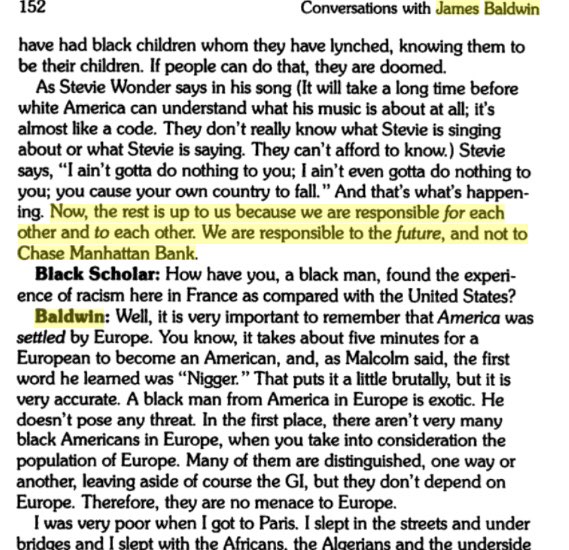
MMTサイトにボールドウィンの言葉が引用されている
ボールドウィンは該当箇所直前でスティービィーの歌詞を引用している
以下の最後のフレーズ
You've killed all our leaders,
I don't even have to do nothing to you,
You'll cause your own country to fall.
Talking Book (1972). Big Brother
“Now, the rest is up to us because we are responsible for each other and to each other.
We are responsible to the future, and not to Chase Manhattan Bank.”
The Deficit Myth: Banking Between The Lines - LPE Project
https://lpeproject.org/blog/the-deficit-myth-banking-between-the-lines/
152
…have had black children whom they have lynched, knowing them to
be their children. If people can do that, they are doomed.
As Stevie Wonder says in his song (It will take a long time before
white America can understand what his music is about at all; it's
almost like a code. They don't really know what Stevie is singing
about or what Stevie is saying. They can't afford to know.) Stevie
says, "I ain't gotta do nothing to you; I ain't even gotta do nothing to
you; you cause your own country to fall." And that's what's happen-
ing. Now, the rest is up to us because we are responsible for each
other and to each other. We are responsible to the future, and not to
Chase Manhattan Bank.
Black Scholar: How have you, a black man, found the exxperi-
ence of racism here in France as compared with the United States?
Baldwin: Well, it is very important to remember that America was
settled by Europe. You know, It takes about five minutes for a
European to become an American, and, as Malcolm said, the first
word he learned was "Nigger." That puts it a little brutally, but it is
very accurate. A black man from America in Europe is exotic. He
doesn't pose any threat. In the first place, there aren't very many
black Americans in Europe, when you take into consideration the
population of Europe. Many of them are distinguished, one way or
another, leaving aside of course the GI, but they don't depend on
Europe. Therefore, they are no menace to Europe.
I was very poor when I got to Paris. I slept in the streets and under
bridges and I slept with the Africans, the Algerians and the underside
of Paris. It was very good for me. It was frightening, but it was very
good for me. In France, the Algerian is the nigger. That's because of
the relationship of France to Algeria for 130 years: A very complex
relationship in which Algeria simply belonged to France and when an
Algerian came to France, he was treated and is treated as a mule,
especially now because he is doing all the dirty work that the
Europeans no longer want to do. They need him for his labor, but
they don't want him here as a man, they want him here as a mule.
He didn't have his woman here, he didn't have his children. He had
to work and send money back to Algeria. Of course, it is possible that
something else begins to happen because the Algerians have been
here long enough to have children and this begins to change the
whole structure of France. France reacts the way England reacts, the
The Deficit Myth: Banking Between The Lines
“Now, the rest is up to us because we are responsible for each other and to each other.
We are responsible to the future, and not to Chase Manhattan Bank.”
–– James Baldwin
赤字の神話:ライン間のバンキング
「私たちはお互いに、そしてお互いに責任があるので、今、残りは私たち次第 です。
私たちはチェイスマンハッタンバンクではなく、将来に責任を負っています 。」
– – ジェームズボールドウィン
この投稿は、Stephanie Keltonの The Deficit Myth に関するシンポジウムの一部です 。 ここで完全なシンポジウムを見つけることができます 。
いくつかのコメンテーターは、赤字神話(TDM) は「民間金融」についてほとんど言及していないと主張してい ます。たとえば、他の点では同情的な要約では、異人種間のエコノミストであるJWメイソン は 、「ほとんど言及されていない…」と主張しています。メイソンの議論は、MMTが民間の資金力学を無視し、「基盤に穴」を生むという批判にまで広がります。そのような主張は根拠がなく、誤解を招くものです。
金融業者はTDM全体に現れます 。 債券のハゲタカ、年金泥棒、通貨の衝突者など、および分析の専門家です。さらに重要なのは、支払いシステムのオペレーター、量的緩和カウンターパーティ、 プライマリディーラーなどとして表示されることです。タイトルが示すように、ステファニーケルトンは「公的金融」についてベストセラーの反覇権主義の本を書いています。ケルトンは、公共の財布の力を適切に高め、 捕食 ではなく、ケアを中心とした「人々の経済」を生み出します 。
メイソンは「彼の本はすべてのお金は政府からのものであるという主張から始まる」と宣言している。しかし、メイソンが引用するまさにその文の中で、ケルトンは単に次のように書いています。「MMTはその出発点として、単純で議論の余地のない事実を採用しています。私たちの国の通貨である米ドルは、米国政府からのものであり、他のどこからも来ることはできません。少なくとも合法ではない。」これはすべてのお金 についての声明ではなく、 1つの 通貨、つまり米ドルです。第5章明確化として、MMTが認識する 貨幣主権のスペクトルを一端に、グローバル通貨覇権国として、米国で、そして覇権国のドル「でお世話になっグローバル南部の多くの国民国家は、食品を支払うために、医薬品、と他の重要な輸入」、その他。
その後メイソンは、MMTが「銀行の存在」を無視することを提案しています。これは、MMT文学の帯によって押し寄せ、メイソンの MMTが内生的な金銭 的見解を支持することを認めた 以前の研究と矛盾し ます。正統派経済学者は銀行 を希少な資金の流れを管理する仲介者として扱うのに対し、多くのヘテロドックス経済 学者 は 銀行は資金を「事前に蓄積」せず、クレジットを発行しないと主張してい ます。
しかし、ここでMMTは、憲法および行政法に基づいた新しいものさえ提供します。メイソン氏にとって、「[b]銀行は政府と同じくらいすべての発行者です。」これは直観的に見える人もいます。それは、たとえば、緊急COVID-19の支払いを必要とunbanked人(あるいは「の被害者であるため、経験的に虚偽である支払の高級化」)。つまり、金融階層と公法の構成的役割を認める観点からは、一貫性がない。
Nathan Tankusが 指摘したように、 MMTは一般的に、アナリストにFRBを合法的なサブユニットとして米国政府の他の地域に統合することを奨励しています。中央銀行業務を統合すると …定義上 、銀行業務を全体像に取り込みます 。たとえば、第2章では、KeltonがFRBが銀行準備(より広範な銀行システムの公共のマネタリーベース)を発行し、財務省が債券(資本市場の公共のマネタリーベース)を発行する方法について説明しています。彼女は 特に、銀行システム に安定した成長を生み出すように促す金融政策は、通常、財政政策よりも劣ると主張してい ます。ケルトンが書いているように、銀行は「...経済に直接お金を使うことはできないので、雇用を促進するためにできる最善のことは、より多くの借入と支出をもたらす財政状態を確立することを試みることです。」
メイソン氏は、政府が実際に「銀行資金」に対してどのような力を持っているのか質問します。法的に言えば:たくさん。カタリーナPistorとして 主張している、 それがされているため、法定状態の問題は、moneynessの階層に「銀行のお金」の上に座る「一方的に他人に責任を課す権限を含め、その状態の保パワーに裏打ちされた...」コントラメイソンの提案、「金融システムの規制と制度の機能」は、実際にはケルトンが「通貨発行に関する政府の独占」として特徴付けているものから流れています。さまざまな方法で、学者たちは政府が その資金創造力の一部を銀行に委任したと主張し ている。実際、33人の銀行法学者は最近 、「[c]預金ドルの再発行は委任されたソブリン特権」であり、通貨監督官庁(国家銀行規制当局)であると主張して、第2巡回控訴裁判所にアミカスブリーフを提出しました。 シリコンバレーの企業をチャーターする権限がありません。
Christine Desan(およびKelton!)は一般に小さなcの憲法プロジェクトとしてお金と銀行にアプローチしますが、 行政規制のレンズを通してTDM と MMTを議論 することは、金融力が金融デザインからどのように流れ、政治経済を根本的に形成するかを見るのに役立ちます 。
「ファイナンスフランチャイズ」のビューを見てください。MMTersと同様に、Saule OmarovaとBob Hockettは銀行が かなり中間の金融資本を生み出すことができると主張して います。これが、そもそも多くの銀行規制が存在する理由です。OmarovaやHockettと同様に、すべてのMMTエコノミストは、堅牢な予防的金融規制(特に価格安定化の形)を支持してい ます。ウォーレンモスラーは、米国の銀行を「公的/私的パートナーシップ」を腐敗させたと見なし 、バニラバンキングと資本市場の間の明るい境界線を主張しています。スコットFullwilerは長い間している と主張し 、銀行は、融資拡大に預金を求めていない 主張する こと「資本と仮定資本要件が厳格に施行されているローンの作成にのみ関連数量制約を...、」最終的に規制狭窄「であることをOmarovaとHockettに同意の社会と法的慣行。」
「インフラストラクチャーとしてのお金」の見方では、モーガン・リックは 銀行チャーター を調達として構成しています。南北戦争後、銀行が預金債務を負うことを許可されたのは、州憲章付きまたは全国憲章付きの機関だけであり、規制のための論理的なサイトを作成しました。MMTの法学者でありホワイトカラーの犯罪学者であるビルブラックは同意しますが 、法と経済の運動が憲章に基づく執行の競争を底に追いやったと指摘してい ます。
もちろん、世界的な金融危機は チャーターされた銀行からだけではありませんでした 。2012年の法律レビュー記事で、MMTエコノミスト(および ハイマンミンスキーのプロテジェ)ランディレイ は、準備段階 での「シャドウバンキング」の役割を分析しました。Wrayにとっ て、Ricksと同様に、銀行業務の正統な「中間的見解」の人気は、規制緩和の責任を負っています。レイの引数は、影の銀行は危険「と主張OmarovaとHockettとの調和、見つけ増幅 および 複製 必ずしも連銀と財務省によるチャーター銀行のために構築法的基盤を活用して、コアバンキング・フランチャイズ」。現在、シャドウバンキングはシリコンバレーから忍び寄ってい ます。MMT法学者たちは 、 ものみの塔にシフト しています。
奇妙なことに、MMT が民間金融について語っていることを正確に認めても、使命はほとんど変わりません。 MMTersとその同盟国は世界中で、非民主的な銀行やその他の企業から国内の議会や国庫に権力を移すために戦っています。これは地政学的に重要です。ピスターが 主張しているように、資本の国際移動は、最終的にはイングランドとニューヨーク州の法律、「いくつかの国際条約、およびそれ自体が一握りを中心とする二国間 貿易および投資家体制の広範なネットワークによって支えられています 先進国。」第5章では、ケルトンは国際的な資本移動の恒久的な規制について論じています。さらに重要なことに、彼女は 直接雇用創出、エネルギーと食糧自立、南南貿易パートナーシップの促進においてMMTエコノミストのファデルカブブをフォローしています。
TDM は民間金融を無視していません。公共金融と戦っています。この本はクラス戦争をむやみにかき立てるものではないが、権力については恥ずかしくない。読者は文脈を知っています。今日では、ウォール街やシリコンバレーは必需品配布 社会的再生 -healthcare、住宅、教育などを-によって 背負っ racializedとジェンダーの方法で債務と日常の人々を。これは私たちの経済を パンデミックに対して特に脆弱にします。MMTのエコノミスト、ズドラフカトドロバは次のように主張しています。金融生産経済では、ケアワークで さえも、公的資金なしではそれほど長く続けることしかできません。ウォール街はすでに私たちの頭の多くに住んでいます-そして 私 たちの考えに家賃を請求します。 TDM は日常生活の人々に私たちの生活からプライベートファイナンスを押し出す方法を示しています。代わりに、人々、コミュニティ、惑星を直接ケアすることができ ます。
This post is part of our symposium on Stephanie Kelton’s The Deficit Myth. You can find the full symposium here.
Several commenters have argued that The Deficit Myth (TDM) says little about “private finance.” For instance, in an otherwise sympathetic recap, fellow heterodox economist J.W. Mason claims it’s “hardly mentioned….” Mason’s argument broadens into a criticism that MMT ignores private finance dynamics, yielding “holes in the foundation.” Such a claim is baseless—and misleading.
Financiers pop up throughout TDM: as bond vultures, pension thieves, currency crashers, etc., as well as analytical experts. More importantly, they appear as payments systems operators, quantitative-easing counterparties, primary dealers, etc. As the title suggests, Stephanie Kelton has written a best-selling, counter-hegemonic book on “public finance.” Kelton appropriately elevates the power of the public purse to create a “people’s economy” centered on care, rather than predation.
Mason declares that “[t]he book begins with a claim that all money originates with the government.” But in the very sentence Mason then quotes, Kelton merely writes, “MMT takes as its starting point a simple and incontrovertible fact: our national currency, the US dollar, comes from the US government, and it can’t come from anywhere else–at least not legally.” This is not a statement about all money, but one currency—the US dollar. As Chapter 5 clarifies, MMT recognizes a spectrum of monetary sovereignty, with the US, as a global currency hegemon, on one end, and many nation-states in the Global South, indebted in the hegemon’s dollars “to pay for food, medicines, and other critical imports,” on the other.
Mason subsequently suggests MMT ignores “the existence of banks.” This breezes by swathes of MMT literature and contradicts Mason’s previous work acknowledging MMT supports the endogenous money view. Whereas orthodox economists treat banks as intermediaries managing flows of scarce funds, many heterodox economists argue banks do not “pre-accumulate” funds, but issue credit ex nihilo.
Yet here MMT even offers something new: grounding in constitutional and administrative law. For Mason, “[b]anks are money issuers every bit as much as the government.” This may seem intuitive for some; it is empirically untrue for, say, an unbanked person who needs an emergency COVID-19 payment (or is otherwise a victim of the “gentrification of payments”). That is to say, it is incoherent from a perspective that acknowledges financial hierarchy and the constitutive role of public law.
As Nathan Tankus has noted, MMT generally encourages analysts to consolidate the Fed as a legal subunit within the rest of the US government. When one integrates central banking….one definitionally brings banking into the picture. For instance, in Chapter 2, Kelton describes how the Fed issues bank reserves (the public monetary base of the broader banking system) and the Treasury issues bonds (the public monetary base for capital markets). She specifically argues monetary policy, which pushes the banking system to generate stable growth, is usually inferior to fiscal policy. As Kelton writes, banks can’t “…spend money directly into the economy, so the best they can do to promote employment is to try to establish financial conditions that will give rise to more borrowing and spending.”
Mason questions what powers the government actually has over “bank money.” Legally speaking: plenty. As Katharina Pistor argues, the legal tender the state issues sit above “bank money” in the hierarchy of moneyness, because it is “backed by the coercive powers of that state, including the power to unilaterally impose liabilities on others…” Contra Mason’s suggestion, the “function of the regulations and institutions of the financial system” actually do flow from what Kelton characterizes as “government’s monopoly on currency issuance.” In various ways, scholars have argued the government has delegated some of its money-creation power to banks. Indeed, 33 banking law scholars recently submitted an amicus brief to the Second Circuit Court of Appeals, arguing that “[c]reating deposit dollars is a delegated sovereign privilege” and that the Office of the Comptroller of the Currency (the national banking regulator) lacks the authority to charter Silicon Valley firms.
While Christine Desan (and Kelton!) generally approach money and banking as a small-c constitutional project, discussing TDM and MMT through the lens of administrative regulation helps us see how financial power flows from monetary design, fundamentally shaping our political economy.
Take the “finance franchise” view. Like MMTers, Saule Omarova and Bob Hockett argue banks can generate rather intermediate finance capital; this is why much banking regulation exists in the first place. Like Omarova and Hockett, all MMT economists support robust, precautionary financial regulation (especially in the form of price-stabilizers). Warren Mosler sees US banks as corrupted “public/private partnerships”, arguing for a bright-line barrier between vanilla banking and capital markets. Scott Fullwiler has long argued banks do not seek deposits to expand lending, asserting that “the only relevant quantity constraint on creating a loan is capital—assuming capital requirements are strictly enforced…,” ultimately agreeing with Omarova and Hockett that regulatory stricture is “social and legal practice.”
In the “money as infrastructure” view, Morgan Ricks frames bank chartering as procurement. Following the Civil War, only state-chartered or nationally-chartered institutions have been allowed to incur bank deposit liabilities, creating a logical site for regulation. MMT legal scholar and white-collar criminologist Bill Black agrees, but notes the Law and Economics movement has driven a race-to-the-bottom in charter-based enforcement.
Of course, the global financial crisis did not flow merely from chartered banks. In a 2012 law review article, MMT economist (and Hyman Minsky protégé) Randy Wray analyzed the role of “shadow banking” in the run-up. For Wray, as for Ricks, the popularity of the orthodox “intermediation view” of banking bears some blame for deregulation. Wray’s argument finds harmony with Omarova and Hockett, who argue shadow banks dangerously “amplify and replicate the core banking franchise”, necessarily taking advantage of the legal foundations constructed for chartered banks by the Fed and Treasury. We all agree shadow banking now creeps from Silicon Valley; MMT legal scholars are taking their shifts on the watchtower.
Oddly, accurately acknowledging what MMT says about private finance hardly changes the mission. Around the world, MMTers and our allies are fighting to shift power from undemocratic banks and other corporations to domestic legislatures and treasuries. This is geopolitically crucial: as Pistor argues, capital’s international mobility is ultimately backed by the laws of England and New York State, “a few international treaties, and an extensive network of bilateral trade and investor regimes, which themselves are centered around a handful of advanced economies.” In Chapter 5, Kelton argues for the permanent regulation of international capital flows. More importantly, she follows MMT economist Fadhel Kaboub in promoting direct job creation, energy and food independence, and South-South trade partnerships.
TDM doesn’t ignore private finance—it fights for public finance. While the book doesn’t nakedly stoke class war, it’s not shy about power. Readers know the context. Today, Wall Street and Silicon Valley distribute the necessities of social reproduction—healthcare, housing, education, etc.—by shouldering everyday people with debt in racialized and gendered ways. This renders our economy especially vulnerable to the pandemic. As MMT economist Zdravka Todorova has argued: in a monetary production economy even carework can only continue for so long without public funding. Wall Street already lives in many of our heads — and charges us rent on our thoughts. TDM shows everyday folks how we can push private finance out of our lives and we can instead care directly for people, community, and planet.
THE BLACK SCHOLAR INTERVIEWS: JAMES BALDWIN
Journal Information
Founded in 1969 and hailed by The New York Times as “a journal in which the writings of many of today’s finest black thinkers may be viewed,” THE BLACK SCHOLAR has firmly established itself as the leading journal of black cultural and political thought in the United States and remains under the editorship of Robert Chrisman, Editor-In-Chief, Robert Allen, Senior Editor, and Maize Woodford, Executive Editor. In its pages African American studies intellectuals, community activists, and national and international political leaders come to grips with basic issues confronting black America and Africa.
Publisher Information
Building on two centuries' experience, Taylor & Francis has grown rapidlyover the last two decades to become a leading international academic publisher.The Group publishes over 800 journals and over 1,800 new books each year, coveringa wide variety of subject areas and incorporating the journal imprints of Routledge,Carfax, Spon Press, Psychology Press, Martin Dunitz, and Taylor & Francis.Taylor & Francis is fully committed to the publication and dissemination of scholarly information of the highest quality, and today this remains the primary goal.
Rights & Usage
This item is part of JSTOR collection
For terms and use, please refer to our Terms and Conditions
The Black Scholar © 1973 Taylor & Francis, Ltd.
Request Permissions
You've killed all our leaders,
I don't even have to do nothing to you,
You'll cause your own country to fall.
Talking Book (1972). Big Brother

0 件のコメント:
コメントを投稿