 | Stephanie Kelton StephanieKelton |
|---|---|
Rebuilding the economy will require Joe Biden to think very differently than 2009 https://t.co/mnwnVbV5GL by James K. Galbraith | |
| Stephanie Kelton StephanieKelton |
|---|---|
@dcrutledge9 Urgent need to address climate and restore jobs. Jamie understands the role of a federal job guarantee in dealing with both the economic crisis and the climate crisis. | |
https://twitter.com/StephanieKelton/status/1301523020297666560
It is a delusion to think that merely injecting money will bring back the happy mix of jobs and incomes we’ve lost in the Covid-19 pandemic.
James K. Galbraith September 1 2020, 8:00 p.m.
Biden’s Plan for the Economy Requires More Than Money
https://theintercept.com/2020/09/01/biden-economic-policy-us-economy/ ☆バイデンの経済計画にはお金以上のものが必要
経済を再構築するには、ジョーバイデンが2009年とはまったく異なる考え方をする必要があります。
お金を注入するだけで、COVID-19パンデミックで失った仕事と収入の幸せな組み合わせを取り戻すことができると考えるのは妄想です。
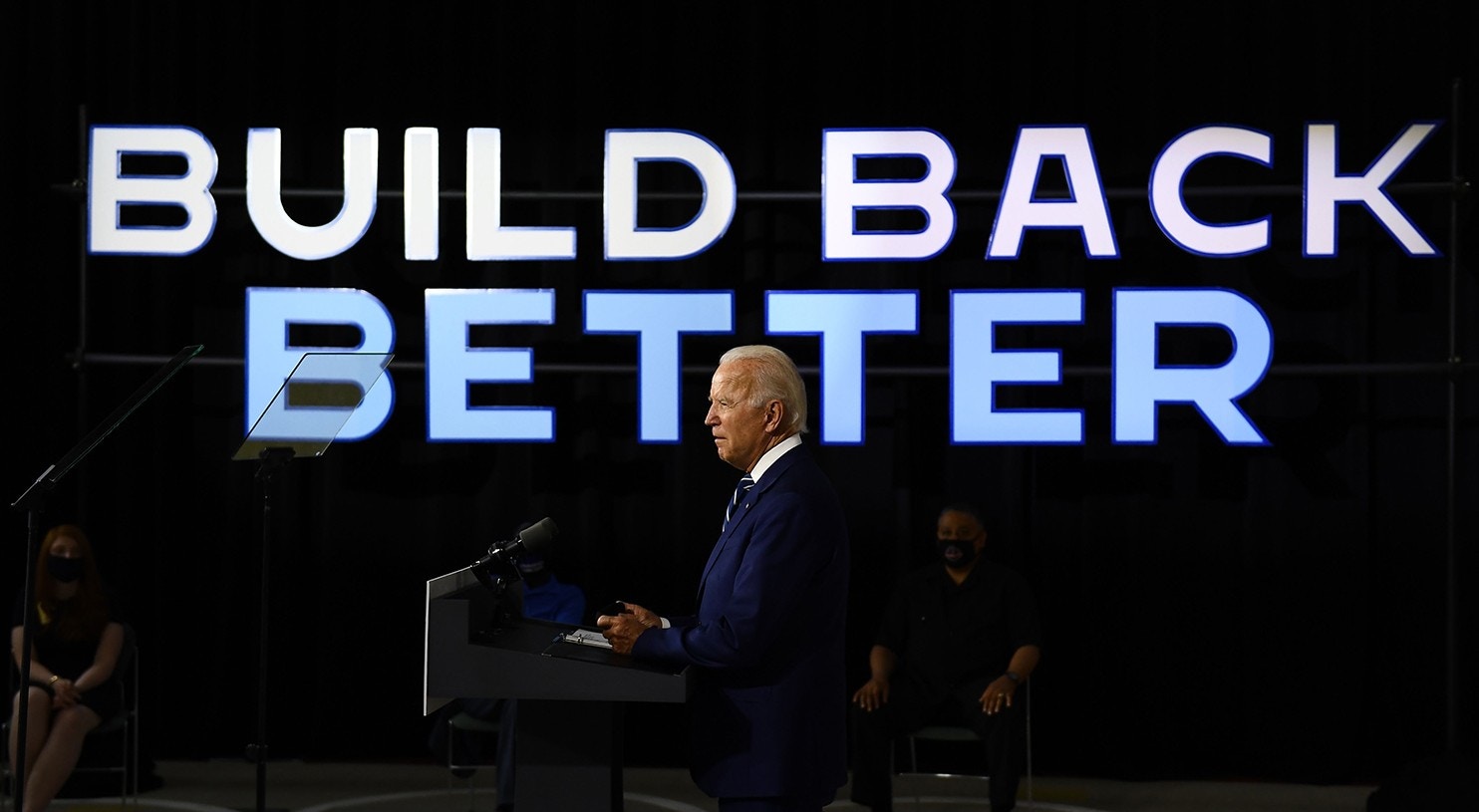
民主党の大統領候補であるジョーバイデンは、2020年7月21日、デルのニューキャッスルで、働く家族のための彼の「Build Back Better」経済回復計画の3番目の板について話します。
写真:Brendan Smialowski / AFP / Getty Images
ジョー・バイデン がフランクリン・ルーズベルトのニューディールを発動したことは、彼の大会受諾演説の冒頭の言葉で、民主党の被指名者がCovid-19危機の規模を把握していることへの希望の閃きをもたらした。それでもバイデンが話す前に、彼の移行チームの元元上院議員テッドカウフマンはその望みを果たせず、ウォールストリートジャーナルに事実上バイデンはそれを意味しなかったと伝えた。「私たちが入ると、パントリーはむき出しになります」とカウフマン氏は語った。「トランプが赤字に何をしたかを見るとき…Covid-19を忘れてください、彼が信じられないほどの減税で築いたすべての赤字。したがって、制限されます。」された後 のOUと呼ばれるトンを デビッド・シロタことで、 バイデンキャンペーンは違いを分割:以降の節減、短期的には「刺激」があります。
安心は安心ではありません。なぜなら、民主党のプラットフォームが基づいているバイデン・サンダース統一タスクフォースのレポートの ように、 チームバイデンの経済的思考は、その最も進歩的な要素の中でも、本質的には以前のオバマバイデン戦略の背後にあるものと同じであることを確認します2008年から2009年までの経済危機。しかし、根本的な状況は、現在、多くの点ではるかに深刻で扱いにくいものです。
2008年の危機は、根本的には金融危機でした 。それは金融詐欺の急増に起因しました。それは完全に名誉を与えられることは決してない、そしてそれらが 完全に名誉を与えられることが決してないことを保証するように設計され、標的にされた住宅ローンを通じて経済成長のシミュラムを生み出しました 。詐欺が露呈し、住宅市場が崩壊したとき、何百万人もの人々が職を失いました。数百万人が家を失いました。それでも、全体的に、そして時間の経過とともに、この危機は従来の「ケインズ派」の修正である大規模な資金注入に影響を受けました。2009年のオバマ・ビデン計画に関する残りの議論は、注射が十分に大きかったかどうか、そしてより大きなものが2010年に政権を襲った政治的反発を回避したかもしれないかどうかについてだけです。
驚くべきことに、回復は遅く、労働力も自家所有も危機以前のレベルに戻ったことはありませんでしたが、米国は2010年以降、経済拡大を維持することができました。天然ガスと高コストの石油生産。ドナルドトランプ氏の任期の最初の3年間は、裕福で活況を呈している株式市場に重み付けされた大幅な減税、つまり「すべてのバブル」と呼ばれることにより、拡大が続けられました。確かに、創出された雇用は主に比較的低賃金でした。それにもかかわらず、それらは作成されました。米国は、2018年頃までに従来定義されていた完全雇用に復帰しました。この事実、スローモーションサクセスストーリーは、当時の政策を策定した人々の信頼を確かに強めています。
次の回復は、輸出、事業投資、または耐久消費財の購入によっては始まりません。
長期にわたる拡張は、消費者に大きく依存していました。個人消費は危機前のブームの原因であり、不況で急激に低下しましたが、国内総生産のシェアは2015年初頭以降回復し、以前の戦後の水準をはるかに上回っていました。一方、総事業投資は、GDPのシェアとして危機以前のレベルに戻ることはなく、デジタル革命が資本コストを削減したこともあり、2015年のピークは、2005年の以前のピークをほぼ2パーセント下回っていました。機器とビジネス部門の実店舗のニーズに割り込む。政府支出は不振の中で急激に上昇し、歴史的に高いままでしたが、GDPのシェアとして、拡大の開始から2020年まで継続的に減少しました。したがって、パンデミックヒットまでの最後の5年間の主な持続要因は個人消費でした。
最後の拡張の経験が今繰り返されない理由は3つあります。
まず、パンデミックにより、アメリカが得意とする多くの先進的な資本財の世界市場が台無しになりました。航空機がその代表的な例です。民間航空業界は、米国の需要ではなく、世界的な需要に依存しており、地上より多くの耐空性の飛行機が空中に駐車されている限り、世界の需要は失われています。少し違った形で、米国の石油ビジネスは世界の価格を変えます。販売価格が西テキサスの地面から砕いた油を得るコストの半分である限り、それは運命です。オフィスと小売モールの建設:事務作業のかなりの部分がホームオフィスに移り、ショッピングがオンラインディストリビューターに移るので、死んでしまいました。通勤や買い物での走行距離が短くなるため、自動車の販売は鈍化し、自動車は長持ちします。他の多くの部門では、安価なデジタル機器が高価な設備や人力に取って代わります。全体として、次の回復は、輸出、企業投資、または耐久消費財の購入によっては開始されません。ケインズの刺激がそれについてできることは何もない。
消費者のところに来ると、さらに大きな問題があります。前回の回復における支出増加の最大のシェア、そして雇用創出におけるアメリカの成功の秘密は、商品の購入ではなく、サービスの生産と消費にあったということです。危機後の米国経済は、バー、レストラン、喫茶店、ホテル、リゾート、スパ、カジノ、ジム、ライドシェア、マッサージおよびタトゥーパーラー、ヘアサロン、ネイルサロン、ブティック、高級店での雇用が大幅に増加しました。食料品店だけでなく、育児、教育、文化イベント、選択的医療処置など、裕福な社会が甘やかす傾向にあるサービス全体を網羅しています。事実、米国経済は、お互いを洗い流し、お互いの背中を引っかくという巨大なカーニバルになりました。
パンデミックはその多くを洗い流した。直接的な個人的な接触、混雑した空間、および混合は多くのサービスの本質であり、必然的に、健康上の理由から抑制されてきました。多くの四半期で、パンデミックが後退した場合に、これらが単純に戻り、中断したところから物事が始まるという仮定があります。これは安全な仮定でも、合理的な仮定でもありません。
マージンで、ほとんどの支出がアメリカの工場で生産された商品にあったとき、お金の単純な供給は物事をうまく進めるスイッチを反転させることができました。顧客が注文し、企業が労働者を雇い、エンジンが始動しました。国内支出が圧倒的にサービスに向けられている経済では、顧客が共同で、彼ら自身が共同で提供するサービスを購入する意思があるまで、仕事は戻りません。しかし、彼らは彼らが仕事をするまでは喜ばないでしょう。それは顧客の以前の存在に依存します。これは古典的なキャッチ22です。パンデミックが妨害し続け、これからも妨害し続けるのは、自己強化的な要求のダイナミック(好循環)です。

人々は、2020年8月12日にニューヨークのマンハッタンのショッピング地区で廃業を過ぎて歩いています。
写真:Spencer Platt / Getty Images
ウイルスの脅威が後退した場合でも(後退した場合でも)、これらのサービスは、より基本的な理由で簡単に復帰しません。一般的には必須ではありません 。それらは私たちの富とともに成長したアドオンであり、ほとんどのアメリカ人は概してそれらなしで行うことができます。中産階級以上のアメリカ人世帯は、郊外化と住宅所有の戦後政策の副産物である家に住んでいます。必要に応じて、家に住む人々は家で料理、掃除、娯楽をすることができます。近年、彼らは 家を出るように説得することによって経済が成長しました :外出すること、食べ物を買うこと、運動すること、そして市場で楽しむこと。収入のある家族は支出を減らして節約することを決定する一方で、収入のない家族は必要があるためすべてを削減するため、経済は同じ線に沿って後退することができます。それは少なくともパンデミックの不確実性が後退し始めるまでそれらの線に沿って後退します。しかし、これらすべてのサービスを提供する人々が最初に仕事の見込みの持続的な改善を経験しない限り、不確実性は後退することができません-そして、再び、そこには問題があります。
仕事を提供する企業は、これらの状況に無期限に耐えることはできません。サービス事業は通常、家賃や利息などの固定費で運営されており、高レベルの顧客の通過を必要とします。バーは満員でなければならず、レストランは週末は満員で騒々しい、コンサートは売り切れ、またはその背後にあるビジネスを維持できません。彼らの能力に対する公衆衛生の制限と、家計の高額な貯蓄と経済的不安による後援の低さの組み合わせは、彼らの見通しにとって致命的です。A ニューヨーク・タイムズ紙の調査では、 所得が救済プログラムによって状態に保たれているにもかかわらず、2019年に比べて企業への訪問のほぼ25パーセントの8月に減衰を示しています。企業がどれだけ長く耐えることができるかは、誰もが推測するところです。しかし、多くはすでにあきらめており、さらに多くが続くでしょう。そして、商業地区、商店街、または近所が暗くなり始めると、生存者に疫病が重くのしかかります。これは、現在私たちの周りに見られるものです。
第三に、パンデミックが長引いて人々は働けないので、家賃の滞納、住宅ローン、光熱費が積み重なっています。 ある調査によると、約3分の1の世帯が7月に4か月連続で家賃や住宅ローンの全額を支払うことができませんでした。家主は再び立ち退きを申請し始めました—当然のことながら彼らの観点からですが、経済全体にとって悲惨なことです。立ち退きや差し押さえの恐怖が復活すると、世帯はさらに多くを節約し、さらに少なく費やして、不運または持続的な失業の場合に、保安官がドアから遠ざけるのに十分な予備があることを期待します。
Covid-19のパンデミック は長期的に私たちの経済を変え ました。変化は私たちの後方技術ではなく、高度な技術によるものです。私たちの富ではなく、私たちの貧困。過去の信用へのアクセス、したがって、現在の収入に関連する一定のコミットメント。私たちの家や郊外や車に。そして、私たちが豊かな社会を持っていて、今も持っているという事実に。何百万人もの不安なアメリカ人がそれぞれ自分の最善の利益のために行動するという決断-家で食事や遊びをし、より多くを節約し、より少なく費やし、彼らの健康を保護し、可能な限り長く続くこと-は、お金だけで緩和される。これは戦後のアメリカの競争的な消費主義とうんざりするような需要ではなく、メイナード・ケインズの魔法がうまく働いたわけではありません。
単なるお金をはるかに超えて、何か他のことをしなければなりません。さもなければ、それはずっとずっとうつ病です。
4月に取られたすべての措置の要点—拡張された失業給付、給与保護、中小企業向けローン、および納税者への直接支払いを伴うCARES法。 そして連邦準備制度の動き は、Covid-19を制御下に置くための社会的距離と他の手段のための時間を購入することでした。その後、経済は自然に回復するとの想定がありました。公衆衛生対策が機能しなかったとしても、資金はアメリカの家計が家賃、住宅ローン、光熱費を支払うための時間を稼ぎ、そして夏と秋のために何かを脇に置いておいた。彼らはパンデミックが広がったときに国が崩壊するのを防いだ。もちろん、収入支援の新しいラウンドは、より多くの時間を購入することができ、今すぐに緊急です。しかし、それだけでは、経済が新たな成長と高い雇用に向かう道を開くことはありません。単なるお金をはるかに超えて、何か他のことをしなければなりません。さもなければ、それはずっとずっとうつ病です。
その何か他の輪郭は見え始めたばかりです。基本的な要素のいくつかは次のとおりです。
1. 世界市場向けの先進的な資本財、家庭用エネルギー、兵器、建設セクターを生産する部門は、まるで戦時中の努力のように、新しい目的に動員されなければなりません。これらは、持続可能なエネルギー、気候変動の緩和、公衆衛生、および安全で持続可能な活動パターンを中心とした生活そのものの再構築を目的とする必要があります。すべてのタイプの新しいインフラストラクチャ、新しい交通システム、新しい設備、自然保護、文化的投資はすべてこの課題の一部です。 グリーン・ニューディールは、 経済のエネルギー基盤を変換するために、また、形質転換されるべき経済があることを確認するだけでなく、今二重に必要です。
2. 民間部門で仕事を見つけることができない何百万もの人々の ために、公的部門で適度な生活賃金で仕事をしようとするすべての人に仕事の保証がなければなりません 。パンデミックはサービスの仕事だけでなく、オフィスの仕事と建設も削減したので、4000万人近くのアメリカ人労働者が避難しました。彼らの雇用主が生き残ったとしても、多くは呼び戻されません。しかし、教育、思いやり、公衆衛生、公園と図書館、芸術と文化、コミュニティの維持、そして必要とする人々への食物や住居やその他の基本的なサービスの提供、そして仕事が利用できるようになれば、人々は何百万人も彼らのためにサインアップします。
3. サービスプロバイダーは、削減されたボリュームで維持できるように再構築する必要があります。彼らは、顧客と労働者の両方を保護するために物理的なレイアウトを再構成するために、簡単な条件で融資を受ける必要があります。しかし、彼らはまた、コストを賄うための支援を必要としています。地方自治体が連邦政府からの支援を得て、協力的な官民所有とサービス会社の部分自治化は有望な道の1つです。ドイツでは、 中小企業は地域によってカバーされるコストの一部を手に入れ、それで生き残ることができますが、米国では失敗しています。
4. 世界的なサプライチェーンへのパンデミックやその他の脅威に関連する取引の混乱から免れるために、公衆衛生と栄養の基本要件を満たすのに十分な製造能力を国内の土壌で再構築する必要があります。私たちは今春と夏であったため、再び捕まることはできません。医療従事者、そして実際には全人口に基本的な保護具を提供することはできません。この目的のために、1932年から1956年まで運営されてい た復興金融公社の 沿線に沿っ た健康金融公社の新しい資金調達構造が必要になります 。
5. 公衆衛生を再構築し、自己負担なしで誰もが利用できるようにする必要があります。この呼びかけは、Covid-19がアメリカのヘルスケア部門に金融危機を引き起こしたことを認めるために、従来の公共オプションや単一支払者制度の議論を超えています。アメリカの他のすべてのように、ヘルスケアはビジネスです。また、経済が悪化し、事故やその他の感染症が減少し、選択的な手続きが延期されたため、プロバイダーの診察数が減り、他のあらゆるビジネス形態と同様に、多くの病院や診療所では費用を賄えなくなっています。解決策は、すべての人が適切なサービスを利用できるようにするために、医療部門を協力的にすることです。実際、 スペイン と アイルランド はパンデミックですべての医療サービスを国有化しました。アメリカも同じことをするか、それほど根本的な解決策を見つけることができませんでした。
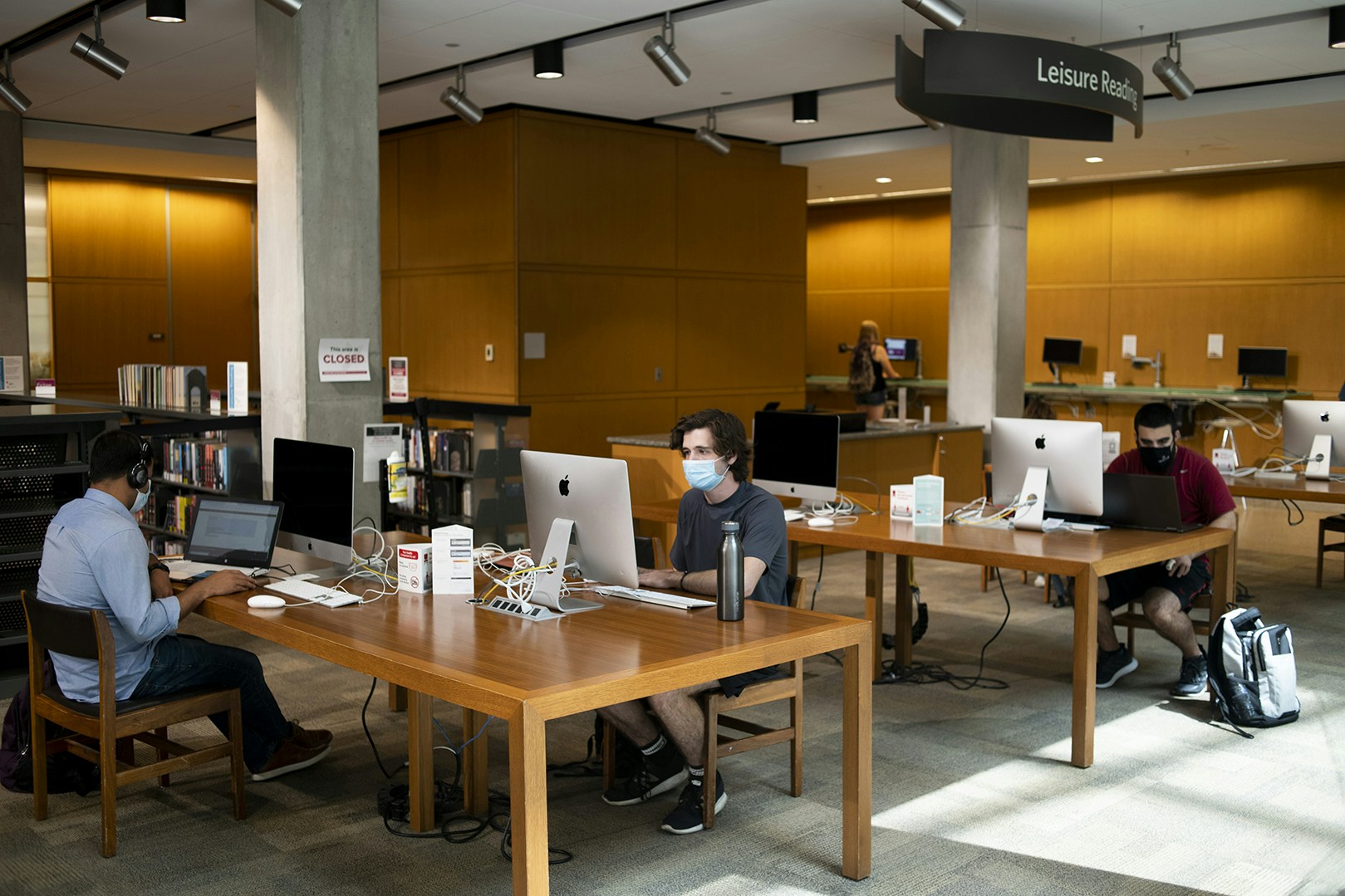
2020年8月25日、オハイオ州コロンバスにあるオハイオ州立大学の授業の初日、防護マスクを身に着けている学生がトンプソン図書館の内部で勉強します。
写真:Ty Wright / Bloomberg / Getty Images
6. 期間中およびそれ以降は、地方自治体が監督する良好な行動と一致して、賃貸人と住宅ローン所有者は立ち退き、差し押さえ、およびユーティリティの停止から保護する必要があり、支払い不可能な債務を書き留めるための合理的な設備と、小さな家主。学生の負債と医療の負債も一般的な救済の良い候補です。
7. 結局のところ、これらの借金はお金を貸した人たちの資産でもあるため、現実には、Covid-19以降の経済の成功には金融資産の再配分が必要です。パンデミックを打倒し、実行可能な社会秩序が余波で出現する場合、米国の世帯のバランスシートを書き直さなければならず、市場活動が少なく、市場所得が低いため、管理可能な負債を負担する必要があります。 。これは、裕福な人々の資産だけでなく、過重に負担された人々の負債も書き留められる必要があることを意味します。過去40年の傾向を逆転させ、債権者から債務者への一般的な再分配がなければなりません。ちなみに、再配布 が発生します。 それは、1930年代のように10年間の不況、1960年代のように20年間のインフレによって、あるいは第二次世界大戦直後のように、賢明なリストラと債務救済によって実現できます。
8.最後に、負債と資産の評価減が広範囲に及ぶ中で、金融セクターは価値を失う資産の多くを保有しているため、金融セクターを再構築する必要があります。このパンデミックの最終的な財政的影響はまだ明確ではなく、金融システムの弱点がどこに現れるかはまだいくぶんあいまいです。しかし、それらの弱点が存在することは確かであり、それらが露呈された場合、それらは深遠なものとなるでしょう。それを作ることができない大きな銀行は、買収されて公益事業として実行することができます。これは現在の法律の下で行うことができます。必要な支払い、貯蓄、信用機能は、FRBが管理する郵便バンキングや公共の電子決済システムを通じて、公共のオプションを提供することで維持できます。時間が経つにつれて、地域や地方の銀行は、ウォール街が歪曲し、最終的には破壊を助けた経済に代わって、新しい経済を構築するためにサポートされることができます。
市場が私たち自身を幸福に回復させると考えるのは妄想です。
過激主義の精神はこれらのアイデアをアニメーション化しません。彼らはイデオロギーによっても、いかなる議題への過去のコミットメントによっても動かされていません。それらは状況の理解から論理と事実の問題として続きます。以前のアメリカ経済の構造は、いくつかの点で非常に効率的でした。不平等ではありますが、人口の非常に多くの人々の高い生活水準をサポートしました。しかし、状況は変化し、制御も逆転もできず、ウイルスやパンデミックに何が起こっても、それだけでは蒸発しません。
したがって、市場が私たち自身を幸福に回復させると考えるのは妄想です。ただお金を注入するだけで、どれだけ素晴らしくて寛大で、短期的には必要であるとしても、失ったばかりの仕事と収入の幸せな組み合わせを取り戻すと考えるのは妄想です。70年に渡ってリベラルな思考と経済危機への対応を支配してきた戦後の経済学者たちの簡単な方法が、Covid-19の課題に直面しても機能すると考えるのは、妄想です。前進するためには、はるかに大規模な計画と行動が必要です。それには、ニューディールでもたらされるものに似ているが、実際にはそれを超えるスキル、想像力、地元の知識、取り組み、動員が必要です。
唯一の良いニュースは、他の前例のない危機が以前に起こったことです。ほとんどの場合、その結果は災害です。しかし、アメリカの歴史の中で、国が必要なことを実行し、困難、力、古い考え、邪魔な俳優を克服した瞬間がいくつかあります。1861年、1933年、1942年にそうなりました。
バイデンはルーズベルトとニューディールを呼び出すのは正しかった。アメリカは彼がそれを意味する必要がある。
Rebuilding the Economy Will Require Joe Biden to Think Very Differently Than 2009
It is a delusion to think that merely injecting money will bring back the happy mix of jobs and incomes we’ve lost in the Covid-19 pandemic.
Democratic presidential candidate Joe Biden speaks on the third plank of his “Build Back Better” economic recovery plan for working families, on July 21, 2020, in New Castle, Del.
Photo: Brendan Smialowski/AFP/Getty Images
Joe Biden’s invocation of Franklin Roosevelt’s New Deal, in the opening words of his convention acceptance speech, offered a flash of hope that, in broad terms, the Democratic nominee has grasped the scale of the Covid-19 crisis. Yet before Biden even spoke, the head of his transition team, former Sen. Ted Kaufman, undercut that hope, telling the Wall Street Journal that, in effect, Biden didn’t mean it. “When we get in, the pantry is going to be bare,” Kaufman said. “When you see what Trump’s done to the deficit … forget about Covid-19, all the deficits that he built with the incredible tax cuts. So we’re going to be limited.” After being called out by David Sirota, the Biden campaign split the difference: There will be “stimulus” in the short run, retrenchment later.
The reassurance is not reassuring. For, like the Biden-Sanders Unity Task Force report on which the Democratic platform is based, it confirms that economic thinking on Team Biden, even among its most progressive elements, is essentially the same as that behind the Obama-Biden strategy for the previous economic crisis, from 2008 to 2009. But the underlying situation now is in many ways much more serious and intractable.
The 2008 crisis was, at its core, a financial one. It stemmed from a rash of financial frauds, which generated a simulacrum of economic growth through mortgage loans that would never be honored in full — and that were designed, and targeted, to ensure that they could never be honored in full. When the frauds were exposed and the housing market collapsed, millions lost their jobs; millions more lost their homes. Still, overall and over time, the crisis was amenable to the conventional “Keynesian” fix: a large injection of money. The residual arguments over the Obama-Biden program in 2009 are merely over whether the injection was large enough, and whether a larger one might have averted the political backlash that hit the administration in 2010.
Remarkably, although the recovery was slow and neither the labor force nor homeownership ever returned to pre-crisis levels, the United States was able to sustain an economic expansion after 2010. The position of the country was helped by an unexpected surge in low-cost natural gas and high-cost oil production. The expansion was continued, in the first three years of Donald Trump’s term, by large tax cuts weighted to the wealthy and a booming stock market — the “everything bubble” as it is sometimes called. The jobs created, it is true, were mainly at relatively low wages. Nevertheless, they were created. The U.S. returned to full employment, conventionally defined, by around 2018. This fact — a slow-motion success story — no doubt bolsters the confidence now of those who set the policy back then.
The next recovery will not be kickstarted by exports, by business investment, or by the purchases of durable consumer goods.
The long expansion relied very heavily on the consumer. While personal consumption had been the source of the pre-crisis boom, and fell sharply in the slump, its share of gross domestic product recovered after early 2015 and remained throughout well above levels of any previous post-war epoch. Total business investment, on the other hand, never returned to pre-crisis levels as a share of GDP and was at the peak in 2015 almost 2 percentage points below the previous peak in 2005, in part because the digital revolution reduced the cost of capital equipment and cut into the brick-and-mortar needs of the business sector. Government spending rose sharply in the slump and remained historically high, but as a share of GDP it declined continuously from the start of the expansion until 2020. Thus, consumer spending was the main sustaining factor for the five final years, until the pandemic hit.
There are three reasons why the experience of the last expansion will not be repeated now.
First, the pandemic has obliterated the global market for many advanced capital goods in which America excels. Aircraft are a major example. The civil aviation industry depends on worldwide demand, not U.S. demand, and world demand is dead so long as more airworthy planes are parked on the ground than are in the air. In a slightly different vein, the U.S. oil business turns on a world price. It is doomed so long as the selling price is half the cost of getting fracked oil from the ground in West Texas. Construction of offices and retail malls: also dead and done as a substantial share of clerical work shifts to the home office and of shopping to online distributors. The sale of automobiles will slow as commuting and shopping demand fewer miles of travel, and cars therefore last longer. In many other sectors, cheap digital equipment will replace expensive facilities and human labor. Overall, the next recovery will not be kickstarted by exports, by business investment, or by the purchases of durable consumer goods. There is nothing that Keynesian stimulus can do about that.
When we come to the consumer, there is an even bigger problem. It is that the largest share of increased spending in the last recovery — and the secret of American success at job creation — was not in the purchase of goods, but in the production and consumption of services. The U.S. economy after the crisis saw a vast growth in jobs in bars, restaurants, coffeehouses, hotels, resorts, spas and casinos, gyms, ride-shares, massage and tattoo parlors, hair and nail salons, boutique shops, and high-end grocery stores, as well as in child care, education, cultural events, and elective medical procedures — the entire panoply of services with which a wealthy society tends to pamper itself. In effect, the U.S. economy became a gigantic carnival of doing each other’s washing and scratching each other’s backs.
The pandemic has washed much of that away. Direct personal contact, crowded spaces, and mixing are the essence of many services and have been suppressed, necessarily, for health reasons — and will remain. There is an assumption, in many quarters, that if and when the pandemic recedes, these will simply return, and things will start up where they left off. This is neither a safe assumption nor even a reasonable one.
Back when most spending, at the margin, was for goods produced in American factories, the simple provision of money could flip the switch that got things going. Customers placed orders, businesses hired workers, and the engine started up. In an economy in which domestic spending is overwhelmingly directed at services, the jobs will not return until the customers, collectively, are willing to buy the services that they, themselves, collectively provide. But they will not be willing until they have the jobs, which depend on the prior presence of customers. This is a classic catch-22. It is precisely the dynamic — the virtuous circle — of self-reinforcing demand that the pandemic has obstructed and will continue to obstruct.
People walk past a closed business in a Manhattan shopping district on Aug. 12, 2020 in New York.
Photo: Spencer Platt/Getty Images
Even when the threat of the virus recedes — if it does recede — these services will not return easily for a more basic reason. They are generally not essential. They are add-ons that grew up with our wealth, and most Americans can, by and large, do without them. American households in the middle class and up live in houses, the byproduct of postwar policies of suburbanization and homeownership. If they have to, people who live in houses can cook, clean, and entertain themselves at home. In recent years, the economy grew by persuading them to leave home: to go out, to buy food, get exercise, and have fun on the market. The economy can and will retreat along the same lines, as families with incomes decide to spend less and save more, while those without incomes cut back on everything because they have to. It will retreat along those lines at least until the uncertainties of the pandemic start to recede. But the uncertainties can’t recede, so long as people who provide all those services do not first experience a sustained improvement in their prospect for jobs — and there, once again, is the catch.
The firms that provide the jobs cannot survive these conditions indefinitely. Service businesses generally operate with fixed costs, including rent and interest, that demand a high level of customer pass-through. Bars must be packed, restaurants full and noisy on the weekends, concerts sold out, or the businesses behind them cannot be sustained. The combination of public health restrictions on their capacity with high household savings and low patronage driven by economic insecurity is lethal to their prospects. A New York Times survey shows a falloff in August of almost 25 percent in visits to businesses compared to 2019, even though incomes have been kept up by relief programs. How long businesses can hold out is anyone’s guess. But many have given up already and many more will follow. And once a commercial strip or mall or neighborhood begins to go dark, blight weighs on the survivors. This is something we can see all around us right now.
Third, as the pandemic lingers and people cannot work, arrears for rent, mortgages, and utility bills are piling up. According to one survey, about a third of households failed to make their full rent or mortgage payment in July — for the fourth month in a row. Landlords have begun again to file for evictions — understandably from their point of view but disastrously for the economy as a whole. As the fear of eviction or foreclosure returns, households will save even more, and spend even less, hoping to have enough in reserve, in case of bad luck or sustained joblessness, to keep the bailiff from the door.
The Covid-19 pandemic has changed our economy for the long term. The changes are due to our advanced technology, not our backwardness; to our wealth, not our poverty; to our past access to credit and therefore, to our fixed commitments in relation to current incomes; to our houses and suburbs and cars; and to the fact that we have had, and still have, an affluent society. The decision, by millions of anxious Americans each acting in their own best interest — to eat and play at home, to save more and spend less, to protect their health and to hang on for as long as possible — creates an economic problem that cannot be palliated by money alone. This is not the postwar America of competitive consumerism and pent-up demand on which the magic of Maynard Keynes worked so well.
Something else must be done, going far beyond mere money. Or else, it’s depression all the way down.
The point of all the measures taken in April — the CARES Act, with extended unemployment benefits, payroll protection, small business loans, and direct payments to tax filers; and the Federal Reserve’s moves — was to buy time for social distancing and other measures to bring Covid-19 under control. The assumption was that the economy would then recover on its own. Even though the public health measures did not work, the funds did buy time for American households to pay rent, mortgages, utility bills, and (as it turned out) to put something aside for the summer and fall. They kept the country from falling apart as the pandemic spread. A new round of income supports can, of course, buy more time and is indeed urgent right now. But it will not, by itself, set the economy on a path toward renewed growth and high employment. Something else must be done, going far beyond mere money. Or else, it’s depression all the way down.
The outlines of that something else are only just coming into view. Some of the basic elements are the following:
1. The sectors producing advanced capital goods for world markets, energy for domestic use, weapons, and the construction sector must be mobilized, as if in a wartime effort, to a new set of purposes. These should aim at sustainable energy, mitigation of climate change, public health, and the reconstruction of life itself around safe and sustainable patterns of activity. Renewed infrastructure of all types, new transportation systems, new amenities, natural conservation, and cultural investments are all parts of this challenge. The Green New Deal is now doubly necessary, not only to transform the energy basis of the economy, but also to ensure that there is an economy to be transformed.
2. For the many millions who cannot find jobs in the private sector, there must be a job guarantee for all seeking to work, at a modest living wage, in the public sector. The pandemic has cut not only services jobs, but also office jobs and construction, so that nearly 40 million American workers have been displaced. Many will not be called back even if their employers survive. Yet there is work enough for everyone: in teaching, in caring, in public health, in parks and libraries, in art and culture, in maintaining our communities, and in providing food and housing and other basic services to those in need, and if the jobs are made available, people will sign up for them by the millions.
3. Service providers must be restructured so they can be sustained at reduced volumes. They must get loans on easy terms to reconfigure their physical layout to protect both customers and workers. But they also need assistance in meeting their costs. Cooperative private-public ownership and partial municipalization of service firms, with local government getting support from the federal government, is one promising path. In Germany, small businesses got a share of their costs covered by their localities, and so can survive, whereas in the U.S. they are failing.
4. Manufacturing capacity sufficient to meet the basic requirements of public health and sustenance must be rebuilt on domestic soil, so as to be immune from the disruptions to trade associated with the pandemic or other threats to global supply chains. We cannot be caught again, as we were this spring and summer, unable to provide basic protective equipment to health care workers and indeed to the whole population. For this purpose, a new structure of financing will be required, a Health Finance Corporation along the lines of the Reconstruction Finance Corporation that operated from 1932 to 1956.
5. Public health must be reconstructed, accessible to all at no out-of-pocket cost. This call goes beyond the conventional discussion of public options and single-payer schemes to recognize that Covid-19 has created a financial crisis for America’s health care sector. Like everything else in America, health care is a business. And as the economy has fallen, reducing accidents and other infectious diseases, and as elective procedures have been postponed, providers are seeing fewer people, so that — like every other form of business — many hospitals and clinics cannot cover their costs. The solution is to make the health care sector cooperative, to assure that appropriate services are available to all. Indeed Spain and Ireland nationalized all health care services in the pandemic; America could do the same or find a less drastic solution.
Students wearing protective masks study inside of the Thompson Library on the first day of classes at Ohio State University in Columbus, Ohio, on Aug. 25, 2020.
Photo: Ty Wright/Bloomberg/Getty Images
6. For the duration and beyond, renters and mortgage holders must be shielded from evictions, foreclosures, and utility stoppages, consistent with good behavior supervised by local authorities, and there must be reasonable facilities to write down unpayable debts, along with reasonable compensation to small landlords. Student debt and medical debt are also good candidates for general relief.
7. Ultimately, since these debts are also the assets of those who lent the money, the reality is that a successful economy after Covid-19 requires a redistribution of financial wealth. If the pandemic is to be defeated, and if a viable social order is to emerge in the aftermath, the balance sheets of American households will have to be rewritten to carry a burden of debt that is manageable, given less market activity and lower market incomes. This means that the assets of the wealthy, as well as the debts of the overburdened, will have to be written down. There must be a general redistribution from creditors to debtors, reversing the trend of the past 40 years. The redistribution, by the way, will occur. It can be done through a decade of depression, as in the 1930s, or two decades of inflation, as in the 1960s, or it can be done by sensible restructuring and debt relief, as was done in the immediate aftermath of World War II.
8.Finally, with a widespread write-down of debts and assets, the financial sector must be restructured, since that sector holds many of the assets that will lose value. The ultimate financial consequences of this pandemic are not yet clear, and where the weak points of the financial system will emerge is still somewhat obscure. But it is certain that those weak points exist and when they are exposed, they will prove profound. The big banks that cannot make it can be taken over and run as public utilities; this can be done under present law. Necessary payments, savings, and credit functions can be sustained by providing public options, through postal banking and a public electronic payments system, managed by the Fed. Over time, regional and local banks can be supported to build a new economy in place of the one that Wall Street distorted and, ultimately, helped to destroy.
It is a delusion to think that markets will restore us to well-being on their own.
No spirit of radicalism animates these ideas. They are not driven by ideology nor by any past commitment to any agenda. They follow as matters of logic and fact from an understanding of the situation. The previous structure of the American economy was highly efficient in some ways. It supported, although unequally, a high living standard for a very large part of the population. But circumstances have changed in ways that cannot be controlled or reversed, and that will not evaporate on their own, whatever happens to the virus and the pandemic.
It is therefore a delusion to think that markets will restore us to well-being on their own. It is a delusion to think that the mere injection of money, however great and generous and however needed for the short run, will bring back the happy mix of jobs and incomes we’ve just lost. It is a delusion to think that the easy methods of the postwar economists, whose ideas have dominated liberal thought and response to economic crises for 70 years now, will work in the face of the Covid-19 challenge. The path forward requires planning and action on a far larger scale. It requires skills, imagination, local knowledge, commitment, and mobilization that resemble — but actually surpass — those brought to bear in the New Deal.
The only good news is that other unprecedented crises have happened before. In most cases, the result has been disaster. But there are a few moments in American history when the country rallied to do what was necessary, overcoming the odds, the powers, the old ideas, and the bad actors who stood in the way. It did so in 1861, in 1933, and in 1942. And here we are again.
Biden was right to invoke Roosevelt and the New Deal. America needs for him to mean it.

0 件のコメント:
コメントを投稿