参考:
╋ ビーバー
参考:
MMT国債論争
https://love-and-theft-2014.blogspot.com/2021/02/mmt.html
租税貨幣論(Tax-Driven Monetary View)
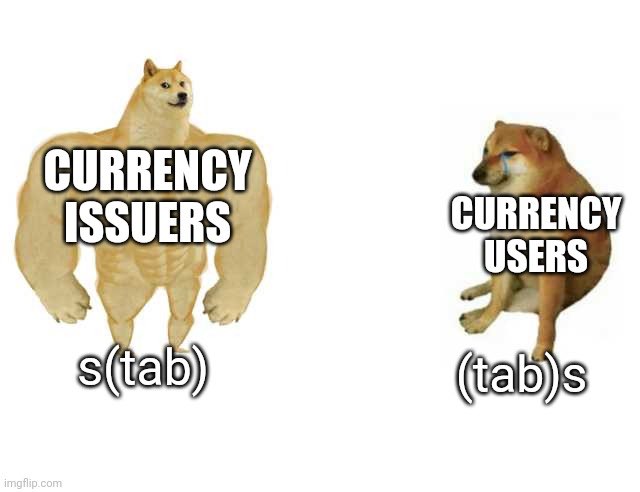
“TAXES DRIVE MONEY” 租税(あるいは、何かしらの形での政府への支払い手段としての需要)が通貨を駆動する。 ... "Spending First"
Sesame Street: One of These Things (The Deficit Myth #1)
3:30~
2020/06/16 Stephanie Kelton: Debunking the Deficit Myth | Town Hall Seattle
https://youtu.be/a9pAPIUYXxQ
https://love-and-theft-2014.blogspot.com/2021/01/20200616-stephanie-kelton-debunking.html
アバ・P・ラーナー (Abba P. Lerner), 1903-1982.
https://nam-students.blogspot.com/2019/03/abba-p-lerner-1903-1982.html
https://nam-students.blogspot.com/2019/04/randall-wraymodern-monetary-theory2012.html
MMTの本当に単純な観察結果から出発します。それは米ドルは単純な公的独占であるということです。 別の言い方をすれば、アメリカ合衆国の通貨はアメリカ合衆国政府を起源としています。合衆国政府以外のところから来ることはありえません。つまり、連邦政府は一般家庭と似てはいないのです。家計や民間企業が支出するときにはお金の用意を考えておくものですよね。 政府が通貨を使い果たすことはあり得ないことになります。政府は支払い能力の問題には直面しようがありませんし、政府への請求書が支払い不能になることもありえません。
転載:ケルトン教授インタビュー2019 CNBC
https://nam-students.blogspot.com/2019/06/2019526.html
https://nam-students.blogspot.com/2019/06/keltoncnbc.html
Stephanie Kelton: The Deficit Myth (with David Cay Johnston) 2020/11/06
Stephanie Kelton: The Deficit Myth 2020/11/06https://t.co/NIsvPGpwJW pic.twitter.com/mygJgVufgb
— luminous woman (@_luminous_woman) December 21, 2020
and as a kid i would play and i'd shout at the tv you know as i as i watched sesame street. and i'd say that as an adult i still often find myself shouting at the tv and my kids are are here somewhere.
and they can tell you that i routinely sit and watch uh you know conversations that take place on the news about politics and economics.
and i'm hollering back at the television so um the thing that i think helps us more than anything else to begin to shift the conversation in a more productive direction is is very simple actually.
and it's to recognize that the federal government.
i'm going to say first about the united states
(but i know david is going to have me broaden that discussion for you in a little bit )
but a government like ours here in the united states is the issuer of our currency the u.s dollar it comes from the u.s government.
and it can't come legally from anywhere else so how is it different from everybody else.
which is sort of the sesame street game.
well i can't issue the us dollar i'm a user of the currency and private businesses can't issue the us dollar.
look what's happening in the world today right if all of these private businesses whose um you know bottom lines have been clobbered through the coronavirus and the shutdowns and so forth.
if they could issue the currency or they'd be fine they could keep all their workers on payroll.
they could meet their recurring expenses.
we wouldn't have an economic crisis unfolding around us.
but they can't nor can state and local governments which is why governors and mayors around the country are pleading with the federal government the currency issuer to step up and help them.
so once you kind of separate in your mind what makes the federal government different from all of the rest of us.
then a lot of the other sorts of myths and misunderstandings about public finances start to fall away on their own.
子供の頃は遊んでいたし テレビに向かって叫んでいた セサミ・ストリートを見ながらね
大人になってもテレビに向かって 叫んでいる自分に気づくことがあります 子供たちがどこかにいます
子供たちがどこかで見ていますが、私は日常的に座って政治や経済についてのニュースの会話を見ています。
私はテレビに向かって大声で言い返しているのですが、私が思うに、会話をより生産的な方向にシフトさせるためには、何よりも役に立つことがあります。
それは、連邦政府を認識することです。最初に米国について話しますが、(デービッドが少し話を広げてくれると思いますが)、ここ米国のような政府は、我々の通貨である米ドルの発行者です。
他のどこからも合法的に来ることはできません。
セサミ・ストリート・ゲームのようなものです
私は米ドルを発行できません。私は通貨の使用者であり、民間企業は米ドルを発行できません。
今日、世界で起きていることを見てください。もし、コロナウイルスやシャットダウンなどで、
通貨を発行することが出来れば、労働者の給与を維持することが出来ます。
経常的な経費を賄うことができます。
経済危機が起こることもありません。
しかし、州や地方自治体にはできません。だからこそ、全国の知事や市長は、通貨発行者である連邦政府に助けを求めています。
連邦政府は、他の人々と何が違うのでしょうか?
そうすれば、財政に関する他の多くの神話や誤解は、自ずと消えていきます。
www.DeepL.com/Translator(無料版)で翻訳しました。
子供の頃、私は遊んでいて、セサミストリートを見ているとあなたが知っているテレビで叫びました。
そして、私は大人としてまだテレビで叫んでいることに気づき、私の子供たちはどこかにいると思います。
そして彼らは私が日常的に座って見ているとあなたが政治と経済についてのニュースで行われる会話を知っているとあなたに言うことができます。
私はテレビに戻ってきたので、何よりも会話をより生産的な方向にシフトし始めるのに役立つと思うことは、実際には非常に簡単です。
そして、私が最初に米国について話す連邦政府を認識することですが、(デイビッドは私にあなたのためにその議論を少し広げさせるつもりですが)、ここ米国の私たちのような政府が発行者です私たちの通貨の米ドルは米国政府から来ています。
そしてそれは他のどこからでも合法的に来ることができないので、それは他の人とどう違うのですか。
これは一種のセサミストリートゲームです。
よく私は米ドルを発行することはできません私は通貨のユーザーであり、民間企業は米ドルを発行することはできません。
収益を知っているこれらの民間企業のすべてがコロナウイルスやシャットダウンなどによって破壊された場合、今日の世界で何が起こっているかを見てください。
彼らが通貨を発行することができれば、あるいは彼らが大丈夫だとしたら、彼らはすべての労働者を給与に保つことができます。
彼らは彼らの経常費用を満たすことができました。
私たちの周りで経済危機が発生することはありません。
しかし、州政府や地方政府はできませんし、できません。そのため、全国の知事や市長は、連邦政府に通貨発行者にステップアップして支援するように求めています。
ですから、一度頭の中で何が連邦政府と私たちの他のすべての人が違うのか切り離すと、財政についての他の種類の神話や誤解の多くが自然に消え始めます。
https://video.twimg.com/ext_tw_video/1270548446273867777/pu/vid/1280x720/2gTed2668asMO9un.mp4
(https://twitter.com/gtopalides/status/1270300394401353728?s=21)
文字起こし and as a kid i would play and i'd shout at the tv you know as i as i watched sesame street and i'd say that as an adult i still often find myself shouting at the tv and my kids are are here somewhere and they can tell you that i routinely sit and watch uh you know conversations that take place on the news about politics and economics and i'm hollering back at the television so um the thing that i think helps us more than anything else to begin to shift the conversation in a more productive direction is is very simple actually and it's to recognize that the federal government i'm going to say first about the united states but i know david is going to have me broaden that discussion for you in a little bit but a government like ours here in the united states is the issuer of our currency the u.s dollar it comes from the u.s government and it can't come legally from anywhere else so how is it different from everybody else which is sort of the sesame street game well i can't issue the us dollar i'm a user of the currency and private businesses can't issue the us dollar look what's happening in the world today right if all of these private businesses whose um you know bottom lines have been clobbered through the coronavirus and the shutdowns and so forth if they could issue the currency or they'd be fine they could keep all their workers on payroll they could meet their recurring expenses we wouldn't have an economic crisis unfolding around us but they can't nor can state and local governments which is why governors and mayors around the country are pleading with the federal government the currency issuer to step up and help them so once you kind of separate in your mind what makes the federal government different from all of the rest of us then a lot of the other sorts of myths and misunderstandings about public finances start to fall away on their own davidson so uh stephanie most of us think that the way things work are uh we go out and get a job we make money the government takes part of it that's how we uh finance the government um you show with a very simple phrase tab uh that that's backwards and explain to us how it's backwards because it it certainly is intuitive and makes sense i remember getting a paycheck as a teenager and seeing the things that were deducted from it that went to the government and we all talk about our after tax income versus our gross income uh and government we're told all the time has to uh balance its books just like uh families can't spend money they don't have so walk us through the flaw the the foundational flaw in that idea sure so i'm looking for ways to use little mnemonics just to sort of help people separate what otherwise economists might present his fancy mathematical models well i didn't want to get bogged down in jargon and all of that i wanted this book to be really accessible so i came up with a way to express the ideas using a simple mnemonic and this tabs model that you just mentioned is the first one that i introduce in the book and tab of course is tab right and so the tab stands for taxing and borrowing and it's tabs plural so the s is spending and that comes last so the idea is that we've been taught to believe that governments pay for things using our money that they have essentially two options they can come for our money in the form of taxation or they can borrow our savings so taxes and bonds are the two primary ways that governments raise revenue so that they can pay the bills taxes and borrowing come first only after the government has money can it then finance expenditures can it then spend well i'm resequencing that okay so i'm saying the correct way to think about it is that the spending comes first and it should in fact be logical if we stop and think about it we think well where do we get the money to pay taxes or buy bonds the only way to pay taxes is with government money and the only way to buy bonds is with government money you can only use the us dollar only the currency is accepted for both of those things so it has to be the case that the government must first make its currency available to the rest of us by spending or i suppose you could lend it into the economy but the normal way would be to spend it into the economy to hire people and pay them so they can earn the currency and then collect a portion of what you have paid out in the form of taxes and if you choose you can allow people to take some of the currency that you have spent into the economy and effectively trade it up right trade it in for bonds which are just an interest interest-bearing way to hold your us dollars right so the basic difference between a bond and a dollar is a dollar bill in my pocket just sits there but if i buy a bond what you call yellow money instead of greenbacks uh the government pays me and interest on it so that it retains value over time it might go up or down depending on particular conditions but the fundamental idea is that the interest i'll be paid makes a dollar worth the same today as 10 years from now which would not be true of a dollar i put in my pocket and 10 years later pulled out to spend right right and the thing that we're so kind of taught to believe is that when the government engages in death when it runs a budget deficit when it when there is uh when the government spends more than it taxes back when there's deficit spending happening that it makes the rest of us poorer okay that's what they've taught us to believe that it's bad for the rest of us and in the book i show that in fact that is not true that government deficits augment our savings so how that happens would be if the government spends a hundred dollars into the economy but only taxes ninety dollars back out it has left behind ten of those green dollars that david just mentioned so that's and that's an we're augmenting non-government surpluses or savings or wealth the government's deficit makes a financial contribution to some other part of the economy now they could just leave those greenbacks as david referred to them in our pockets but they don't okay in the present time the government matches up its deficit spending by selling bonds so it puts 100 in subtracts 90 by taxing leaves 10 and then recycles those 10 dollars into interest bearing dollars that we call us government bonds they're treasuries the problem is we also use another word to describe them we call it the national debt and that makes everyone crazy so let me pursue that for a second uh when i was studying economics in the 60s and the 70s and i don't think it's changed much since then one of the fundamental things we're taught is that when the government borrows rather than taxes it is um effectively crowding out private investment so we don't have money to build factories and research labs uh or other private sector activities that create wealth if the government is borrowing all this money and then there's a second part to this which is the interest we have to pay to those people who hold yellow money treasuries rather than greenbacks itself can become large enough that we could end up with no money to do anything but pay the bondholders so if you tailor those first and then yep these are you know david the thing about the myths that you just described is that they're not just propagated in casual circles this is the kind of stuff that form the underlying assumptions that you know make up the reports that are published by the congressional budget office that are relied upon by lawmakers when they're making decisions about whether they can vote for a spending bill or something if the congressional budget office puts out a report and says oh no this spending will lead to all of these negative consequences the crowding out and so forth that you just talked about so then they give it a bad score and it makes it more difficult to pass good legislation so in the book i say this is backwards okay we're getting this wrong and the reason that we get it wrong is because again we're stuck in this tabs model instead of moving the sequencing around and recognizing the spending comes first the taxing and borrowing are secondary operations so if that's the case then this crowding out stuff doesn't make sense if the government's own spending is augmenting savings in the non-government part of the economy then it cannot be the case that government deficits use up savings right and lead to crowding out of more efficient forms of government investment and so forth and so once you realize that the government's own deficit spending provides the dollars that are then available to buy the bonds you realize the government isn't competing for a finite pool of savings and elbowing out the private sector as it needs to take more and more of the savings to finance its deficit but in fact it's building up the savings first with its own deficit spending and then allowing people to recycle some of those dollars into treasuries so the whole sort of thing falls apart and then as you said interest on the debt is a huge huge deal and and i did serve for a period of time in the u.s senate uh as the chief economist to the democrats and i can tell you that both sides both republicans and democrats are absolutely obsessed with this line item in the budget called interest on the debt and they see it exactly the way you just described it david they see it as an expense that eats up part of the funds that are available to spend in total so in other words imagine your household budget and you say okay i bring in a thousand dollars a month right and that's my budget and my rent takes a third of that and my car payment takes ten percent in my you add it up and all of a sudden the cable bill goes up and you say oh my god the cable bill has gone up and so now i can't afford to pay as much for my groceries or i can't afford right it's it's eating up part of your finite resources the government looks at its own budget like a household budget so when it sees the interest expense that line item increasing it says oh i'm going to have less money available for defense spending for education for infrastructure and a whole range of other things it's just not the case the federal government's budget doesn't work like a household budget even as interest becomes a bigger and bigger number in absolute terms there's nothing to prevent congress from choosing to spend more on defense or education or health care or any other line item in the budget it's not a zero-sum game and that's what i think a lot of people are missing so of course that was one of the great insights of adam smith that we can create wealth and frankly we've become very good as human beings all over the world at creating wealth it is not as donald trump talks about a zero-sum game a dollar china gets is a dollar we don't have is not how this works but this is important but the government so long as it has a monopoly on the currency and it controls the currency can't go broke we would go broke we had a revolution for somebody who's thinking about russian rules but as long as the us government endures we cannot go broke but can modern monetary theory lead to us going broke rather than the government through ruinous inflation deflation uh through any mechanism at all because i think that's one of the fears people have that's shown up in some of the i would describe them as petty and closed-minded reviews of your work okay great question so mmt can't make policy happen mnt is a framework of analysis right it's a it's an approach to macro economics and sometimes we say mmt is a lens so if i if i supply someone with a better set of lenses you know your vision was off you weren't seeing things clearly and i say oh you're stuck in a gold standard world you don't see how to take full advantage of the monetary system we have today which is not a gold standard a modern monetary system let me update your prescription let me give you a better set of lenses so that you can see the policy space around you that's what mmt is trying to do now someone could take an mmt understanding of things and try to push it too far but that would be a violation of the principles of mmt because what mmt tells us is that we've been paying attention to the wrong limits we thought that these um obstructions were here we thought we had to borrow from china we thought we had to raise taxes to pay for everything we thought we had to borrow from financial markets where they set the terms and decide when and how much we can borrow we don't know all of that stuff we clear away okay now we have a new understanding there's nothing to prevent any government from authorizing budgets and pushing things too far mmt can't stop that but what mmd does is to say hang on the limits are real there are limits to how much the economy can handle in terms of total spending not just government spending but spending from all sources including the rest of the world so you can imagine that every economy has a sort of speed limit that we have the resources we have we have people who are of working age and in the labor force we have all the factories and technology and machines and raw materials and we want to pay attention to environmental limits so there are limits but once we um identify the limits the the goal is to make full use of the resources we have respecting environmental limits as well but not to push things beyond those limits because the punishment for going too far is absolutely inflation so one of the important points for those of you are watching in this is mmt recognizes that the production of goods and services is central to how we address our economy this is not some fantasy notion of just turning on a government printing press and becoming the weimar republic or venezuela right now uh it is about serious level of economics so i want to go to one other issue and then we'll deal with the questions that people are posing to us uh for eight years i taught third year law students and graduate business students at syracuse the law of the ancient world the business law lots of business regulation and the property and tax law and it was really a way to just teach modern law why is the law the way it is and my better students would ask about well before we had money as we think of money greenbacks in our era digital deposits in our bank account wasn't everything done by barter and your book has important insights about why this myth that has been knocked down by economic historians but is still widely held that economies had barter and there's a word that readers or viewers i think need to hear and understand chartalism what is that why does it matter and how does it relate to mmt okay well um you know for people who want to hear more there is not a great deal of this in my book but i do deal with it but you can also pick up books by randall ray he you can read his understanding modern money or his modern monetary theory book you can even pick up david graber's debt the first five thousand years you can read michael hudson's work on imperial there are lots of uh resources out there um but you're right to say this barter exchange story is so entrenched within the economic discipline that if you pick up a principal's textbook the cut the stuff we use to introduce first-year students to economics you will almost inevitably if you find a discussion of money turn to the page where the word money first appears and they tell you a story about where money is supposed to come from how did we invent money once upon a time in a land far far away man conducted his affairs on the basis of barter you know trucking his wares to the local trading venue and trying to find somebody who had what he wanted and wanted what he had it was known as the double coincidence of wants the only way david and i can successfully engage in exchange if i'm the shoe salesman and he's the local fisherman is i'm hungry and i want fish but i go to david looking for fish and david says my shoes are fine i don't need a new pair of shoes and he tells me to take a hike so now we can't we can engage in in trade so we decide to invent money this is the story okay this is a textbook story we decide to invent money because it would be so much more efficient if i could hand david something we mutually agree to take in exchange seashells beads whatever these primitive things that were supposed to have once served as a medium of exchange and all of a sudden everything gets more efficient because we've invented this money thing uh and over time the story evolves and they say well beads and and uh and shells and other things are heavy and inefficient we can do better so people discover precious metals and those are really cool because they have these nice properties like they're divisible melt them down and make different weights they're durable they last a long time they're portable you put them in your pocket and go shopping uh and then eventually you get to gold backed paper and then finally where we are today with paper currencies with no metal backing that's supposed to be the evolution of money in the the story that's told and talk to students all over the world and if you ask an economist to tell you a story of about money that's probably the story you'll hear if you ask a historian a sociologist an anthropologist a numismatist a legal scholar christine desan at harvard university a wonderful book on uh this kind of thing that is not the story that you will hear okay you will get a much richer and well-grounded story about the nature and origins of money which brings me to journalism that's the word that you brought up so where do these um where does money originate you know how how is this stuff invented and it's obviously you know it takes a lot of work from people who specialize in this and i'm not a numismatist or an anthropologist but i read their work and the quick and dirty way to put this forward is that over a period of time um those with power could be a palace king could be a nation state over a period of time nations discover that they can invent money they can define a unit of account like ours is the us dollar that's not a thing it's a name right it's a unity of account and then you can um come up with a physical manifestation for that name a piece of currency a coin right and you can give that otherwise intrinsically useless item value by demanding that thing in payment to yourself in the form of taxes fees fines and other payments so that's in the book but it's not well developed like it is in david graber or somebody like that thank you what that does folks is bring us back to the beginning of this which is tabs and stabs spending followed by taxes and borrowing not taxes and borrowing of enabled spending so let me address some of the questions we have and i'm going to take them in order um joel asks in modern monetary theory is it applicable at all times or is it only useful in a large resource-rich economy like the us what if what if we were more like bangladesh in my words than like the united states with a mature economy what if we're trying to do this in zimbabwe or cuba or perhaps a good example might be one of the caribbean islands that uses the american dollar rather than its own local currency so david's wearing glasses and those glasses are going to be useful to him whether he's traipsing around uh you know rural communities in the united states or the big cities in the u.s or whether he goes across the um ceta europe or to japan or to anywhere else so as a framework mmt quote unquote works just about anywhere where what m t recognizes is that there is added policy space so if i say you're a country and how's my camera angled you have this much policy space because you've designed your monetary system or you've made policy decisions that have closed in space around you constrained your ability to run your domestic policy in the full interest of the domestic economy in other words it's robbed you of policy space how do countries lose policy space well one way is to adopt someone else's currency so you say a small caribbean country or something like that look at panama or ecuador they have dollarized they just outright adopted the u.s currency as their own well that closes in policy space because the only way that the governments can fund expenditures is with u.s dollars and they don't issue them so they've got to earn them or borrow them in order to be able to fund their uh their spending so that limits space you could do what 19 countries in europe have done you can give up your sovereign currency and adopt a common currency and and tell your central bank that it no longer operates in the interest of the domestic uh economy so greece for example gave up the drachma adopted the euro and the greek central bank now does not have permission authority to clear payments on behalf of the greek government the way the federal reserve does on behalf of the us treasury you could start borrowing in foreign currency like venezuela argentina russia in the late 90s defaulted on a lot of u.s dollar denominated debt could fix your exchange rate again the way russia did the way mexico did with the peso crisis so the monetary system that you impose on yourself uh carries consequences and it can close in policy space around you so so just very briefly stephanie is it fair to say that so long as a government has monopoly control of its currency the lens of mmt will tell us what we need to know but if you choose to be reliant on someone else's monopoly currency uh yes then it would be a contingent situation that would be less applicable yeah the mmt lens will help you see how that policy space has become constrained so i would say that the mmt lens is useful in either case we can help explain why policy options uh are more limited for countries that fix their exchange rates than for those that float more limited for countries that borrow in foreign currencies than for those that don't um so okay now in in the collapse of the u.s economy in 2000 uh seven eight and this comes from michael's question uh we flooded our economy with money uh seven uh 1.4 trillion dollar deficit that year we explicitly gave banks and other people hundreds of billions of dollars over 700 billion dollars we just saw congress pass a number of bills that have injected trillions of dollars into the economy and they're going to be injecting more the white house has acknowledged they're about to do that so how is it that we're not seeing weimar republic inflation why is it i don't need a billion dollar bill with uh with a face value of nine zeros after it to buy a loaf of bread at wegmans well a number of reasons one of which is in spite of the fact that these numbers seem very big we've got as you say trillion multi-trillion dollar deficits at this point um those deficits are backstopping an economy that was in free fall right so it is again it's about total spending in the economy you've got to have total spending in the economy outstripping the ability of the economy to keep up with demand well we took a lot of people and asked them to stay home right shelter in place help flatten the curve we we told various establishments you cannot open people didn't go out it wasn't an environment in which people were spending a lot of money savings increased a lot people stayed home they spent less money the government came in and replaced some lost spending but it didn't come anywhere close to pushing beyond the limits right of where you would begin to get inflationary pressure in fact there's a lot of room in the economy today for the government not just to sustain the current level of fiscal support but to do the kinds of things that the house is asking for right the house has passed a three trillion dollar bill and it's the senate that currently stands in the way that's saying oh no we don't we aren't ready yet we're not prepared yet to do more citing in some cases concern about adding to the deficit and so what i'm saying is not only are we all right holding on where we are but we could safely increase uh fiscal support that is increase the deficit now and end up i believe with a shorter downturn and a more um a more robust recovery now one of the things that i teach my current students who are undergrads is uh ask your parents if when they went to take a loan in a bank to buy a car or a house something else did you ever see a banker pull a drawer open and look to see if there was money there did they pick up the phone and call the home office and say we have enough money today to make this loan uh and of course that's not how it works but uh henry makes the point that banks create money uh and so if banks are creating money by making these digital entries offset uh an asset with a liability uh in each case um is it the government that's really creating the money uh and how does that relate to the idea that the government's creating the money when when the banks are doing it okay so bank is a good question henry so banks henrik henry okay henrik uh that's a great question and you know this my book is focused on really public money and getting the government finance piece right is absolutely the case and we've all written about private money creation bank created uh bank credit and the creation of money via banks for decades uh in other places so let's talk about that so what happens david's right you walk into a bank and you ask for a loan the loan officer does not uh pull open a drawer find out if they have any money they don't go to the vault to check the vault cash levels they don't look into somebody else's deposit and say let me see if mr smith is using the deposit in his account if not i'll just move it over into your account and that's how you'll you'll get your loan no no no banks have a very special power banks have the ability to create a special kind of money okay it's it's bank money bank deposits and it's part of the us money supply if i walk into a bank tomorrow and i chat with the loan officer and i ask for a loan and the loan officer thinks accountants are pretty good credit risk i think we can make some money if we give this loan to her she's going to service the loan on time interest and principal it'll be a profitable loan the loan officer credits my account with let's say the thirty thousand dollars that i was asking to borrow hey that thirty thousand dollars was created essentially out of thin air the bank uses a computer keyboard changes the numbers up in my balance sheet adds 30 000 and now i have a newly created deposit which is part of the money supply and puts on its side of the ledger 30 000 asset the loan the loan becomes the bank's asset the deposit is the bank's liability it's my asset right the bank is creating a kind of money what i was talking about earlier is different i was using the phrase the federal government is the issuer of the currency i use the phrase the dollar right so there is a difference between what we call the monetary base or high-powered money and the kind of credit money that banks can create so you had an op-ed yesterday in my former newspaper the new york times and um there were a lot of comments from naysayers uh michael points out in his note to us and the naysayers were don't seem to realize how many trillions of dollars the fed has given to wall street banks i just wrote a column at dc report about the fact that bank deposits by the narrowest measure called m1 are at record high levels they're just like those charts of the employment rate they're way up here so there's lots of cash sitting around i would call it idle cash not being spent and so since the fed produced something on the order michael puts it seven trillion dollars from last august until january how do we arrange the deck uh michael writes so the fed is giving money directly to people or individuals who are in need as opposed to having a system where what we're doing is propping up or deepening the pockets of artificial persons corporations great question so michael uh terrific question and a lot of people have thought quite a bit about this and i bet you have as well you probably already know the answer to your own question uh as chairman powell continues to remind us every time he has a press conference essentially he said he reminds people that the fed can lend but the fed can't spend and so the fed's powers are limited well where do those limits come from well they come from congress congress could give the fed new expanded authorities and in some ways they just did but they could do they didn't do the kind of thing i think michael's thinking about which is to get cash directly in the hands of people who need it in this moment so there are proposals out there um that would have the federal reserve essentially create an account for all of us that we would banks have accounts at the fed so why can't the rest of us have an account to the fed a lot of people say we should all have an account at the fed and we should all get to earn on that account whatever interest rate the fed decides to pay the banks our deposit should get the same sort of treatment you could imagine that what you could also imagine is that if we all had accounts at the central bank that it would give the fed a very direct and powerful way to add dollars to bank accounts to people who would actually turn around and spend them back into the economy very quickly supporting jobs and aggregate demands so i think that's what michael is is getting at and stephanie i think your point also goes to one of the fundamental insights that adam smith had that currency operates in a circulatory system uh if your venal flow and your arterial flow don't match up blood will begin to pool somewhere in your body probably where you sit and if you don't cure it it will sour and kill you so we need to recognize that the circulation of money and the balancing of spending and savings and investment uh matter uh in very important ways now funny that you use those uh that description i mean economists talk about leakages and injections and i don't want to put this too far but um yeah if you've got a lot of leakages what you would call maybe a backup in the system then the economy is not going to perform well you you want to close at a high level yeah right you want lots of particularly domestic capital investment if you want growth in jobs at home which stephanie's book spends a lot of time talking about the misunderstanding of all of this as it relates to jobs and how we could have a full employment economy uh without inflation now wendy asks i think a really good question do you know any elected officials currently in office who understand mmt that's bait um wendy i know what you're trying to get me to do uh yeah i do uh i do and there are more than some people might think um look i get i'm very fortunate in that i have an opportunity to not only jump on the phone frequently with a variety of different offices and not all of them democrats by the way the majority are but not all of them are uh but i also get to you know when we were traveling i would get to go to the hill and um have those conversations there as well what i can tell you without naming names is that um there are members of congress in both the house and senate that have reached the conclusion that they have played charlie brown to lucy in the football for a lot of years and they don't like it and they believe i think now that some of the you know some of the rhetoric some of the beliefs that they had about you know the dangers of fiscal deficits and the risk of adding to the debt or whatever they recognize that they've had some things wrong and now they're looking to have conversations about how to begin to unwind you know how do we start to move in a more productive direction with policy making and with our narratives you know because once you've gone around for so many years saying we were the party if you're a democrat we were the party that balanced the federal budget we put the budget in surplus that was the bill clinton years that was what democrats uh largely were responsible for so it was the republicans who came in and messed everything up with their unpaid wars and their tax cuts the bush tax cuts and so forth so they really built that surplus as a badge of honor for a long period of time and now they got to kind of come to terms with the fact that um they had some things wrong and i just want to say the good news is that i've been encouraged by a lot of conversations that i've had and the general uh trend of economics in the post-war years 75 years seems to me plenty of time for us to draw some conclusions has been that when we have run deficits the economy has tended to do better we had more jobs created during periods of more government spending than less i did a chart once showing jobs created under each president since 1940 and it was remarkable how it lined up with uh democrats in the white house but because of the spending policies which were to put more money into the economy which resulted in more investment and jobs in various ways um a person who calls himself busted asks i'm having a hard time getting quote grow our way out of debt and quote out of my mind and what exactly is the difference between the percent sign gdp and mmt is there sort of a max out here on the gross domestic product uh if there's a contraction and i think the question of trying to get out is if we borrow excessive amounts of money aren't we going to damage gdp okay so once again we want to resequence so that we get out of the tabs and into the stab model where we get that the spending comes first because if the spending comes first then you realize that the borrowing operation so-called or the bond sales are purely voluntary you know warren mosler you mentioned the uh new york times op-ed that i did warren likes to call interest on government bonds ubi and he calls it universal bondholder income he says it's basically money for rich people if you're if you're wealthy enough to be able like warren yeah to be able to save some money and invest those dollars to hold them in the form of interest bearing dollars well that's pretty good deal for you okay and so warren's position actually is that we should phase that out that we should not be that it is not a good use of public money to be providing a basic income to bondholders annually monthly right that there are better ways to use resources so when i think that so much of the growth obsession is bound up in our debt obsession because as as he said as buster said or busted said um this idea that we have to grow our way out of debt that that belief is rooted in the idea that the national debt is itself a problem and that the way out of the problem is to grow your way out of it right so you think of the debt to gdp ratio and you say oh i can get out of this mess if i can make the denominator grow very very fast because if it's a fraction and the denominator goes up a lot the fraction gets smaller so the debt to gdp ratio falls so if you're obsessed with debt and you think debt is a terrible tragic high risk sort of you know threat to national security as we've been taught to to think then the way out of the problem is to grow the gdp so we make this an obsession uh growth becomes an obsession but i'm saying the the thing we call the national debt is nothing more than the money the government spent into the economy and did not tax back that is currently being saved held in the form of u.s treasuries that's all it is so we could think of it busted as just part of the u.s money supply there's there's nothing to grow out of right it's all just part of the net supply of u.s dollars um and in in accounting of course all uh assets are offset by liabilities or shareholder equity of its company and it's not like this is a one-sided mountain here to deal with um those of you when you read stephanie's book she tells delightfully a story that warren mossler who was the one who introduced stephanie and into this idea about trying to get his children to do chores and she doesn't say so but part of their attitude was dad you're a super rich guy what the heck why do we need to do it hire people to do this work and of course he has a parental observation here and the story is absolutely delightful and instructive about everything about mmt as to how he got his children to do the chores by in essence taxing them uh in return for the benefit they got a living in his house being fed having a bed uh etc to sleep in it is it is on a core level to people who are not economists a delightful and uh enduring way in your memory to think about uh the principles that the deficit myth is about now um uh one of the questions from luis given that the banks all have an account with the fed wouldn't the source of all created money still be the fed rather than the u.s government the treasury well you know when we start talking about what to include in a definition of money things get very murky you probably well you may or may not know this or remember that many years ago alan greenspan when he was chairman of the federal reserve was in for his regular testimony before i don't know if it was a house committee or a senate commissioner behind but he said he said ask me so david you know this story and and he's being grilled right he's got all these house members around and one of them says it was paul it was actually it was paul ryan it's very important it was paul ryan who was the leader of the republicans and uh he's the one who asked the question and he thought he was going to get an answer that would support oh no well i think this i think we're telling two different stories the paul ryan story is definitely in the book and one that everyone should should hear and and watch the video on youtube um but there was another story with greenspan where he's asked about money what is money and one of the housemate i think it probably was a house member holds up a credit card and says to him is this money well then you get a long alan greenspan type answer which is exactly what you would get from almost any economist um because we have as broad or narrow a definition of money as we choose for whatever purpose we're using the fed has you know base money they have m1 they have m2 they have m3 they just have all these l ones and l two so um no i i guess the answer to the question is is no but only because we get to define money uh to include a broad array of uh financial instruments uh okay um paul krugman writes that mmt is really sort of a repackaging of existing ideas and it's not new uh he says for instance that he agrees with keynes that deficits are not a problem that he concludes they just don't understand your claim that mmt is something new so can you address faulkerman's critique yes but how much time do we have left we got a couple of minutes not enough to go through all the ways in which mmt is unlike conventional mainstream macro so look i i do this in the book and essentially every chapter is a sharp departure from what i was taught and i have a phd in economics so i took the intro i took the intermediate i took the master's level i took the phd i can tell you that nowhere in my conventional training as an economist did i encounter the kind of ideas that are in this book so they aren't just standard keynesian or conventional macroeconomics from the first chapter uh all the way through to the last one we talked a little bit about the loanable funds theory already uh we could talk we talked about crowding out this is all you know fundamental to conventional economic thinking um you know the stab versus the tabs model the the purpose of taxes nowhere did anybody tell me that the purpose of the tax was to start up a currency to create a demand for otherwise worthless uh pieces of paper to regulate inflation to that the purpose of bonds was about um supporting interest rates not financing government so i've probably given you seven or eight um pretty big differences that monetary policy isn't a powerful tool to steer the macro economy that interest rates probably don't work the way we think they do that raising interest rates might be inflationary and not the way the conventional wisdom teaches that interest rates are the way to stop inflation why because increasing interest rates increases interest income to bondholders and if you believe that people spend at least some of their interest income then you got two things happening raising interest rates is viewed as contractionary monetary policy a way to slow the economy down by making credit more expensive and so forth but mmt recognizes that it does something else it also increases interest income and so while cutting interest rates can have some expansionary effects especially in housing and probably auto sales there's also the potential for accelerating spending because you're increasing interest it's just another form of payment into the economy so let me combine questions from two different people in the audience i think you're very interesting why is the national debt not a burden on future generations and the other one is is japan as a practical matter practicing mmt they have a current uh federal government uh national government debt in tokyo that's i think around 190 of the gdp it's it's well above gdp so is japan effectively practicing mmt and what about the burden on our you know grandchildren which i have and someday you may have look the greatest burden that we are going to place on future generations is leaving them with a climate that's not inhabitable with infrastructure that continues to deteriorate with schools that are underfunded growing classroom sizes you know this is the world we're potentially leaving to the next generation the the bonds again are just part of the us money supply they're just the dollars the government spent into the economy didn't take away from us and let us hold on to in interest bearing form they're not risky they're part of our wealth they're part of our savings if you're fortunate enough to have some of these things right so there are distributional issues and that's what warren is raising when he calls it ubi for bondholders um but don't worry about the the bill being passed on to the next generation look what happened in world war ii my grandparents spot right and the national debt increased and the bonds uh the number of bonds outstanding increase and i was the next generation i was the generations that followed see i didn't have a harsher life as a consequence of the increase in the debt and so forth we built we built the middle class we built you know our educational system and um various industries right we had a thriving economy for two decades we had what they call the golden age of capitalism and then we began to unwind um a lot of those investments so and japan quickly uh japan's debt to gdp ratio if you go all in the thing is closing in on 250 percent so um it's well above the boundaries that conventional economics taught us were sustainable and the reason that japan is sitting there with the largest public debt in the entire like developed world uh without negative consequences is because things don't work the way we've been taught to believe that they work so where is the inflation rate in japan barely above zero they've been battling deflationary pressures for decades where are interest rates in japan if deficits and growing debt are supposed to lead to crowding out in higher interest rates where are japanese interest rates the 10-year is zero by policy proclamation by policy action and uh the overnight rate is negative so we got a lot of wrong-headed thinking to correct and i hope the book helps us to get a good start on that so i want to sum up here um about what we've discussed when i first heard about mmt uh from randall ray and stephanie and other people at the university of missouri kansas city um i struggled with it and in fact i said to one of them look if i can't understand this the american public will never understand this you've got to figure out how to explain this to people uh who are not intellectuals who are not pointy headed people who think about these issues every day and i think stephanie would reasonably conclude the many emails and notes i've said over the years needled her endlessly about this point her book the deficit myth is a really superb job of making this understandable now if you have a high school education i think you'll struggle with parts of the book skip over those parts of it uh but if you went to college you should be able to grasp this book and understand it and it is full of useful ways to think about it and you should approach this book the same way that you would uh the heretical idea of galileo galilei that destroyed geocentrism and got us to heliocentrism the recognition that the sun doesn't revolve around the earth it's the other way around uh recognize uh the heretical idea put forward by adam smith which has totally transformed the world that because you have a piece of gold doesn't mean i don't have a piece of gold and that enduring idea of mercantilism is so pervasive it is promoted by the president of the united states uh we know how to create wealth and we've really become very good at it uh especially as we've moved away from an industrial economy to a digital economy on our way to a genetic economy and so i i hope all of you will read this book and re-read it if you need to and think about it and engage people because this is a fundamentally life-changing and global changing idea that can make us wealthier that can reduce poverty that can have us be much more productive that can have us uh educating our populace better in the world that's becoming increasingly complicated so stephanie before we back out to the strand our host of the strands there's something you want to wind up with us well i want to say thank you to you because you did needle me and i remember maybe one of the first video chats that i ever had back when these things were maybe just taking off it was with you and i reached out to you to get some advice about how to approach a project like this and your words stayed in my head throughout the many years long uh journey to bringing this book to fruition and i remember you said you know you have to tantalize me and i thought this is economics what am i going to do i could cancel eyes the reader but i never forgot that and it it definitely made an impact and it changed the way that i approached the book marianne williamson who was a presidential contender uh in the last um election cycle or this election cycle came and and we um had a visit here at my place uh two or three years ago and she said to me you know she's the author of many best-selling books and she said you have to be pregnant with a book and i thought well all right this is the longest gestation period in the history of uh my life but um you know it's finally here and it's wonderful that you could be the first person uh to join me at a book event and i'm so grateful to you and to the strands so thank you very much all right so uh our host the strand are you there yep just wanted to pop in and say thank you david thank you stephanie so much for a fantastic conversation thank you everyone for attending i have dropped the order link for deficit myth again in the chat so if you haven't ordered a copy already please do and with that thank you everyone and have a great night thank you so much 英語 (自動生成)
#1
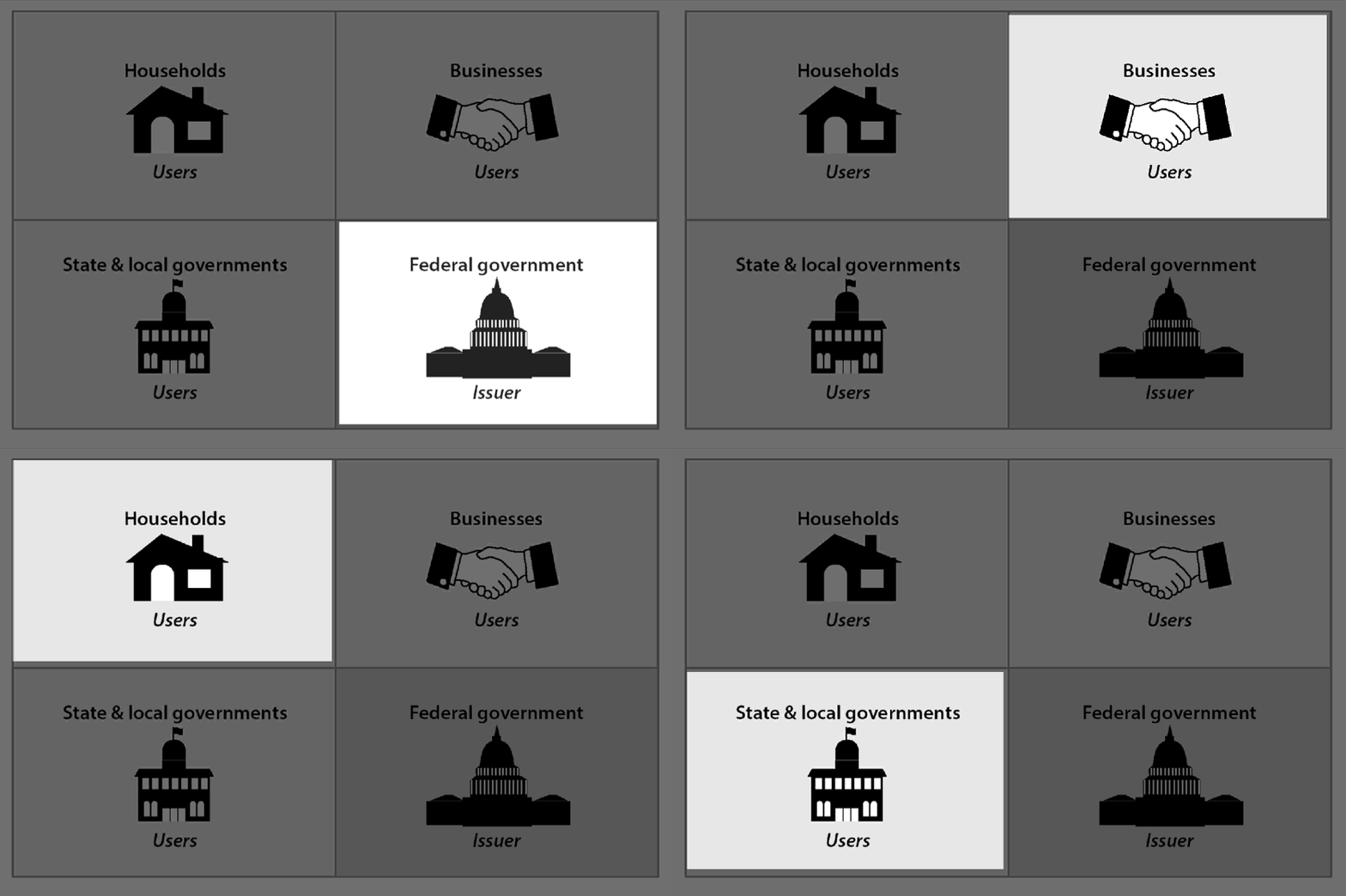
みなさんと同じように、私もテレビで『セサミストリート』を観て育った。この幼児番組が伸ばそうとしていたスキルのひとつが、さまざまなモノを共通点や違いに応じて分類する力だ。「ひとつだけ仲間はずれがあるよ」という歌でコーナーが始まり、画面に四つのマスが現れる。バナナ、オレンジ、パイナップル、サンドイッチ。「サンドイッチ! サンドイッチだよ!」と、姉と私は口々に叫ぶ。大人になった今でも、テレビで「国の財政は家計と同じだ」という発言を聞くと、「違うよ!」と叫んでしまう。 「政府は財政をきちんと管理しなければならない」といった発言は、この第一の神話に類するものだ。これは国の財政は一般家庭のそれと同じ発想で管理しなければならない、という誤った認識に基づいている。本書で見ていく神話のなかでも、間違いなく一番有害だ。
4. MMTは通貨主権を「ある」か「ない」かの二項対立とは見ていない。主権が強い国もあれば弱い国もある、という幅のある概念ととらえるべきだ。米ドルは世界金融システムの中核(準備通貨)であるため、アメリカは比類ない通貨主権を持つ。しかし日本、イギリス、オーストラリアなども強い通貨主権がある。人民元の価値を管理する中国さえも相当な主権がある。
https://nam-students.blogspot.com/2019/08/mmt-euro-and-greatest-prediction-of.html

(通貨同盟)
←為替固定的 為替制度·通貨制度 為替変動的→
カレンシーボード制 固定バンド制 管理変動相場制
https://blogger.googleusercontent.com/img/b/R29vZ2xl/AVvXsEhCe0h5d0vMWEd_jAg746yrgnOyPXatCdu7IqqLxygeMAmAKGlxAFCHp3SqCQcDhuxt5CK72WGKnGDoK_kbFlMdlspiDmNdSvSK-mdbaKG85ylmohlRWSl84_zhyphenhyphenvSXIZUizsV7EDqxzCE/s1600/IMG_5436.PNG


ケルトン 2020
返信削除#1
みなさんと同じように、私もテレビで『セサミストリート』を観て育った。この幼児番組が伸ばそうとしていたスキルのひとつが、さまざまなモノを共通点や違いに応じて分類する力だ。「ひとつだけ仲間はずれがあるよ」という歌でコーナーが始まり、画面に四つのマスが現れる。バナナ、オレンジ、パイナップル、サンドイッチ。「サンドイッチ! サンドイッチだよ!」と、姉と私は口々に叫ぶ。大人になった今でも、テレビで「国の財政は家計と同じだ」という発言を聞くと、「違うよ!」と叫んでしまう。 「政府は財政をきちんと管理しなければならない」といった発言は、この第一の神話に類するものだ。これは国の財政は一般家庭のそれと同じ発想で管理しなければならない、という誤った認識に基づいている。本書で見ていく神話のなかでも、間違いなく一番有害だ。 有権者の共感を得られるような単純なストーリーを求める政治家は、この神話が大好きだ。国の財政を、誰もが知っている家計になぞらえる。これほどわかりやすい話もない。支出を自分の収入に見合ったものに抑えるのが重要なことは、誰でもわかっている。だから国の財政を、家計のやりくりを彷彿とさせるようなかたちで説明されると腑に落ちる。このようなストーリーは、庶民的で身近な感じがする。 みなさんも一度は耳にしたことがあるだろう。選挙広告や各地の政治集会で、政治家は小さな会社の経営者や仕事熱心なウエイトレスを、責任ある財政管理の模範例として取り上げる。台所のテーブルに座って家計簿の帳尻を合わせる苦しみを追体験し、庶民の厳しい生活に共感してみせる。それから財政赤字に話を移し、民衆の怒りを煽る。政府が無責任な支出ばかりしているから、財政均衡はいつまでたっても実現しないのだ、と。 どこかで聞いたような話なので、私たちはこのようなストーリーに納得しやすい。身の丈にあった暮らしをし、支出が収入を上回らないように収支を管理しなければならない。将来に備えて貯蓄をしなければならないし、借金をするときは特に慎重になる必要がある。借金が膨らみすぎれば破産、差し押さえ、場合によっては刑務所に入ることもある。それが常識だ。 個人も破産しうること、家電量販店のラジオシャックや大手玩具チェーンのトイザラスといった有名企業でも支払いが滞ると破産することを、誰もがわかっている。自治体(デトロイト市)や州政府(カンザス州)も、支出をまかなうだけの資金を調達できなければ、とんでもないことになる。国中の家族がこうした現実を理解している。しかし理解していないこともある。政府は自分たちとはどこが違うのか、だ。 それを説明するために、MMTの核となる主張を見ていこう。 通貨の発行者と利用者 わが国の通貨である米ドルを発行するのはアメリカ政府であり、他の誰も発行できない(少なくとも合法的には)。MMTはこのシンプルで議論の余地のない事実に立脚している。財務省とその財政代理機関である連邦準備銀行の両方が、米ドルを発行する権限を有している。ここにはみなさんのポケットに入っているような硬貨の鋳造、財布の中にある紙幣の印刷、さらには銀行のバランスシート(貸借対照表)上に電子的に存在するだけの、準備預金と呼ばれるデジタル通貨の発行が含まれる。硬貨は財務省が、それ以外は連邦準備銀行がつくる。この事実の重大性が理解できれば、財政赤字にまつわる神話の多くを見破ることができるはずだ。 これまでじっくり考えたことはなかったかもしれないが、みなさんもすでにこの基本的事実を直観的に理解しているのではないか。考えてみてほしい。あなたは米ドルをつくれるだろうか。もちろん稼ぐことはできるが、製造できるか。地下室に高性能の彫刻設備を設置して、米ドルによく似たものはつくれるかもしれない。あるいは連邦準備銀行のコンピュータをハッキングして、デジタルドルを発行できるかもしれない。だが通貨の偽造が発覚すれば、刑務所にぶち込まれることはみなわかっている。それは合衆国憲法が、通貨発行の「独占権」を政府に認めているからだ(1)。セントルイス連銀の表現を借りれば、政府は「ドルの唯一の製造者」だ(2)。 言うまでもないが「独占」という言葉は、ある製品の供給者が一社しかない市場を指す。政府は米ドルの「唯一」の製造者なので、ドルの独占的供給者と考えられる。ドルを追加発行する(期限のない)特別な著作権を与えられているようなものだ。建国の父らが定めた独占的権限である。家庭や企業、州や自治体政府にはない能力だ。政府だけが通貨の「発行者」で、それ以外はみな「利用者」に過ぎない。きわめて慎重に行使すべき、特別な力である。 『セサミストリート』に話を戻すと、図1のなかでどれが仲間はずれか、すぐにわかるだろう。 通貨の「利用者」と「発行者」の区別は、MMTの要だ。これから見ていくとおり、それは医療、気候変動、社会保障制度、国際貿易や格差といった現代の最も重要な政策議論に重大な意味を持つ。 通貨発行者に与えられる特別な力を存分に活かすには、通貨発行の独占権を付与するだけでは足りない。通貨を限りある資産(金や他国の通貨など)と交換すると約束しないことも重要だ。さらに自国通貨建てではない借り入れも避ける必要がある(3)。ある国が独自の不換通貨を発行し、自国通貨建ての借り入れしかしなければ、通貨主権を確立したことになる(4)。通貨主権を手にした国は、家計と同じように収支を管理する必要はなくなる。通貨発行能力を活かして、完全雇用(労働の意思と能力のあるすべての人が働いている状態)を維持するための政策を追求することができる。 MMTはアメリカ以外の国にも当てはまるのか、と聞かれることがある。答えはイエスだ。国際的な準備通貨(各国の政府や金融当局が対外決済のために保有している通貨)である米ドルは特別視されるが、通貨制度を国民のために役立てる力は他国にもある。だからアメリカ以外の読者も、本書のメッセージが自分や自国には無関係だと思わないでほしい。それどころかMMTはアメリカ、日本、イギリス、オーストラリア、カナダをはじめ、高いレベルの通貨主権を持つあらゆる国において、政策の選択肢を理解し、改善するのに役立つ。さらに第五章で見ていくとおり、MMTはパナマ、チュニジア、ギリシャ、ベネズエラなど、通貨主権がない、あるいは限られた国にも有益な知見を提示する。
. 第一章 家計と比べない
返信削除1. アメリカ合衆国憲法第1章8条5項www.usconstitution.net/xconst_A1Sec8.html.
2. 他の主体も金融商品をつくることはできる。たとえば銀行の融資によって銀行預金が創造され、それが政府通貨のような機能を果たすケースもある。しかし通貨そのものを製造できるのはアメリカ財務省とFRBだけだ。Brett W. Fawley and Luciana Juvenal,Why Health Care Matters and the Current Debt Does Not, Federal Reserve Bank of St. Louis, October 1, 2011, www.stlouisfed.org/publications/regional-economist/october-2011/why-health-care-matters-and-the-current-debt-does-not.
3. 多少の対外債務があったとしても、国家の通貨主権が損なわれることはない。
4. MMTは通貨主権を「ある」か「ない」かの二項対立とは見ていない。主権が強い国もあれば弱い国もある、という幅のある概念ととらえるべきだ。米ドルは世界金融システムの中核(準備通貨)であるため、アメリカは比類ない通貨主権を持つ。しかし日本、イギリス、オーストラリアなども強い通貨主権がある。人民元の価値を管理する中国さえも相当な主権がある。
797 名無しさん@お腹いっぱい。[sage] 2021/01/06(水) 15:30:57.47 ID:JBz+WtUr
返信削除《通貨の「利用者」と「発行者」の区別は、MMTの要だ。
これから見ていくとおり、それは医療、気候変動、社会保障制度、
国際貿易や格差といった現代の最も重要な政策議論に重大な意味を持つ。》
ケルトン 2019#1
https://i.gyazo.com/9dcd79380e0d21ad84f985b22b75a2d4.gif
返信削除(Adobe PDF)
ritsumeikeizai.koj.jp/koj_pdfs/68203.pdf
-キャッシュ
Modern Monetary Theory の概説 - 立命館大学経済学部 論文検索
Ⅰ.租税貨幣論(Tax-Driven Monetary View). Ⅱ.機能的 ... し,何かしらの形での政府への支払い手段としての需要)が通貨を駆動するという動きは,貨幣史的 ... が Spending First と述べるのはまさにこの点があるからだ。 ... 2) Wray, L. R., 2011, MMP BLOG #8 : TAXES DRIVE MONEY, New Economic Perspectives,.
note.com > note > 望月慎(望月夜)
Modern Monetary Theoryの概説(note版)|望月慎(望月夜 ...
2019/8/5 -今回は、立命館大学経済学会セミナーにて、望月夜名義で研究報告させていただいた、『Modern Monetary Theoryの概説』について、noteの形で ... 租税貨幣論(Tax-Driven Monetary View) ... L. Randall Wray, “MMP BLOG #8 : TAXES DRIVE MONEY” ... 租税(あるいは、何かしらの形での政府への支払い手段としての需要)が通貨を駆動するという動きは、貨幣史的にはごく一般的なものです。 ... MMTが "Spending First" と述べるのはまさにこの点があるからです。
こちらもセサミストリートの話から
返信削除3:30~
2020/06/16 Stephanie Kelton: Debunking the Deficit Myth | Town Hall Seattle
https://youtu.be/a9pAPIUYXxQ
https://love-and-theft-2014.blogspot.com/2021/01/20200616-stephanie-kelton-debunking.html
返信削除luminous woman
@_luminous_woman
@zaigen_lab @Moka_Wisdom @yukkuliberalism 体脂肪率が高いからと赤ん坊にダイエットさせて来たようなものです。背が伸びれば問題ないのに。
《…名目GDPに比した我が国政府債務の巨額さが、むしろ一九九七年以降の緊縮財政の結果としてもたらされた…》
別冊クライテリオン2018/12
名目成長率×税収弾性値>一般歳出増加率
が守られればいい pic.twitter.com/OG2kEFcBcA
2021/02/10 2:41
Twitterアプリをダウンロード
https://twitter.com/_luminous_woman/status/1359195766418382856?s=21
iPhoneから送信