2021年1月12日火曜日

ConnectTheDotsUSA.com


国家(セサミストリート)                   GND

/シンク/天秤@@           JGP

ケルトンカーブ       完全雇用

貨幣ピラミッド   ╋           ビーバー

部門別会計分析   

信用貨幣論

歴史           フクロウ


参考:


ConnectTheDotsUSA.com


Presidential Lecture Series: Stephanie Kelton
2018/10/15
ケルトン 1
http://nam-students.blogspot.com/2019/03/httpsthenextrecession.html x
Top 10 Things Stephanie Kelton Wants You to Know About the Economy

L. Randall Wray - Modern Money Theory for Beginners 2018/04/06


2019/01/13 — ConnectTheDotsUSA.com. Military/. Defense. 15.0% = $622 Billion ... Theory (MMT) ak


?


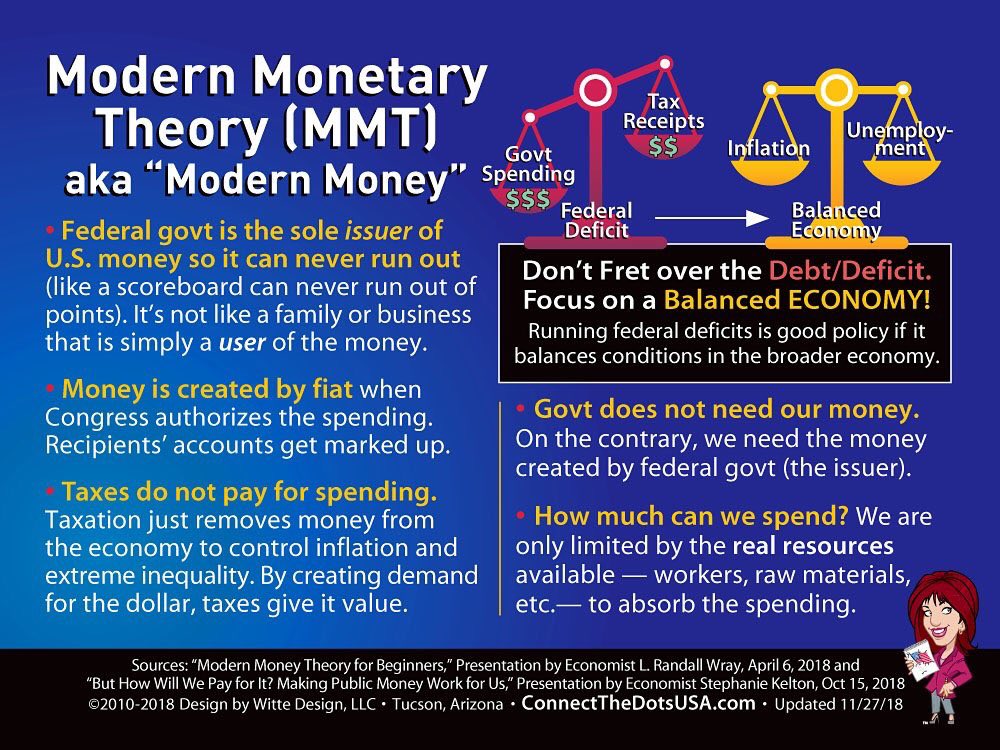
Modern Monetary

Theory (MMT)

Таx

Receipts

Inflation

Unemploy-

ment

Govt

aka "Modern Money" Spending

$$$

Federal

Deficit

Balanced

Economy

Federal govt is the sole issuer of

U.S. money so it can never run out

(like a scoreboard can never run out of

points). It's not like a family or business

that is simply a user of the money.

Don't Fret over the Debt/Deficit.

Focus on a Balanced ECONOMY!

Running federal deficits is good policy if it

balances conditions in the broader economy.

Money is created by fiat when

Congress authorizes the spending.

Recipients' accounts get marked up.

Govt does not need our money.

On the contrary, we need the money

created by federal govt (the issuer).

Taxes do not pay for spending.

Taxation just removes money from

the economy to control inflation and

extreme inequality. By creating demand

for the dollar, taxes give it value.

How much can we spend? We are

only limited by the real resources

available – workers, raw materials,

etc.- to absorb the spending.

Sources: "Modern Money Theory for Beginners," Presentation by Economist L. Randall Wray, April 6, 2018 and

"But How Will We Pay for It? Making Public Money Work for Us," Presentation by Economist Stephanie Kelton, Oct 15, 2018

©2010-2018 Design by Witte Design, LLC • Tucson, Arizona • ConnectTheDotsUSA.com · Updated 11/27/18


https://braveneweurope.com/heikki-patomaki-modern-monetary-theory-populist-rhetoric-or-a-credible-alternative

Heikki Patomäki: Modern Monetary Theory – Populist Rhetoric or a Credible Alternative?
In a short blog, it is not possible to properly discuss the economic theory of MMT. MMT can be interpreted as a theory that presents an alternative way of financing Keynesian economic policies, and in particular deficits (originally this approach was developed by Abba Lerner already in the 1940s). MMT focuses on stock-flow consistent models of financial flows in a capitalist market economy. It is not a theory of the development of the means of production, or of countries’ path dependent developments in the context of global economic processes, or, more generally, of the historical dynamics of capitalism. I think MMT’s view of money and the nature of money is more adequate than the neoclassical ahistorical notion of the development of barter and exchange economy. Yet not all money is debt. Money may evolve also partly independent of the state and its taxation. The MMT interpretation of the history of money is further limited by a certain amount of hindsight and by reading our contemporary categories into the past, where they did not exist.In addition, as MMT developers openly acknowledge, the positioning of a country in the division of labour and processes of the world economy largely determines the importance of its money issuance. From this point of view, the United States is a special case because the dollar is the world’s main reserve currency and preferred medium of exchange. There seems to have been enough demand for dollars for any practical purpose. But is the US an example of better? From the perspective of democratic left, it can be difficult to justify the United States as an ideally “monetarily sovereign” state whose economic policy is based on the rational promotion of the interests of the “people” rather than the elites. The hope of MMT supporters must thus be placed on the future prospect of an MMT supporter leading US economic policy and trying a different kind of economic policy. Still, Bernie Sanders, for example, pursues seemingly “utopian” projects such as universal healthcare and free higher education that remain, to a large degree, a part of everyday lives in a country such as Finland, despite decades of neoliberalization. 

現代貨幣
理論(MMT)
Таx
領収書
インフレーション
アンジョブ
メンター
政府
別名「現代のお金」の使い方
$$$
フェデラル
赤字
バランスのとれた
経済
連邦政府が唯一の発行者です。
アメリカのお金は尽きることがないように
碁盤の目は尽きることがない
ポイント)になります。家族や会社のような
というのは、単にお金の使い手であるということです。
借金・赤字のことを心配しないでください。
バランスのとれた経済に焦点を当てよう
連邦政府の赤字を実行することは、もしそれが
貨幣は、経済全体のバランスをとるものです。
貨幣は、以下の場合に不換紙幣によって作られる。
議会が支出を承認し
受給者の口座には印がつく
政府は私たちのお金を必要としていない。
それどころか、私たちはお金を必要としています。
連邦政府(発行者)が作成したもの。
税金は支出の支払いには使わない。
課税はただお金を
インフレを抑制するための経済と
極端な不平等 需要を生み出すことで
ドルには税金が価値を与える
私たちはどれだけ使えるのでしょうか?私たちは
実質資源次第
利用可能 - 労働者、原材料。
等、支出を吸収するため。
ソースとなる。"初心者のための現代マネー理論 "エコノミストL・ランドール・レイ氏講演会(2018年4月6日)と
"しかし、どうやってお金を払うのか?Making Public Money Work for Us" エコノミストのステファニー・ケルトン氏によるプレゼンテーション、2018年10月15日
©2010-2018 Design by Witte Design, LLC - ツーソン、アリゾナ州 - ConnectTheDotsUSA.com - 更新 11/27/18

https://braveneweurope.com/heikki-patomaki-modern-monetary-theory-populist-rhetoric-or-a-credible-alternative

ヘイッキ・パトマキ 現代貨幣論-ポピュリストのレトリックか、それとも信憑性のある代替案か?
2020年1月1日

短いブログでは、MMTの経済理論を適切に論じることはできません。MMTは、ケインズ的な経済政策、特に赤字の資金調達の代替方法を提示した理論と解釈することができます(もともとこのアプローチは、1940年代にすでにアッバ・ラーナーによって開発されていました)。MMTは、資本主義市場経済における金融フローのストックフロー整合性モデルに焦点を当てています。それは、生産手段の発展や、グローバルな経済プロセスの文脈における各国の経路依存的な発展の理論ではなく、より一般的には、資本主義の歴史的ダイナミクスの理論でもありません。私は、物々交換経済の発展という新古典主義的な非歴史的概念よりも、MMTの貨幣観と貨幣の性質の方が適切だと考えている。しかし、すべての貨幣が負債であるわけではない。貨幣は、国家とその課税から部分的に独立して発展する可能性もある。また、MMTの開発者が公然と認めているように、世界経済の分業やプロセスにおける国の位置づけが、その国の貨幣発行の重要性を大きく左右する。この観点から見ると、ドルは世界の主要な基軸通貨であり、好まれる為替媒体であるため、米国は特別なケースである。ドルは世界の主要基軸通貨であり、好まれる交換媒体であるからである。しかし、米国はより良い例なのだろうか。民主主義左翼の視点から見れば、エリートではなく「人民」の利益を合理的に推進することを経済政策の基本とする理想的な「貨幣主権国家」としての米国を正当化することは難しいかもしれない。したがって、国民党支持者の希望は、将来、国民党支持者が米国の経済政策をリードし、別の経済政策を試みるという展望に置かれなければならない。しかし、例えばバーニー・サンダースは、フィンランドのような国では、新自由主義化が何十年も続いているにもかかわらず、国民皆保険制度や無料の高等教育など、一見「ユートピア的」なプロジェクトを追求しています。

Modern Monetary

Theory (MMT)

Таx

Receipts

Inflation

Unemploy-

ment

Govt

aka "Modern Money" Spending

$$$

Federal

Deficit

Balanced

Economy

Federal govt is the sole issuer of

U.S. money so it can never run out

(like a scoreboard can never run out of

points). It's not like a family or business

that is simply a user of the money.

Don't Fret over the Debt/Deficit.

Focus on a Balanced ECONOMY!

Running federal deficits is good policy if it

balances conditions in the broader economy.

Money is created by fiat when

Congress authorizes the spending.

Recipients' accounts get marked up.

Govt does not need our money.

On the contrary, we need the money

created by federal govt (the issuer).

Taxes do not pay for spending.

Taxation just removes money from

the economy to control inflation and

extreme inequality. By creating demand

for the dollar, taxes give it value.

How much can we spend? We are

only limited by the real resources

available – workers, raw materials,

etc.- to absorb the spending.

Sources: "Modern Money Theory for Beginners," Presentation by Economist L. Randall Wray, April 6, 2018 and

"But How Will We Pay for It? Making Public Money Work for Us," Presentation by Economist Stephanie Kelton, Oct 15, 2018

©2010-2018 Design by Witte Design, LLC • Tucson, Arizona • ConnectTheDotsUSA.com · Updated 11/27/18


https://braveneweurope.com/heikki-patomaki-modern-monetary-theory-populist-rhetoric-or-a-credible-alternative

Heikki Patomäki: Modern Monetary Theory – Populist Rhetoric or a Credible Alternative?

In a short blog, it is not possible to properly discuss the economic theory of MMT. MMT can be interpreted as a theory that presents an alternative way of financing Keynesian economic policies, and in particular deficits (originally this approach was developed by Abba Lerner already in the 1940s). MMT focuses on stock-flow consistent models of financial flows in a capitalist market economy. It is not a theory of the development of the means of production, or of countries' path dependent developments in the context of global economic processes, or, more generally, of the historical dynamics of capitalism. I think MMT's view of money and the nature of money is more adequate than the neoclassical ahistorical notion of the development of barter and exchange economy. Yet not all money is debt. Money may evolve also partly independent of the state and its taxation. The MMT interpretation of the history of money is further limited by a certain amount of hindsight and by reading our contemporary categories into the past, where they did not exist.In addition, as MMT developers openly acknowledge, the positioning of a country in the division of labour and processes of the world economy largely determines the importance of its money issuance. From this point of view, the United States is a special case because the dollar is the world's main reserve currency and preferred medium of exchange. There seems to have been enough demand for dollars for any practical purpose. But is the US an example of better? From the perspective of democratic left, it can be difficult to justify the United States as an ideally "monetarily sovereign" state whose economic policy is based on the rational promotion of the interests of the "people" rather than the elites. The hope of MMT supporters must thus be placed on the future prospect of an MMT supporter leading US economic policy and trying a different kind of economic policy. Still, Bernie Sanders, for example, pursues seemingly "utopian" projects such as universal healthcare and free higher education that remain, to a large degree, a part of everyday lives in a country such as Finland, despite decades of neoliberalization. 


iPhoneから送信


ケルトン 2020#2
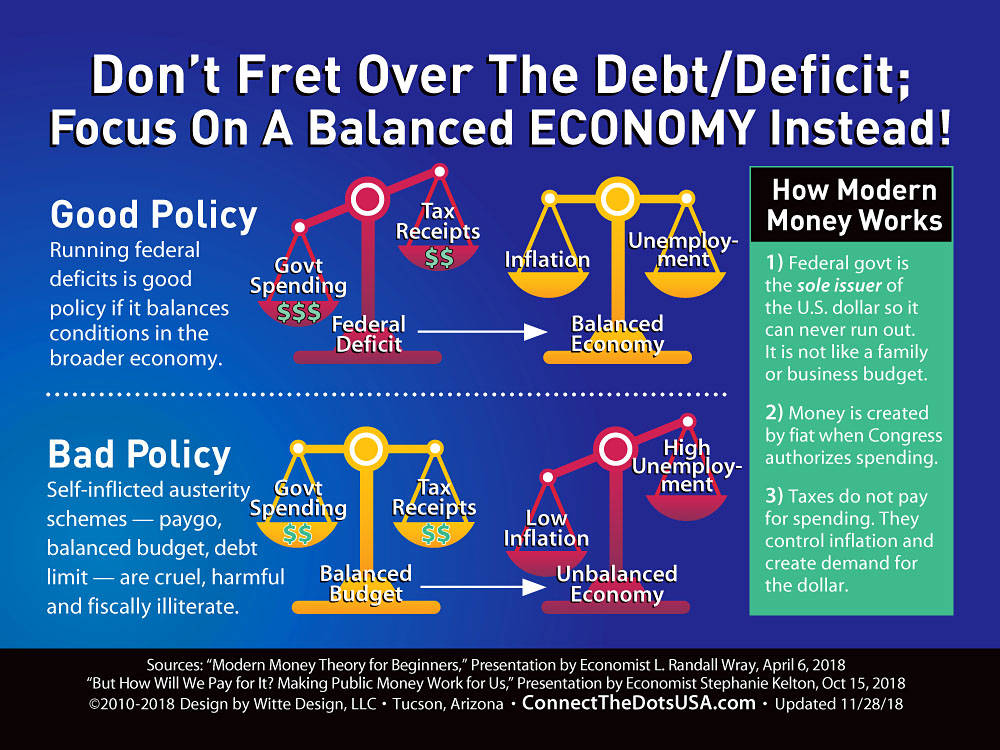
責任ある財政運営とは何を意味するのか。それまでの常識は根本から覆された。私たちは政府が税収に合わせて支出を抑えられないことを責めるのではなく、経済をバランスのとれた状況に導くものであればどのような財政収支も受け入れるべきだ。つまり図2の左側に示した予算によって、右側に示したバランスのとれた経済状況が実現できるなら、財政政策を修正する必要はまったくなく、財政は均衡しているとみなすべきである。

0 件のコメント:

コメントを投稿