2021年5月31日月曜日

How Inflation Became the Gasbags’ Favorite Moral Panic – Mother Jones

How Inflation Became the Gasbags' Favorite Moral Panic – Mother Jones

How Inflation Became the Gasbags' Favorite Moral Panic

The hidden meanings of hard-money politics

Inflation
Let our journalists help you make sense of the noise: Subscribe to the Mother Jones Daily newsletter and get a recap of news that matters.

Well into the 19th century, the word "inflation" referred mostly to bodily phenomena. It meant an enlargement of hot air in your stomach, a cancerous growth, a swollen organ, an imminent fart. Samuel Johnson's dictionary from 1755 called it "the state of being swelled with wind."

Today, inflation tends to be used in an economic context, denoting an increase in the price of goods and the resulting loss in purchasing power. Five percent inflation means that $1,000 in June 2021 can buy you 95 books; before, it got you 100. Yet the word has not drifted so far from its roots. It's still described as an illness in our body economic, a toxic byproduct of gluttonous government spending and bloated wages for workers. The response from some quarters to President Joe Biden's fiscal policy proposals, like his massive COVID relief packages and the $2 trillion infrastructure bill, has sounded like a physician's diagnosis. The Economist wondered if the American economy would grow so fast it'd risk running a "fever"; policymakers worried the economy is "overheating." Out of such metaphors are inflation hysterias made.

Inflation in an economic sense took root in the lexicon after the Civil War, when gold bugs and "inflationists" fought over whether to put more money in circulation. A party arose to fight for inflation: the Greenbacks (named for the new currency), who joined with labor interests. On the other side were business interests—"sound money" men who saw inflation as a personal affront. One famous tract said paper money was "clamored for as a new dram is called for by a drunkard." Andrew Dickson White, a founder of Cornell University, compared the loss of "thrift" from paper currency adoption as "a disease more permanently injurious to a nation than war, pestilence, or famine."

For Michael O'Malley, a professor at George Mason University, the 19th-century arguments rhyme with Reagan-era demagoguery about "welfare queens driving Cadillacs." And they were used to similar effect. As W.E.B. Du Bois explained, Reconstruction fell amid charges of corruption from former Confederate landholders, little more than veiled complaints that "poor men were ruling and taxing rich men." Said O'Malley: "The alleged corruption of greenbacks is connected to both paper money—or excessive debt—and racial equality."

It was the project of 20th-century reactionaries to obscure the distributive struggles contained within inflation. In 1963, Milton Friedman and Anna Jacobson Schwartz published their tome, A Monetary History of the United States, 1867–1960. They found that each depression had coincided with a mismanaged supply of money: We'd inflated wrongly sometimes and deflated wrongly other times. In doing so, Friedman and Schwartz "posed inflation as an entirely technical matter," said Ellen Frank, a lecturer in economics at the University of Massachusetts, Boston. A just-so story emerged about how low unemployment and higher wages inevitably result in inflation, a framing in which unemployment has a "natural rate" but inflation is always an ill to be eradicated. As one conservative joked before Congress, even God wants inflation to be zero.

Thus the austerity of the 1970s and beyond was offered as a technocratic fix. Doctorates got to play doctor and prescribe a hard medicine for America's indigestion. Paul Volcker, installed as chair of the Federal Reserve by Jimmy Carter, hiked up interest rates, allowing bankers to make a killing and stalling the economy. The harms were an afterthought, like the side effects enumerated at the end of a pharmaceutical commercial: lower wages, higher unemployment, less spending on the welfare state. Examples of inflation run amok—Weimar Germany, Hungary after World War II, Zimbabwe in the late 2000s—underscored the philosophy. Forget the German war debts and the 1970s oil shocks. Forget that there is no strong agreement among economists about what causes inflation. Do you want to become a failed state because of a higher minimum wage?

Inflation is money losing value; it is the wealth of the rich eroding. Yes, it can spiral out of control. But it also eats away at debt—for students now, for farmers in the late 1800s, for our country during World War II. Yet these aims are always coded as fake or greedy. Beryl Sprinkel, an economist in the Reagan Treasury department, described inflation as "stuffing a kid with too much food" to the point of being "sick." When Senator Mitt Romney hit back against President Obama's quantitative easing—a post-2008 recession measure to increase the money supply—he warned it was an "artificial" boost and a "sugar high."

"We regularly use the metaphor of illness to describe the problem of inflation," the economist Albert Heilbroner Jr. lamented in 1979. It had become "the great besetting ailment of Western society" and the "global malady of capitalism."

We are still living with the wreckage caused by the old consensus. "We've lost the industrial heartland of the country," said the economist James Galbraith, a longtime enemy of inflation hawks. "That's what we've lost." It was never just about the money. Inflation hysteria is always class war of one kind or another, waged on behalf of the asset-holders against perceived forces of "social destabilization," O'Malley said. "It's about the wrong kind of people getting too much stuff."

FACT:

Mother Jones was founded as a nonprofit in 1976 because we knew corporations and the wealthy wouldn't fund the type of hard-hitting journalism we set out to do.

Today, reader support makes up about two-thirds of our budget, allows us to dig deep on stories that matter, and lets us keep our reporting free for everyone. If you value what you get from Mother Jones, please join us with a tax-deductible donation today so we can keep on doing the type of journalism 2021 demands.

payment methods

失業率 Stephanie Keltonさんのツイート


1 Mr. Rutledge and JEC Chairman Henry Reuss promptly had the following exchange:

Representative REUSS. Well, now, to examine that, is zero the optimal unemployment rate too?

Mr. RUTLEDGE. No, I would not say that.

Representative REUSS. Did God switch signals on that?

Mr. RUTLEDGE. No. God never made a target for unemployment as far as I know, in the St. James version anyway.


ステファニー・ケルトン

ステファニー・ケルトン(@StephanieKelton


本当の宝石は脚注の中にある。😂 3/3

h/t Jamie Galbraith (元の作品に引用されています) via e-mail pic.twitter.com/umJv5rL9Q5


2021/05/31 23:32


https://twitter.com/stephaniekelton/status/1399373311004532741?s=21


1 ラトレッジ氏とJECのヘンリー・ロイス議長は、早速次のようなやり取りをした。

REUSS代表。さて、それを検証すると、最適な失業率もゼロなのでしょうか?

ラトレッジ氏 いいえ、そうは言いません。

リューシュ代表。神はそれで信号を切り替えたのか?

RUTLEDGE氏。私の知る限り、セントジェームズ版では、神は失業者をターゲットにしたことはありませんでした。


西田議員の闘い

高井たかし 2021年5月21日厚生労働委員会【コロナ禍でMMTに賛同する経済学者が急増】

高井たかし

https://twitter.com/t_takai/status/1399294433992994816?s=21


2021年5月21日厚生労働委員会【コロナ禍でMMTに賛同する経済学者が急増】
高木たかし


https://twitter.com/t_takai/status/1399294433992994816?s=21


二宮金次郎 NHK 英雄たちの選択 2021/06/02

https://twitter.com/_luminous_woman/status/1399232789778604035?s=21

参考:


2021年5月30日日曜日

2021/05/28 Zachary D. Carter Wrestling With the New Deal

Wrestling With the New Deal

Wrestling With the New Deal

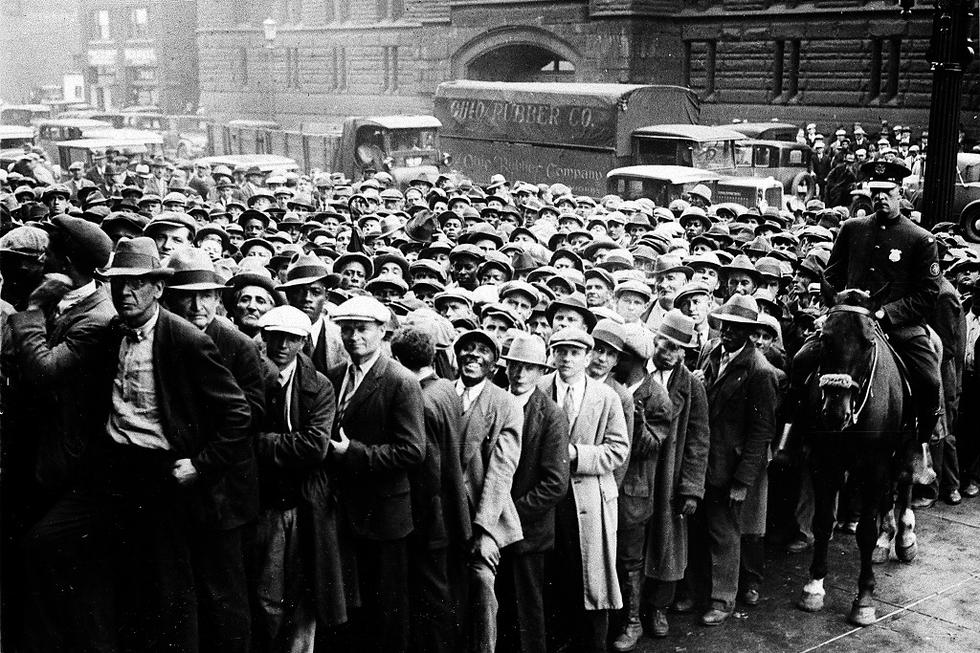
The programs Roosevelt put together may not have met a Platonic ideal of modern progress, but they saved American democracy itself.
MJ21 Carter1.jpeg

AP Photo

Why the New Deal Matters

By Eric Rauchway

Yale University Press


In 2014, an up-and-coming writer named Ta-Nehisi Coates made a landmark case for reparations in The Atlantic, which took aim at, among other targets, one of the most revered figures in the liberal pantheon: Franklin Delano Roosevelt. Detailing the failures of New Deal housing policy for Black America, Coates told readers that "Roosevelt's New Deal, much like the democracy that produced it, rested on the foundation of Jim Crow."

Cardi B was nonplussed. "I love Franklin Delano Roosevelt," the multi-platinum rapper told GQ four years later. "He helped us get over the Depression, all while he was in a wheelchair … if it wasn't for him, old people wouldn't even get Social Security."

MJ21 Carter cover.png

Intellectuals broadly affiliated with the American left have been fighting a quiet culture war over FDR for nearly a decade. Sometimes the battle is between the left and the center, at other times among vying ultraleft fringes. Bernie Sanders admires FDR, even as some of the Vermont senator's most ardent supporters denounce his hero as a capitalist sellout. Otis Rolley of the Rockefeller Foundation claims the New Deal made racial inequality worse; Marxist scholar Adolph Reed Jr. dismisses such reasoning as specious. Almost every month, a major progressive magazine publishes a take on FDR, and a flurry of responses ensue.

The waters have calmed since President Joe Biden redesigned the Oval Office by placing a massive portrait of FDR above the Resolute Desk. For the next few years at least, Roosevelt will remain Officially Good. Opinion writers are now devoting their energies to explaining the various ways Biden can prove himself as excellent and extraordinary as FDR. But in time, intellectuals will get back to squabbling, and Biden's admiration for the 32nd president will itself become narrative ammunition for a new slate of arguments.

Fighting over famous dead people is just what intellectuals do, of course. But the hold that FDR maintains on American public discourse is extraordinary, even for an American president. The left does not wage magazine wars with itself over Abraham Lincoln or Martin Van Buren.

More from Zachary D. Carter

American intellectuals obsess over FDR because, as historian Eric Rauchway demonstrates in his admirable new book Why the New Deal Matters, he saved the American project itself, for better and for worse. The Great Depression that Roosevelt ended was not merely a collapse of gross domestic product and employment figures; it was a full-blown political crisis that toppled regimes around the world and called into question the very legitimacy of democratic governance. Under FDR, Rauchway writes, "democracy in the United States, flawed and compromised as it was, proved it could emerge from a severe crisis not only intact but stronger." When we fight over the New Deal, we are really arguing about the very meaning of America.

WHY THE NEW DEAL MATTERS is Rauchway's third book on the subject, and at this point in his career as a scholar, he no longer needs to argue for the New Deal's overall economic effectiveness. But a few numbers culled from his earlier work can aid the uninitiated. In the first three full years of FDR's presidency, GDP grew by 10.8 percent, 8.9 percent, and 12.9 percent, respectively, a record that has been matched only once in subsequent decades—by FDR, during World War II. This extraordinary growth was not a statistical quirk. Rauchway notes that the unemployment rate fell from over 20 percent to less than 10 percent as 6.6 million people went back to work.

FDR's success with unemployment was a matter of mathematical dispute for years due to the ideological eccentricities of the official statisticians, who did not count those employed by the federal government as employed. And FDR's war on unemployment did suffer a setback in 1936 when he changed course and decided to try and balance the federal budget. When that backfired, deficits were back, and by the time America had committed to entering World War II, domestic unemployment had essentially ceased to exist. FDR was re-elected again, and again, and again for a reason.

The New Deal worked. The questions that remain for serious minds today are how it worked and who it worked for.

Rauchway seeks to answer these inquiries with deep dives into specific programs, a strategy that allows him to examine the way different regions and communities understood the issues posed by the New Deal at the time. This is a refreshing change of pace for anyone familiar with the comprehensive declarations of justice and injustice that dominate the New Deal Take Complex (The New Deal Was Racist/No, the New Deal Was Not Racist/It's Time to Stop Talking About the New Deal).

In the process, even seasoned scholars will find much to learn. Rauchway's discussion of the "Indian New Deal" is particularly insightful. FDR's Bureau of Indian Affairs canceled debts owed by Indian nations to the federal government, subsidized Indian cattle ranches, and spent millions building hospitals, schools, and sewage treatment facilities for local Indian governments, employing members of relevant tribes to perform the work.

Intellectuals broadly affiliated with the American left have been fighting a quiet culture war over FDR for nearly a decade.

These policies were popular. But New Dealers also often ignored input from tribal leaders about the way particular policies would work. As a result, one of the most wrongheaded New Deal agricultural programs—the mass slaughter of livestock—proved uniquely disruptive to Indian nations.

The New Deal succeeded in raising agricultural prices for distressed farmers and put an end to decades of structural financial strain, an achievement born of both macroeconomic stabilization and the implementation of sector-specific price policy. Killing livestock was part of this program; by reducing supply, prices would rise, making it more profitable to raise sheep, goats, pigs, or whatever else.

The policy was, at best, deeply inhumane. But as Rauchway details, for Navajo farmers the loss of goats, sheep, and other small herding animals "destroyed a traditional source of subsistence … leaving some families hungry and even more desperate." The slaughter program forced many ranchers and farmers into wage labor, where despite successful New Deal efforts to create more employment, Navajo workers could expect to earn much less than white workers performing similar tasks.

The New Dealer responsible for these outrages, Commissioner of Indian Affairs John Collier, was also, paradoxically, a staunch defender of Native American political autonomy. After hearing demands at a conference of Indian activists in Washington, D.C., in 1934 to halt the privatization of Indian lands and return them, to whatever extent possible, to tribal authority, Collier put the policy into practice in federal legislation.

A majority of American Indians and American Indian tribes supported Collier's law, but the enthusiasm was far from uniform. Joe Irving of the Crow denounced the program's end to privatization as "socialist," while Navajo leader Jacob Morgan argued it would hamper Indian assimilation into American society. The Indian New Deal, as it was called, was popular with American Indians. It was also tremendously controversial.

Not every New Deal program is so riddled with nuanced conflict. Coates, for instance, is unambiguously correct to note that the New Deal's affordable-housing provisions reinforced segregation. The Federal Housing Administration and the Home Owners Loan Corporation declared Black neighborhoods a serious credit risk, relied on racist banks to issue new government-backed low-interest mortgages to low-income home buyers, and required loans in white neighborhoods to include "restrictive covenants" banning the sale of the home to a Black family. The Black homeownership rate doubled between 1930 and 1960 to 40 percent—but 70 percent of white families owned their homes in 1960, and they owned homes that were more valuable, precisely because Black families had been excluded from their neighborhoods.

But the New Deal meant more to Black America than housing policy. Had it not, Roosevelt would not have inaugurated the titanic shift in Black voting away from the party of Lincoln and Frederick Douglass. Even after President Herbert Hoover's disastrous navigation of the Depression, Roosevelt lost the Black vote by roughly 2-to-1 in 1932. After four years of the New Deal, he won the Black vote by nearly 3-to-1 in 1936. This was the beginning of a political realignment that persists to this day.

Roosevelt achieved this by improving the overall economic picture and easing the legal landscape for labor unions, which allowed the Congress of Industrial Organizations to bargain effectively on behalf of Black workers in the high-wage manufacturing sector of the upper Midwest. By the 1940s, Roosevelt's Fair Employment Practice Committee—established to enforce his Executive Order 8802 banning racial discrimination in the defense industry—was successfully pressuring Northern manufacturers into hiring more Black workers and raising their pay.

These victories largely excluded the South, where the overwhelming majority of Black adults were disenfranchised, and where the FEPC's efforts were effectively nullified by local white leaders. Rauchway examines the New Deal in the South through the Tennessee Valley Authority, a smashing success for rural infrastructure and public-works spending that brought an entire region into the 20th century by generating and distributing electricity.

The TVA also proved reluctant to hire Black workers and eager to assign those Black men it did bring on board to the lowest-status and lowest-wage positions available. As Rauchway details, J. Max Bond, a Black TVA administrator specifically charged with overseeing Black employment, was so frustrated by the situation that he surreptitiously encouraged an NAACP investigation of the entire TVA project. Black literary scholar J. Saunders Redding took his own tour of the TVA and concluded, "Democracy's taking an awful beating on the TVA," but ultimately decided he was "not discouraged" because even under these discriminatory conditions, what was offered to Black TVA workers proved better than what he'd seen for other Black working-class communities.

Rauchway seems ambivalent about Redding's assessment. It is included not to prove an ultimate moral summation of the TVA's sins and virtues, but to demonstrate the controversy that even the New Deal's most obviously objectionable elements engendered among the very peoples it wronged. After centuries of oppression and years of depression, the way forward for Black and Native leaders was not obvious in the 1930s. Knowing when to fight and when to leave well enough alone was not an easy calculation. Often people did not even agree on the direction in which progress lay.

Progress is by its very nature unsatisfying. When Germany surrendered in 1945, America did not speak of progress against Nazism, it declared victory. The New Deal's triumph over domestic fascism proved so comprehensive that we have all but forgotten the threat ever existed. But had the New Deal emerged victorious over domestic injustice, we would feel no need to fight over it.

Rauchway's most engaging chapter is devoted to the harrowing tale of the Bonus Army—a group of frustrated, unemployed World War I veterans led by an admirer of fascist Prime Minister Benito Mussolini who marched on Washington for weeks in 1932, only to be purged from the nation's capital by another scion of authoritarian violence, Gen. Douglas MacArthur. Blatantly disobeying orders from President Hoover, MacArthur rolled tanks to disperse the veterans, an act of military defiance against civilian authority.

When Roosevelt was elected, his swift rejuvenation of American democracy rendered this showdown between rival would-be fascists a historical footnote. When a similar bonus army arrived to greet his administration, FDR responded not with tanks, but with economic relief, and a visit from his wife Eleanor.

American democracy at its best is only a shadow of the Platonic ideal. But however we might critique individual decisions or programs, as Rauchway emphasizes, the threat of a far-right takeover in the 1930s was very real. The New Deal beat it back by reinventing American government, from the electrical grid to the course of rivers to Social Security to farm support to the buildings where we go to work and our children attend school. And in the process, it established a new democratic promise for the country: a commitment that the American government would and could be an expression of peaceful common purpose for all Americans. This promise was not fulfilled in the 1930s, but the world we live in today would be unrecognizable without it.

"The New Deal matters," Rauchway writes, "because we all live in it; it gives structure to our lives in ways we do not ordinarily bother to count or catalog. When we imagine the end of the world as we know it, the world we are thinking might end is the one the New Deal built."

Why congressional hearings are bad, and how they can be made great again


iPhoneから送信

2011 ガルブレイス、クルーグマン、ケルトン

Economics was not riven by a feud between Pangloss and Cassandra. It was all a chummy conversation betweenTweedledum andTweedledee. 
 経済学では、パングロスとカサンドラの確執があったわけではない。ツイードルダムとツイードルディーの仲の良い会話だったのだ。 

  WhoAreThese Economists, Anyway? by James K. Galbraith 
 Of course, there were exceptions to these trends: a few economists challenged the assumption of rational behavior, questioned the belief that financial markets can be trusted and pointed to the long history of financial crises that had devastating economic consequences. But they were swimming against the tide, unable to make much headway against a pervasive and, in retrospect, foolish complacency. —Paul Krugman, New YorkTimes Magazine, September 6, 2009

もちろん、これらの傾向には例外もありました。合理的行動の前提に疑問を呈し、金融市場が信頼できるという信念に疑問を呈し、経済的に壊滅的な結果をもたらした金融危機の長い歴史を指摘する経済学者もいました。しかし、彼らは潮の流れに逆らって泳いでいたのであり、広まっている、そして振り返ってみると愚かな自己満足に対して、大きな前進をすることはできなかったのである。-ポール・クルーグマン、ニューヨーク・タイムズ誌、2009年9月6日付

http://www.levyinstitute.org/pubs/Thought_Action.pdf


iPhoneから送信

2012 Paul Krugman vs. MMT: The Great Debate

Paul Krugman vs. MMT: The Great Debate

Paul Krugman vs. MMT: The Great Debate

bank_vault_200.jpg

There's a tremendously important debate being waged across a bunch of different websites, including Paul Krugman's at The New York Times, about how banking really works.

Unfortunately, it's probably a bit tough to wade into the debate at this point. So I'll do my best to summarize what's going on.

ACT I: Krugman Answers Keen

Last week, a maverick Australian economist named Steve Keen linked to a paper he had written for a conference to be held in Berlin later this month. The paper, entitled "Instability in Financial Markets: Sources and Uses," starts with a synopsis of the work on the financial sources of economic instability by the late economist Hyman Minsky. In particular, Keen argues for the Minskyite point that an understanding of banking is central to understanding the economy.

Paul Krugman weighed in the very next day with a post arguing that Keen's insistence that banking is crucial was misplaced. Krugman argues that bank lending doesn't necessarily increase demand in the economy—it just shifts money around.

"If I decide to cut back on my spending and stash the funds in a bank, which lends them out to someone else, this doesn't have to represent a net increase in demand. Yes, in some (many) cases lending is associated with higher demand, because resources are being transferred to people with a higher propensity to spend; but Keen seems to be saying something else, and I'm not sure what," Krugman writes.

A few hours and scores of blog comments later, Krugman returned to the debate to accuse Keen and the "Minskyites" of engaging in "banking mysticism." (The Minskyites he most likely had in mind were Modern Monetary Theorists like economist Randall Wray, a former student of Minsky.) Krugman compared Keen and the Minskyites of being similar to Austrian economists in that both assign "unique powers" to modern banks.

Of course, one of the best ways to pick a fight with a Minskyite is to compare him to an Austrian. The typically left-wing Minskyites typically despise what they regard as the right-wing quackery of Austrian economics. (Austrians, as far as I can tell, don't spend much time thinking about Minsky or MMT at all.) Krugman no doubt knows this, which is why he decided to make the comment in the first place. He wanted to poke the bear.

The bear might not have noticed the poke, however, if not for Krugman attempting to also take the honey.
(Editor's note: enough with this metaphor!
JC: Okay, fine. Grrr
.)

Krugman really provoked the MMTers by claiming that the idea of a loanable funds market is basically correct. Banks, he argued, make loans from deposits. That is, deposits create "loanable funds" that banks can lend out. Interest rates, he argued, are determined by loanable funds and liquidity preference.

"Banks don't create demand out of thin air any more than anyone does by choosing to spend more; and banks are just one channel linking lenders to borrowers," Krugman wrote.

This idea of loanable funds runs directly contrary to what MMT claims about banking. Instead of bank deposits creating the opportunity for loans, loans create bank deposits. The funds needed to create the loan are manufactured out of thin air when the bank credits a borrowers account with the amount lent.

Banking regulations require that banks have reserves equal to a fraction of their deposits. Banks can meet these reserve requirements by having sufficient deposits in place. But they can also meet these requirements by borrowing reserves from other banks in what's called the Fed Funds market.

The Federal Reserve targets the interest rate of this kind of borrowing in an effort to meet its monetary policy goals of low inflation and full employment. The idea is that a higher the interest rate a bank must pay to borrow reserves, the higher the interest rate customers will pay for loans.

Act II: Let Loose the Dogs of Blog War

Two days later, Keen responded by arguing that banks do not need deposits to create loans. To support this claim, Keen points to a 1969 paper by Alan Holmes, then senior vice-president for the New York Federal Reserve.

"In the real world, banks extend credit, creating deposits in the process, and look for the reserves later," Holmes wrote.

Keen went on to summon the ghost of long-dead economist Joseph Schumpeter to back up the notion that banks introduce additional demand into the economy, not by transferring purchasing power between depositors and borrowers, but by creating new funds "out of nothing."

Canadian economistNick Rowe entered the fray on the side of Krugman with a post arguing that, while commercial banks can create money out of thin air, they are contrained by their reserves.

"Commercial banks promise to redeem their money at a fixed exchange rate (at par) for central bank money," Rowe explains.

Which means the central bank controls the size of the money supply, because it is the source of bank reserves. If it doesn't want the money supply to expand, it should refuse to allow banks to lend beyond their reserves, Rowe argues.

He concedes, however, that if the central bank targets an interest rate, it has to "let individual commercial banks set monetary policy."

This is a pretty crucial point so let's pause for a moment and examine it. As I mentioned at the end of Act I, banks that don't have reserves sufficient for regulatory requirements can borrow from other banks in the Fed Funds market. If demand for reserves climbs, the price for those reserves climbs—unless someone intervenes.

That someone, of course, is the Federal Reserve. The Fed targets the Fed Funds rate. If demand increases, the rate will exceed the target unless the Fed increases the supply of reserves. If the demand falls, the rate will drop below target unless the Fed drains reserves. So in order to hit its target, the Fed must increase or decrease the amount of reserves to match the demand for reserves.

Krugman returned to the fight with his most explicit rejection of "monetary mysticism" yet.

First of all, any individual bank does, in fact, have to lend out the money it receives in deposits. Bank loan officers can't just issue checks out of thin air; like employees of any financial intermediary, they must buy assets with funds they have on hand. I hope this isn't controversial, although given what usually happens when we discuss banks, I assume that even this proposition will spur outrage.

This brought forth Scott Fullwiler, an MMT economics professor. Fullwiler says that Krugman's posts on banking amount to a flashing sign announcing "I DON'T KNOW WHAT I'M TALKING ABOUT." It's really just a matter of double entry book-keeping, Fullwiler argues. When a bank makes a loan it creates a liability for itself—a customer deposit—and an asset for itself—the loan. The customer, of course, has the mirror opposite: an asset called a bank deposit and a liability in the form of an amount owed to the bank.

But what happens when the bank customer who borrowed from JPMorgan Chase spends the money he borrowed and the guy on the other end of the deal deposits the money in Citibank?

The deposit gets transferred from JPMorgan Chase to Citigroup. This typically happens by having the Federal Reserve debit reserves from JPMorgan Chase and credit reserves to Citigroup. If JPMorgan's reserves were to run short of the requirements, it would borrow the reserves on the interbank market. If the reserves were unavailable on the interbank market for some reason, the Fed would automatically credit JPMorgan with a loan of the reserves. In short, the amount of reserves would grow.

Note that it cannot be any other way. If the central bank attempted to constrain directly the quantity of reserve balances, this would cause banks to bid up interbank market rates above the central bank's target until the central bank intervened. That is, central banks accommodate banks' demand for reserve balances at the given target rate because that's what it means to set an interest rate target. More fundamentally, given the obligation to the payments system, it can do no other but set an interest rate target, at least in terms of a direct operating target.

Act III: Krugman Declares Victory

On April 1, Krugman returned with a post warning Rowe against any attempt to "engage the monetary mystics in a rational discussion." He cites a 1963 paper by economist James Tobin arguing that monetary controls can be effective even with banks existing.

Krugman's critics think this was an odd thing to do because no one was arguing that banks mean monetary controls are ineffective. And it was even odder, because Tobin also wrote a paper called "Commercial Banks as Creators of Money," which supports the views that Krugman is arguing against.

The next day Krugman returned with a post that claiming his opponent maintains that banks can "create unlimited amounts of inside money, never mind the size of the monetary base."

The Unlearning Economics blog thinks this is a "sleight of hand," because that really wasn't what anyone was claiming at all. The claim, rather, was that lending isn't reserve constrained.

By noon yesterday (Monday), Krugman was beginning to declare victory in the debate.

"That's the bottom line: the Fed controls credit conditions, except when we're in a liquidity trap and it's pushing on a string. Everything else — all the talk about banks creating money, and yes, all the gotchas my critics think they've found in what I'm saying — is irrelevant to the actual economic discussion," Krugman writes.

A few minutes later he returned with a post declaring "OK, I'm done with this conversation."

Later, he updated it with this: "I'm all for listening to heretics when they offer insights I can use, but I'm not finding that at all in this conversation, just word games and continual insistence that the members of the sect have insights denied to us lesser mortals. Time to move on."

That's probably wishful thinking on Krugman's point. He may move on, but this debate will no doubt be picked over on blogs until kingdom come. Or, you know, until another Eurozone country goes kerplunk and everyone gets distracted.

By the way, I apologize for having so many economists in this post. Somedays, that's just the way the world is.

Follow John on Twitter.  (Market and financial news, adventures in New York City, plus whatever is on his mind.)  You can email him at john.carney@nbcuni.com.

We also have two NetNet Twitter feeds. Follow for the best of the days posts, including breaking news. Follow NetNetDigest for a feed of every single post each day.

You can also be . Or subscribe to John's Facebook page.

We're on Google Plus too! Click here and add NetNet to your circles. And .

Questions? Comments? Tips? Email us ator send a text message to: 9170740-8477.

Call us at 201-735-4638.


iPhoneから送信

