| ||||||||||||||||||||||||



| ||||||||||||||||||||||||
https://www.wbur.org/onpoint/2023/06/02/greedflation-a-once-fringe-theory-of-inflation-gains-momentum
'Greedflation': A once fringe theory of inflation gains momentum
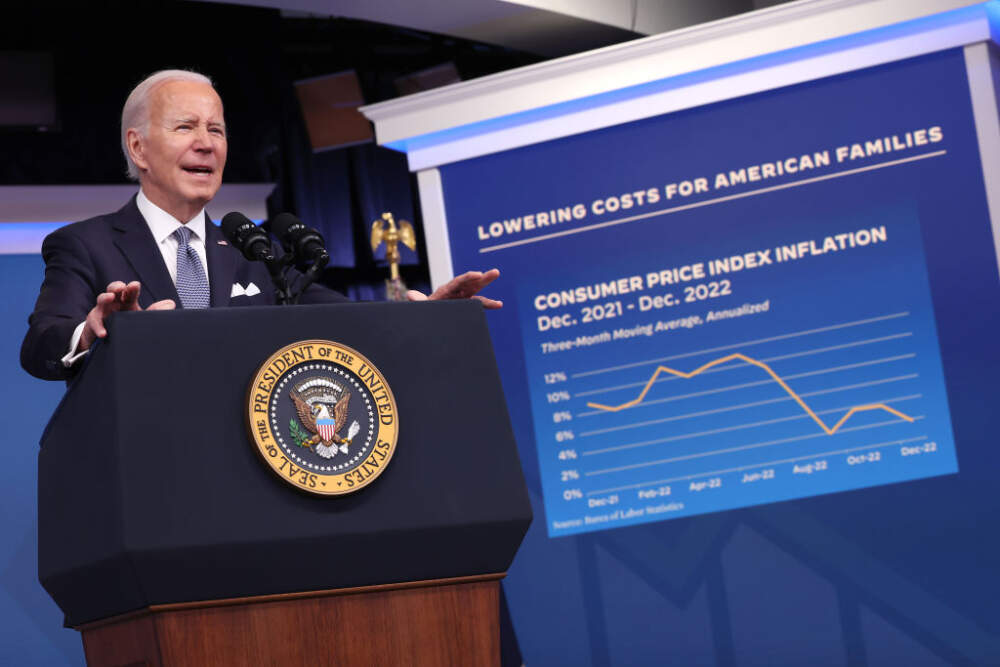
A pandemic, war in Ukraine, supply chain breakdowns — all led to soaring prices.
Some of those forces have eased, but prices haven't. Economist Isabella has a theory about this. She calls it 'sellers' inflation.'
"This was considered kind of fringe idea. Because I think it in many ways doesn't fit with the macroeconomic framework that economists tend to have on their minds," Isabella Weber, assistant professor of economics at the University of Massachusetts, Amherst, says.
But Weber says business are now keeping prices high, simply because they can.
"The danger is that corporations have now learned how this works, they know that if they are hiking prices their competitors are also hiking prices in this kind of situation," Weber says.
"If there was another major shock, the chances are they would be even quicker to move to that kind of playbook."
Today, On Point: 'Greedflation,' a once fringe theory of inflation gains momentum.
Guests
Isabella Weber, assistant professor of economics at the University of Massachusetts, Amherst. Author of How China Escaped Shock Therapy: The Market Reform Debate. Her recent paper is titled Sellers' Inflation, Profits and Conflict: Why can Large Firms Hike Prices in an Emergency?
Also Featured
Justin Wolfers, professor of public policy and economics at the University of Michigan.
Transcript
MEGHNA CHAKRABARTI: In December 2021, University of Massachusetts economist Isabella Weber looked at spiraling inflation. She saw a number of drivers for those ever-increasing prices, but there was one she thought no one was talking about. An explosion in corporate profits. In 2021, U.S. profit margins have reached levels not seen since the aftermath of the Second World War, she wrote in the British newspaper The Guardian.
So Weber made a radical suggestion, quote: "The government could target the specific prices that drive inflation. Instead of moving to austerity, which risks a recession."
Well, the response from just about every established corner of economics was unanimous. Heresy, they shouted. Liberal economist and New York Times columnist Paul Krugman went so far as to tweet, quote, "I'm not a free market zealot, but this is truly stupid."
But then something interesting happened. Prices stayed high, even though some of the inflationary drivers have eased a bit.
And then earlier this year, Albert Edwards, global strategist at the massive French bank Societe Generale, released an astonishing note saying, quote, "How wrong I was to assume that margins would have declined by the end of last year." He called, quote, "supernormal profit margins a big issue for policy makers that simply cannot be ignored any longer."
Around the same time here in the United States, Fed vice Chair Lael Brainard gave a speech at the University of Chicago, of all places, saying, quote, "Overall, the labor share of income has declined over the past two years and appears to be at or below pre-pandemic levels. While corporate profits as a share of GDP remain near postwar highs."
Brainard described it as a 'price price spiral,' where prices are still rising faster than the material costs to make those products. Even economists at the insurance company Allianz estimate that when it comes to the high cost of food, right now, about 10% of that rise is due to corporations seeking higher profits. So has Isabella Weber been vindicated? Is there something to her theory that part of what we're seeing now is due to what we in the media have taken to calling greed flirtation, though Professor Weber prefers to call it sellers' inflation. And she joins us now. Professor Weber, welcome to On Point.
ISABELLA WEBER: Thanks so much for having me back. Hi.
CHAKRABARTI: So have you gone from Pariah in the economic world to the most talked about economist and sought after economist right now? Because I'm seeing that the same central bankers and lawmakers and think tankers and academics who once were trying to laugh you out of the room, they're calling you now, is that right?
WEBER: I mean, inflation is probably one of the most complicated economic problems. So I would say the battle is now over, but it's certainly been a big turnaround.
CHAKRABARTI: But tell me more. I mean, because Axios reports that your phone is ringing off the hook. Who's calling you?
WEBER: I mean, it's been kind of a trajectory of change. Probably the most dramatic event was in last fall, actually, when the German government called me to work for them on gas price stabilization, because the gas price shock to the German economy had just become so, so, so large that households and firms could no longer pay these extremely high gas prices.
So that the government decided to step in and set up a commission to design a policy that was pretty much along the lines of what I had been arguing in the German context. So that was probably the most unexpected kind of turn around to sit there on a commission designing a policy that followed my basic principles with a budget of almost 5% of GDP at our disposal. And that was certainly quite dramatic.
CHAKRABARTI: So the principles being introducing some kind of price stabilization.
WEBER: Yes. So what I have been arguing is that there's one part where consumers and firms cannot save, which is basically their inelastic demand, as economists would say. And then there's another part where you can say everybody can react to price signals. I mean, if you think of it from the perspective of a consumer, you can say that you turn down the temperature in your room a little bit, that you take a shower less frequently, that you cook warm meals less frequently. But there's a limit to all of that, right?
So the idea was to protect that like essential part of consumption with a price sterilization measure while keeping the market signals up at the margins. And I won't bore you with the details of the policy that we implemented, but that was a basic, basic idea.
Now, I feel like in recent weeks there has been a new wave of all of this. I mean, it seems like the media is really catching up to this question of what is the role of profits and inflation. I mean, there has been very major reports and basically all major media outlets from The New York Times, Wall Street Journal, Financial Times and so on, and not only in English, but in several languages.
CHAKRABARTI: Okay. So what I'd like to do is a little later in the show, Professor Weber, we're going to talk about there's still considerable pushback to the theoretical framework that you offer here. So we'll do that a little bit later. But I want to just kind of go through it in a little bit of detail because you have coauthored a couple of papers specifically about why you and your coauthors see that industries can and do continue to hike prices.
Even though in the pandemic and post-pandemic period, even though they have experienced some price stabilization on their inputs. So let's use an example here, because I'd like to just make it real for folks, because in your paper you talk about, for example, PepsiCo, right? Massive global company in the food and snacks and drinks business. And you've looked at not just their earnings records, but what CEOs and CFOs say, what they literally say, during their earnings calls about the decisions they have behind their pricing.
CHAKRABARTIL So let's play we've got here a clip from a 2021 first quarter earnings call from Pepsi. So this happened in April of 2021. An analyst asks executives about Pepsi's historically high prices and if the company would be comfortable continuing with a price over volume approach, as they called it. So here's how executives answer. The second voice that we'll hear is Ramon Laguarta, Pepsi CEO. And the first you're going to hear is Hugh Johnston. He's the CFO of Pepsi, who talked about what he sees as the right way to compete.
JOHNSTON: Which is primarily around innovation and brand building and execution. So we think the environment is well set up where pricing can be positive going forward, that that's not a temporary thing based on what's happening in the environment right now.
LAGUARTA: ... We're seeing everybody becoming more capable and knowledgeable on consumer insights and applied to promotions and pricing and elasticities. And so we're going to see more application of those multiple levers, rather than just driving prices down, which I don't think is the big idea for anybody in the industry.
CHAKRABARTI: Okay. So Professor Weber, initially before that, Pepsi was saying they had to raise prices because again, they were suffering from inflation and supply chain problems like everybody else was. But by the time we get to the first quarter of 2021 here, what do you hear in that moment from the earnings call?
WEBER: Yeah. Maybe to take a little step back just to think about this as a process. So there have, of course, been major cost shocks, right? So there have been energy prices going up, food prices going up and so on. So a company like Pepsi both, of course, has faced very major cost increases.
CHAKRABARTI: You call this the impulse stage.
WEBER: That's right. Yeah. So there's an impulse that comes basically from the shutdown of the economy, which resulted in the reduction in capacity in all sorts of critical areas like energy, like raw materials, which then when the economy picked back up and demand started to increase, did not pick up at pace, which meant that in response to that, prices for things like energy started to shoot up. Which then created a cost impulse to companies that are using energy, that are using transportation services, that are using food inputs and so on.
And reacting to these cost shocks, firms basically started to raise their prices to protect their profit margins. Now, if you protect your profit margin, you actually have to increase your price more than your cost. Because if you imagine that, let's say your product costs $100 and you have a cost of $80, then you would have a profit margin of $20. Now, suppose costs go up by $5, if you now were to raise your product by just $5, you would have $105 in price. Right? Then in relative terms, your profit margin over the total price would have gone down.
CHAKRABARTI: Because it's one it's 20 over 105 now.
WEBER: Exactly. Instead of 20 over 100. So, it's gone down. So, to protect your profit margin, you need to increase prices by more than the costs. So, this is kind of the first stage where this impulse translates into a larger price increase, simply to protect profit margins. Then what firms found is that this actually worked out better than they thought.
Volumes went down less than they anticipated, and they actually found that there is a lot of pricing space for them. And they kind of switched to a new type of playbook where they started to rely much more heavily on pricing than they used to. And that's not just one firm in isolation, but that is like many firms doing the same thing at the same time.
CHAKRABARTI: That's what we hear the Pepsi CEO ... saying, right? He said, rather than driving prices down, I don't think that's a big idea for anybody in the industry.
WEBER: Exactly. And you would hear statements like that not just from Pepsi, but from many, many firms across the whole spectrum of industries. So this is not just about consumer facing snacks. This is also about other types of food, like Nestlé, Unilever and so on. But also more upstream things like steel, like chemicals, like cars, which I mean, is consumer durable, different from snacks. So you would find these types of statements pretty much in a very far range of different types of companies.
CHAKRABARTI: Now, Professor Weber, before the break, you were talking about the shocks that everyone, individuals and companies felt as the pandemic hit, both due to the pandemic itself and the supply chain constraints together, and that led to an increase in prices. Makes a lot of sense. But you also then said that what companies found after some of those shocks ebbed a little bit was that consumer demand hadn't fallen or hadn't fallen dramatically. So what I wonder is, well, then, I mean, according to the most rudimentary rules of macroeconomics, if demand stays high, so should prices. So why isn't that an adequate explanation?
WEBER: Well, I mean, what we see is that on the company level, time and again, basically volumes start declining, but prices keep going up. So if it was simply about demand being strong, we wouldn't expect volumes to go down. Especially as the supply chain issues are easing, as the bottlenecks are easing. So if volumes are going down in a situation where the supply issues are becoming less dramatic, and prices still are going up quite by quite substantive amounts, then for these types of cases, and I'm emphasizing here cases, we are talking about a situation that I don't think can be explained by simply an increase in demand.
CHAKRABARTI: Okay. So we again, you've got this sort of tripartite theoretical argument that you say explains sellers' inflation, as you call it. We talked about the impulse stage, those initial shocks that causes companies to raise their prices. Now, we're in sort of the propagation and amplification stage that you have here as the prices continue to stay high. So let's return to our example of PepsiCo. A little earlier, we heard from a earnings call from the first quarter of 2021. Moving forward in time.
Here's a moment from their Q3 earnings call in 2022. So this is when executives spoke with analysts and investors in September of 2022. And it's interesting because they were asked. Pepsi executives were asked if they would consider price rollbacks, if there would be a general slowdown or a recession overall in the economy. And Ramon Laguarta, again, Pepsi CEO, responded to the question, saying the company did not have plans to reduce prices.
LAGUARTA: If you look at the majority of our conversation with our customers centered around growth and how do we develop our category, continue to bring consumers into the category, continue to bring new occasions into their category. And that's the role I think we played to our customers and to the how we create value for the company long term. So we'll continue with that focus, trying to create brands that can stand for a higher value to consumers. And consumers are willing to pay more for our brands. We'll continue with that philosophy.
CHAKRABARTI: So Professor Weber, you pointed out this moment in your paper about sellers' inflation, saying that there's no mention ... about rolling back prices if demand drops. But on the other hand, he's saying, well, we're just going to create higher value products that can sustain higher prices. So what's wrong with that?
WEBER: Well, I mean, this is one snippet from these kinds of earnings calls. There are also other moments where they talk about costs actually going down, but keeping prices where they are or even increasing them.
Now, if the input costs for stuff like energy, for basic raw materials and food are going down, then we would expect prices to also go down with them if profit margins were meant to kind of stay stable. But if prices stay where they are, then these declining costs actually mean another increase in in profit margins, potentially. This whole story around brands, I mean, there is a question of what is a brand, right? I mean, is this then really ultimately a different kind of product or is this a product where customers feel so attached to the idea of that type of goods as they.
I think this is from the Pepsi call. Saying at some point, we are selling a moment of pleasure, right? So they're really selling an emotion. They are selling a brand identity, which gives them a lot of pricing power, which gives them space to keep prices where they are or even increasing them, which I mean, you can interpret as an increased value for the customer. But at the substance, these kinds of products I think are still very similar to what they used to be. And it's really not like about the simple logic of demand going up and therefore prices going up or something like that.
CHAKRABARTI: So how long can this propagation or amplification stage of the sellers' inflation theory, how long can that go on for?
WEBER: I think that's a complicated question. I mean, what we are laying out in the ... framework to try to think about the dynamic of the current inflation rate. I think that ... all that we are seeing is pretty extraordinary. We are in very uncharted waters. So I think it's very hard to predict how long this can go on. My sense is that it's been going on for longer than I actually thought it could go on. How much longer it can go on is an open question and has to do with what happens in the conflict stage.
CHAKRABARTI: Okay. So, yes, how do you define what the conflict stage is?
WEBER: So we are thinking of the conflict stage as basically labor eventually reacting as prices are going up, as inflation is high and purchasing power is eroding. Eventually, workers may be asking for higher wages, right, to basically compensate the loss in real wages.
WEBER: Now, if wages go up, that of course, could create a new kind of impulse, because wages tend to go up in a sector kind of fashion because companies in one sector compete against each other and compete for a similar kind of labor pool. So if wages are going up in a whole sector, then this could be a similar kind of inputs as a specific input cost for one sector going up.
So it could be that firms then react to this by again increasing their prices in order to protect their profit margins, which could mean that inflation could go up again. But of course, there are so many variables at play that we cannot predict what will happen. But I think this is one possibility, one possible avenue that we can see from where we stand.
CHAKRABARTI: Well, what's interesting, though, is that the presumption is that wages would go up meaningfully. And as I quoted earlier, former Fed vice chair Lael Brainard earlier this year talked about that the labor share of income has declined over the past two years in comparison to, I guess, the profit or capital share. So that's an interesting note, even though I guess the exact dollar value of wages has gone up. But again, just to stick with Pepsi as our sort of real-world example here, and yes, these are just, you know, individual moments from 45-minute-long earnings calls, but they're indicative here.
So I've got one more that might talk us through a little bit about how some companies are at least looking or eyeing at what you're calling the conflict stage here. So this is from Pepsi's 2022 Q4 earnings call. So it just happened a few months ago in February of 2023.
And interestingly, analysts, the first question in the earnings call, the very first question came from an analyst who asked executives if they were worried about consumer and retailer pushback about Pepsi's continued historically high prices and whether or not the company was planning for what the analyst called incremental consumer weakness. So here's how Ramon Laguarta, Pepsi CEO answered. He said there could be some changes in consumer behavior in the second half of the year, but the company was still aiming for a 6% top line growth.
LAGUARTA: We feel comfortable with the way the business is going, as you could saw from Q4. But, you know, the key, the most important thing for you to think about is we're going to keep investing in the quality of our products. We want to keep investing in the strength of our brands. So no matter what happens with the consumer, we're going to be, I think, preferred choice for a lot of our consumers and, you know, our customers. And that's how we are planning for next year.
CHAKRABARTI: Professor Weber, how do you what do you hear in that?
WEBER: Yeah, I think this point of being the preferred product of the customers is an important one here, where basically a company like Pepsi has such a strong market position that they can meet demand wherever it is, as they are saying, whether it's in a pandemic and restaurants are shut down and consumers go to supermarkets, they will end up still buying Pepsi.
If they now go to the restroom, they buy Pepsi. If their income declines and they end up no longer going to the restaurant, but just maybe stopping at a gas station on the way to work, they would still buy a Pepsi. So in other words, the consumer is bound so strongly to this brand that they seem to be very confident in being able to keep consumers with them, even though they have been pursuing this strategy of increasing prices and prices over volume for quite some time by now.
CHAKRABARTI: So before we get into some of the still quite vigorous pushback to your theoretical framework of sellers' inflation or greedflation, as we in the media have taken to calling it. I do want to note that, again, we're having this conversation because there's a lot of people in very high levels of businesses and organizations in the global economy who are suddenly talking about this.
Because as you know, Professor Faber, just a couple of months ago in March, Paul Donovan, who's the chief economist at UBS Global Wealth Management, he wrote a note also talking about what he described as profit margin led inflation. And stating that most of the time in typical economies, companies have weak pricing power because there's just a lot of response from consumers in moderating their demand.
And they just can't wildly increase prices, because consumers will abandon them. But that hasn't happened this time around. So there's a lot of people paying attention to you at the moment. Nevertheless, there's also a lot of pushback. So I want to explore some of that. First and foremost, Professor Weber, especially in the United States, what about the simple macroeconomic fact that the government pumped a whole lot of money into the economy as pandemic aid, as a means to prop up the economy, to help people through unemployment. And there's just a lot of cash looking for a constrained amount of goods because of the supply chain crisis we have. That's just kind of the basic scenario for inflation. How does that not explain everything we're seeing?
WEBER: Well, I think the critical point that you are bringing in here is the supply chain story. Right? And what we have seen is that bottlenecks have presented opportunities for firms to increase prices. So if you imagine a firm being confronted with a bottleneck like, for example, a chip shortage, and they know that their competitor also is facing a similar kind of shortage.
This means that when they increase prices, they are no longer worrying that customers would run away from them, because their competitor is in the same kind of situation and is very likely to react with the same kind of price increase. So in other words, we have been living in an incredibly concentrated kind of economy before the pandemic. But during the pandemic, with these supply shocks, we have entered a world where price hikes could be coordinated by these emergencies, by these bottlenecks, by consumers also being more willing to pay these higher prices, because it seems legitimate to them that these prices are increasing.
Because they are seeing on the news that supply chains are crumbling, because they are seeing on the news that energy prices are going up and so on. So I would think of a demand here as an enabling factor, but I don't think it's the key factor. Because if demand was going up, and firms were worried about losing their customers, if they were increasing prices because other firms were not increasing their prices, then I don't think they would be doing it. So the key factor here really is that the dynamic of competition has changed.
CHAKRABARTI: So I mean, to me, that leads us down the road a little bit later about talking about how in some of these sectors there's a problem of inadequate competition. Right? We have virtual monopolies in some of these sectors, but we'll come back to that in a second. I did want to offer you sort of a counterargument that comes from Justin Wolfers.
He's a professor of public policy and economics at the University of Michigan. And he says, basically, with all due respect, the evidence points to a different conclusion that profit seeking isn't a driver in hidden inflation. We're seeing it all, according to Wolfers. And he told us that recent numbers from 2022 discount your idea of sellers' inflation.
WOLFERS: The claim that low unemployment has sparked inflation has a lot of historical evidence, global evidence. The claim that the supply shocks associated with either Putin or the pandemic has enormous global influence evidence because we saw the same thing happening in almost every country around the world.
The claim that this is in the set of theories that are sometimes called greedflation, doesn't have a lot of independent evidence in favor of it. A simple thing to note is since the middle of 2022, corporate profits have fallen by 7% or 8% and prices have risen by 5% or 6%. That seems a rather embarrassing fact for those claiming that greed and the pursuit of higher profits is what's causing higher prices.
CHAKRABARTI: Professor Weber, your response?
WEBER: I mean, first of all, let me be crystal clear. If you read my paper, you will see that I'm not blaming the increase of inflation on a sudden jump in corporate greed. I'm also not using the term greedflation, because I think what we are seeing is not a sudden change in the attitude of firm leaders. But what I'm arguing is that the dynamic of competition has changed. When firms were faced with bottlenecks, when these major cost shocks, coordinated price hikes. So in that sense, I'm fully with my colleague and saying that these major supply shocks have been very, very important.
... What we are arguing is that firms don't absorb these cost shocks, but rather they pass them on. And in certain consultations they can even amplify these kind of cost shocks. To the question of some ... profit margins going down in 2022. First of all, there has been reporting by Bloomberg that there are some questions whether the Federal Reserve is included in this data, but this is not my main point. My main point is that in 2021, profit margins have chomped up in a very dramatic fashion reaching levels that we hadn't seen since the aftermath of World War II.
Them easing somewhat in 2022 is entirely consistent with our theory, because we don't argue that this may be inevitably a sustained process of constantly elevated profit margins. But we say that there's an impulse that presents an opportunity for firms to hike prices, for some firms to hike prices more than costs, thereby driving up profit margins, but that this eventually goes into the conflict stage where we would expect profit margins to come down. So this is absolutely consistent with my theory.
This program aired on June 2, 2023.
「Greedflation」:かつてのフリンジのインフレ理論が勢いを増す
パンデミック、ウクライナでの戦争、サプライチェーンの崩壊など、すべてが価格の高騰につながった。
これらの力のいくつかは緩和されましたが、価格は緩和していません。エコノミストのイザベラはこれについて理論を持っています。彼女はそれを「売り手」インフレと呼んでいます。
WBURは非営利の報道機関です。私たちのカバレッジは、あなたの財政的支援に依存しています。あなたが今読んでいるような記事を大切にするなら、今日あげてください。
「これは一種のフリンジのアイデアと考えられていました。なぜなら、多くの点で、経済学者が考えているマクロ経済の枠組みに合わないと思うからです」と、マサチューセッツ大学アマースト校の経済学助教授であるイザベラ・ウェーバーは言います。
しかし、ウェーバーは、ビジネスは現在、単に彼らができるという理由だけで、価格を高く保っていると言います。
「危険は、企業がこれがどのように機能するかを学んだことです。彼らは価格を引き上げている場合、競合他社もこのような状況で価格を引き上げていることを知っています」とウェーバーは言います。
「別の大きなショックがあった場合、彼らはそのようなプレイブックに移行するのがさらに速くなる可能性があります。」
今日、オンポイント:「Greedflation」、かつてのフリンジインフレ理論が勢いを増す。
ゲスト
イザベラ・ウェーバー、マサチューセッツ大学アマースト校経済学助教授。How China Escaped Shock Therapy: The Market Reform Debateの著者。彼女の最近の論文は、売り手のインフレ、利益、紛争と題されています:なぜ大企業は緊急時に価格を上げることができるのですか?
また、注目
ジャスティン・ウォルファーズ、ミシガン大学公共政策と経済学の教授。
トランスクリプト
MEGHNA CHAKRABARTI:2021年12月、マサチューセッツ大学の経済学者イザベラ・ウェーバーは急激なインフレに目を向けた。彼女はそれらの絶えず上昇する価格のために多くのドライバーを見ましたが、誰も話していないと思ったものがありました。企業利益の急増。2021年、米国の利益率は第二次世界大戦の余波以来見られなかったレベルに達した、と彼女はイギリスの新聞ガーディアン紙に書いた。
そこでウェーバーは抜本的な提案をしました。「政府はインフレを促進する特定の価格をターゲットにすることができます。不況の危険性がある緊縮財政に移行する代わりに。
まあ、経済学のほぼすべての確立されたコーナーからの反応は満場一致でした。異端、彼らは叫んだ。リベラルなエコノミストでニューヨークタイムズのコラムニストであるポール・クルーグマンは、「私は自由市場の熱狂者ではないが、これは本当に愚かだ」とツイートした。
しかし、その後、何か面白いことが起こった。インフレドライバーの一部が少し緩和されたにもかかわらず、価格は高いままでした。
そして今年初め、フランスの大規模な銀行ソシエテ・ジェネラルのグローバルストラテジストであるアルバート・エドワーズは、「昨年末までにマージンが減少しただろうと仮定したことがどれほど間違っていたか」という驚くべきメモを発表しました。彼は、「超常的な利益率は、もはや無視できない政策立案者にとって大きな問題である」と引用した。
ここ米国で同じ頃、FRB副議長のラエル・ブレイナードは、シカゴ大学で演説を行い、「全体として、所得の労働シェアは過去2年間で減少し、パンデミック前のレベル以下であるようです。GDPのシェアとしての企業利益は戦後の高値に近いままです。
ブレイナードはそれを「価格スパイラル」と表現し、価格は依然としてこれらの製品を作るための材料コストよりも速く上昇しています。保険会社アリアンツのエコノミストでさえ、食品の高コストに関しては、現在、その上昇の約10%は、より高い利益を求める企業によるものだと推定しています。それで、イザベラ・ウェーバーは立証されましたか?ウェーバー教授はそれを売り手のインフレと呼ぶことを好むが、私たちが今見ているものの一部は、メディアで貪欲な浮気と呼ぶことによるものだという彼女の理論に何かありますか?そして、彼女は今私たちに加わります。ウェーバー教授、オンポイントへようこそ。
イザベラ・ウェーバー:戻ってきてくれてありがとう。こんにちは。
CHAKRABARTI:それで、あなたは経済の世界でパリアから最も話題になった経済学者になり、今求められている経済学者になりましたか?かつてあなたを部屋から笑おうとしていたのと同じ中央銀行家や議員、シンクタンクラーや学者が、今あなたに電話しているのを見ているので、そうですか?
WEBER:つまり、インフレはおそらく最も複雑な経済問題の1つです。だから、私は戦いが終わったと言うでしょうが、それは確かに大きな転換でした。
CHAKRABARTI:でも、もっと教えてください。つまり、Axiosはあなたの電話がフックから鳴っていると報告しているからです。誰があなたを呼んでいますか?
WEBER:つまり、それは一種の変化の軌跡でした。おそらく最も劇的な出来事は、昨年秋、ドイツ政府がガス価格の安定化のために働くように私を呼んだときでした。なぜなら、ドイツ経済へのガス価格のショックが大きすぎて、家計や企業はもはやこれらの非常に高いガス価格を支払うことができなかったからです。
そのため、政府は介入し、私がドイツの文脈で議論していたことに沿った政策を設計するための委員会を設立することを決定しました。だから、それはおそらく、GDPのほぼ5%の予算で私の基本原則に従った政策を設計する委員会に座った最も予想外のターンアラウンドでした。そして、それは確かにかなり劇的でした。
CHAKRABARTI:原則は、ある種の価格安定化を導入することです。
ウェーバー:はい。だから、私が主張しているのは、消費者や企業が節約できない部分が1つあるということです。これは、経済学者が言うように、基本的に彼らの非弾性的な需要です。そして、誰もが価格シグナルに反応できると言える別の部分があります。つまり、消費者の観点から考えると、部屋の温度を少し下げたり、シャワーを浴びる頻度を減らしたり、温かい食事を調理したりしないと言うことができます。しかし、そのすべてには限界がありますよね?
したがって、アイデアは、市場シグナルをマージンに保ちながら、価格滅菌措置で消費の重要な部分を保護することでした。そして、私たちが実施したポリシーの詳細であなたを退屈させませんが、それは基本的な、基本的なアイデアでした。
さて、ここ数週間、このすべての新しい波があったような気がします。つまり、メディアは利益とインフレの役割が何であるかというこの質問に本当に追いついているようです。つまり、ニューヨークタイムズ、ウォールストリートジャーナル、フィナンシャルタイムズなど、英語だけでなく、いくつかの言語で非常に主要な報道があり、基本的にすべての主要なメディアがあります。
CHAKRABARTI: わかりました。だから、私がしたいのは、ショーの少し後、ウェーバー教授、あなたがここで提供する理論的枠組みにまだかなりの反発があることについて話すつもりです。だから、私たちは少し後でそれをします。しかし、私は少し詳細に調べたいと思います。なぜなら、あなたは特にあなたとあなたの共著者が、業界が価格を引き上げ続けることができると見ている理由について、いくつかの論文を共同執筆したからです。
パンデミックとパンデミック後の期間にもかかわらず、彼らはインプットでいくらかの価格安定化を経験しているにもかかわらず。だから、ここで例を挙げてみましょう。なぜなら、私は人々のためにそれを現実にしたいからです。なぜなら、あなたの論文では、例えばペプシコについて話しているからです。食品、スナック、飲料事業における大規模なグローバル企業。そして、あなたは彼らの収益記録だけでなく、CEOやCFOが言うこと、彼らが文字通り言うこと、彼らの価格設定の背後にある決定についての彼らの収益コールの間に彼らが言うことを見てきました。
CHAKRABARTIL だから、ペプシからの2021年第1四半期の収益コールのクリップをここでプレイしましょう。だから、これは2021年4月に起こった。アナリストは、ペプシの歴史的に高い価格について幹部に尋ね、同社が彼らがそれを呼んだように、ボリュームよりも価格アプローチを続けることに満足しているかどうかを尋ねます。だから、これが幹部の答えです。私たちが聞く2番目の声は、ペプシのCEOであるラモン・ラグアルタです。そして、あなたが最初に聞くのはヒュー・ジョンストンです。彼はペプシのCFOであり、彼が競争するための正しい方法として見ているものについて話しました。
ジョンストン:主にイノベーションとブランド構築と実行に関するものです。したがって、環境は今後価格設定がポジティブになる可能性があると考えています。それは、現在環境で何が起こっているかに基づいて一時的なことではありません。
ラガータ: ...私たちは、誰もが消費者の洞察についてより有能で知識が豊富になり、プロモーションや価格設定、弾力性に適用されるのを見ています。そして、私たちは単に価格を押し下げるのではなく、これらの複数のレバーのより多くの適用を見るつもりですが、これは業界の誰にとっても大きなアイデアではないと思います。
CHAKRABARTI: わかりました。だから、ウェーバー教授は、当初、ペプシは、他のみんなと同じようにインフレとサプライチェーンの問題に苦しんでいたので、価格を上げなければならないと言っていました。しかし、ここで2021年第1四半期にたどり着くまでに、収益コールからその瞬間に何を聞きますか?
ウェーバー:うん。これをプロセスとして考えるためだけに、少し後退するかもしれません。もちろん、大きなコストショックがありましたよね?そのため、エネルギー価格が上昇し、食品価格が上昇しています。もちろん、ペプシのような会社は、非常に大きなコスト増加に直面しています。
CHAKRABARTI:あなたはこれをインパルスステージと呼んでいます。
ウェーバー:その通りです。うん。したがって、基本的に経済の閉鎖から来る衝動があり、その結果、原材料などのエネルギーなどのあらゆる種類の重要な分野で容量が減少し、経済が回復し、需要が増加し始めたとき、ペースで回復しませんでした。つまり、それに対応して、エネルギーなどの価格が上昇し始めました。その後、エネルギーを使用している企業、輸送サービスを使用している企業、食品インプットを使用している企業にコストインパルスを生み出しました。
そして、これらのコストショックに対応して、企業は基本的に利益率を保護するために価格を上げ始めました。さて、利益率を保護する場合は、実際にはコストよりも価格を上げる必要があります。なぜなら、あなたがそれを想像するなら、あなたの製品が100ドルで、80ドルの費用がかかるとすると、利益率は20ドルになります。さて、コストが5ドル上がると仮定して、今製品をわずか5ドル上げると、105ドルの価格が高になります。でしょ?その後、相対的に、あなたの利益率は総価格よりも下がっていたでしょう。
CHAKRABARTI:それは1つなので、今は105で20です。
ウェーバー:その通り。20オーバー100の代わりに。だから、それは下がった。したがって、利益率を保護するためには、コストよりも価格を上げる必要があります。したがって、これは、単に利益率を保護するために、この衝動がより大きな価格上昇につながる最初の段階のようなものです。その後、企業が見つけたのは、これが実際に彼らが思っていたよりもうまくいったということです。
ボリュームは予想よりも減少し、実際には多くの価格設定スペースがあることがわかりました。そして、彼らは新しいタイプのプレイブックに切り替え、以前よりもはるかに価格設定に大きく依存し始めました。そして、それは孤立した1つの会社ではなく、多くの企業が同時に同じことをしているようなものです。
CHAKRABARTI:それはペプシのCEOが言っていることですよね?彼は、価格を押し下げるのではなく、業界の誰にとっても大きなアイデアではないと思うと言いました。
ウェーバー:その通り。そして、あなたはペプシだけでなく、業界の全範囲にわたる多くの、多くの企業からそのような声明を聞くでしょう。したがって、これは消費者が直面するスナックだけではありません。これは、ネスレ、ユニリーバなどの他の種類の食べ物に関するものでもあります。しかし、鉄鋼、化学物質、自動車などの上流のものは、消費者の耐久性があり、スナックとは異なります。したがって、これらのタイプのステートメントは、非常に幅広いタイプの企業で見つけることができます。
CHAKRABARTI:さて、ウェーバー教授、休憩前に、パンデミック自体とサプライチェーンの制約の両方により、すべての人、個人、企業がパンデミックが襲ったと感じたショックについて話していました。とても理にかなっています。しかし、あなたはまた、これらのショックのいくつかが少し減少した後に企業が発見したことは、消費者の需要が低下していないか、劇的に低下していないということでした。だから、私が疑問に思うのは、まあ、つまり、マクロ経済学の最も初歩的なルールによると、需要が高ければ、価格も高まなければならないということです。では、なぜそれが適切な説明ではないのですか?
WEBER:まあ、つまり、私たちが見ているのは、会社レベルでは、何度も何度も、基本的にボリュームが減少し始めますが、価格は上昇し続けています。したがって、単に需要が強いのであれば、ボリュームが減少するとは思えません。特にサプライチェーンの問題が緩和され、ボトルネックが緩和されています。したがって、供給問題がそれほど劇的ではなく、価格がまだかなり実質的な金額で上昇している状況でボリュームが減少している場合、これらのタイプのケースについては、私はここでケースを強調していますが、単に需要の増加だけでは説明できないと思う状況について話しています。
CHAKRABARTI: わかりました。だから、私たちは再び、あなたがそれを呼ぶように、売り手のインフレを説明すると言うこの種の三者間の理論的議論を持っています。私たちは、インパルス段階、企業が価格を上昇させる最初のショックについて話しました。今、私たちは、価格が高値を維持し続けているので、あなたがここで持っている伝播と増幅の段階のようなものです。では、ペプシコの例に戻りましょう。少し前に、2021年第1四半期の収益コールから聞きました。時間内に前進する。
2022年第3四半期の収益コールの瞬間です。だから、これは幹部が2022年9月にアナリストや投資家と話した時です。そして、彼らは尋ねられたので、それは面白いです。ペプシの幹部は、価格ロールバックを検討するかどうか、経済に一般的な減速や景気後退があるかどうかを尋ねられました。そして、ペプシのCEOであるラモン・ラグアルタは、同社には価格を引き下げる計画がないと言って、この質問に答えました。
LAGUARTA:成長とカテゴリをどのように開発するかを中心としたお客様との会話の大部分を見ると、消費者をカテゴリに持ち込み続け、新しい機会をカテゴリに持ち込み続けます。そして、それが私たちがお客様と、長期的に会社のために価値を創造する方法に果たした役割だと思います。だから、私たちはその焦点を続け、消費者にとってより高い価値を表すことができるブランドを作ろうとします。そして、消費者は私たちのブランドにもっとお金を払うことをいとわない。私たちはその哲学を続けます。
CHAKRABARTI:それで、ウェーバー教授、あなたは売り手のインフレについてあなたの論文でこの瞬間を指摘し、需要が下がった場合に価格をロールバックすることについて言及していないと述べました。しかし、その一方で、彼は、まあ、私たちはより高い価格を維持できるより高い価値の製品を作成するつもりだと言っています。それで、それのどこが悪いの?
WEBER:まあ、つまり、これはこの種の収益コールからの1つの断片です。コストが実際に下がることについて話す他の瞬間もありますが、価格を維持したり、上昇したりします。
さて、エネルギー、基本的な原材料、食品などの投入コストが下がっている場合、利益率が安定しているのであれば、価格も下がると予想されます。しかし、価格がそのままであれば、これらのコストの低下は、実際には潜在的に利益率の別の増加を意味します。ブランドに関するこの全体の話は、つまり、ブランドとは何かという質問がありますよね?つまり、これは本当に最終的に別の種類の製品なのか、それとも顧客がそのような種類の商品のアイデアにとても愛着を感じる製品なのかということです。
これはペプシの電話からだと思います。ある時点で、私たちは喜びの瞬間を売っていると言っていますよね?だから、彼らは本当に感情を売っています。彼らはブランドアイデンティティを販売しており、それは彼らに多くの価格設定力を与え、価格を維持したり、価格を増やしたりするスペースを与えます。つまり、顧客にとって価値の増加と解釈することができます。しかし、物質では、これらの種類の製品はまだ以前と非常によく似ていると思います。そして、需要が上昇し、したがって価格が上昇するなどの単純な論理とは思えません。
CHAKRABARTI:では、売り手のインフレ理論のこの伝播または増幅段階はどのくらいの期間続くことができますか?
WEBER:それは複雑な質問だと思います。つまり、現在のインフレ率のダイナミクスについて考えるために、私たちが...の枠組みの中でレイアウトしていることです。私たちが見ているものはすべてかなり並外れたものだと思います。私たちは非常に未知の海にいます。だから、これがいつまで続くかを予測するのは非常に難しいと思います。私の感覚では、実際に思っていたよりも長く続いていると思います。それがいつまで続くことができるかは未解決の問題であり、紛争段階で何が起こるかに関係しています。
CHAKRABARTI: わかりました。では、はい、紛争段階をどのように定義しますか?
WEBER:つまり、インフレが高く、購買力が侵食されているため、価格が上昇するにつれて、基本的に労働が最終的に反応するという紛争段階を考えています。最終的には、労働者は基本的に実質賃金の損失を補償するために、より高い賃金を求めているかもしれません。
WEBER:今、賃金が上がると、もちろん、新しい種類の衝動を生み出す可能性があります。なぜなら、あるセクターの企業が互いに競争し、同様の種類の労働プールを競うため、賃金はセクターのファッションで上昇する傾向があるからです。したがって、セクター全体で賃金が上昇している場合、これは1つのセクターが上昇する特定の投入コストと同様の種類のインプットになる可能性があります。
したがって、企業は利益率を保護するために再び価格を上げることでこれに反応する可能性があり、インフレが再び上昇する可能性があることを意味します。しかし、もちろん、非常に多くの変数が作用しているので、何が起こるかを予測することはできません。しかし、これは私たちが立っている場所から見ることができる1つの可能性、1つの可能な道だと思います。
CHAKRABARTI:まあ、興味深いのは、賃金が有意義に上がるという推定があるということです。そして、先ほど引用したように、元FRB副議長のLael Brainardは、今年初めに、利益や資本のシェアと比較して、収入の労働シェアが過去2年間で減少したと話しました。だから、賃金の正確なドル価値が上昇したと思いますが、それは興味深いメモです。しかし、繰り返しますが、ここで私たちの現実世界の例としてペプシに固執するために、はい、これらは45分間の収益コールからの個々の瞬間ですが、ここでは指標です。
だから、私はいくつかの企業が少なくともあなたがここで紛争段階と呼んでいるものをどのように見ているか、または見ているかについて少し私たちを通して私たちに話すかもしれないもう1つを持っています。これはペプシの2022年第4四半期の収益コールからのものです。だから、それは数ヶ月前の2023年2月に起こったばかりです。
そして興味深いことに、アナリスト、収益コールの最初の質問、最初の質問は、ペプシの継続的な歴史的に高い価格に関する消費者と小売業者の反発を心配しているかどうか、そしてアナリストが漸進的な消費者の弱さと呼ぶものを計画しているかどうかを幹部に尋ねたアナリストから来ました。ペプシのCEOであるラモン・ラグアルタは次のように答えました。彼は、下半期に消費者行動にいくつかの変化がある可能性があると述べたが、同社はまだ6%のトップラインの成長を目指している。
LAGUARTA:第4四半期から見たように、ビジネスの進み方を快適に感じています。しかし、あなたが知っている、あなたが考えるべき鍵、最も重要なことは、私たちが製品の品質に投資し続けることです。私たちはブランドの強さに投資し続けたいと思っています。だから、消費者に何が起こっても、私たちは多くの消費者と、あなたが知っているように、私たちの顧客にとって好ましい選択になると思います。そして、それが私たちが来年の計画です。
CHAKRABARTI:ウェーバー教授、あなたはどのようにその中に何を聞こえますか?
WEBER:ええ、顧客の好ましい製品であるというこの点は、ここで重要なものだと思います。基本的にペプシのような企業は、どこにいても需要を満たすことができるほど強力な市場ポジションを持っています。彼らが言っているように、それがパンデミックであり、レストランが閉鎖され、消費者がスーパーマーケットに行くかどうかにかかわらず、彼らはまだペプシを買うことになります。
彼らが今トイレに行くなら、彼らはペプシを買います。彼らの収入が減少し、彼らがもはやレストランに行かなくなったが、仕事に行く途中でガソリンスタンドに立ち寄るだけなら、彼らはまだペプシを買うだろう。言い換えれば、消費者はこのブランドに強く縛られているため、かなり前から価格と価格をボリュームよりも上昇させるこの戦略を追求してきたにもかかわらず、消費者を彼らと一緒に保つことができることに非常に自信を持っているようです。
CHAKRABARTI:メディアがそう呼んでいるように、売り手のインフレや貪欲の理論的枠組みに対するまだかなり活発な反発に入る前に。繰り返しになりますが、世界経済の非常に高いレベルの企業や組織で突然これについて話している人がたくさんいるので、私たちはこの会話をしていることに注意したいと思います。
ご存知のように、フェイバー教授、ほんの数ヶ月前の3月、UBSグローバル・ウェルス・マネジメントのチーフエコノミストであるポール・ドノバンは、利益率がインフレを牽引したと表現したものについてもメモを書きました。そして、典型的な経済では、ほとんどの場合、消費者が需要を緩和する際の反応が多いため、企業は価格設定力が弱いと述べています。
そして、消費者が価格を放棄するので、彼らは価格を乱暴に値上げすることはできません。しかし、今回はそれは起こっていません。だから、今、あなたに注意を払っている人がたくさんいます。それにもかかわらず、多くの反発もあります。だから私はそのいくつかを探求したい。まず第一に、ウェーバー教授、特に米国では、政府がパンデミック援助として、経済を支える手段として、失業を通して人々を助けるために、経済に多額の資金を注ぎ込んだという単純なマクロ経済の事実はどうですか。そして、サプライチェーンの危機のために、限られた量の商品を探している現金がたくさんあります。それはインフレの基本的なシナリオのようなものです。それは私たちが見ているすべてをどのように説明しないのですか?
WEBER: さて、あなたがここに持ち込んでいる重要なポイントは、サプライチェーンの話だと思います。でしょ?そして、私たちが見たのは、ボトルネックが企業に価格を上げる機会をもたらしたということです。したがって、企業がチップ不足などのボトルネックに直面していると想像すると、競合他社も同様の不足に直面していることを知っています。
これは、彼らが価格を上げるとき、競合他社が同じ種類の状況にあり、同じ種類の値上げに反応する可能性が非常に高いため、顧客が彼らから逃げることをもはや心配していないことを意味します。言い換えれば、私たちはパンデミックの前に信じられないほど集中した種類の経済に暮らしてきました。しかし、パンデミックの間、これらの供給ショックにより、これらの緊急事態、これらのボトルネック、消費者がこれらのより高い価格を支払うことをより喜んでいることによって、値上げが調整される可能性がある世界に入りました。なぜなら、これらの価格が上昇していることは彼らにとって正当であると思われるからです。
彼らはサプライチェーンが崩壊しているというニュースを見ているからです。なぜなら、エネルギー価格が上昇しているというニュースを見ているからです。だから、ここでの需要は実現要因だと思いますが、それが重要な要素ではないと思います。なぜなら、需要が上昇し、企業が顧客を失うことを心配していた場合、他の企業が価格を上げていないために価格を上げているのであれば、彼らはそれをしないと思います。したがって、ここでの重要な要素は、競争のダイナミクスが変化したということです。
CHAKRABARTI:つまり、私にとっては、これらのセクターのいくつかで不十分な競争の問題があることについて話すことについて、少し後に私たちを導きます。でしょ?これらのセクターのいくつかには仮想独占がありますが、すぐにそれに戻ります。ジャスティン・ウォルファーズからの反論のようなものを提供したかった。
彼はミシガン大学の公共政策と経済学の教授です。そして彼は、基本的に、すべての失礼ながら、証拠は、利益追求が隠れたインフレの原動力ではないという別の結論を指摘していると言います。ウォルファーズによると、私たちはそれをすべて見ています。そして彼は、2022年の最近の数字は、売り手のインフレに対するあなたの考えを割引すると私たちに言いました。
狼民:低失業率がインフレを引き起こしたという主張には、多くの歴史的証拠、世界的な証拠があります。プーチンまたはパンデミックに関連する供給ショックは、世界中のほぼすべての国で同じことが起こっているのを見たため、巨大な世界的な影響力の証拠を持っています。
これが時々貪欲フレーションと呼ばれる一連の理論にあるという主張は、それを支持する多くの独立した証拠を持っていません。注目すべき簡単なことは、2022年半ば以降、企業利益は7%または8%減少し、価格は5%または6%上昇したことです。それは、貪欲とより高い利益の追求が価格の上昇を引き起こしていると主張する人々にとって、かなり恥ずかしい事実のようです。
CHAKRABARTI:ウェーバー教授、あなたの反応は?
WEBER:つまり、まず第一に、はっきりさせてください。私の論文を読めば、インフレの増加を企業の貪欲の急激な急上昇のせいにしていないことがわかります。私はまた、貪欲という言葉を使用していません。なぜなら、私たちが見ているのは、企業リーダーの態度の突然の変化ではないと思うからです。しかし、私が主張しているのは、競争のダイナミクスが変わったということです。企業がボトルネックに直面したとき、これらの大きなコストショック、調整された値上げ。だから、その意味で、私は完全に同僚と一緒にいて、これらの主要な供給ショックは非常に、非常に重要だったと言っています。
...私たちが主張しているのは、企業はこれらのコストショックを吸収するのではなく、むしろそれらを引き継ぐということです。そして、特定の協議では、彼らはこの種のコストショックを増幅することさえできます。いくつかの問題に...利益率が2022年に低下します。まず第一に、ブルームバーグは、連邦準備制度がこのデータに含まれているかどうかについていくつかの疑問があると報告されていますが、これは私の主なポイントではありません。私の主なポイントは、2021年に利益率が非常に劇的な方法で増加し、第二次世界大戦の余波以来見たことのないレベルに達したということです。
2022年にやや緩和することは、これが必然的に利益率が絶えず上昇する持続的なプロセスであるかもしれないと主張していないため、私たちの理論と完全に一致しています。しかし、私たちは、企業が価格を引き上げ、一部の企業がコストよりも価格を引き上げ、それによって利益率を押し上げる機会を提供する衝動があると言いますが、これは最終的に利益率が下がると予想される紛争段階に入ります。だから、これは私の理論と完全に一致しています。
本番組は2023年6月2日に放送されたものです。

0 件のコメント:
コメントを投稿