In France, there are both stamp duties and duties upon registration. The former are considered as a branch of the aids of excise, and, in the provinces where those duties take place, are levied by the excise officers. The latter are considered as a branch of the domain of the crown and are levied by a different set of officers.
Those modes of taxation by stamp duties and by duties upon registration, are of very modern invention. In the course of little more than a century, however, stamp duties have, in Europe, become almost universal, and duties upon registration extremely common. There is no art which one government sooner learns of another, than that of draining money from the pockets of the people.
フランスには、印紙税と登録に伴う税がある。前者は物品税の一部門とみなされ、これらの関税が行われる地方では、物品税担当官によって課税される。後者は,王室の領域の一部門とみなされ,別の役員によって徴収される。
印紙税や登録税による課税方法は、非常に近代的な発明である。しかし、1世紀あまりの間に、ヨーロッパでは、印紙税はほとんど普遍的なものとなり、登録に基づく関税は極めて一般的なものとなった。国民のポケットからお金を抜くことほど、ある政府が他の政府からすぐに学ぶ術はないだろう。
国民のふところから金を奪いとる術ほどに、一つの政府が他の政府からすみやかに学びとる術はないのである。
5:2:2
第二部 租税について
◆第一項と第二項への付録 土地、家屋、資財の資本価値にたいする税
Adam Smith on how governments learn from each other the best way of draining money from the pockets of the people (1776)
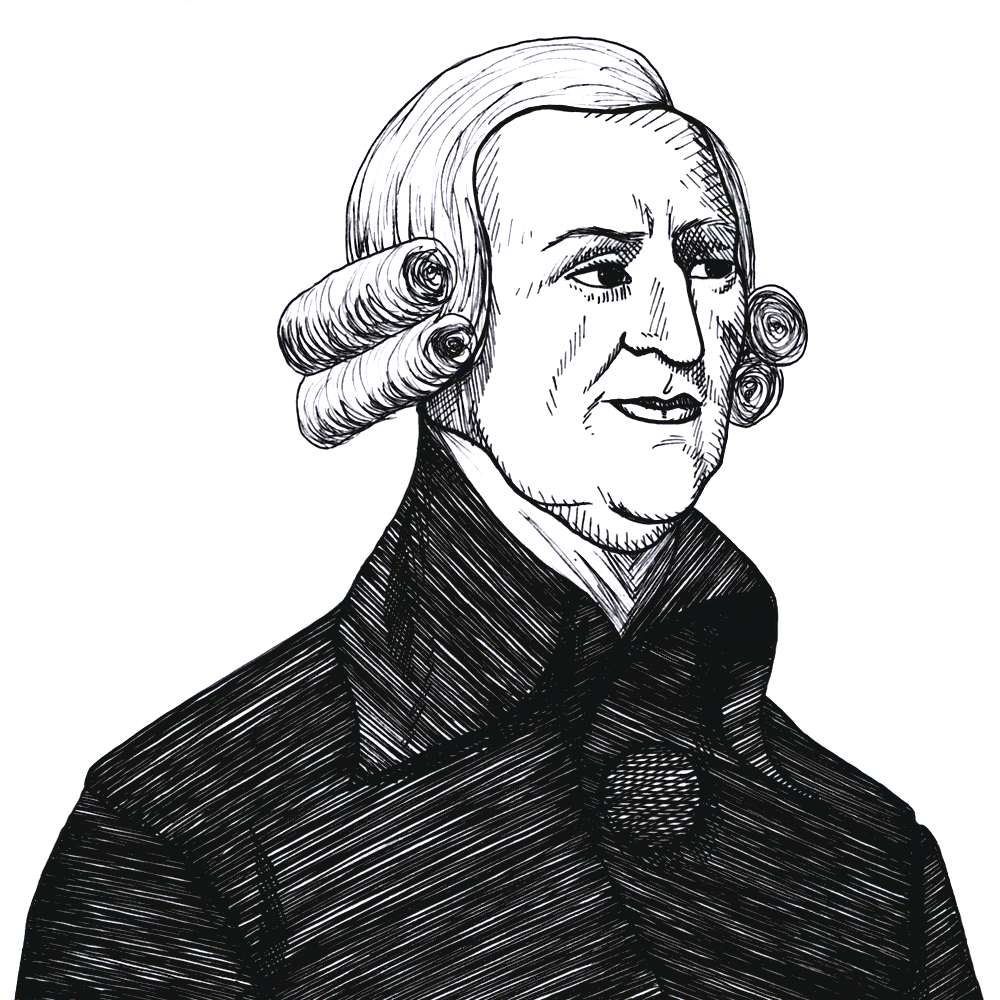
Found in An Inquiry Into the Nature and Causes of the Wealth of Nations (Cannan ed.), vol. 2
Adam Smith (1723-1790) studied in great detail how taxes were used to fund the activities of the monarchies of his day. He was especially interested in how new taxes in one state would be copied by other states:
In France there are both stamp–duties and duties upon registration. The former are considered as a branch of the aides or excise, and in the provinces where those duties take place, are levied by the excise officers. The latter are considered as a branch of the domain of the crown, and are levied by a different set of officers. Those modes of taxation, by stamp–duties and by duties upon registration, are of very modern invention. In the course of little more than a century, however, stamp–duties have, in Europe, become almost universal, and duties upon registration extremely common. There is no art which one government sooner learns of another than that of draining money from the pockets of the people.
Here we have an example of "the spread of worst practice" to counter E.L. Jones' notion of "the spread of best practice" which he developed in order to show how free institutions gradually emerged in Europe. The latter expressed the idea that people and industries would relocate to areas in Europe which had lower taxes and less regulations, thus spurring other states to lower their taxes and regulations in order to compete. Smith takes the opposite view in this passage from Wealth of Nations where he shows how innovations in tax collection in one state (here France and stamp duties) where quickly copied by other states. he sadly concludes that "There is no art which one government sooner learns of another than that of draining money from the pockets of the people".

0 件のコメント:
コメントを投稿