https://www.tiktok.com/@kaburbank?_t=8VWjP46LA7l&_r=1
https://instagram.com/kaburbank?igshid=YmMyMTA2M2Y=
https://twitter.com/jessicalburbank?s=21バーバンク
https://slowslow67.blogspot.com/2021/05/blog-post_14.html
| ||||||||||||||||||||||||



https://twitter.com/jessicalburbank/status/1630264021545885698?s=61&t=Z8VQCsn36XP6-g14mD4rrw
https://vt.tiktok.com/ZS89MLttJ/
B
Today we're going to talk about project Willow.
S:
Sound sick. We should probably do it.
I'm in.
P1:
yeah, it sounds nature.
B:
Can you guys pay attention, please? You work in the White House? This is serious.
our bet guys.
P:
How about that?
B:
Never pay attention.
Willow is conocco Phillips proposed drilling project in Alaska. They plan to produce roughly 600 million barrels of oil.
P:
that is not naturally.
B:
This will produce climate pollution over the next 30 years. That's the equivalent of the annual emissions of 74 coal plants.
P:
Yeah, maybe we don't approve this one.
S:
So for leaning against this I should probably sell my conocco Philips stock.
R:
Are you serious right now?
B:
head to the in my 🔗to tell the body and administration not to approve the willow project.
https://www.instagram.com/reel/CpLHEAnjQXf/?igshid=YmMyMTA2M2Y=
Stop Willow
B
今日はプロジェクトウィローの話です。
S:
気持ち悪い。やったほうがいいんじゃない? 参加します。
P1:
ええ、それは自然に聞こえます。
B:
皆さん、注意してくださいませんか?あなたたちはホワイトハウスで働いているんですか?これは深刻なことなんだ。
私たちの賭けです。
P:
どうですか?
B:
決して注意を払わない。
ウィローはアラスカでコノコ・フィリップスが提案している掘削プロジェクトだ。 およそ6億バレルの石油を生産する予定だそうです。
P:
B:そんなの当たり前じゃない。
B:
これは今後30年間に渡って気候汚染をもたらすでしょう。これは石炭火力発電所74基の年間排出量に相当します。
P:
ああ、これは承認しないほうがいいかもしれないね。
S:
だから、これに傾いた分、私はコノコ・フィリップスの株を売るべきだろう。
R:
今、本気ですか?
B:
B:私は、ウィローのプロジェクトを承認しないよう、議会と行政に伝えるために、インマイに向かいます。
https://iitomo2010.blogspot.com/2023/02/iitomo-fwd-scottish-wedding-ka-jessica.html

2022/09/09 JessicaLBurbank RELIGIOUS HACK BLAMES SCHOOL SHOOTINGS ON LACK OF PRAYERS

https://www.amazon.co.jp/dp/B01HW6Z3L0/ref=dp-kindle-redirect?_encoding=UTF8&btkr=1
https://love-and-theft-2014.blogspot.com/2022/07/burbank-20220728.html
inflation
https://love-and-theft-2014.blogspot.com/2022/07/20220708-jessica-ka-l-burbank-mpa.html
議会支出
https://love-and-theft-2014.blogspot.com/2021/05/20210514-jessica-l-burbank.html
自然失業率
https://love-and-theft-2014.blogspot.com/2021/09/ka-burbank-on-nairu.html
2021/11/16
https://vt.tiktok.com/ZSehW16nS/
https://vt.tiktok.com/ZSehWB7YG/
Where did money come
from in the first place?
economics
for the
people
@Ka Burbank
Economics for the People TLDR on money. cc: Randall Wray and he probably cc's: David Graeber
Where did money comefrom in the first place?economicsfor thepeople@Ka Burbank
so i've addressed a little bit about where dollars come from in a modern context.
お金はどこに来たの
そもそも?
経済
のために
人
@Kaバーバンク
お金の人々TLDRのための経済学。cc:Randall Wrayと彼はおそらくcc:David Graeber
そもそもお金はどこから来たのですか?thepeople @ KaBurbankの経済学
2021/10/23
https://vt.tiktok.com/ZSehEYrn8/
let's talk about money. cash. dollar bills. we use dollars every day but i bet if we went to a room with people and we asked everyone individually:
where do dollars come from?
each person would give a slightly different response if not wildly different response from the next.
this does not sit right with me.
if we are all to participate in the monetary system,
we should know how it works,
something i heard when knocking doors and talking to voters all of the time was:
i like the idea of better public education, and universal health care..
but i don't want my taxes to go up and this is one of the many lies we are told.
is that in order for the government to spend money they must tax it out of the economy and collect it.
this is not the case.
the government must first issue the dollars in order to be able to collect them.
the government has to spend first and then tax.
Otherwise where does the money come from?
who creates those dollars?
it is illegal for private entities like you or me or business to print their own dollars.
the dollars must come from the government.
warren mosler has this great analogy of a football stadium-
it doesn't collect tickets and then sell them.
the issuer of anything must get it out there before they collect it, including the issuer of us dollars, the government.
the federal reserve is an agent of the government.
a lot of people are commenting on my videos saying ‘the federal reserve is this private entity’ this is not the case.
uh by law if congress votes to pass spending, the fed must credit the account with the dollars.
many people have this belief that we're still using the gold standard, and it's quite funny because we haven't since 1934.
if you go to the federal reserve with a dollar you can't exchange it for anything except for maybe change.
the fed's role is to be the scorekeeper for the us dollar.
so think about a card game if i win the scorekeeper will say plus 100 points to jessica.
however the scorekeeper is not losing 100 points.
the scorekeeper just writes them down.
and therefore they exist when banks have their accounts credited by the fed.
the fed simply hits a button on the computer and it puts the money into the bank's accounts.
in a similar way to the scorekeeper not losing anything when they give me 100 points.
they wouldn't gain anything if they took points away from me as part of the game either the federal reserve when they spend money into the economy.
they're not losing anything they have similarly they're not truly gaining anything when they tax it back.
they're simply the score keeper.
they control the amount of dollars that are out there in the economy that's how the government can and does credit its own accounts.
and i talk about that more in this video.
thanks for watching.
https://vt.tiktok.com/ZSehWbMkr/
ジェシカ・バーバンク 2021/10/17
https://vt.tiktok.com/ZSeYKsQj6/
hear people say we can just print more dollars.
so i want to break that down it is a big misconception that every dollar we print or every dollar we put out into the economy devalues every other dollar already out there that's cute that's an oversimplification it's not how it works it's much more complicated than that can we print more dollars?
yes.
are there limits to spending?
yes.
but we are not spending enough right now when we create dollars and when i say we i mean the federal government we call this deficit spending this is a bit misleading don't think of a household budget when you or i spend money we don't have we take on debt that we have to pay back but the federal government is a currency issuer and they have a different framework for making decisions when it comes to managing our money supply their red ink is our black ink so when the federal government spends money.
they write it down in their red ink this money goes out that money is black ink somewhere someone gets that money those dollars exist in the economy what we really need to think about is how much is going out there who gets it and what are they using it for we do need to think about inflation and how to mitigate it we do not want prices to rise faster than people's incomes.
and thankfully we have economists like warren mosler and stephanie kelton who have given us a decision-making framework on this the question.
becomes how do we know how much to spend every economy has its own internal speed limit of sorts.
uh it's set by the real productive resources in the real economy so think about things like technology workers land and resources now you need money to put that stuff to use you've got to pay workers and and front the money that it costs to start a business now that money needs to come from somewhere and if the private sector is not employing everyone that suggests that the federal government can step in and spend some money to employ some people to get things going to full speed.
so that we're using all of the real productive resources that we have we could allow the private sector to employ as many people as they can and allow the federal government to run programs like building infrastructure and we would employ the remainder of the working population to do things that are useful for everyone what we wouldn't do is spend money into an economy that's already running at full speed.
and zero unemployment is a really good indicator of that as stephanie kelton would put it when we run our economy below its productive capacity we are living below our collective means we're not just going out and throwing dollars out of a helicopter uh what we're doing is carefully making decisions about what dollars should be spent on in a way that increases economic productivity and yes that includes spending money on education and healthcare.
ドルをもっと刷ればいい、という声が聞こえてきます。
これは大きな誤解で、私たちが印刷するドルや経済に投入するドルは、すでに存在する他のすべてのドルを切り下げるというものです。
そうです。
支出には限界がありますか?
そうです。
しかし、私たちは今十分な支出をしていません 私たちとは、つまり連邦政府のことです 私たちはこれを赤字支出と呼んでいます これは少し誤解を招く恐れがあります あなたや私が持っていないお金を使うときには家計を考えないでください 私たちは返済しなければならない借金をします しかし、連邦政府は通貨発行者であり、私たちの通貨供給を管理することになると決定を下すための異なる枠組みを持っています 彼らの赤インクは私たちの黒インクです だから連邦政府がお金を使うときには彼らの赤インクに書き留めます
私たちが本当に考えなければならないのは、どれだけのお金が外に出て、誰がそれを手に入れ、何に使っているのかということです。
ありがたいことに、ウォーレン・モスラーやステファニー・ケルトンといった経済学者が、この問題に関する意思決定の枠組みを与えてくれています。
どのようにして、どれだけ消費すればよいかを知ることができるのでしょうか?すべての経済には、ある種の内部制限速度があります。
民間部門が全員を雇用していない場合は、連邦政府が介入して、フルスピードで物事を進めるために何人かの人を雇用するためにお金を使うことができます。
民間企業ができるだけ多くの人を雇用し、連邦政府がインフラ整備などのプログラムを実施することで、残りの労働人口をみんなの役に立つことに使うことができるのです。
ステファニー・ケルトンの言葉を借りれば、失業率がゼロであることは、経済が生産能力を下回っているとき、私たちは集団としての手段を超えた生活をしているということになります。私たちがしていることは、ヘリコプターからドルをばらまくことではなく、経済の生産性を高めるためにどのドルを使うべきかを慎重に判断することです。
https://vt.tiktok.com/ZSe1vdKCT/
| ||||||||||||||||||||||||

mentioned nairu in my last video and got questions about it already, and realized there's not a great explainer of this anywhere on the internet um and it's really important it affects aspects of american life in every possible way. so what it is is it's an acronym for non-accelerating inflationary rate of unemployment. basically the federal reserve decides there is this magic number.
インフレを生じさせない失業率の下限。 自然失業率。 失業率とインフレには一定の相関関係があり、失業率がNAIRUを割り込むと、急激にインフレが加速すると言われている。
自然失業率
自然失業率(しぜんしつぎょうりつ、英: Natural rate of unemployment)とは、人々の予想するインフレーション率と実際のインフレ率の乖離がなくなるとともに、賃金が十分に伸縮して価格メカニズムより労働市場の需給が調整される、長期均衡状態における失業率のこと。
概要
ミルトン・フリードマンによって1968年に提唱された[1]。また、ほぼ同時期にエドモンド・フェルプスも同様の概念を独立に構築した[2][3]。
政策によってインフレ率が引き上げられると短期的には失業率は低下する(→フィリップス曲線)。これは、インフレ率を引き上げる政策を受けて、企業は実質賃金を不変に保とうとインフレーションを考慮した分だけ高い名目賃金での労働需要計画を表明する一方で、労働者はその名目賃金の上昇を実質賃金の上昇と錯覚して労働供給を増やそうとするからである(労働者の貨幣錯覚)。その結果、実質賃金‐雇用量のグラフにおいて、労働需要曲線は一定のまま労働供給曲線が右シフトし、実質賃金が低下するとともに雇用量が増加する[4]。しかし、長期的には貨幣錯覚は解消される。すなわち、労働者もインフレ率を引き上げる政策が採られることに気付き、インフレを予測した分だけ高い名目賃金を要求するようになるので実質賃金は低下しなくなり、インフレ率引き上げに失業率を低下させる効果はなくなるため、失業率はインフレ率に拠らないで決定される。このような長期における失業率をフリードマンは自然失業率と呼んだ。
また、長期においてはフィリップス曲線は自然失業率の水準にて垂直になる(=インフレ率に関わらず失業率は一定になる)ため、インフレ率が上がれば[下がれば]失業率が下がる[上がる]というトレードオフ関係は消失すると主張した。そして、高いインフレによって失業の低下を目指す政策は、長期的には失業率を(自然失業率より)低下させることは出来ずに、ただ高いインフレを招くだけなので好ましくないと指摘した。この説に従うと、長期的に失業率を低下させるには自然失業率を低下させる必要があることになる。
NAIRU等との関係
自然失業率に非常によく似たものに、NAIRU(Non-Accelerating Inflation Rate of Unemployment、インフレ非加速的失業率)があり、両者は時に同一視される。NAIRUとはインフレ率を安定的に保つ失業率の閾値であり、失業率がNAIRUを下回るとインフレ率は上昇していくとされる。逆に述べると、インフレ率を上昇させ続けないという維持可能な経済において、もっとも雇用状態がいい場合の失業率がNAIRUである。長期均衡での失業率という概念的な面の強い自然失業率と異なり、NAIRUはただの閾値であり実際的な面が強い[5]。
その他、失業を構造的失業・摩擦的失業・循環的失業に分けた場合において、循環的失業が無い場合、すなわち構造的失業と摩擦的失業を足しあわせた分の失業率が自然失業率に当たる、とする場合がある。また、失業率が自然失業率に一致している時に完全雇用が達成されていると考えることがある。
自然失業率の変化
産業構造の変化や就労意識の変化、企業や家計の行動に変化を促すような規制や税制の改革によって、労働需要や労働供給が影響を受けると、自然失業率は変化する。
失業が長期に及ぶと、ブランクが忌避されることや技能の陳腐化などにより、再び職を得ることが容易ではなくなる[6]。
金融危機などによって、大幅に景気が落ち込んで景気回復に時間がかかり長期失業者が発生すると、循環的失業が次第に構造的失業へと変化し、自然失業率は上昇する(このような、一時的要因による失業の増加が、長期的な失業水準の上昇へと繋がることを履歴効果と呼ぶ)。そして、そのことが景気回復を阻害してしまうという悪循環に陥る。このように総需要への負のショックは永続的な失業を生み出し得るため、大幅な景気の落ち込みに対しては、出来るだけ迅速に、かつ十分な規模の景気刺激策を行うことが重要となる[7]。
ローレンス・ボールは、インフレ率の低下および低インフレ状態の継続を経験した国や、拡張的金融政策が追求されなかった国において、自然失業率が上昇することを指摘した[8][9][10]。
また、ジョージ・アカロフやロバート・シラーらも、インフレ率によって自然失業率が変わってくることを示し、長期のフィリップス曲線がミルトン・フリードマンが言うような垂直ではないことを指摘した[11][12][13][14]。
インフレ率が非常に低い状態ないしデフレーションの場合には自然失業率が高まることが示されているが、これは、名目賃金の硬直性によりインフレ率の低い領域では実質賃金の調整が一層困難となり失業が解消されにくいこと、またその失業が履歴効果などによって長期的に固定化・構造化してしまうことなどによる。このことはまた、インフレ率という貨幣的現象が、自然失業率という実体経済の現象に影響を与えることを示しており、貨幣の中立性が長期においても成立しないことを表している。
アカロフらの研究によると、デフレを含む非常に低いインフレ水準においても、また逆に非常に高いインフレ水準においても、自然失業率が高まってしまう。このことは、完全雇用時における雇用量を最大化するという観点からの望ましいインフレ率が存在すること、およびその水準の決定に関する理論的背景の一つを提供する。このことはまた、インフレ率の水準などを勘案せず、自然失業率の達成や産出量ギャップの有無だけでマクロ経済のパフォーマンスを判断することの危険性を示している。
たとえば、低インフレ経済において失業率を低下させる政策が採られた場合、一時的には失業率が自然失業率を下回るためインフレが加速するが、それによってインフレ率が高まることによって自然失業率の水準も低下するため、失業率が自然失業率よりも高い状態になればインフレはもはや加速しなくなる[15]。このように、インフレ率の非常に低い経済においては、一時的にインフレが加速したとしても、維持不可能なほどに失業率が低すぎるとは即座には判断できない。
脚注
- Milton Friedman (1968), "The Role of Monetary Policy," American Economic Review, Vol.58, No.1
- Edmund S. Phelps (1968), "Money-Wage Dynamics and Labor-Market Equilibrium," Journal of Political Economy, Vol.76
- なお『アニマルスピリット』におけるアカロフの言によると、この以前にRaymond J. Saulnierによって先駆的にアイデアが示されていたとのことである。
- よりくわしくは、中村健一 (1996), "フィリップス曲線の理論的根拠に関するノート", 商学討究, 小樽商科大学、を参照。
- Carl E. Walsh (1998), "The Natural Rate, NAIRU, and Monetary Policy," FRBSF Economic Letter
- J. Bradford DeLong, "Hopeless Unemployment," Project Syndicate, Jul. 31, 2012 その訳。
- たとえば金融危機によるショックについては、Kazuo Ueda (2012), "Deleveraging and Monetary Policy: Japan since the 1990s and the United States since 2007," Journal of Economic Perspectives, 2012, vol. 26 などを参照。
- Laurence Ball (1997), "Disinflation and the NAIRU"
- Laurence Ball (1999), "Aggregate Demand and Long-Run Unemployment"
- N. Gregory Mankiw (2000), "The Inexorable and Mysterious Tradeoff Between Inflation and Unemployment"
- George A. Akerlof, William T. Dickens and George L. Perry (2000), "Near-Rational Wage and Price Setting and the Long-Run Phillips Curve"
- ジョージ・A・アカロフ, ロバート・シラー (2009), 『アニマルスピリット』
- 黒田祥子・山本勲 (2003), "名目賃金の下方硬直性が失業率に与える影響 ─ マクロ・モデルのシミュレーションによる検証 ─"
- 井上智洋・品川俊介・都築栄司 (2011), "Is the Long-run Phillips Curve Vertical?: A Monetary Growth Model with Wage Stickiness"
- Joseph Stiglitz (1997), "Reflections on the Natural Rate Hypothesis," Journal of Economic Perspectives, 11(1): 3-10.
関連項目
外部リンク
- カール・ウォルシュによる自然失業率およびNAIRUの解説
- ローレンス・ボールおよびグレゴリー・マンキューによるNAIRUの解説
- 日本の均衡失業率(構造的・摩擦的失業率)
- OECDによるNAIRU推計方法と各国の推計値なお、自然失業率ではなくNAIRUの推計であることに注意。また、推計値の推移を見て分かるように、NAIRUは大きく変化し得るものである。


https://twitter.com/jessicalburbank
参考:
love and theft: A New Direction for the U.S. Economy | Jessica Burbank | TEDxBrownU 2019 &2020
https://love-and-theft-2014.blogspot.com/2020/12/a-new-direction-for-us-economy-jessica.html
https://vt.tiktok.com/ZSJjCTLTb/
https://twitter.com/jessicalburbank/status/1376909713158385664?s=21
Should I do #MMT Tik Toks? I think I should do MMT Tik Toks...
— Jessica L. Burbank (@JessicaLBurbank) March 30, 2021
Get in, gen-z, 🤠🚙 we’re adopting a new economic decision making framework.
I’ll work my way through The Deficit Myth, turning it into bits @StephanieKelton https://t.co/ZvbbDT8Hn2 pic.twitter.com/g4XhwhIwE2
| ||||||||||||||||||||||||

When in tarnation do we have to worry about inflation?https://t.co/jjbJmznceK#MMT #EconTwitter pic.twitter.com/wPjIoNeg54
— Jessica L. Burbank (@JessicaLBurbank) April 2, 2021
| ||||||||||||||||||||||||
No, but with enough votes
from Congress, the Federal
Reserve will create the
dollars to fund spending.
Ee jessiebuank
いいえ、議会から十分な票があれば
議会から十分な票があれば、連邦準備制度は
連邦準備制度が
支出を賄うためのドルを作ります。
Ee jessiebuank


Broke: Eric Clapton & Van Morrison’s “Stand and Deliver”
— Jessica L. Burbank (@JessicaLBurbank) December 22, 2020
Woke: Leon Bridges & John Mayer’s “Inside Friend”
Awakened: Stephanie Kelton & Jessica Burbank’s “the Deficit Myth & COVID Relif Teach-In”https://t.co/iaFsyvozDS
Kelton


#RiseUp2020
COVID Teach In: The Deficit Myth and COVID Relief w/ Stephanie Kelton
Join People's Action and Stephanie Kelton Friday, December 18th for Part 2 of our COVID Teach-In Series!
- WHO: Stephanie Kelton is a leading MMT (Modern Monetary Theory) economist and the author of New York Times Bestseller, The Deficit Myth. Kelton served as economic advisor to Sen. Bernie Sanders in 2016, and Chief Economist on the U.S. Senate Budget Committee. She was named by POLITICO as one of the 50 people most influencing the policy debate in America.
- WHO:Jessica Burbank delivered a Ted Talk at Brown University on "A New Direction for the U.S. Economy," worked on the Bernie Sanders Presidential campaign in 2020, lectured in the International Studies department at Wells College as a Teaching Assistant, and is currently the Distributed Data Lead at People's Action.
- WHAT: Stephanie and Jessica will lead us through a training and discussion about the realities of public spending, the infamous "deficit myth." and how we can engage in meaningful conversations about COVID Relief and the long term economic policies that our communities deserve.
42:00
K:
… ever it deems appropriate right and the money will be there so i'm going to close on this the the answer that i usually give when people say you know how are you going to pay for it is you know the votes fund the spending
if you can find the votes you have found the money it's as simple as that so if you know uh senator sanders and senator hawley could go around and collect enough votes to support this 1200 payment that they have jointly um proposed then the money would be there it's just as simple as that the votes always are there when it comes to defense
right they're always there there's never a lack of votes and that funding always happens regularly every year there is an appropriation and an authorization for the military budget and they top it up over time because they feel generous and they say well we should probably put in a another 10 or 20 billion this year uh you know just because we can
um it's only when it comes to other priorities that we think our pockets are empty that the hand ringing starts over the deficit we got to stop falling for this.
and democrats in particular need to stop falling for it because they've been playing.you know.

Charlie brown to Lucy in the football for the last couple of decades at least and they continue to fall for this and every time they get in office they say you know we have to be the party of fiscal responsibility so i have to start working on the deficit and then republicans get in and they just disregard uh you know the deficit entirely and they focus on passing their agenda they're just laser focused say what do we want to accomplish let's pass our agenda democrats need to do that too what is it we want to accomplish approach the budgeting process in a mission oriented way what do you want to see happen do you want to see child poverty rates cut in half in the next four years let's do that
do you want to drive them to zero over some short period of time let's do that
do you want to see everybody who wants to work in this country able to find a job right with a job that that they can provide for their family with a living wage and and benefits let's do that like what is it we're trying to accomplish set the mission and fit the budget to the mission instead of pretending that the budget is some fixed allotment and we can only incrementally fiddle around and nibble away at some of the the real problems that we face so in the book i have a chapter called the the deficits that matter
and that's what i think we need to focus on there are so many deficiencies in our economy
the the thing we call the federal deficit is not a problem
it is not a problem it's not a problem today it wasn't a problem 10 years ago when we had the deficit commission and the simpson bowles and all that kind of stuff it wasn't a problem
then it isn't a problem now and it's not going to be a problem going forward we just have to flip that script and try to get everybody focused on the deficits that matter recognize that whatever is financially feasible if we have the know-how if we have the workers if we have the raw materials if we have the capacity in our economy to do things the money can always be there we just have to find the votes.
B:
thank you so much stephanie we have so many amazing questions coming in the chat but i want to start with this so you are a brilliant economist you could you know theoretically make so much money working for like goldman sachs uh but instead you've chosen um and not to go to places like harvard but instead to go to the new school and not to pursue working at places like goldman sachs where you make a lot of money but to tackle the deficit myth and do work that uh is really good for the people uh so where did you learn to care and why are you tackling the deficit myth when you could be doing anything else?
Kelton:
no it's a it's a funny question that you phrased it the way you did because um when i was finishing up my undergrad uh one of my well the the most influential professor in my life took me to lunch and he invited another professor along.
and the point of the lunch was to introduce me to this other professor and to have him give me some advice about where i should go to graduate school and so uh the the professor that i was introduced to said go to harvard.
and the professor who took me the lunch said no no no don't listen to that so the two of them started you know kind of arguing about whether and why i should or should not uh try to get into harvard and you know i i think that it was easy for me i i have a stubborn streak.
um i don't have as uh my former boss senator sanders puts it um what did he say in the interview with the new york times editorial board.
i'm not someone who tolerates particularly well.
i think we're his exact words and i am i think cut from a similar cloth in that respect i just um i couldn't do it i could not do that type of training i i could not um i knew enough to be dangerous i suppose in the sense that i had enough of an understanding of you know how the financial system works how banking works and that if i went through a more conventional program that i was going to be asked to swallow a lot of uh stuff that you know is it's just wrong it's i don't know how else to say it.
and i didn't want to do that so um and the new school you know has a long tradition of um fighting the good fight and being i think on the right side of a lot of policy uh fights and advocating for um you know people who are are struggling there it's a it's an institution that's very special in in its history and so i felt more at home in a place like like that.
B:
amazing all right now that we know that uh professor kelton is on our side generally um let's get into some of the questions there are some very good ones uh including i think we should start with this but how should we think about the deficit what is the deficit how does it exist in the world maybe you know what's the role of a treasury bond?
Kelton:
okay well so as i i said the deficit is just the difference between two numbers i mean we shouldn't make this harder than it is you know it's the word it's the word that gets in the way because the word has a connotation a deficit is a shortfall right if you're a sports fan and you turn on uh you know the game.
and you see that it's getting close to halftime and you hear the announcer say,
oh if the bills are going to come back and win this thing they're going to have to overcome a 14-point deficit oh my god you know that's what a deficit is it's something to overcome it's a problem situation.
but it's not when we're talking about the federal government's finances so we've chosen this really lousy word to describe the budget outcome at the end of the year what happened did the government add more than it subtracted or did it subtract more than it added that's all we're talking about and most of the time it's a pretty good thing that the government is making a contribution a financial contribution to some other part of the economy.
right it gets to add more dollars than it subtracts from the rest of us that lets somebody accumulate more financial assets but then you mentioned the bond part.
and this is where the the deficits lead to um an addition to this other thing that we call the national debt.
so when i say suppose the government spends a hundred dollars in and subtracts 90 away they've left ten dollars in some part of the economy except they don't leave that ten dollars when the government runs a deficit it sells bonds u.s government bonds treasuries.
and so those ten dollars that the government is making available through its deficit get subtracted back out and replaced with government bonds.
so think of 10 u.s treasuries now sitting on someone's um in someone's portfolio.
right?
so if the government does this let's say the government does uh infrastructure and it wants to build a bridge it can do two things right one thing is it could say well i don't want to add to the deficit because i i'm somehow you know opposed to that.
so i want to spend a trillion dollars on infrastructure but i don't want that spending to add to the deficit so i'm gonna subtract a trillion dollars away from people by taxing.
so i'm gonna take a trillion dollars away from some people in the economy i'm gonna add a trillion dollars to other pockets so the construction workers who get hired to do the infrastructure the corporations who manufacture and sell cranes and concrete mixers and all that kind of stuff right they get paid a trillion dollars and some segment of u.s taxpayers you know.
you get your account subtracted with dollars so what happens well you fix some bridges that were crumbling and uh and that's it america gets crumbling infrastructure this segment of the population gave up some dollars and this segment of the population got some dollars and it's net to zero nobody has any net new dollars but we have some better infrastructure.
okay that's one way to do it the other way to do it is to say the government is going to fund the infrastructure investment it's going to just spend a trillion just like the cares act we're just going to spend a trillion dollars.
so the government spends a trillion dollars some workers get jobs doing infrastructure repair and and so forth some companies get some additional dollars right for selling heavy machine equipment and that sort of thing and america gets better infrastructure so we get better safer bridges to drive across and somebody ends up with a trillion dollars right uh as a result now with the deficit it's a trillion dollars of bonds it's like saying the government is making uh some of its payments in the form of u.s treasuries so some people end up holding bonds now who are those people well there tend to be wealthier people right who have dollars that they can transform into u.s treasuries treasuries are interest bearing dollars.
so somebody's getting to give up their dollars to hold treasuries which amplify which pays some interest but look you hired some people workers did infrastructure investment they got paid the contractors got paid the corporations made some money and we got better infrastructure it's like you know you could do it either way but in the second way the government is actually increasing the financial assets out there somewhere in the economy as payment for the improved infrastructure.
burbank:
now there's i love the phrasing of this question it was a question from the chat is there a point where debt spending becomes unsustainable or do we indeed have an infinite credit card and the word credit card is reminding me of obama's 2008 stump speech.
Kelton:
yeah so i don't you know you're right uh when i'll say it for those who who don't know what you're talking about.
but when barack obama was running for president first time he was stumping around the country and he was you know lamenting this national debt that we have he said you know it's irresponsible he said it's unpatriotic it's like you take out a credit card from the bank of china.
right a credit card from the bank of china the government doesn't have a credit card don't don't analogize the federal government's finances to that of a individual household that gets you going on the wrong off on the wrong foot.
does the does congress have the capacity to commit to spending whatever it deems appropriate the answer is yes.
it can afford to purchase whatever is available and for sale in its own currency that's the limit right you can't buy what's not available so all the money in the world would not help the government get ventilators and ppe back in march.
it wasn't available you couldn't have it but you can afford to hire all unemployed workers who are looking for jobs that pay us dollars looking for a job in with wages paid in us dollars you can afford to hire everybody.
uh and employ everyone who wants a job but can't find one anywhere else in the economy so the upper limit is what's available and for sale in your own currency.
it's not the same as saying the government should go out and buy everything that's available for sale it's recognizing that that is the upper limit.
right.
it is what's available and for sale in your in your currency so is there a limit yes right you try to push beyond the limit the punishment is inflation it's not insolvency with a credit card if i charge up my credit card right.
and and i can't pay it the punishment for me is bankruptcy right that's not going to happen to the federal government of the united states the punishment is inflation not insolvency.
burbank:
yeah i think there are so many questions about inflation so let's dig into those um yeah is inflation going to be a problem if we spend you know three trillion dollars on another covet relief package.
Kelton:
3 trillion no but there is a limit okay look i'm drinking a glass of water i have to wipe the lipstick off i'm holding up a glass of water.
yes this let's suppose this is a 12-ounce glass if we could agree that this is a 12-ounce glass and if if it were empty and i had a 12-ounce can of soda unopened.
we could agree that i could open that can and safely pour every drop of liquid into my empty 12-ounce glass.
it wouldn't overflow i wouldn't create a mess that's the capacity of the glass 12 ounces.
the economy has like a carrying capacity right there are also ecological constraints.
but there's a spending constraint.
and the government has to share space in the economy with everyone else who wants to spend and remember that households do the vast majority of spending in our economy,
accounting for some two-thirds to 70 percent of all spending it's us we take up most of the space in the glass.
but if the glass isn't full to the top,
in other words if we're not at full employment and there's extra space available then the government can pour some liquid into the glass take up that space and move us closer to full employment.
as you as you begin to run out of space right in the economy people are all working who is the government going to get to do infrastructure or you know if you want to do medicare for all and you want to pledge that everybody can have mental health care and dental and vision and long-term care.
if you don't have the doctors the nurses the optometrists the health healthcare professionals if you don't have the beds and the capacity to make good on that promise.
then you can't deliver in spite of all the money in the world.right so the limits are your economy's real productive capacity there is a constraint you can spend up to full employment.
you have to share your spending space with everyone else in the economy who wants to spend.
but you can safely spend up to the point of full employment and would three trillion dollars risk overflowing the glass and producing an inflation problem no we are too far from full employment um for that for that to happen so three trillion is i think almost all economists would agree a safe number at this point given how depressed our economy is.
burbank:
and are there economic consequences to not spending money into the economy right now.
if we don't do another stimulus.
Kelton:
just incredible ones yeah like you know you you probably have heard this term scarring people talk about long-term scarring effects of.
um you know people who lost jobs that were we talked about this supposed to be temporary job losses maybe you were furloughed the expectation was that your boss was going to bring you back onto payroll uh restore your wages and benefits and so forth after we hit this pause button on the economy but now your your job is gone permanently.
you know the business has gone under it's not there for you to return to.
so how long can people remain unemployed before they become unemployable right because that's what happens employers do not like to hire the the long-term unemployed.
they don't they will hire around them.
they will do everything they can to avoid hiring someone who's been out of work for 12 or 16 months or more.
why?
because you know your skills can deteriorate your work habits can do they just employers don't like to do that and i'm just giving you one example i mean think about the small businesses whole cities are going to look very different um six months from now compared to you know the start of this year there was an article i was reading the other day it really broke my heart because i spent 17 years living in and immediately around kansas city.
and the stories were about how many businesses you know small business restaurants in particular right just going under in the kansas city area and i thought by the time i make it back to kansas city to see old friends.
i probably won't recognize much of the place you know it will have so changed with businesses going under and so what are you left with you're left with the larger and larger corporations who you know managed to survive through this fewer small businesses um more long-term unemployment those scarring effects um you know whole industries that are downsized if we don't get the support to the airlines and and retail and so yeah it's the the damage is potentially um you know lasting and that just makes it that much harder to climb your way out of it.
burbank:
yeah so this is not a question from the chat but i think it's a good time for it uh .
can you tell me about your views of spider-man?
Kelton:「大いなる力には、大いなる責任が伴う」スパイダーマン
— luminous woman (@_luminous_woman) December 23, 2020
”with great power comes great responsibility.”
Spider-Man pic.twitter.com/lbnUWwHd0C
well look i'm a huge uh of all the people in my family my son and i are the two complete you know marvel and dc i mean i like all of that stuff so i know you're bringing this up because i um i make some references to spider-man in the book right and i said look spider-man's a hero everybody knows spider-man's a hero why is he a hero because he you know he swoops in and saves the day when there's a crisis moment and nobody would think of spider-man as a hero.
if he refused to act he just sat there and and watched you know the the the train go careening over.
the you know the track is gone and he just was like yeah i'm gonna let it go over um he's a hero because he takes action and you know the stan lee line is that um with great power comes great responsibility.
and in the book i say that's what congress has they have great power it's called the power of the purse you know they have the power of the purse if they wanted to tonight they could walk away with a three trillion dollar bill.
that's much closer to what we need than this 900 whatever billion dollar i mean it changes almost by the minute right.
if they wanted to provide that level of support for this economy for people who are hurting in this economy to shore up incomes and protect families and communities and and get money to state and local governments they could with this with a stroke of a pen right it's just the votes all they have to do is vote for it and walk out they don't have to hurt anybody they don't have to say well we had to raise these taxes on this group of people and folks that they could just literally cast the votes provide the funding and walk away for the holidays feeling good about what they've done right to help like spiderman right.
we're rescuing families we're saving people we're saving lives we're literally saving lives people who are losing their health care people who can't feed their families people who are facing eviction.
we can deal with so much pain and distress in this economy and we have the power to do it and it's as simple as casting that vote.
and yet they won't do it.
and so that spider-man reference is about you know the responsibility side of this you have great power but it doesn't do anyone any good if you don't use it.
and what they're trying to do is use use it as um as frugally as possible and so it leads to a lot of gratuitous suffering.
ケルトン :
…それが適切であるとみなし、お金がそこにあるので、私はこれを締めくくります。人々があなたがそれに対してどのように支払うつもりか知っていると言うとき、私が通常与える答えは、投票が支出に資金を提供することを知っています。
あなたがお金を見つけた票を見つけることができればそれはそれと同じくらい簡単ですそれであなたがええと上院議員サンダースと上院議員ホーリーが一緒に提案したこの1200の支払いをサポートするのに十分な票を集めることができると知っているならお金はそこにあります防衛に関しては常に投票が行われるのと同じくらい簡単です
確かに彼らは常にそこにいて、投票が不足することは決してなく、資金は毎年定期的に行われ、軍事予算の充当と承認があり、彼らは寛大であると感じ、おそらく置くべきだとよく言っているので、時間の経過とともにそれを補充します今年はさらに100億から200億になります。
ええと、他の優先事項に関しては、私たちのポケットが空であると私たちが考えるときだけ、私たちがこれのために落ちるのをやめなければならない赤字から手が鳴り始めます、そして特に民主党員はあなたが知っているように遊んでいるのでそれのために落ちるのをやめる必要があります

少なくとも過去数十年の間、チャーリー・ブラウンはフットボールでルーシーになり、彼らはこれに陥り続け、彼らが就任するたびに、私たちは財政責任の当事者でなければならないことを知っているので、私は赤字、そして共和党員が入り、彼らはあなたが赤字を完全に知っていることを無視し、彼らは彼らの議題を渡すことに焦点を合わせています彼らはただレーザーに焦点を合わせています私たちが何を達成したいのかを言います私たちの議題を通過させましょうミッション指向の方法で予算編成プロセスへのアプローチを達成したい何が起こるのを見たいのか次の4年間で子どもの貧困率が半分に減るのを見たいのかそれをやろう
短期間でそれらをゼロにしたいですかそれをしましょう
この国で働きたいと思っているすべての人が、家族に生活賃金と利益を提供できる仕事で正しい仕事を見つけることができるのを見たいですか?私たちが達成しようとしていることのようにそれをやりましょう予算が固定された割り当てであると偽る代わりに、ミッションを設定し、予算をミッションに適合させます。私たちが直面している実際の問題のいくつかを少しずついじってかじることしかできないので、本には「重要な赤字
それが私たちが焦点を当てる必要があると私が思うことです私たちの経済には非常に多くの欠陥があります
私たちが連邦赤字と呼ぶものは問題ではありません
それは問題ではありません今日は問題ではありません10年前に赤字委員会とシンプソンボウルとそのようなものすべてを持っていたときそれは問題ではありませんでした
そうすれば、今は問題ではなく、今後も問題になることはありません。スクリプトを裏返して、重要な赤字に全員が集中できるようにする必要があります。ノウハウがあれば、経済的に実現可能なことは何でも認識できます。私たちの経済に物事を行う能力があれば、原材料があれば労働者がいます。お金はいつでもそこにあります。投票を見つけるだけです。
B:
ステファニーに感謝します。チャットには素晴らしい質問がたくさんありますが、これから始めたいので、あなたは素晴らしいエコノミストです。理論的には、ゴールドマンサックスのように多くのお金を稼ぐことができますが、代わりに、ええと選択しました。ハーバードのような場所に行くのではなく、新しい学校に行き、お金を稼ぐゴールドマンサックスのような場所で働くことを追求するのではなく、赤字の神話に取り組み、人々にとって本当に良い仕事をすることですええと、どこで気にかけることを学びましたか、そしてあなたが他のことをすることができるのになぜあなたは赤字の神話に取り組んでいますか?
ケルトン:
いいえ、それは面白い質問です。私が学部を卒業したとき、私の人生で最も影響力のある教授の1人が私を昼食に連れて行ってくれ、彼は別の教授を招待したからです。
昼食のポイントは、この他の教授を紹介し、大学院に行くべき場所についてアドバイスしてもらうことでした。そういうわけで、紹介された教授はハーバードに行くと言いました。
昼食を取った教授は、いやいやいや、聞いてはいけないと言ったので、二人はハーバードに入ろうとすべきかどうか、そしてなぜそうすべきかについて議論を始めました。頑固な筋があるのは私にとって簡単でした。
私の元上司上院議員サンダースがニューヨークタイムズの編集委員会とのインタビューで彼が言ったことを言っているように、私は持っていません。
私は特によく耐える人ではありません。
私たちは彼の正確な言葉だと思います、そして私はその点で同じような布から切り取られたと思います私はそれをすることができませんでした私はそのタイプのトレーニングをすることができませんでした私は危険であると思うのに十分知っていました金融システムがどのように機能するか、銀行がどのように機能するかを十分に理解しているという意味で、より従来のプログラムを実行した場合、あなたが知っている多くのものを飲み込むように求められることになりました。間違っているのは、他にどう言うかわからないということです。
そして、私はそれをやりたくありませんでした、そしてあなたが知っている新しい学校は、良い戦いと戦うという長い伝統があり、私は多くの政策の右側にいると思いますええと、あなたはあなたが知っている人々を知っています苦労しているのですが、その歴史の中で非常に特別な機関であるため、そのような場所でよりくつろいだ気分になりました。
B:
ケルトン教授が私たちの側にいることを知っているので、今は驚くべきことです。いくつかの質問に取り掛かりましょう。非常に良い質問がいくつかあります。これから始めるべきだと思いますが、赤字についてどのように考えるべきですか。赤字それは世界にどのように存在しますか多分あなたは国債の役割が何であるか知っていますか?
ケルトン:
大丈夫です。iiが言ったように、赤字は2つの数字の違いにすぎません。つまり、これを難しくするべきではないということです。つまり、この単語は、単語の意味合いが含まれているため、邪魔になる単語です。あなたがスポーツファンであり、あなたがゲームを知っているええとあなたがオンにした場合、右の不足。
ハーフタイムに近づいているのがわかり、アナウンサーが言うのが聞こえます。
ああ、法案が戻ってきてこのことを勝ち取ろうとしているなら、彼らは14ポイントの赤字を克服しなければならないでしょうああ、あなたはそれが赤字であるということを知っていますそれは問題の状況を克服するためのものです。
しかし、連邦政府の財政について話しているときではないので、年末の予算の結果を説明するためにこの本当にお粗末な言葉を選びました。政府はそれを差し引いた以上に加算したのか、それ以上に減算したのか。私たちが話しているのはそれだけであり、ほとんどの場合、政府が経済の他の部分に財政的貢献をしていることはかなり良いことです。
確かに、他の人から差し引くよりも多くのドルを追加して、誰かがより多くの金融資産を蓄積できるようにしますが、あなたは債券の部分について言及しました。
そしてこれは、赤字が私たちが国債と呼ぶこの他のものへの追加につながるところです。
ですから、政府が100ドルを費やし、90ドルを差し引いたとすると、政府が赤字を出したときに10ドルを残さないことを除いて、経済の一部に10ドルを残しました。 。
そのため、政府が赤字で利用できるようにしている10ドルは差し引かれ、国債に置き換えられます。
ですから、現在誰かのポートフォリオの誰かのumに座っている10の米国債について考えてみてください。
正しい?
ですから、政府がこれを行う場合、政府がインフラストラクチャを行い、橋を建設したいとします。それは2つのことを正しく行うことができます。1つは、私はどういうわけかあなたなので、赤字を増やしたくないと言うことができます。それに反対することを知っています。
だから私はインフラストラクチャに1兆ドルを費やしたいのですが、その支出が赤字に追加されることを望まないので、課税によって人々から1兆ドルを差し引くつもりです。
だから私は経済の何人かの人々から1兆ドルを奪うつもりです私は他のポケットに1兆ドルを追加するつもりですそれで雇われる建設労働者はインフラストラクチャを行うために雇われますクレーンとコンクリートミキサーとすべてを製造し販売する企業そのようなものは、彼らが1兆ドルとあなたが知っている私たちの納税者の一部に支払われるのです。
あなたはあなたの口座をドルで差し引いたので、あなたは崩壊していたいくつかの橋を修理しますそしてええと、それはアメリカが崩壊しているインフラストラクチャを取得します人口のこのセグメントはいくつかのドルをあきらめましたそして人口のこのセグメントはいくつかのドルを手に入れましたそしてそれはゼロになります誰も正味の新しいドルを持っていませんが、私たちはいくつかのより良いインフラストラクチャを持っています。
さて、それを行う1つの方法は、政府がインフラ投資に資金を提供するということです。これは、私たちが1兆ドルを費やすケア行為と同じように、1兆を費やすだけです。
そのため、政府は1兆ドルを費やして、一部の労働者はインフラストラクチャの修理を行う仕事に就き、一部の企業は重機機器の販売に追加のドルを獲得します。そのようなものやアメリカはより優れたインフラストラクチャを取得するため、より安全な橋を渡り、誰かが1兆ドルになってしまいます。その結果、今では1兆ドルの債券が不足しています。これは、政府が米国債の形で支払いの一部を行っていると言っているようなものです。そこにいる人々は、私たちに変換できるドルを持っている裕福な人々がいる傾向があります。国債国債は利子付きのドルです。
だから誰かがお金をあきらめて、ある程度の利子を払って増幅する財務を保持するようになっていますが、あなたが何人かの人々を雇ったように見えます労働者はインフラ投資をしました彼らは支払いました請負業者は支払いました企業はいくらかのお金を稼ぎましたどちらの方法でもそれを行いますが、2番目の方法では、政府は実際に、インフラストラクチャの改善に対する支払いとして、経済のどこかで金融資産を増やしています。
バーバンク:
今、私はこの質問の言い回しが大好きです。チャットからの質問でした。借金の支出が持続不可能になるポイントがありますか、それとも実際に無限のクレジットカードがあり、クレジットカードという言葉はオバマの2008年の選挙演説を思い出させます。
ケルトン:
ええ、あなたが何について話しているのかわからない人のために私がそれを言うとき、あなたが正しいことをあなたは知らないのです。
しかし、バラク・オバマが初めて大統領に立候補したとき、彼は国中を困惑していました。彼は、この国の借金を嘆いていることを知っていました。彼は、無責任だと言っていました。中国。
正しい中国銀行のクレジットカード政府はクレジットカードを持っていません連邦政府の財政を、あなたが間違った方向に進んでしまう個々の世帯の財政に類似していないのです。
議会は、それが適切であると考えるものは何でも使うことを約束する能力を持っていますか?答えはイエスです。
利用可能なものは何でも購入する余裕があり、自国通貨で販売することができます。これは、利用できないものを購入できないため、政府が人工呼吸器を取り戻し、3月に元に戻すのに役立たないためです。
それは利用できませんでしたが、あなたはそれを手に入れることができませんでしたが、私たちにドルを支払う仕事を探しているすべての失業者を雇う余裕があります。
ええと、仕事をしたいが経済の他の場所で仕事を見つけることができないすべての人を雇用するので、上限はあなた自身の通貨で利用可能で販売されているものです。
それは、政府が外に出て、売りに出されているすべてのものを買うべきだと言っているのと同じではありません。それが上限であることを認識しています。
正しい。
それはあなたの通貨で利用可能で販売されているものなので、制限がありますか?制限を超えようとすると、罰はインフレです。クレジットカードの権利を請求しても破産しません。
そして、私にはそれを支払うことができません。私にとっての罰は破産権であり、米国連邦政府には起こらないでしょう。罰はインフレであり、破産ではありません。
バーバンク:
ええ、インフレについては非常に多くの質問があると思うので、それらを掘り下げてみましょう。ええ、私たちが別の切望された救済パッケージに3兆ドルを費やすと、インフレが問題になるでしょう。
ケルトン:
3兆はありませんが、制限があります。コップ一杯の水を飲んでいます。コップ一杯の水を持っているので、口紅を拭き取らなければなりません。
はい、これが12オンスのガラスであることに同意でき、空で12オンスのソーダ缶が未開封である場合は、これが12オンスのガラスであると仮定しましょう。
空の12オンスのグラスにすべての液体を安全に注ぐことができるように開くことができることに同意することができました。
それはあふれません私はガラスの12オンスの容量である混乱を作成しません。
経済には環境収容力のようなものがあり、生態学的な制約もあります。
しかし、支出の制約があります。
そして政府は、経済の中でスペースを共有したいと思っている他のすべての人と共有しなければならず、家計が私たちの経済の支出の大部分を行っていることを覚えておく必要があります。
すべての支出の約3分の2から70%を占めるのは、ガラスのスペースの大部分を占める私たちです。
しかし、グラスが上までいっぱいになっていない場合は、
言い換えれば、私たちが完全雇用ではなく、利用可能な余分なスペースがある場合、政府はそのスペースを占めるガラスに液体を注ぎ、私たちを完全雇用に近づけることができます。
あなたが経済の中でスペースを使い果たし始めたとき、人々はすべて働いています。政府はインフラストラクチャを実行しようとしています。ケアと歯科とビジョンと長期ケア。
医師がいない場合、看護師、検眼医、医療従事者、ベッドがなく、その約束を果たす能力がない場合。
そうすれば、世界のすべてのお金にもかかわらず、あなたは配達することができません。そうです、限界はあなたの経済の本当の生産能力であり、完全雇用まで費やすことができる制約があります。
あなたはあなたの支出スペースを、支出したい経済の他のすべての人と共有しなければなりません。
しかし、完全雇用の時点まで安全に過ごすことができ、3兆ドルがガラスを溢れさせ、インフレ問題を引き起こすリスクがあります。それが起こるには完全雇用から遠すぎるので、3兆ドルはほとんどすべてのエコノミストだと思います私たちの経済がどれほど落ち込んでいるかを考えると、この時点で安全な数字に同意するでしょう。
バーバンク:
そして今、経済にお金を使わないことには経済的影響がありますか。
別の刺激をしなければ。
ケルトン:
信じられないほどの人たちええ、あなたが知っているように、おそらくこの用語の傷跡の人々がの長期的な傷跡の影響について話しているのを聞いたことがあるでしょう。
一時的な失業と思われる失業した人を知っているかもしれませんが、これに当たった後、上司があなたを給与計算に戻すことになると期待されていたのかもしれません。経済の一時停止ボタンが、今あなたの仕事は永久になくなっています。
あなたはビジネスが下にあることを知っています、あなたが戻るためにそこにありません。
ですから、雇用主は長期失業者を雇うことを好まないので、失業する前にどれだけ長く失業し続けることができるのでしょうか。
彼らは彼らの周りで雇うことはありません。
彼らは、12か月または16か月以上仕事をしていない人を雇うことを避けるためにできる限りのことをします。
どうして?
あなたのスキルがあなたの仕事の習慣を悪化させる可能性があることを知っているので、彼らは雇用主がそれをしたくないだけですそして私はあなたに1つの例を挙げています私は都市全体が6ヶ月で非常に異なって見えるだろうということを意味しますさて、今年の初めをご存知のように、先日読んでいた記事がありました。カンザスシティとその周辺に17年間住んでいたので、本当に心が痛むものでした。
話は、カンザスシティエリアで特に中小企業のレストランを知っているビジネスの数についてでした。私は、カンザスシティに戻って古い友達に会うまでに考えました。
私はおそらくあなたが知っている場所の多くが下がるビジネスでそのように変化することを認識しないでしょう、そしてあなたが残しているものはあなたがこの少数の中小企業を通して生き残ることができたと知っている大企業に残されていますより長期的な失業これらの傷跡の影響は、航空会社や小売店へのサポートが得られない場合に縮小される業界全体を知っているので、そうです、被害は潜在的にあなたが知っていることですが、それだけでそれだけになりますそれからあなたの方法を登るのは難しいです。
バーバンク:
ええ、これはチャットからの質問ではありませんが、それは良い時期だと思います。
スパイダーマンについてのあなたの見解を教えてください。
ケルトン:
よく見てください私は私の家族のすべての人々の巨大なええと私の息子と私はあなたが驚異とDCを知っている2人の完全な人です私は私がそのすべてのものが好きなのであなたがこれを育てていることを知っています本の中でスパイダーマンへのいくつかの言及があります、そして私はスパイダーマンは誰もが知っているヒーローだと言いましたスパイダーマンはヒーローですなぜ彼は彼が急降下して危機の瞬間があり誰もいない日を救うことを知っているので彼はヒーローですスパイダーマンをヒーローと考えてください。
彼が行動することを拒否した場合、彼はただそこに座って、電車が気を配っているのをあなたが知っているのを見ました。
あなたはトラックがなくなったことを知っています、そして彼はちょうどそうだったのです彼は行動を起こすので彼はヒーローですそしてあなたはスタンリーラインが大きな責任を持っているということを知っています。
そして本の中で私は議会が彼らに大きな力を持っていると言いますそれはあなたが彼らが今夜したいなら彼らが3兆ドルの請求書で立ち去ることができるならあなたが知っている財布の力と呼ばれています。
これは、この900億ドルよりも、必要なものにはるかに近いものです。つまり、ほぼ1分ごとに変化します。
この経済で苦しんでいる人々が収入を支え、家族やコミュニティを保護し、州や地方自治体にお金を稼ぐために、この経済にそのレベルのサポートを提供したいのであれば、ペンを一筆で打つことができます。彼らがしなければならないのは投票するだけで、彼らは誰も傷つける必要はありません。私たちは文字通りキャストできるこのグループの人々や人々にこれらの税金を引き上げなければなりませんでした。投票は資金を提供し、スパイダーマンのように彼らが正しく行ったことに満足している休日のために立ち去ります。
私たちは家族を救っています私たちは人々を救っています私たちは命を救っています私たちは文字通り命を救っています彼らのヘルスケアを失っている人々彼らの家族を養うことができない人々立ち退きに直面している人々。
私たちはこの経済の多くの苦痛と苦痛に対処することができ、それを行う力があり、それはその票を投じるのと同じくらい簡単です。
それでも彼らはそれをしません。
スパイダーマンのリファレンスは、これの責任の側面を知っているということです。あなたには大きな力がありますが、それを使用しないと、誰にも何の役にも立ちません。
そして彼らがやろうとしているのは、それをできるだけ質素に使うことです。そうすれば、それは多くの不当な苦しみにつながります。
| ||||||||||||||||||||||||
mentioned nairu in my last video and got questions about it already, and realized there's not a great explainer of this anywhere on the internet um and it's really important it affects aspects of american life in every possible way. so what it is is it's an acronym for non-accelerating inflationary rate of unemployment. basically the federal reserve decides there is this magic number.
自然失業率
自然失業率(しぜんしつぎょうりつ、英: Natural rate of unemployment)とは、人々の予想するインフレーション率と実際のインフレ率の乖離がなくなるとともに、賃金が十分に伸縮して価格メカニズムより労働市場の需給が調整される、長期均衡状態における失業率のこと。
概要
ミルトン・フリードマンによって1968年に提唱された[1]。また、ほぼ同時期にエドモンド・フェルプスも同様の概念を独立に構築した[2][3]。
政策によってインフレ率が引き上げられると短期的には失業率は低下する(→フィリップス曲線)。これは、インフレ率を引き上げる政策を受けて、企業は実質賃金を不変に保とうとインフレーションを考慮した分だけ高い名目賃金での労働需要計画を表明する一方で、労働者はその名目賃金の上昇を実質賃金の上昇と錯覚して労働供給を増やそうとするからである(労働者の貨幣錯覚)。その結果、実質賃金‐雇用量のグラフにおいて、労働需要曲線は一定のまま労働供給曲線が右シフトし、実質賃金が低下するとともに雇用量が増加する[4]。しかし、長期的には貨幣錯覚は解消される。すなわち、労働者もインフレ率を引き上げる政策が採られることに気付き、インフレを予測した分だけ高い名目賃金を要求するようになるので実質賃金は低下しなくなり、インフレ率引き上げに失業率を低下させる効果はなくなるため、失業率はインフレ率に拠らないで決定される。このような長期における失業率をフリードマンは自然失業率と呼んだ。
また、長期においてはフィリップス曲線は自然失業率の水準にて垂直になる(=インフレ率に関わらず失業率は一定になる)ため、インフレ率が上がれば[下がれば]失業率が下がる[上がる]というトレードオフ関係は消失すると主張した。そして、高いインフレによって失業の低下を目指す政策は、長期的には失業率を(自然失業率より)低下させることは出来ずに、ただ高いインフレを招くだけなので好ましくないと指摘した。この説に従うと、長期的に失業率を低下させるには自然失業率を低下させる必要があることになる。
NAIRU等との関係
自然失業率に非常によく似たものに、NAIRU(Non-Accelerating Inflation Rate of Unemployment、インフレ非加速的失業率)があり、両者は時に同一視される。NAIRUとはインフレ率を安定的に保つ失業率の閾値であり、失業率がNAIRUを下回るとインフレ率は上昇していくとされる。逆に述べると、インフレ率を上昇させ続けないという維持可能な経済において、もっとも雇用状態がいい場合の失業率がNAIRUである。長期均衡での失業率という概念的な面の強い自然失業率と異なり、NAIRUはただの閾値であり実際的な面が強い[5]。
その他、失業を構造的失業・摩擦的失業・循環的失業に分けた場合において、循環的失業が無い場合、すなわち構造的失業と摩擦的失業を足しあわせた分の失業率が自然失業率に当たる、とする場合がある。また、失業率が自然失業率に一致している時に完全雇用が達成されていると考えることがある。
自然失業率の変化
産業構造の変化や就労意識の変化、企業や家計の行動に変化を促すような規制や税制の改革によって、労働需要や労働供給が影響を受けると、自然失業率は変化する。
失業が長期に及ぶと、ブランクが忌避されることや技能の陳腐化などにより、再び職を得ることが容易ではなくなる[6]。
金融危機などによって、大幅に景気が落ち込んで景気回復に時間がかかり長期失業者が発生すると、循環的失業が次第に構造的失業へと変化し、自然失業率は上昇する(このような、一時的要因による失業の増加が、長期的な失業水準の上昇へと繋がることを履歴効果と呼ぶ)。そして、そのことが景気回復を阻害してしまうという悪循環に陥る。このように総需要への負のショックは永続的な失業を生み出し得るため、大幅な景気の落ち込みに対しては、出来るだけ迅速に、かつ十分な規模の景気刺激策を行うことが重要となる[7]。
ローレンス・ボールは、インフレ率の低下および低インフレ状態の継続を経験した国や、拡張的金融政策が追求されなかった国において、自然失業率が上昇することを指摘した[8][9][10]。
また、ジョージ・アカロフやロバート・シラーらも、インフレ率によって自然失業率が変わってくることを示し、長期のフィリップス曲線がミルトン・フリードマンが言うような垂直ではないことを指摘した[11][12][13][14]。
インフレ率が非常に低い状態ないしデフレーションの場合には自然失業率が高まることが示されているが、これは、名目賃金の硬直性によりインフレ率の低い領域では実質賃金の調整が一層困難となり失業が解消されにくいこと、またその失業が履歴効果などによって長期的に固定化・構造化してしまうことなどによる。このことはまた、インフレ率という貨幣的現象が、自然失業率という実体経済の現象に影響を与えることを示しており、貨幣の中立性が長期においても成立しないことを表している。
アカロフらの研究によると、デフレを含む非常に低いインフレ水準においても、また逆に非常に高いインフレ水準においても、自然失業率が高まってしまう。このことは、完全雇用時における雇用量を最大化するという観点からの望ましいインフレ率が存在すること、およびその水準の決定に関する理論的背景の一つを提供する。このことはまた、インフレ率の水準などを勘案せず、自然失業率の達成や産出量ギャップの有無だけでマクロ経済のパフォーマンスを判断することの危険性を示している。
たとえば、低インフレ経済において失業率を低下させる政策が採られた場合、一時的には失業率が自然失業率を下回るためインフレが加速するが、それによってインフレ率が高まることによって自然失業率の水準も低下するため、失業率が自然失業率よりも高い状態になればインフレはもはや加速しなくなる[15]。このように、インフレ率の非常に低い経済においては、一時的にインフレが加速したとしても、維持不可能なほどに失業率が低すぎるとは即座には判断できない。
脚注
- Milton Friedman (1968), "The Role of Monetary Policy," American Economic Review, Vol.58, No.1
- Edmund S. Phelps (1968), "Money-Wage Dynamics and Labor-Market Equilibrium," Journal of Political Economy, Vol.76
- なお『アニマルスピリット』におけるアカロフの言によると、この以前にRaymond J. Saulnierによって先駆的にアイデアが示されていたとのことである。
- よりくわしくは、中村健一 (1996), "フィリップス曲線の理論的根拠に関するノート", 商学討究, 小樽商科大学、を参照。
- Carl E. Walsh (1998), "The Natural Rate, NAIRU, and Monetary Policy," FRBSF Economic Letter
- J. Bradford DeLong, "Hopeless Unemployment," Project Syndicate, Jul. 31, 2012 その訳。
- たとえば金融危機によるショックについては、Kazuo Ueda (2012), "Deleveraging and Monetary Policy: Japan since the 1990s and the United States since 2007," Journal of Economic Perspectives, 2012, vol. 26 などを参照。
- Laurence Ball (1997), "Disinflation and the NAIRU"
- Laurence Ball (1999), "Aggregate Demand and Long-Run Unemployment"
- N. Gregory Mankiw (2000), "The Inexorable and Mysterious Tradeoff Between Inflation and Unemployment"
- George A. Akerlof, William T. Dickens and George L. Perry (2000), "Near-Rational Wage and Price Setting and the Long-Run Phillips Curve"
- ジョージ・A・アカロフ, ロバート・シラー (2009), 『アニマルスピリット』
- 黒田祥子・山本勲 (2003), "名目賃金の下方硬直性が失業率に与える影響 ─ マクロ・モデルのシミュレーションによる検証 ─"
- 井上智洋・品川俊介・都築栄司 (2011), "Is the Long-run Phillips Curve Vertical?: A Monetary Growth Model with Wage Stickiness"
- Joseph Stiglitz (1997), "Reflections on the Natural Rate Hypothesis," Journal of Economic Perspectives, 11(1): 3-10.
関連項目
外部リンク
- カール・ウォルシュによる自然失業率およびNAIRUの解説
- ローレンス・ボールおよびグレゴリー・マンキューによるNAIRUの解説
- 日本の均衡失業率(構造的・摩擦的失業率)
- OECDによるNAIRU推計方法と各国の推計値なお、自然失業率ではなくNAIRUの推計であることに注意。また、推計値の推移を見て分かるように、NAIRUは大きく変化し得るものである。
https://vt.tiktok.com/ZSeF2rYU4/
A:
what are you going to be got halloween?
B:
I want to be something scary this year.
A:
not something cute?
B:
no I want to be something that actually scares a lot of people and isn't seggsy at all.
A:
I'm pretty sure that everything scary can also be seggsy.
B:
the debt ceiling.
congress does enforce it as a legal constraint so because of that it's real.
A:
the debt ceiling is not real.
yes but this arbitrary constraint was imposed by conaress sn it can be waived or suspended by congress.
B:
ok but it's halloween.
you were mermaid man is mermaid man real?
A:
no
B:
exactly
A:
what would you even wear?
how do you dress as the debt limit?
B
《WE CAN'T HAVE NICE THINGS.》
A:
ハロウィンでは何になりたい?
B:
今年は怖いものになりたいな。
A:
可愛いものではなくて?
B:
そうじゃなくて、多くの人を怖がらせるような、魅惑的でないものになりたい。
A:
怖いものは、きっと魅惑的にもなると思うんだけど。
B:
債務上限よ。
国会が法的拘束力を持っているので、それはリアルよ。
A:
債務上限はリアルではないわ。
この恣意的な制約は、議会によって課されたものであり、議会はそれを放棄したり中断したりすることができるわ。
B:
いいけど、ハロウィンだからね。人魚姫はリアル?
A:
いいえ。
B:
その通り。
A:
何を着ていくの?
借金の上限としてどのような服装をするの?
B
《素敵なものは持てません。》
https://vt.tiktok.com/ZSeF2mjDU/
Reply to mohammbrand's comment.
「It does devalue the currency doesn't it?
I've been seeing USD falling ever since theystarted printing money.」
where does the money come from?
(often times these are digital dollars)
& when inflation acellerates, there are many potential causes!
Unfortunately MMTers have not been running the Fed and public spending in the way I described.
mohammbrandさんのコメントに返信します。
「確かに通貨の価値は下がりますよね。
お金を印刷するようになってから、米ドルが下がっているのを見たことがあります。」
そのお金はどこから来ているのか?
(多くの場合、これらはデジタル・ドルです)
インフレが加速する場合、多くの潜在的な原因があります。
残念ながら、MMTerは私が説明したような方法でFRBと公共支出を担当していません。

when he says "well we
can't just print more money
because of inflation"
TikTok
@ kaburbank
彼が
"インフレだからお金を増やせない"
と言った時
TikTok
@ kaburbank
https://vt.tiktok.com/ZSeYmfa5s/
https://www.instagram.com/reel/CVUTooWjJw6/?utm_medium=copy_link
| ||||||||||||||||||||||||
ja.wikipedia.org/wiki/%E4%B8%8D…
《『不思議の森の妖精たち』(ふしぎのもりのようせいたち、原題:FernGully: The Last Rainforest)は、オーストラリアの長編アニメ映画。1992年。妖精たちが住んでいる美しい熱帯雨林を舞台にして、森の外へ冒険と森の救援に中心的なファンタジー物語を展開させている。》 pic.twitter.com/elR5duqzgF
2022/01/04 13:46
https://twitter.com/tiikituukahana/status/1478226391284219909?s=21
不思議の森の妖精たち
『不思議の森の妖精たち』(ふしぎのもりのようせいたち、原題:FernGully: The Last Rainforest)は、オーストラリアのファンタジー劇場用長編アニメーション映画。1992年4月10日にアメリカ合衆国より先行公開されており、オーストラリアは同年9月17日に公開されている。ディズニーの名作アニメーション映画『美女と野獣』を手掛けたスタッフが制作されている。妖精たちが住んでいる美しい熱帯雨林を舞台にして、森の外へ冒険と森の救援に中心的なファンタジー物語を展開させている。
| 不思議の森の妖精たち | |
|---|---|
| FernGully: The Last Rainforest | |
| 監督 | ビル・クローヤー |
| 脚本 | ジム・コックス |
| 原作 | ダイアナ・ヤング |
| 製作 | ピーター・フェイマン ウェイン・ヤング |
| 製作総指揮 | ロバート・W・コート テッド・フィールド |
| 出演者 | サマンサ・マシス ティム・カリー クリスチャン・スレイター ジョナサン・ウォード ロビン・ウィリアムズ グレイス・ザブリスキー ジェフリー・ブレイク ロバート・パストレッリ |
| 音楽 | アラン・シルヴェストリ ウィリアム・ロス |
| 製作会社 | Kroyer Films FAI Films |
| 配給 | 20世紀フォックス |
| 公開 |  1992年4月10日 1992年4月10日 1992年9月17日 1992年9月17日 1994年8月13日 1994年8月13日 |
| 上映時間 | 76分 |
| 製作国 | オーストラリア アメリカ合衆国 |
| 言語 | 英語 |
| 興行収入 | $32,710,894 |
| 次作 | en:FernGully 2: The Magical Rescue |
| テンプレートを表示 | |
日本では1994年8月13日に「グリーンガリー/永遠の熱帯雨林」(グリーンガリー/えいえんのねったいうりん)のタイトルで劇場公開された。後に「森の妖精クリスタ」(もりのようせいクリスタ)のタイトルで日本衛星放送(現:WOWOW)より放映された。1999年5月21日に20世紀フォックス ホーム エンターテイメント ジャパン(現:ウォルト・ディズニー・ジャパン)より「リトル・フェアリー/不思議の森の妖精たち」のタイトルでVHSが発売されており、2008年12月17日より発売されたDVD(FXBV-5594)と2012年3月16日より発売されたBlu-ray Disc(FXXJ-5594)は「不思議の森の妖精たち」の正式タイトルで発売されている。映像特典はUSAオリジナル劇場版予告。
ストーリー
キャスト
| 役名 | 俳優 | 日本語吹き替え |
|---|---|---|
| クリスタ | サマンサ・マシス | 林原めぐみ |
| バティ | ロビン・ウィリアムズ | 中尾隆聖 |
| ピップス | クリスチャン・スレーター | 菊池正美 |
| ザック | ジョナサン・ワード | 松本保典 |
| マジー・ルーン | グレース・ザブリスキー | 瀬能礼子 |
| ヘクサス | ティム・カリー | 内海賢二 |
| スタンプ | チーチ・マリン | 増岡弘 |
スタッフ
- 原作:ダイアナ・ヤング
- 監督:ビル・クロイヤー
- 製作:ピーター・フェイマン、ウェイン・ヤング
- アニメーション製作:クロイヤー・フィルムス,INC.
- 製作総指揮:テッド・フィールド、ロバート・W・コート
- 音楽:アラン・シルベストリ
- 脚本:ジム・コックス
日本語版制作スタッフ
外部リンク
| ||||||||||||||||||||||||
| ||||||||||||||||||||||||

バーに入ってきたビル・ゲイツ
平均値が集団の平均的姿を表さない典型例に平均年収があります。これを分かりやすくした話が「バーに入ってきたビル・ゲイツ」です。
「バーに入ってきたビル・ゲイツ」とは、「とあるバーにビル・ゲイツが入ってきたらバーの客の平均年収は急激に上がるけれど、ビル・ゲイツが入ってくる前からいた客が以前よりも金持ちになったわけではない」というものです。このたとえ話は、昨年、ノーベル経済学賞を受賞したポール・クルーグマンの著書、『格差はつくられた―保守派がアメリカを支配し続けるための呆れた戦略』の中でも使われていましたから、ご存知の方もいらっしゃるのではないでしょうか。
さて、総務省による2008年10-12月期の家計調査では、年間の世帯収入の平均値が544万円でした。このときの、収入の多い少ないで世帯を5等分した各階級の平均年収は次の通りです。
| 年間収入五分位階級 | 1 | 2 | 3 | 4 | 5 |
|---|---|---|---|---|---|
| 平均世帯年収(万円) | 180 | 329 | 460 | 645 | 1,103 |
表を見ると第3階級の平均が 460万円、第4階級は 645万円。全体平均の 544万円はこの中間ですから、第3階級までの 60%ぐらいの世帯は平均年収以下と思われます。上位 20%である第5階級の平均年収は 1,103万円と跳ね上がっています。この階級には年収が億単位の世帯もあるでしょうから、そういう世帯が全体の平均も引き上げているのでしょう。
平均値が集団の平均像であるかどうかは、平均値と中央値を比べます。中央値とは集団を上下半々に分ける値です。上述の家計調査であれば第3階級の平均 460万円が中央値に近いはずです。平均値と中央値がほぼ一致すれば平均値は集団の特性値である可能性が高くなります。平均値が中央値よりも大きければ、上述の年収のように分布が左に偏っている可能性が高くなります。
平均値が中央値と異なる場合、平均値にはどのような意味があるでしょうか。たとえば上述の家計調査による平均年収であれば、これに日本の総世帯数を掛けることで日本の世帯年収の総額が分かります。一方、中央値に総世帯数を掛けても世帯年収の総額は分かりません。したがって、中央値よりも平均値の方が日本全体の姿を現していることになります。平均値と中央値の両方の数字があれば、国内格差の有無を読み取ることもできます。
エクセル統計ではローレンツ曲線を作成し、同時にジニ係数を求める機能が搭載されています。ローレンツ曲線は収入の不平等度など、格差の状態を表すために用いられます。
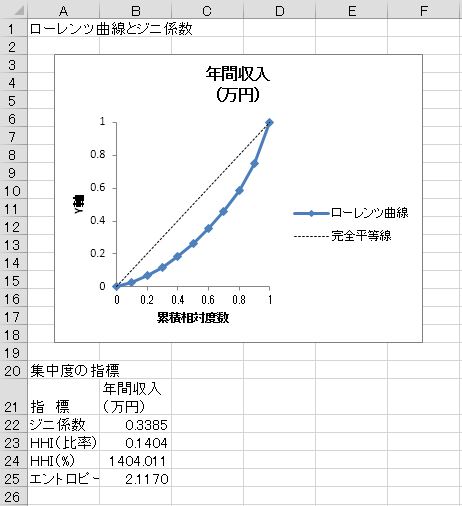
★
I'm gonna go of course
of course
I drink your milkshake
https://tyt.com/watch/the-young-turks/5698cf53051edd712/episodes/9743695f3d815000


okay so i'm looking at the comments and i see this comment from occam's taser says.

返信削除https://vt.tiktok.com/ZSeF2rYU4/
A:
what are you going to be got halloween?
B:
I want to be something scary this year.
A:
not something cute?
B:
no I want to be something that actually scares a lot of people and isn't seggsy at all.
A:
I'm pretty sure that everything scary can also be seggsy.
B:
the debt ceiling.
congress does enforce it as a legal constraint so because of that it's real.
A:
the debt ceiling is not real.
yes but this arbitrary constraint was imposed by conaress sn it can be waived or suspended by congress.
B:
ok but it's halloween.
you were mermaid man is mermaid man real?
A:
no
B:
exactly
A:
what would you even wear?
how do you dress as the debt limit?
B
《WE CAN'T HAVE NICE THINGS.》
A:
ハロウィンでは何になりたい?
B:
今年は怖いものになりたいな。
A:
可愛いものではなくて?
B:
そうじゃなくて、多くの人を怖がらせるような、魅惑的でないものになりたい。
A:
怖いものは、きっと魅惑的にもなると思うんだけど。
B:
債務上限よ。
国会が法的拘束力を持っているので、それはリアルよ。
A:
債務上限はリアルではないわ。
この恣意的な制約は、議会によって課されたものであり、議会はそれを放棄したり中断したりすることができるわ。
B:
いいけど、ハロウィンだからね。人魚姫はリアル?
A:
いいえ。
B:
その通り。
A:
何を着ていくの?
借金の上限としてどのような服装をするの?
B
《素敵なものは持てません。》
《私たちは素晴らしいものを手にできない》
返信削除
返信削除https://vt.tiktok.com/ZSeF2mjDU/
Reply to mohammbrand's comment.
It does devalue the currency doesn't it?
I've been seeing USD falling ever since theystarted printing money.
where does the money come from?
(often times these are digital dollars)
& when inflation acellerates, there are many potential causes!
Unfortunately MMTers have not been running the Fed and public spending in the way I described.
mohammbrandさんのコメントに返信します。
確かに通貨の価値は下がりますよね。
お金を印刷するようになってから、米ドルが下がっているのを見たことがあります。
そのお金はどこから来ているのか?
(多くの場合、これらはデジタル・ドルです)
インフレが加速する場合、多くの潜在的な原因があります。
残念ながら、MMTerは私が説明したような方法でFRBと公共支出を担当していません。
返信削除Jessica (Ka) Burbank
@JessicaLBurbank
pls caption this pic.twitter.com/PZbj3i5jtJ
2023/08/02 10:40
https://twitter.com/jessicalburbank/status/1686552395914805248?s=61
slowslow2772
@slowslow2772
@JessicaLBurbank “Let's create money like this.”
2023/08/02 13:01
https://twitter.com/slowslow2772/status/1686587996085313537?s=61