| ||||||||||||||||||||||||



| ||||||||||||||||||||||||

https://stephaniekelton.substack.com/p/when-will-the-rate-hikes-break-something
https://www.cnbc.com/2022/09/30/ron-insana-something-big-could-be-about-to-break-in-markets-as-rates-continue-to-rise.html
(When) Will the Rate Hikes Break Something?
Stephanie Kelton 8 hr ago 20 7
There's a lot of concern that the Federal Reserve is going to keep raising interest rates until it forces something to "break." I share that concern.
If you follow financial markets, then you've undoubtedly heard people like Scott Minerd say that he thinks the Fed will continue with rate increases until "something breaks." He's been arguing for some time that the Fed is steering us into a crisis by relying on backward-looking price (and other) signals for guidance about the underlying strength of the US economy. He's worried that if the Fed keeps tightening the way markets currently anticipate, then it will lead to a financial accident that could "spill over into the financial markets."
San Francisco Federal Reserve President Mary Daly has dismissed those concerns, insisting:
We definitely don't raise rates until something breaks; we actually are forward-looking.
As Daly (rightly) notes, the Fed doesn't simply plug some historical data into some kind of Taylor-Rule model when deciding on its next policy move. Still, Powell & Co. appear committed to staying the course—downplaying financial risks and mounting evidence that it has done enough—by vowing to "keep at it" even if it means hiking into a recession.
This uber-hawkish Fed has a lot of people worried, including the IMF and the United Nations Conference on Trade and Development (UNCTAD), the World Bank.
My friend, CNBC contributor Ron Insana, agrees. He points to the recent turmoil in UK gilt markets but says:
We are on the cusp of an even bigger break in the global financial architecture as Federal Reserve officials are now doubling down on the need to raise rates to fight what appears to be falling inflation, irrespective of the consequences.
Ron reminds us that excessive rate hikes won't just "break something" in the US economy—the labor market, housing, commercial real estate, the stock market, etc. The breakage will spill over onto the rest of the world:
Volcker's draconian policies…came with an associated and unanticipated cost even beyond the deep double-dip recession that ensued.
Rapidly rising rates in the U.S. put a strain on Latin American nations which had borrowed considerable amounts of money from U.S. commercial banks throughout the 1970s.
Those debts, largely denominated in dollars, were hammered by a combination of higher rates and falling domestic currency values, effectively and substantially increasing the debt service burden on those nations.
As rates rose sharply, Latin American nations threatened to default on their outstanding debts, an event that could have rendered many U.S. money center banks, effectively, insolvent. Volcker had no choice but to stop raising rates and start cutting them to relieve the strains on the U.S. banking system.
So, even under those circumstances the Fed raised rates until something broke…
If history is any guide, and in financial markets it almost always is, the Fed will be forced to pause, if not pivot, on policy in the relatively near future.
They may deny it. They may not want to do it. They may refuse to even acknowledge the possibility of such a drastic change in policy.
But change they will.
I'm with Ron.
https://www.cnbc.com/2022/09/30/ron-insana-something-big-could-be-about-to-break-in-markets-as-rates-continue-to-rise.html
Ron Insana: Something big could be about to break in markets as rates continue to rise★★
https://www.cnbc.com/2022/09/30/ron-insana-something-big-could-be-about-to-break-in-markets-as-rates-continue-to-rise.html
ロン・インサナ:金利が上昇し続ける中、何か大きなものが市場に参入しようとしている可能性があります
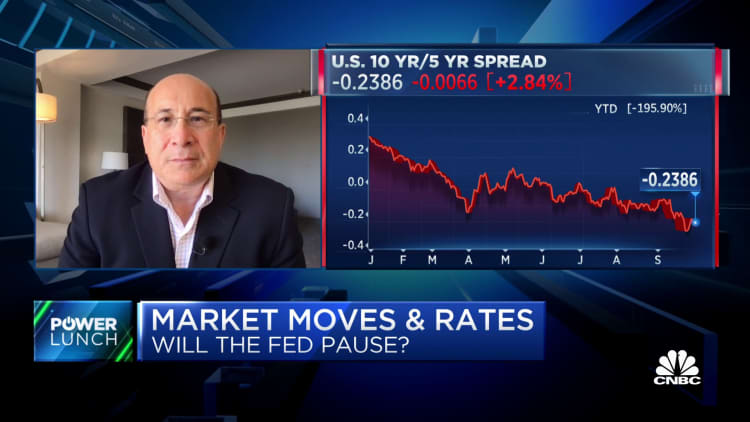
https://vimeo.com/760888616
。。。
Q:
先週、中央銀行家の行動について書いて、米国が主導する金利の急激な上昇を示唆しています。連邦準備制度理事会は、近いうちに国内であろうと海外であろうと、金融市場で有意義なブレークにつながるだろう。
さて、その日が来たようです。
水曜日、現代の中央銀行が基づいている慣行の歴史的モデルであるイングランド銀行は、英国の債券市場に介入し、「金箔」利回りが特定の英国の年金基金を沈めるのを防ぐため、伝えられている。(ギルトは、かつて印刷された金エッジ紙にちなんで名付けられた英国の債券です。)
私たちの多くに知られていないが、合計で約1.7兆ドルの資産を保有している英国の年金基金の中には、金利の上昇をヘッジするだけでなく、特定の種類の取引から得られる利益を増幅するためにデリバティブを使用していました。
言い換えれば、年金基金は借りたお金を使って金融市場で投機した。
金利が急上昇するにつれて、これらの取引のいくつかは価値が崩壊し、同じファンドにマージンコールを生み出し、英国の金融市場でリーマンに近い瞬間を引き起こしました。
BoEは介入して債券を購入し、長期利回りを全パーセンテージポイント以上下げ、米国の10年利回りも押し下げました。それはヨーロッパと米国で反射市場集会につながった。水曜日は、わずか24時間後に消去されませんでした。
「さらに大きな休憩」が先に進む
連邦準備制度理事会の当局が、結果に関係なく、インフレが低下しているように見えるものと戦うために金利を引き上げる必要性を倍増しているため、私たちは世界の金融アーキテクチャのさらに大きなブレークの危機に瀕しています。
一部のFRB当局者は、景気後退の中でも金利が上昇し続け、インフレが2%という目標に下がるまで金利引き上げは止まらないことを認めた。それが現在の認識目標の4.6%を上回る料金を引き上げることを意味するのか、それとも長期間料金を維持することを意味するのかは不明です。
明らかなことは、私がかなり長い間提案してきたことです。その不況は、1980年代初頭に金利を20%に引き上げ、10年以上にわたって荒れ狂っていたインフレを殺す不況と飼いならされたインフレを誘発するために金利を20%に引き上げた故ポール・ボルカーの政策決定を反映しています。
私は、選択された歴史的アナログが現在の政策のガイドとして使用するのは間違っていると主張しました。
歴史的記録のために、ボルカーの厳格な政策はインフレを飼いならすことに成功しましたが、その後の深いダブルディップ不況を超えても、関連的で予期せぬコストもももってきました。
米国の急激な金利上昇は、1970年代を通じて米国の商業銀行からかなりの金額を借りていたラテンアメリカ諸国に負担をかけました。
これらの債務は、主にドル建てで、より高い金利と国内通貨価値の低下の組み合わせによって打撃を受け、それらの国の債務サービス負担を効果的かつ大幅に増加させました。
金利が急激に上昇するにつれて、ラテンアメリカ諸国は未払いの債務不履行を脅した。これは、多くの米国のマネーセンター銀行を効果的に破産させる可能性のある出来事である。ボルカーは、金利引き上げを中止し、米国の銀行システムの負担を軽減するためにそれらを削減するしかなかった。
したがって、そのような状況下でも、FRBは何かが壊れるまで料金を引き上げました。
彼らは1987年(10月の株式市場の暴落)、1994年(メキシコペソ危機とオレンジ郡の破産)に再びそれを行い、1997年と1998年に試みるが、アジアの通貨危機とロシアの債務不履行とその後の長期資本管理の大規模な失敗によって停止されました。LTCMは、米国の銀行から借りたお金を使って国際債券を推測し、その崩壊が米国の金融システム全体の支払能力を脅かしたヘッジファンドでした。
FRBはすぐに停止しなければならないでしょう
もう一度、私たちはそのしきい値に達しているか、すでに越っているかもしれないようです。
英国債券市場の崩壊は、炭鉱のカナリアであり、地球の近隅と遠くの隅の両方にレバレッジ投機的賭けの未知または認識されていないポケットがあることを示しています。
私が正しければ、イングランド銀行による英国債の強制購入は、より厳しい金融政策でまばたきする最初の中央銀行を示していますが、それが最後ではありません。次の靴が落ちるのは時間の問題です。
歴史がガイドであり、金融市場ではほとんどの場合、FRBは比較的近い将来に政策を一時停止することを余儀なくされます。
彼らはそれを否定するかもしれない。彼らはそれをしたくないかもしれない。彼らは、このような政策の劇的な変化の可能性を認めることさえ拒否するかもしれません。
しかし、彼らは変わるでしょう。
元FRB議長のアラン・グリーンスパンが長期資本の崩壊時にプライベートな会話で私にしたコメントを思い出しました。
彼は理論的には、市場に失敗を処理させることは良い考えであることに同意するだろうが、「実際には、それは私が喜んで行う社会実験ではない」と述べた。
彼の言葉は今後数日と数週間で再び真実に聞こえるだろう。
— ロン・インサナはCNBCの寄稿者であり、シュローダーズのシニアアドバイザーです。
I wrote about the action of central bankers last week, suggesting that the rapid increase in interest rates, led by the U.S. Federal Reserve, would lead to a meaningful break in financial markets, whether at home or abroad sometime soon.
Well, it appears that day has come.
On Wednesday, the Bank of England, the historical model on whose practices modern central banking is based, intervened in the British bond market, reportedly, to prevent spiking "gilt" yields from sinking certain British pension funds. (Gilts are British bonds that are named for the gold-edged paper on which they were once printed.)
Unbeknownst to many of us, some British pension funds, which in total hold about $1.7 trillion in assets, used derivatives both to hedge a rise in interest rates but also to amplify gains coming from certain kinds of trades.
In other words, pension funds used borrowed money to speculate in financial markets.
As rates shot up, some of those trades collapsed in value, creating margin calls on those self-same funds, triggering a near-Lehman moment in U.K. financial markets.
The BoE stepped in and bought bonds, driving long-term yields down by over a full percentage point, and pushed U.S. 10-year yields down as well. That led to a reflex market rally in Europe and the U.S. Wednesday, which was all but erased a mere 24 hours later.
'An even bigger break' ahead
We are on the cusp of an even bigger break in the global financial architecture as Federal Reserve officials are now doubling down on the need to raise rates to fight what appears to be falling inflation, irrespective of the consequences.
Some Fed officials admitted that rates will continue to rise even amid a recession and that rate hikes won't stop until inflation falls to its stated target of 2%. Whether that means raising rates above the current perceived target of 4.6%, or keeping rates up for an extended period, remains unclear.
What is clear is something I have suggested for quite some time — that recession is a feature, not a bug, of Fed policy, echoing the policy decisions of the late Paul Volcker who in the early 1980s drove interest rates to 20% to induce an inflation-killing recession and tame inflation that had been raging for over a decade.
I have argued that the chosen historical analog is the wrong one to use as a guide to current policy.
For the historical record, while Volcker's draconian policies were successful in taming inflation, they also came with an associated and unanticipated cost even beyond the deep double-dip recession that ensued.
Rapidly rising rates in the U.S. put a strain on Latin American nations which had borrowed considerable amounts of money from U.S. commercial banks throughout the 1970s.
Those debts, largely denominated in dollars, were hammered by a combination of higher rates and falling domestic currency values, effectively and substantially increasing the debt service burden on those nations.
As rates rose sharply, Latin American nations threatened to default on their outstanding debts, an event that could have rendered many U.S. money center banks, effectively, insolvent. Volcker had no choice but to stop raising rates and start cutting them to relieve the strains on the U.S. banking system.
So, even under those circumstances the Fed raised rates until something broke.
They would do that again in 1987 (October stock market crash), in 1994 (Mexican peso crisis and Orange County bankruptcy) and would try in 1997 and 1998, but were stopped by the Asian currency crisis and the Russian debt default and subsequent, and massive, failure of Long-Term Capital Management. LTCM was a hedge fund that used so much borrowed money from U.S. banks to speculate on international bonds that its collapse threatened the solvency of the entire U.S. financial system.
Fed will have to stop soon
It appears that once again we are reaching — or may have already crossed — that threshold.
The near collapse of the British bond market may just be the canary in the coal mine, indicating that there are unknown or unrecognized pockets of leveraged speculative bets in both near and far-flung corners of the globe.
If I'm right, the forced purchase of British bonds by the Bank of England signals the first central bank to blink on tighter monetary policy but it will not be the last. It is only a matter of time now before the next shoe drops.
If history is any guide, and in financial markets it almost always is, the Fed will be forced to pause, if not pivot, on policy in the relatively near future.
They may deny it. They may not want to do it. They may refuse to even acknowledge the possibility of such a drastic change in policy.
But change they will.
I am reminded of a comment former Fed Chair Alan Greenspan made to me in a private conversation during the collapse of Long-Term Capital as he was being pressured to let the firm fail.
He said in theory he would agree that letting markets handle the failure is a good idea, but "in practice, it's not a social experiment I'm willing to undertake."
His words will ring true again in the days and weeks ahead.
— Ron Insana is a CNBC contributor and a senior advisor at Schroders.
★★★
ステファニー・ケルトン「(いつ)利上げで"何かが壊れる"のか?」(2022年10月8日)

Stephanie Kelton, "(When) Will the Rate Hikes Break Something?", The Lens, Oct 8, 2022
米連邦準備制度理事会(FRB)は、何かが "壊れる"事態に陥るまで金利を上げ続けるのではないかという懸念が多くあがっている。私も同感だ。
金融市場の動向をフォローしている人なら、スコット・マイナード〔米投資運用会社グッゲンハイム・パートナーズ最高投資責任者(CIO)〕のような人々が「FRBは"何かが壊れる"(something breaks)まで利上げを続けるだろう」と言っているのを耳にしたことがあるに違いない。彼は以前から、FRBは米国経済の底力を示すために、後ろ向き(backward-looking)な価格(やその他の)シグナルに頼ることで、我々を危機へと導いていると主張してきた。もしFRBが現在市場が予想しているような引き締めを続けるなら、"金融市場に波及する "ような金融事故につながるだろうと懸念しているのだ。
サンフランシスコ連銀のメアリー・デイリー総裁は、こうした懸念を一蹴し、次のように主張している。
私たちは何かが壊れるまで利上げをすることはない。実際のところ、私たちは前向き(forward-looking)だ。
デイリーが(正しく)指摘するように、FRBは次の政策行動を決定する際に、ある種のテイラー・ルール・モデルに過去のデータを単純に差し込むことはしない。しかし、パウエル議長らFRB首脳陣は、不況に突入しても〔利上げを〕「根気強く続けていく」と誓い、(金融リスクを軽視し、十分にやり遂げたという証拠を積み上げる)この路線を維持することにコミットしているようだ。
この超タカ派のFRBは、IMFや国連貿易開発会議(UNCTAD)、世界銀行など多くの人々を不安にさせている。
私の友人でCNBCへの寄稿者であるロン・インサナも同意見だ。彼は、最近の英国ギルト(英国債)市場の混乱を指摘しつつ、こう言っている。
世界の金融構造はさらに大きく崩れようとしている。というのもFRBの当局者は現在、下がり気味のインフレ率と戦うために、どんな結末を迎えようとも金利を引き上げる必要性に倍賭け(doubling down) [1] しているのだ。
インサナが私たちに思い出させようとするのは、過度の利上げの影響は、米国経済の(労働市場、住宅、商業用不動産、株式市場など)"何かが壊れる"だけでは済まないという点だ。その破壊的な影響は世界の他の地域にまで波及する。
ボルカーの強硬な政策は…その結果発生した深刻なW字不況に留まらず、関連する予期せぬ代償を伴うものだった。
米国の急激な金利上昇は、1970年代を通じて米国の商業銀行から多額の資金を借りていた中南米諸国を圧迫した。
これらの債務は大部分がドル建てであり、金利上昇と国内通貨価値の下落が相まって打撃を受け、当該諸国の債務返済負担は事実上大幅に増加した。
金利が急上昇すると、中南米諸国が債務不履行に陥る恐れがあり、米国のマネーセンター・バンク [2] の多くが事実上支払不能に陥る可能性があった。ボルカーは、米国の銀行システムの緊張を緩和するために、金利の引き上げを止め、引き下げに転じるしかなかった。
つまり、そのような状況下でも、FRBは何かが壊れるまで金利を上げたわけだ…。
歴史が示すとおりであれば、金融市場ではほとんどそうだが、FRBは比較的近い将来、政策について方針転換とまではいかなくても、一時停止を余儀なくされるだろう。
FRBはその可能性を否定するかもしれない。そんな手は打ちたくないのかもしれない。政策の大幅な変更の可能性を認めることさえ拒否するかもしれない。
しかし、FRBが変わることには違いない。
私もロンに同意見だ。

0 件のコメント:
コメントを投稿