嘘を信じ込ませるのがどんなに簡単で、その嘘をひっくり返すのがどれほど難しいことか。
完全なる自伝2-662頁


https://youtu.be/sInAKeluQ0E
ケルトン教授2021プレゼン資料
https://www.masic.com.sa/sites/default/files/Stephanie-Presentation-21.pdf

It ain't what you don't know that gets you into trouble.
It's what you know for sure that just ain't so.
Mark Twain
典拠は不明、
It Ain’t What You Don’t Know That Gets You Into Trouble. It’s What You Know for Sure That Just Ain’t So – Quote Investigator
Handbook of Alternative Theories of Economic Development - xxii ページ

Adventures of Huckleberry Finn (Tom Sawyer's Comrade) - 264 ページ
https://www.snopes.com/fact-check/did-mark-twain-say-its-easier-to-fool-people-than-to-convince-them-that-they-have-been-fooled/
Did Mark Twain Say 'It's Easier to Fool People Than to Convince Them That They Have Been Fooled'?
While the quote "it's easier to fool people than to convince them that they have been fooled" is often attributed to Mark Twain, there's no evidence that the author actually wrote this phrase.

Claim
Mark Twain said that it's easier to fool people than to convince them that they have been fooled.
Origin
A quote frequently attributed to Mark Twain gained greater prominence in 2016 as media publications debated the effect of "fake news" on the internet:
It's easier to fool people than to convince them that they have been fooled.
The quote shown here has been attributed to Mark Twain (or Samuel Clemens, if you prefer) by dozens of web sites, books, and memes, and was even available on a T-shirt sold by Amazon. However, none of these sources provided any information about where or when Twain allegedly said this. Was it written or spoken? Did it appear in a book or a newspaper article?
A lack of source information for this particular quote is especially noteworthy, because Mark Twain's writing was very well-documented. Several volumes of quotes from the author of Huckleberry Finn have been compiled, yet we were unable to find this quote in any of them.
Barbara Schmidt, who operates TwainQuotes.com, told us that she also had no evidence that Twain wrote or uttered this phrase. However, Schmidt directed us to a passage from the Autobiography of Mark Twain, Volume 2, in which he expressed a similar opinion about the power of a lie::
The general idea of that quote (although not that wording) is one Mark Twain expressed in regard to lying — in that is it hard to convince people they have been a victim of a lie.
He did state:
"The glory which is built upon a lie soon becomes a most unpleasant incumbrance. … How easy it is to make people believe a lie, and how hard it is to undo that work again!" – Autobiographical dictation, 2 December 1906. Published in Autobiography of Mark Twain, Volume 2 (University of California Press, 2013)
The full quote, which can be viewed via The Mark Twain Project, reads as follows (emphasis ours):
The truth is, I did not have to wait long to get tired of my triumphs. Not thirty days, I think. The glory which is built upon [a] lie soon becomes a most unpleasant incumbrance. No doubt for a while I enjoyed having my exploits told and retold and told again [in my presence] and wondered over and exclaimed about, but I quite distinctly remember that there presently came a time [when] the subject was wearisome [and odious] to me and I could not endure the disgusting discomfort of [it.] I am well aware that the world-glorified doer of a deed of great and real splendor has just my experience; I know that he deliciously enjoys hearing about it for three or four weeks, and that pretty soon after that he begins to dread the mention of it, and by and by wishes he had been with the damned before he ever thought of doing that deed; I remember how [General Sherman used to rage and swear [over] "When we were marching through Georgia,"] which was played at him and sung at him everywhere he went; still, I think I suffered a shade more than the legitimate hero does, he being privileged to soften his misery with the reflection that his glory was at any rate golden and reproachless in its origin, whereas I had no such privilege, there being no possible way to make mine respectable.
How easy it is to make people believe a lie, and [how] hard it is to undo that work again! [Thirty-five years after those evil exploits of mine I visited my old mother, whom I had not seen for ten years]; and being moved by what seemed to me a rather noble and perhaps [page 303] heroic impulse, I thought I would humble myself and confess my ancient fault. It cost me a great effort to make up my mind; I dreaded the sorrow that would rise in her face, and the shame that would look out of her eyes; but after long and troubled reflection, the sacrifice seemed due and right, and I gathered my resolution together and made the confession.
It is possible that someone else paraphrased Twain's words, and others conflated both the actual phrase and the paraphrase over time. However, we have been unable to find evidence that Twain spoke or wrote this exact phrase.
It Ain't What You Don't Know That Gets You Into Trouble. It's What You Know for Sure That Just Ain't So
Mark Twain? Josh Billings? Artemus Ward? Kin Hubbard? Will Rogers? Anonymous?
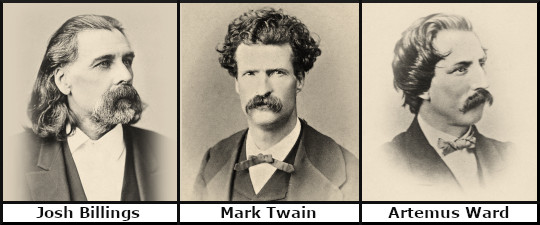 Dear Quote Investigator: The Oscar-winning 2015 film "The Big Short" begins with a display of the following statement:
It ain't what you don't know that gets you into trouble. It's what you know for sure that just ain't so.
The brilliant humorist Mark Twain receives credit, but I have been unable to find a solid citation. This quip is very popular. Would you please investigate?
Quote Investigator: Scholars at the Center for Mark Twain Studies of Elmira College have found no substantive evidence supporting the ascription to Mark Twain.[1]
The observation has been attributed to several other prominent humorists including: Josh Billings (pseudonym of Henry Wheeler Shaw), Artemus Ward (pseudonym of Charles Farrar Browne), Kin Hubbard (pen name of Frank McKinney Hubbard), and Will Rogers. Yet, it is unlikely then any of them said it. The creator remains anonymous based on current evidence.
The saying is difficult to trace because it falls within an evolving family of remarks concerning faulty knowledge and memory. Three processes operate on members of the family to generate new members and ascriptions incrementally:
- Statements are rephrased over time.
- Statements are hybridized together to produce new statements.
- Attributions are shifted from one prominent humorist to another.
The family contains some comments with genuine ascriptions. For example, in 1874 a compendium of wit and humor from Josh Billings was published. The work employed dialectal spelling which causes headaches for modern researchers who are attempting to find matches using standard spelling. The following pertinent item appeared in a section labeled "Affurisms", i.e., "Aphorisms". Emphasis added to excerpts by QI:[2]
I honestly beleave it iz better tew know nothing than two know what ain't so.
Here is the statement written with standard spelling:
I honestly believe it is better to know nothing than to know what ain't so.
This remark partially matched the saying under investigation, and it acted as a seed in the evolving family of remarks.
Here are additional selected citations in chronological order.
Billings died in 1885, and in 1899 a religious orator whose words were recorded in the pages of "The Pacific Unitarian" reassigned a rephrased version of the saying from Billings to Twain:[3]
Perhaps, as Mark Twain observed, it is better not to know so much than to know so many things that aren't so.
In 1900 "The Dietetic and Hygienic Gazette" printed a statement attributed to Billings with quotation marks surrounding only a segment. The full statement included the key word "trouble" which occurs in the target saying:[4]
Upon reading the first item we are forcibly reminded of the pertinent and pithy remark of the lamented humorist, Josh Billings, that the trouble with a great many of us is "we know so many things that ain't so."
In 1909 an advertisement within a book called "A Drum's Story" ascribed a remark to Twain about old men and memory that contained the key word "trouble":[5]
Mark Twain once said that "the trouble with old men is they remember so many things that ain't so," but this book of war reminiscences is different from most of Twain's reminiscences.
In 1911 the well-known author G. K. Chesterton implausibly ascribed to humorist Artemus Ward who died in 1867 a statement that partially matched the target:[6]
One of the two or three wisest sayings uttered on this ancient earth was the remark of Artemus Ward, "It ain't so much men's ignorance that does the harm as their knowing so many things that ain't so."
Twain died in 1910, and his friend Albert Bigelow Paine published a multi-volume biography of the luminary in 1912. Paine presented two quotations from Twain that partially matched the saying being explored:[7]
"When I was younger I could remember anything, whether it happened or not; but I am getting old, and soon I shall remember only the latter."
At another time he paraphrased one of Josh Billings's sayings in the remark: "It isn't so astonishing, the number of things that I can remember, as the number of things I can remember that aren't so."
In 1913 "The Atlantic Monthly" credited Billings with the same statement that Chesterton ascribed to Artemus Ward in 1911:[8]
One of the wisest sayings uttered on this ancient earth was Josh Billings's remark, 'It ain't so much men's ignorance that does the harm as their knowing so many things that ain't so.'
In 1915 "The Catholic World" attributed a similar statement to Billings:[9]
. . . "It is not so much the ignorance of mankind," Josh Billings said, "that makes them ridiculous, as the knowing so many things that ain't so."
In 1917 a military book titled "The Unwritten History of Braddock's Field" included a chapter by George H. Lamb that credited Twain with a partial match containing the word "trouble":[10]
Members of the committee were reminded of Mark Twain's dictum, that the trouble with reminiscences is not that people know too much, but that they know so many things that aren't so.
In April 1917 "The Lyceum Magazine" printed another expression attributed to Twain about "old men" which contained the key word "trouble:[11]
Mark Twain used to say that "the trouble with old men's memories is that they remember so many things that ain't so." Since I heard him say that several times I have been careful not to state anything unusual lest my friends should think that Mark Twain's arraignment is true in my case.
In 1921 a piece in "The Country Gentleman" printed a saying ascribed to Billings:[12]
It ain't so much people's ignorance that does the harm as their knowing so darned much that ain't so.—JOSH BILLINGS.
In 1923 B. C. Forbes founder of "Forbes" magazine wrote about a speech delivered by Francis H. Sisson, vice-president of the Guaranty Trust Company of New York:[13]
Last evening Mr. Sisson talked to a large gathering of Iowa editors. His theme was the oft-quoted observation of Josh Billings that "the trouble with the American people is not so much their ignorance as the tremendous number of things they know that ain't so."
In 1931 the "Ithaca Journal-News" of Ithaca, New York printed an expression attributed to Billings that was semantically close to the target saying:[14]
It ain't what a man don't know-that makes him a fool; it's the awful sight of things he knows' that ain't so. Josh Billings said something of that sort, and Josh Billings knew what he was talking about.
In 1947 the "Janesville Daily Gazette" printed a close syntactic and semantic match ascribed to Twain:[15]
It ain't so much the things that people don't know that makes trouble in this world, as it is the things that people know that ain't so. — Mark Twain.
In 1958 the character Abe Martin received credit for a saying within this family. Cartoonist Kin Hubbard was the creator of Abe Martin:[16]
Abe Martin's definition of ignorance was "not so much what a person don't know, as what he knows that ain't so." And he is certainly correct.
In June 1964 the "Boston Traveler" of Boston, Massachusetts credited Artemus Ward with a strong syntactic and semantic match:[17]
Or, as Artemus Ward put it, "it ain't so much the things we don't know that get us into trouble. It's the things we know that ain't so."
In November 1964 Ronald Reagan who later became the U.S. President delivered a speech on television that contained a pertinent instance without attribution:[18]
Well, the trouble with our liberal friends is not that they are ignorant, but that they know so much that isn't so!
In 1977 "Peter's Quotations: Ideas for Our Time" by Laurence J. Peter credited Kin Hubbard with a version of the saying:[19]
'Tain't what a man don't know that hurts him; it's what he knows that just ain't so.
—Frank McKinney Hubbard ("Kin Hubbard")
In 1978 "New York Magazine" printed an instance together with an unlikely ascription to funny man Will Rogers:[20]
The trouble with most people, as Will Rogers observed, is not that they don't know much but that they know so much that isn't true.
In 1983 former U.S. Vice President Walter Mondale employed the saying while criticizing President Ronald Reagan. Mondale credited the words to Will Rogers:[21]
"I keep quoting Will Rogers as saying of (former President Herbert) Hoover that it's not what he doesn't know that bothers me, it's what he knows for sure that just ain't so," Mondale said.
In 2006 the Oscar-winning documentary about climate change titled "An Inconvenient Truth" displayed an instance of the saying and credited Mark Twain:[22]
What gets us into trouble
is not what we don't know
It's what we know for sure
that just ain't so– Mark Twain
In conclusion, the target saying evolved incrementally over time. Instances have been attributed to a variety of humorists such as Mark Twain, Josh Billings, Artemus Ward, Kin Hubbard, and Will Rogers. However, there is no substantive evidence that the saying was crafted but one of these funny men. The ascription remains anonymous.
The 1874 quotation from Josh Billings: "I honestly beleave it iz better tew know nothing than two know what ain't so" is further explored on this webpage.
The quotation from Mark Twain: "When I was younger I could remember anything, whether it happened or not; but I am getting old, and soon I shall remember only the latter" is further explored on this webpage.
Image Notes: Public domain picture of Josh Billings (Henry Wheeler Shaw) from the Harvard Theatre Collection. Public domain picture of Mark Twain (Samuel Clemens) by Abdullah Frères circa 1867 from the Library of Congress. Public domain picture of Artemus Ward (Charles Farrar Brown) from the Harvard Theatre Collection. Images accessed via Wikimedia Commons. Images have been resized, retouched, and cropped.
(Great thanks to Tom Beeler, Stephen Dorfman, Francis Neelon, Marcos Tatijewski, Simon Lancaster, Dick Plotz, Lane Greene, and George Dinwiddie whose inquiries led QI to formulate this question and perform this exploration. Special thanks to fellow researchers Matt Seybold, Suzy Platt, Ralph Keyes, Fred R. Shapiro, Nigel Rees, and Barry Popik who have explored quotations in this family. Additional thanks to Lane Greene who pointed to the 1964 statement of Ronald Reagan and Dick Plotz who pointed to Walter Mondale's 1983 statement.)
Update History: On November 23, 2018 the November 1964 and the June 1983 citations were added.
| ↑1 | Website: Center for Mark Twain Studies, Article title: The Apocryphal Twain: "Things We Know That Just Ain't So.", Article author: Matt Seybold, Date on website: October 6, 2016, Website description: Center dedicated to fostering and supporting scholarship and pedagogy related to all aspects of Mark Twain based at Elmira College in Elmira, New York. (Accessed marktwainstudies.com on November 18, 2018) link |
|---|---|
| ↑2 | 1874, Everybody's Friend, Or; Josh Billing's Encyclopedia and Proverbial Philosophy of Wit and Humor, Section: Affurisms: Sollum Thoughts, Quote Page 286, American Publishing Company, Hartford, Connecticut. (Google Books Full View) link |
| ↑3 | 1899 February, The Pacific Unitarian, Volume 7, Number 4, Address of Rev. Charles R. Brown, Start Page 118, Quote Page 119, Column 2, San Francisco, California. (Google Books Full View) link |
| ↑4 | 1900 October, The Dietetic and Hygienic Gazette, Volume 16, Number 10, Department of Notes and Queries, Start Page 641, Quote Page 643, The Gazette Publishing Company, New York. (Google Books Full View) link |
| ↑5 | 1909, A Drum's Story: And Other Tales by Delavan S. Miller, (Advertising material for the author's previous book: What Henry Haynie Has to Say in the Boston Times of D. S. Millers "Drum Taps in Dixie"), Star Page 231, Quote Page 231, Hungerford-Holbrook Company, Watertown, New York. (Google Books Full View) link |
| ↑6 | 1911 October 14, The Illustrated London News, Our Notebook by G. K. Chesterton, Start Page 615, Quote Page 615, The International News Company, New York. (Google Books Full View) link |
| ↑7 | 1912, Mark Twain: A Biography: The Personal and Literary Life of Samuel Langhorne Clemens by Albert Bigelow Paine, Volume 3 of 4, Chapter 239: Working With Mark Twain, Quote Page 1269, Harper & Brothers Publishers, New York. (Verified with scans) |
| ↑8 | 1913 July, The Atlantic Monthly, Volume 112, My Garden Beasts by Lucy Elliot Keeler, Start Page 134, Quote Page 140, Column 2, The Atlantic Monthly Company, Boston, Massachusetts. (Google Books Full View) link |
| ↑9 | 1915 November, The Catholic World, Volume 102, Number 608, Some Chapters in the History of Feminine Education by James J. Walsh, M.D. Ph.D., Start Page 194, Quote Page 194, Published by the Paulist Fathers, The Office of the Catholic World, New York. (Google Books Full View) link |
| ↑10 | 1917, The Unwritten History of Braddock's Field (Pennsylvania), Prepared by the History Committee Under the Editorship of Geo. H. Lamb for the Celebration of the Golden Jubilee of Braddock, Conclusion by George H. Lamb, Start Page 311, Quote Page 311, Braddock, Pennsylvania. (Google Books Full View) link |
| ↑11 | 1917 April, The Lyceum Magazine, Volume 26, Number 11, Dr. Conwell's Talks With Platform Workers by Russell H. Conwell (Honorary President I.L.A.), Quote Page 26, Column 2, Chicago, Illinois. (Google Books Full View) link |
| ↑12 | 1921 April 16, The Country Gentleman, Where Ignorance Is Mis-: Misrepresentation and Misunderstanding Befuddle Our Tax Laws by Harry R. O'Brien, Start Page 13, Quote Page 13, Column 1, The Curtis Publishing Company, Philadelphia, Pennsylvania. (Google Books Full View) link |
| ↑13 | 1923 February 10, The Buffalo Evening Times, Finance and Business by B. C. Forbes, Quote Page 11, Column 1, Buffalo, New York. (Newspapers_com) |
| ↑14 | 1931 July 6, Ithaca Journal-News, "Things Which Ain't So" By William Trufant Foster and Waddill Catchings , Quote Page 4, Column 4, Ithaca, New York. (Newspapers_com) |
| ↑15 | 1947 May 21, Janesville Daily Gazette, Editorial Panorama, (Filler item), Quote Page 6, Column 2, Janesville, Wisconsin. (Newspapers_com) |
| ↑16 | 1958 March 5, San Francisco Examiner, Health for Today: Facts Distorted Into Fads by W. W. Bauer M.D. (Director of Health Education American Medical Association), Section 2, Quote Page 2, Column 4, San Francisco, California. (Newspapers_com) |
| ↑17 | 1964 June 26, Boston Traveler, Family Finance: Statistics Can Be Twisted To Fool Unwary by Dick Miller, Quote Page 24, Column 3 and 4, Boston, Massachusetts. (GenealogyBank) |
| ↑18 | 1964 November 2, Ames Daily Tribune, (Political advertisement titled: Did You See Ronald Reagan's TV Speech?), Quote Page 8, Column 4, Ames, Iowa. (Newspapers_com) |
| ↑19 | 1977, "Peter's Quotations: Ideas for Our Time" by Laurence J. Peter, Topic: Ignorance, Quote Page 260, William Morrow and Company, New York. (Verified with hardcopy) |
| ↑20 | 1978 July 10, New York Magazine, Volume 11, Number 28, True or False by Randy Cohen, Start Page 29, Quote Page 30, Published by New York Media, LLC. (Google Books Full View) link |
| ↑21 | 1983 June 15, San Francisco Examiner, Demos rebut Reagan over school funds (Associated Press), Quote Page A5, Column 1, San Francisco, California. (Newspapers_com) |
| ↑22 | Year: 2006, Movie: An Inconvenient Truth, Director: Davis Guggenheim, Studio: Paramount, Primary Narrator: Al Gore, Video Access: Amazon Prime Service, (Quotation starts at 7 minutes 45 seconds of 1 hour 36 minutes 34 seconds; text of quotation and attribution to Mark Twain are displayed in the video; quotation is spoken by Al Gore but attribution is not), Description; Documentary about the dangers of climate change. (Movie viewed via Amazon Prime by QI on November 19, 2018) |
- 大神田丈二・笹田直人(編著)『たのしく読める英米幻想文学』ミネルヴァ書房、1997年(初版)
アーサー王宮廷のコネチカット・ヤンキー
概要
現代(出版当時)のアメリカ人技師が、タイム・スリップしてアーサー王時代のイングランドに紛れ込む物語である。トウェインは、理性的・人道的な現代人である主人公の目を通して中世イングランド社会(腐敗した貴族制、キリスト教会の圧制、騎士道の欺瞞、人間の愚昧さ・非道さ・強欲さなど)を描き、それと類似している(と彼が考えた)アメリカ(の南部)社会を風刺した。「ヤンキー (Yankee) 」とは「アメリカ北部人」を意味する語である。
サイエンス・フィクションの分野においては、時間旅行および歴史改変を扱った初期の作品としても有名である。
あらすじ
イングランドのウォリック城を見物していた「私」は、アーサー王の時代に異常なほど詳しい男と出会う。その男は、展示されている鎧に空いた穴を指して「これは自分が銃であけた穴だ」と言う。不審に思う「私」の元に、その夜、男が現われて自分の体験を書いた手記を見せる。それは以下のような内容であった。
コネチカット州ハートフォード出身のハンク・モーガンは、技師の父親と獣医の叔父に両方の技術を仕込まれた男で、兵器工場の職長である。ある日、モーガンは部下に殴られて気絶する。意識を取り戻すと目の前には騎士がいて、馬上槍試合を申まれる。返事もしないうちに槍で木の上に追いやられたモーガンは、相手を狂人だと思い、大人しく「捕虜」になる。騎士に連れて行かれた先はキャメロットで、モーガンは自分が西暦528年のアーサー王宮廷にいることを知る。モーガンは慣例として処刑されそうになるが、日食を利用してそれを逃れる。そしてマーリンとの魔法合戦にも勝利して宮廷での地位を確立する。
以後、ハンク・モーガンは「ボス卿」("The Boss")を名乗り、科学知識を活かして社会改革に取り組む。学校を作って若者を教育・啓蒙する一方、近代的な産業を打ちたて、それによって貴族制と教会の圧制を覆そうと計画する。また、王をお忍びの国内視察に連れ出し、民衆の不幸を教える。枯れた泉を復活させる、500対1の決闘に勝利するなどの行為で、魔術師としての名声もさらに高める。
しかし、彼がフランスへ旅行している間に情勢が変わる。教会の陰謀により内戦が勃発し、王も敵方も死に、ボス卿がイングランドに帰った時には漁夫の利を得る形で教会が国を支配していた。ボス卿とその部下たちは、教会に扇動された軍勢に攻められる。地雷・鉄条網・機関銃といった科学兵器で敵を撃退するが、ボス卿は負傷する。
ボス卿を看病するために一人の老婆が雇われるが、それは変装したマーリンだった。マーリンは主人公を未来に追放するべく魔法をかける。それは効力を発揮し、彼は1300年間(出版当時の「現在」まで)眠り続けることになったのだった。
挿絵について
初版本はダニエル・カーター・ビアド(英語版)[1](1850年 - 1941年)による挿絵を222枚収録していた。ビアドは当時ギュスターヴ・ドレにも比されていた画家で、トウェイン自身に指名されて、これらの挿絵を9ヶ月で描き上げた。契約内容は「250枚ないし260枚の挿絵に対し、報酬3000ドル」というものだった。完成した挿絵を、トウェインは非常に高く評価した。後にビアドは「百万ポンド紙幣(英語版)」、『トム・ソーヤーの空中旅行(英語版)(1984年)[2]、『赤道に沿って(英語版)』の挿絵も手がけている。
評価と影響
ニューディール政策の名は、本作中におけるモーガンの政策の名称にちなんでいる[3]。
| 詳細 この節の加筆が望まれています。 |
日本語訳書
- 小倉多加志訳(抄訳) 『アーサー王宮廷のヤンキー』早川書房(ハヤカワ・SF・シリーズ3042)、1963年1月、カバー中島靖侃画(挿絵なし)
- 龍口直太郎訳 『アーサー王宮廷のヤンキー』 東京創元社(創元推理文庫)、1976年、カバー真鍋博画
- 大久保博訳 『アーサー王宮廷のヤンキー』 角川文庫、1980年、挿絵D・N・ビアド、新版2009年
- 亀山竜樹訳(児童向け抄訳) 『アーサー王とあった男』岩崎書店(SF少年文庫)、1971年、挿絵D・N・ビアド
- 『アーサー王とあった男』岩崎書店(SFロマン文庫)、1986年
- 『アーサー王とあった男』岩崎書店(SF名作コレクション)、2005年
- 渕脇耕一訳 『アーサー王宮廷のコネチカット・ヤンキー』ニュートンプレス(Newton classics)、1997年
- 砂川宏一訳 『マーク・トウェイン・コレクション 16 - アーサー王宮廷のコネチカット・ヤンキー』彩流社、2000年
- 大久保博編訳 『ハンク・モーガンの冒険 - アーサー王宮廷のコネチカット・ヤンキー』論創社、1984年 (※原書の挿絵すべてを収録し、それを主軸として本文を短縮・再編したもの)
舞台化・映像化
本作は何度も舞台化・映像化が行われているが、代表的な作品は以下のものである。
脚注
参考資料
- 伊藤典夫(責任編集)『世界のSF文学総解説』自由国民社、1990年9月(改訂版第一刷)
- 論創社版『ハンク・モーガンの冒険』および、その(大久保博による)解説
- 翻訳作品集成 > マーク・トウェイン(Mark Twain)
- 大神田丈二・笹田直人(編著)『たのしく読める英米幻想文学』ミネルヴァ書房、1997年(初版)
外部リンク
| 英語版ウィキソースに本記事に関連した原文があります。 |
夢の宮廷
- 夢の宮廷 キネマ旬報DB
- 夢の宮廷 allcinema
- A Connecticut Yankee in King Arthur's Court - インターネット・ムービー・データベース(英語)
- A Connecticut Yankee in King Arthur's Court - オールムービー(英語)
| この項目は、文学に関連した書きかけの項目です。この項目を加筆・訂正などしてくださる協力者を求めています(P:文学/PJライトノベル)。 項目が小説家・作家の場合には {{Writer-stub}} を、文学作品以外の本・雑誌の場合には {{Book-stub}} を貼り付けてください。 |
ーー

0 件のコメント:
コメントを投稿