 | Eric Tymoigne tymoignee |
|---|---|
| Explaining the difference between Keynes and Neoclassical economics by using Roquefort and chocolate croissant https://t.co/D7n78No4fE | |

| ||||||||||||||||||||||||



ティモワーニュ:
OK。ここからは、経済の金融面と実物面の決定的な違いが出てくる。金融面では、税金は政府の支出能力を高めるものではない、つまり政府は課税することでお金を稼得することはできない。税金は通貨を破壊するのだ。金融的側面では、財政赤字を恐れる理由はない。赤字は当たり前であり、持続可能であり、他の部門の金融純資産の拡大を助けるものである。このように、政府がより多くの支出をしたいからといって、より多くの税金をかけるか、他のどこかで支出を減らさなければならないわけではない。一方で「Pay Go」の考えがある。この考え方は政策担当者に、雇用、インフレ、インセンティブなどへの影響ではなく、財政収支にどのような影響を与えるかという観点から支出や課税を考えさせることになる。赤字は負の結果をもたらすかもしれないが、自動的にそうなるわけではない。エビデンスを見てみると、赤字は金利、税率、公的債務の持続可能性、インフレに、自動的にマイナスの影響を与えるものではない。
実物的面では、より多くの資源を政府に移せるようにインフレ防止目的で税率を上げる必要性は、経済の状態と、経済規模に対する政府支出の増加の恒久性に依存する。雇用不足の経済では、政府は税率を上げずにより多くの支出を行うことができる。完全雇用の経済でインフレを起こさず政府に資源をシフトするには、税率の引き上げ、分配、価格統制、民間所得の支払いの遅延などの他の措置を講じる必要がある。これについてはケインズの『戦費調達論』がその道筋を示している。標準的な経済学は完全雇用経済学なので、機会費用が常に存在する。MMTは、カレツキ、ケインズ、そして彼らの追随者の研究(ラヴォアの「ポスト・ケインズ経済分析の基礎」参照)に沿っており、資本主義経済は通常、不完全雇用状態で、経済成長は需要主導であることに注意したい。図に入れると、経済は通常A地点にある。
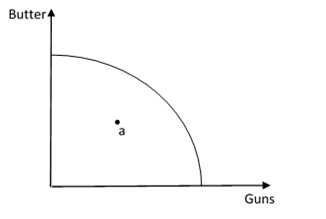
簡潔に言えば、実物的制約は条件付きで関連性があり、通貨主権が優勢であれば金融的制約は無関係になる。それが政策論争のフレームの組み方と政策立案者に助言する適切な方法だ。お金の心配はしなくていい、お金の使い方が経済に与える影響を心配しよう、と。
ティモワーニュ:
別の話題に移るが、政府の統合は現行制度において機能しているにもかかわらず制度的な複雑性に埋もれてしまっている力を表に押し出している。すなわち、財政赤字が金利を下げ、国債発行が金利を引き上げること、支出は課税と国債発行の前に起こらなくてはなければならないこと、政府による財政ファイナンスは本質的に不健全ではないこと、そして、政府による財政ファイナンスが徴税や国債発行の実施の不要性を意味するわけではないということである。
参考:
ケインズ戦費調達論1940と関連するインフレ考察:
Inflation and the Phillips Curve (A) Demand-Pull and Cost-Push Inflation
https://freeassociations2020.blogspot.com/2020/05/inflation-and-phillips-curve-demand.html
Lavoie’s “Foundations of Post Keynesian Economic Analysis”?
Foundations of Post-Keynesian Economic Analysis (New Directions in Modern Economics series) 1993
Post-Keynesian Economics: New Foundations
660頁
| ||||||||||||||||||||||||

https://twitter.com/ptcherneva/status/1313821153992024065?s=21
http://andolfatto.blogspot.com/2019/09/a-conversation-with-eric-tymoigne-on.html?m=1
A conversation with Eric Tymoigne on MMT vs SMT
============================================================================DA: Eric, let's start with the opening paragraph:
One of the main contributions of modern money theory (MMT) has been to explain why monetarily sovereign governments have a very flexible policy space. Not only can they issue their own currency to spend and to service their public debt denominated in their own unit of account, but also any self-imposed constraint on budgetary operations can be easily bypassed.
I'm curious to know what the contribution is here relative to standard monetary theory (SMT). In SMT, the government can also issue its own currency to spend and to service the public debt denominated in its own unit of account. So this degree of "flexibility" is already accounted for. As for "self-imposed constraints on budgetary operations," SMT takes several approaches to this issue, depending on the purpose of the analysis. One approach is to take these constraints as given and then to study their implications. But it is also common to consolidate the central bank, treasury and government into a single authority, which implies no self-imposed constraints on budgetary operations.
Perhaps what is meant is that MMT shows how existing self-imposed constraints on budgetary operations can be (or are) bypassed in reality. This leads us to question, however, concerning what those self-imposed constraints are doing there in the first place. Are they there by design and, if so, why? Or are they there by accident (and, if so, how in the world did this happen)?
ET: Yes consolidation is not unique to MMT as we have said repeatedly. Not only is it used quite commonly in the economic literature, but also it is a common rhetorical tool in economic talks, discourse, etc.

DA: Right, so everyone understands this (at least, they should)--it's perfectly consistent with standard monetary theory. So far, so good.
ET: Most economists, politicians and the public don’t understand this or its implications. They will interpret the above as saying that it is obvious that the government can create money but it is not a normal way to proceed and it is inflationary. MMT just pushes consolidation to its logical conclusions and shows that institutional details do back those conclusions. In a consolidated framework, the federal government can only implement spending by creating money, this is not abnormal and it is not inflationary by itself. There is no other way to find the necessary dollars to spend. Here is what consolidation means in terms of balance sheets:

For the federal government, taxes destroy currency (L1 falls) and claims on non-fed sectors falls (A1 falls) (an alternative offsetting operation is net worth of government rises). When US spends, it credits accounts (L1 rises). Similarly, bond issuance does not lead to a gain of any asset for the government; all it does is replace a non-interest earning government liability (monetary base) with an interest-earning government liability (Treasury securities).
DA: I am not going to argue against your accounting. As for bond-issuance, in SMT, an open-market operation is modeled as a swap of zero-interest reserves for interest-bearing treasuries. The interest on treasuries is explained by their relative illiquidity (another self-imposed constraint). The economic consequences of such a swap depends on a host of factors, which I'm sure you're familiar with.
ET: Sure, in addition, self-imposed financial constraints (e.g. debt ceiling, no direct financing by the Fed, no monetary power for treasury) have been put in place at various times with the argument that they impose discipline in public finances. MMT argues, these financial constraints are not necessary and are bypassed routinely through Treasury-Central Bank coordination.
DA: Sure, the standard view is that these self-imposed constraints are designed to impose discipline in public finance. The proposition that these financial constraints are or are not necessary, however, must be based on a set of assumptions that may or may not be satisfied in reality. (The fact that these constraints may be bypassed through Treasury-Central Bank coordination does not seem relevant to me -- the conflict emphasized by SMT is between an "independent" central bank and the legislative authority (e.g., the Fed and Congress, not the Fed and Treasury). I'm not sure why a new theory is needed here. We know, for example, that if the legislative branch of government fully trusts itself (and future elected representatives) to behave in a fiscally responsible manner, the notion of an "independent" central bank (and other self-imposed constraints) makes little sense.
ET: Remember that MMT emphasizes the irrelevance of financial/nominal constraints for monetarily sovereign governments (bond vigilantes, risk of insolvency of social security, etc.). One can do that by using the consolidated government (taxes don’t finance, bonds don’t finance, government spends by crediting accounts, etc.) or by using the unconsolidated government (the central bank helps the Treasury, the Treasury helps the central bank). The second method conforms to actual federal government operations but it is much less easy to use rhetorically and it waters down the core point: government finances are never a financial issue as long as monetary sovereignty applies.
Given that point, as you note, financial constraints are not only irrelevant, but also disruptive and used for political games. MMT wants to make government financial operations as smooth and flexible as possible. Once society has decided how, and to what degree, government should be involved in solving socioeconomic problems, finding the money should not be an issue when monetary sovereignty prevails. That means demystifying and eliminating financial barriers to government operations so the political debate can focus on solving real issues (environment issues, socio-economic issues, etc.). Fearmongering about the public debt and fiscal deficits makes for poor political debates and policy prescriptions.
In addition, political constraints on government should be geared toward improving the transparency and participatory aspects of government (e.g. limit role of big money in elections, limit wastes, etc.). We already have a government that passes a budget (it needs to do so for transparency and accountability purposes), we already have an auditing process, and we already have some (limited) democratic process, so aim at improving these aspects. MMT proponents are not naive, we know that some politicians are self-interested, we know that policy implementation may lead to mistakes, we know people may try to game the system (“free riders”); however we trust that a transparent and democratic government can (and does) get through these issues. MMT does not see financial constraints as helping in any ways, rather they inhibit the democratic process.
Of course, MMT proponents also have a policy agenda (Job guarantee, financial regulation based on Minsky, etc.) because we do not see market mechanisms as self-promoting full employment, price stability and financial stability. As such, as you said, MMT proponents favor alternative means to achieve these goals through direct government intervention. We don’t see the central bank as an effective means to promote price stability. The central bank should focus on financial stability through interest-rate stabilization and financial regulation (an area where the Fed has not performed well).
Finally, yes independence of the central bank is seen as a big deal but MMT disagrees for two reasons. First, MMT emphasizes the lack of effectiveness of monetary policy in managing the business cycle and, second, and probably more importantly, MMT notes that central-bank independence in terms of interest-rate setting and goal settings does not mean independence from the financial needs of the Treasury.
DA: I think it's fair to say most people want to see government operations run smoothly, and would welcome a sober debate over the issues at hand without the fear-mongering that some like to promote. The broad objective seems the same--the debate is more over implementation--how monetary and fiscal policy is to be coordinated--given human frailties.
Having said this, I think you go too far by asserting that "government finances are never an issue as long as monetary sovereignty applies." Of course, technical default on nominal debt is not an issue (we all understand this). But SMT also recognizes the importance of economic default on nominal debt. True, a government can always print money to satisfy its nominal debt obligation, but if money printing dilutes the purchasing power of money, this is a de facto default.
On a related issue, SMT asks "what are the limits to seigniorage?" The fact that a government can print money does not give it the power to command resources without constraint. People can (and do) find substitutes for government money (they may also substitute out of taxed activities into non-taxed activities). SMT treats the limits to seigniorage as a financial constraint. Maybe MMT has a different label for this constraint? Perhaps it is related to what I hear MMT proponents call an "inflation constraint." Maybe one way to reconcile MMT with SMT on this score is by recognizing that SMT usually assumes (sometimes incorrectly) that the inflation constraint is always binding. If this is the case, a monetarily-sovereign government does have a financial constraint, even according to MMT.
ET: Yes, ability to create a currency does not mean ability to command resources because there may not be a demand for the currency. That is where tax liabilities and other dues owed to the government become important (cf. the chartalist theory of money, a component of MMT). That’s also why taxes, monetary creation and bond issuance are not conceptualized by MMT as alternative financing means but rather as complementary. The government imposes a tax liability, spends by issuing the currency necessary to pay the tax liability, then taxes and issues bonds. Spending may be inflationary indeed and so there is an inflation constraint; but it is not a financial constraint, it is a resource constraint.
About the “printing” of money by government, inflation and economic default. Regarding the first two, there is no evidence of an automatic relation between money and inflation. In a consolidated view, government always spends by monetary creation but controls the impact on inflation via taxes and the impact on interest rates via bond issuance. In an unconsolidated view, the central bank routinely finances and refinances the Treasury by helping some of the auction bidders and by participating in the auction.
Finally, regarding economic default, governments routinely “default” in that sense with no problems. I don’t see that as a relevant concept unless someone can show that economic default raises interest rates or generates rising inflation (it does not); here again, there is no automatic link between inflation and interest rates. That link depends on how the central bank reacts; if it does not then market participants don’t either.
DA: Let me return to the manner in which the Fed/Treasury/Congress are consolidated (or not) in SMT and why this matters, in your view. In some SMT treatments, Congress decides spending and taxes, which implies a primary deficit. It's up to the Treasury to finance that deficit, with the Fed playing a supporting role (by determining interest rate and issuing reserves for treasury debt). What's wrong with this approach?
ET: That is what I meant. MMT links that to monetary sovereignty.
DA: I think that's correct. I should like to add that mainstream economists (apart from a small set of monetary theorists) have not appreciated the role of high-grade sovereign debt as an exchange medium in wholesale financial markets and as a global store of value, which in my view likely explains a lot of the "missing inflation." But as for "surpluses being celebrated," you are now talking about individual viewpoints and not SMT per se. There were plenty of calls out there for countercyclical fiscal policy based on standard macroeconomic principles. But I do agree virtually all mainstream economists are (perhaps overly) concerned about "long-run fiscal sustainability." The view is that at the end of the day, stuff has to be paid for -- and that having the ability to print money, while granting an extra degree of flexibility, does not get around this basic fact.
DA: I'd like to ask you about this statement you make:
In (the unconsolidated) case, the Treasury collects taxes and issues securities before it can spend. However, federal taxes and bond offerings also serve another highly important function that is overlooked in standard monetary economics. Specifically, federal taxes and bond offerings result in a drainage of funds from the banking system, and MMT carefully analyzes the implication of this fact. From that analysis, MMT argues that federal taxes and bond offerings are best conceptualized as devices that maintain price and interest-rate stability, respectively (of course, the tax structure also has some important role to play in terms of influencing incentives and income distribution; something not disputed by MMT).
DA: Well, yes, taxes serve both as a revenue device (permitting the government to gain control over resources that would otherwise be in control of the private sector) and as a way to control inflation. I'm not sure about the idea of the Treasury offering bonds for the purpose of achieving interest-rate stability (though this may happen to some extent when the treasury determines which maturity to offer). I don't think this is the way things work in the U.S. today.
ET: Taxes and issuance of treasuries drain reserves and so raise the overnight rate. Hence, on a daily basis, a fiscal surplus raises the overnight rate and a fiscal deficit lowers it. There has been significant Treasury-Fed coordination to smooth the impact of taxes (and treasury spending) on the money market.
DA: Fine, but so what? We all understand "coordination" between Fed and Treasury exists at the operational level.
ET: I think you are too kind to other economists and policymakers. On taxes as price-stabilizing factors, there is indeed some similarities here. On the role of treasuries for interest-rate stability, it does work like this today. It may not be obvious because of the current emphasis on treasuries as Treasury's budgetary tools, but Treasury has issued securities for other purposes than its budgetary needs. In the US, this occurred most recently during the 2008 crisis (SFP bills). In Australia, in the early 2000s, the Treasury issued securities while running surpluses in order to promote financial stability.
DA: But even if this is not the way things actually work (in my view, it's the Fed that stabilizes interest rates, possibly through OMOs involving U.S. Treasuries), I'm not sure what point is being made. I think we can all agree that monetary and fiscal policy can be thought of as being consolidated in some manner. What would be good to know is how a specific MMT consolidation matters (relative to other specifications) for a specific set of questions being addressed. There is nothing in the abstract or introduction of this paper that suggests an answer to this question.
ET: The point being made is that in a consolidated government, tax and bond issuance lose the financialpurpose they have for the Treasury but keep their price and interest-stability purposes.
DA: In standard monetary theory, tax and bond issuance keeps its funding purposes for the government and at the same time can be used to influence the price-level (inflation) and interest rates. Is this wrong? I don't think so. At some level, taxes (a vacuum cleaner sucking up money from the private sector) must have some implications for the ability of government to exert command over real resources in the economy. What we label this ability (whether "funding" or ''finance" or whatever, seems inconsequential).
ET: Ok here comes the crucial difference between financial and real sides of the economy. In financial terms, taxes do not increase the capacity of the government to spend, i.e. the government does not earn any money from taxing; taxes destroy the currency. In financial terms, there is no reason to fear a fiscal deficit; deficits are the norm, are sustainable and help other sectors grow their financial net wealth. As such, it is not because a government wants to spend more that it must tax more or lower spending somewhere else. That is the PAYGO mentality. This mentality makes policymakers think of spending and taxing in terms of how they impact the fiscal balance instead of their impact on employment, inflation, incentives, etc. While deficits may have negative consequences, they are not automatic. If one takes a look at the evidence, deficits have no automatic negative impacts on interest rates, tax rates, public-debt sustainability, or inflation.

Put succinctly, the real constraint is conditionally relevant, the financial constraint is irrelevant if monetary sovereignty prevails. That is the proper way to frame the policy debates and to advise policymakers; don’t worry about the money, worry about how spending impacts the economy.
ET: Moving to another topic,consolidation of the government brings to the forefront forces that are operating in the current system but that are buried under institutional complications. Namely that a fiscal deficit lowers interest rates and treasuries issuance brings them back up, that spending must come before taxing and treasuries issuance, that monetary financing of the government is not intrinsically unsound and does not mean that tax and treasuries issuance don't have to be implemented.
DA: The statement that "deficit lower interest rates" needs considerable qualification. Among other things, it depends on the monetary policy reaction function. As for the claim that spending *must* come before taxes, this is not a universally valid statement (even if it may be true in some circumstances. But even more importantly, who cares? Mainstream theory does not suggest that monetary financing is intrinsically unsound (seigniorage is fine, if it respects inflation ceiling). As for money, taxes and bonds not being alternative "funding" sources, I worry that this semantics. You can call X a "funding" source or not -- it's just a label. The real question is: what are the macroeconomic implications of X?
ET: Let me emphasize where I agree. Yes, evidence shows the central role of monetary policy for the direction of interest rates, fiscal policy is at best a very small driver. And yes, one ought to focus on the real implications of government spending and we ought to forget about the financial implications. A fiscal deficit is not unsustainable nor abnormal; deficits are the stylized fact of government finances and are financially sustainable if monetary sovereignty is present. So don’t try to frame the policy debate and set policy in terms of household finances, bankruptcy, fixing the deficit, etc.
To conclude I see three reasons why the "taxes/bonds don't finance the government" rhetoric is helpful:
1- It is strictly true for the federal government (i.e. consolidation).
2- it brings to the forefront some lesser-known aspects of taxes and treasuries issuance: impacts on money market, role of central bank in fiscal policy, role of treasury in monetary policy.
3- It changes the narrative in terms of policy and political economy: government does not rely on the rich to finance itself, taxes should be set to remove the "bads" not to finance the government (e.g. one should not set tax rates on pollution with the goal of balancing the budget but with the goal of curbing pollution to whatever is considered appropriate, that may lead to much higher tax rates than what is needed to balance the budget), PAYGO is insane, one should focus on the real outcomes of government policies not the budgetary outcomes.
DA:
1. I think this is semantics.
2. Not sure how it helps in this regard.
3. I think all of these positions are defensible without the statement "taxes/bonds don't finance the government", so if this is the ultimate goal (and I think it should be), perhaps we should set aside semantic debates and focus on the real issues at hand.
ET: 1 is not semantic. I know you have in mind taxes as a means to leave resources to the government. MMT makes a clear difference between financial (ability to find the money) and resources constraint (ability to get the goods and services) as explained above. The financial constraint is highly relevant for non-monetarily sovereign governments so it should be noted and clearly separated from the real constraint. Too many policy discussions and decisions by policymakers operating under monetary sovereignty are based on an inexistent inability to find money and the imagined dear financial consequences of budgeting fiscal deficits. 2 helps to understand how monetary sovereignty is implemented in practice. On 3, yes focus on the real issues.
DA: We agree on 3! Thank you for an interesting discussion, Eric. There's so much more to talk about, but let's leave that for another day.
ET: You are welcome and thank you too!

バターと銃
返信削除チーズとパン
例は何でもいい
https://twitter.com/econ101jp/status/1273571191970807808?s=21
返信削除「MMTとSMT(標準的金融理論):エリック・ティモワーニュとの対話」(2019年9月4日)
ティモワーニュ:
OK。ここからは、経済の金融面と実物面の決定的な違いが出てくる。金融面では、税金は政府の支出能力を高める
ものではない、つまり政府は課税することでお金を稼得することはできない。税金は通貨を破壊するのだ。金融的
側面では、財政赤字を恐れる理由はない。赤字は当たり前であり、持続可能であり、他の部門の金融純資産の拡大
を助けるものである。このように、政府がより多くの支出をしたいからといって、より多くの税金をかけるか、
他のどこかで支出を減らさなければならないわけではない。一方で「Pay Go」の考えがある。この考え方は政策
担当者に、雇用、インフレ、インセンティブなどへの影響ではなく、財政収支にどのような影響を与えるかという
観点から支出や課税を考えさせることになる。赤字は負の結果をもたらすかもしれないが、自動的にそうなるわけで
はない。エビデンスを見てみると、赤字は金利、税率、公的債務の持続可能性、インフレに、自動的にマイナスの
影響を与えるものではない。
実物的面では、より多くの資源を政府に移せるようにインフレ防止目的で税率を上げる必要性は、経済の状態と、
経済規模に対する政府支出の増加の恒久性に依存する。雇用不足の経済では、政府は税率を上げずにより多くの支出
を行うことができる。完全雇用の経済でインフレを起こさず政府に資源をシフトするには、税率の引き上げ、分配、
価格統制、民間所得の支払いの遅延などの他の措置を講じる必要がある。これについてはケインズの『戦費調達論』が
その道筋を示している。標準的な経済学は完全雇用経済学なので、機会費用が常に存在する。MMTは、カレツキ、
ケインズ、そして彼らの追随者の研究(ラヴォアの「
ポスト・ケインズ経済分析の基礎」参照)に沿っており、資本主義経済は通常、不完全雇用状態で、経済成長は
需要主導であることに注意したい。図に入れると、経済は通常A地点にある。
https://econ101.jp/wp-content/uploads/2020/06/eric3.png
図3:通常の資本主義経済の状態
簡潔に言えば、実物的制約は条件付きで関連性があり、通貨主権が優勢であれば金融的制約は無関係になる。それが
政策論争のフレームの組み方と政策立案者に助言する適切な方法だ。お金の心配はしなくていい、お金の使い方が経済
に与える影響を心配しよう、と。
904 あ (ササクッテロラ Sp1b-GQ+j)[sage] 2020/12/10(木) 20:58:43.96 ID:06KGqWkFp
返信削除https://twitter.com/econ101jp/status/1273571191970807808?s=21
「MMTとSMT(標準的金融理論):エリック・ティモワーニュとの対話」(2019年9月4日)
ティモワーニュ:
OK。ここからは、経済の金融面と実物面の決定的な違いが出てくる。金融面では、税金は政府の支出能力を高める
ものではない、つまり政府は課税することでお金を稼得することはできない。税金は通貨を破壊するのだ。金融的
側面では、財政赤字を恐れる理由はない。赤字は当たり前であり、持続可能であり、他の部門の金融純資産の拡大
を助けるものである。このように、政府がより多くの支出をしたいからといって、より多くの税金をかけるか、
他のどこかで支出を減らさなければならないわけではない。一方で「Pay Go」の考えがある。この考え方は政策
担当者に、雇用、インフレ、インセンティブなどへの影響ではなく、財政収支にどのような影響を与えるかという
観点から支出や課税を考えさせることになる。赤字は負の結果をもたらすかもしれないが、自動的にそうなるわけで
はない。エビデンスを見てみると、赤字は金利、税率、公的債務の持続可能性、インフレに、自動的にマイナスの
影響を与えるものではない。
実物的面では、より多くの資源を政府に移せるようにインフレ防止目的で税率を上げる必要性は、経済の状態と、
経済規模に対する政府支出の増加の恒久性に依存する。雇用不足の経済では、政府は税率を上げずにより多くの支出
を行うことができる。完全雇用の経済でインフレを起こさず政府に資源をシフトするには、税率の引き上げ、分配、
価格統制、民間所得の支払いの遅延などの他の措置を講じる必要がある。これについてはケインズの『戦費調達論』が
その道筋を示している。標準的な経済学は完全雇用経済学なので、機会費用が常に存在する。MMTは、カレツキ、
ケインズ、そして彼らの追随者の研究(ラヴォアの「
ポスト・ケインズ経済分析の基礎」参照)に沿っており、資本主義経済は通常、不完全雇用状態で、経済成長は
需要主導であることに注意したい。
https://twitter.com/5chan_nel (5ch newer account)
906 あ (ササクッテロラ Sp1b-GQ+j)[sage] 2020/12/10(木) 20:59:34.74 ID:06KGqWkFp
返信削除>>904 続き
図に入れると、経済は通常A地点にある。
https://econ101.jp/wp-content/uploads/2020/06/eric3.png
図3:通常の資本主義経済の状態
簡潔に言えば、実物的制約は条件付きで関連性があり、通貨主権が優勢であれば金融的制約は無関係になる。それが
政策論争のフレームの組み方と政策立案者に助言する適切な方法だ。お金の心配はしなくていい、お金の使い方が経済
に与える影響を心配しよう、と。
天体の運動-3体問題
返信削除http://www.ne.jp/asahi/tokyo/nkgw/www_2/Index_small/wakusei-eisei/eisei_small.html
天体の運動-3体問題
2つの天体が万有引力を及ぼし合って運動するとき,これを2体問題と言って,方程式から正確な厳密解が得られます。しかし3つ以上の天体が万有引力を及ぼし合って運動するとき多体問題と言い,方程式は立てられるものの,特殊な場合を除いて,一般には有限回の積分などを使っては解析的には解くことができないことが数学的に分かっています。
太陽と地球と月などの関係も3体問題となりますが,3者の質量に 太陽>>地球>>月 の関係があるため,太陽と地球の関係を論ずる際には月の影響は小さく,太陽と地球の関係は2体問題と近似していくこともできます。この場合,地球は太陽のまわりをケプラー運動をしている考えることができることになります。地球と月の関係も同様に考えていくことができる。
しかしこのような近似では実際の惑星や人工衛星の運動を予測するには全く役立たず,今日ではコンピューターを使い,膨大な回数の計算を次々と重ねていくことによって,多くの天体の要素を織り込んだ形で数値解析がなされています。
本シミュレーションでは3体問題について,ルンゲ・クッタ法により数値解析し,ミュレートしています。
変数は二つがいい
返信削除
返信削除https://www.e-elgar.com/shop/gbp/foundations-of-post-keynesian-economic-analysis-9781852783228.html
Contents:
1. The Need for an Alternative
2. Theory of Choice
3. Theory of the Firm
4. Credit and Money
5. Effective Demand and Employment
6. Accumulation and Capacity
7. Inflation
8. Concluding Remarks
Foundations of Post-Keynesian Economic Analysis
New Directions in Modern Economics series
Marc Lavoie,
Professor Emeritus, University of Ottawa, Canada and Professor Emeritus, University of Sorbonne Paris Nord (CEPN), France
Publication Date: 1992
ISBN: 978 1 85278 322 8
Extent: 480 pp
https://www.e-elgar.com/shop/gbp/foundations-of-post-keynesian-economic-analysis-9781852783228.html
返信削除内容をご紹介します。
1. 代替案の必要性
2. 選択の理論
3. 企業の理論
4. 信用とお金
5. 有効な需要と雇用
6. 蓄積と能力
7. 7.インフレーション
8. まとめのご挨拶
ポストケインズ経済分析の基礎
現代経済学の新しい方向性シリーズ
マーク・ラヴォワ
カナダ・オタワ大学名誉教授、フランス・ソルボンヌ・パリ・ノルド大学(CEPN)名誉教授
掲載日:1992年
ISBN:978 1 85278 322 8
展開図。480ページ
返信削除2015
Marc Lavoie
Post-Keynesian Economics: New Foundations
https://journals.openedition.org/regulation/10921?lang=en
Outline
1. Characteristics of the labor market
2. The Marshallian Post-Keynesian Model
3. Kaleckian Model of Labor
4. The Supply of Labor
5. The Kaleckian Model with Overhead costs
6. Fiscal Policy and Full Employment
7. Comments
2015
マーク・ラヴォワ
ポスト・ケインズ経済学。新しい基礎
https://journals.openedition.org/regulation/10921?lang=en
概要
1. 労働市場の特徴
2. マーシャルリアン・ポスト・ケインズモデル
3. 労働のカレキアンモデル
4. 労働力の供給
5. オーバーヘッドコストのカレキアンモデル
6. 財政政策と完全雇用
7. コメント