
| ||||||||||||||||||||||||



https://app.hedgeye.com/insights/84926-why-money-printer-go-brrr-doesn-t-mean-what-you-think-it-means
Why ‘Money Printer Go BRRR!’ Doesn’t Mean What You Think It Means
The guest commentary below was written by Jesse Felder of The Felder Report
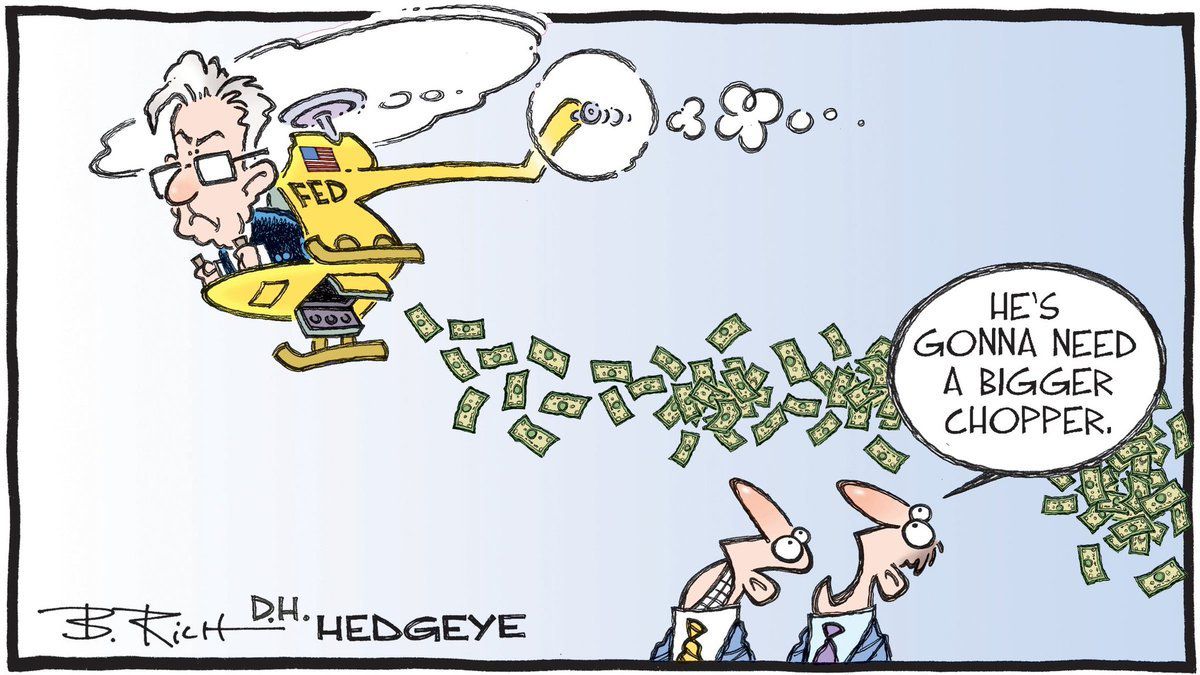
“Earnings don’t move the overall market; it’s the Federal Reserve Board… focus on the central banks and focus on the movement of liquidity… most people in the market are looking for earnings and conventional measures. It’s liquidity that moves markets.” – Stan Druckenmiller |
If there’s any lesson investors have learned over the past decade, it’s this one. ‘When the Fed is making the money printer go “brrr!” it’s time to buy stocks!’ But there is more to it than the simplified version of “liquidity” most traders have adopted. It is not only about how much money the central bank is printing; it’s also about how much debt the federal government is issuing. And it’s the difference that really matters most to the markets.

In his recent interview with the Economic Club of New York, Druckenmiller tried to clear up this misconception:
The consensus out there seems to be, “don’t worry, the Fed has your back.” …There’s only one problem with that is our analysis says it’s not true… I stated earlier that the Fed has increased their balance sheet from four trillion to eight trillion. While they’ve done that, the Treasury Department, I’d say the budget deficit estimate for this year has gone from maybe a trillion a year ago to three-and-a-half trillion… So in March and April alone, the Fed net of Treasury issuance, to pay for the new spending, created a trillion in QE more than Treasury issuance. So it’s the biggest liquidity injection relative to history I’ve ever seen… The problem is as you look forward, because the Treasury deficits are not only still gonna be there, they’re just rolling out aggressively now the financing of them, the Fed front ran this with their actions of a month or two ago and so what the Fed bought was a trillion more than treasury issued. What’s going to happen now is Treasury issuance has caught up with the Fed and if they stick to the schedule they’ve outlined the net difference between those two actually goes to zero in May and net borrowing by Treasury relative to Fed purchases in June very minor, pretty much flat through September. And then liquidity shrinks as far as the eye can see as the Treasury borrowing crowds out not only the private economy but even overwhelms Fed purchases… That leads me to believe… the risk for reward for equities is maybe as bad as I’ve seen it in my career here. |
It’s hard to be more plain-spoken than that even if it is a bit meandering. Contrary to popular belief, liquidity is not the tailwind for risk assets most traders believe it to be. In fact, it will soon be just the opposite.
Net positive liquidity has already evaporated and will soon become a net negative because, even as the Fed prints record amounts of money, it will be overwhelmed by the money being sucked out of the markets by the rapidly growing needs of the Treasury.
EDITOR'S NOTE
This is a Hedgeye Guest Contributor piece written by Jesse Felder and reposted from The Felder Report blog. Felder has been managing money for over 20 years. He began his professional career at Bear, Stearns & Co. and later co-founded a multi-billion-dollar hedge fund firm headquartered in Santa Monica, California. Today he lives in Bend, Oregon and publishes The Felder Report. This piece does not necessarily reflect the opinion of Hedgeye.
以下のゲストコメントは、フェルダーレポートのジェシー・フェルダーによって書かれました
「収益は市場全体を動かしません。それは連邦準備制度理事会です...中央銀行に焦点を当て、流動性の動きに焦点を当てます...市場のほとんどの人は収益と従来の対策を探しています。市場を動かすのは流動性です。」- スタン・ドラッケンミラー |
過去10年間で投資家が学んだ教訓があれば、それはこれです。「FRBがマネープリンターを作っているとき、「brrr!」株を買う時が来た!しかし、ほとんどのトレーダーが採用した「流動性」の簡略化されたバージョン以上のものがあります。中央銀行がどれだけのお金を印刷しているかだけでなく、連邦政府がどれだけの債務を発行しているかについてもです。そして、市場にとって本当に最も重要な違いです。
ニューヨーク経済クラブとの最近のインタビューで、ドラッケンミラーはこの誤解を解消しようとしました。
そこのコンセンサスは、「心配しないで、FRBはあなたの背中を持っている」のようです。...唯一の問題は、私たちの分析がそれが真実ではないと言っていることです...私は先ほど、FRBが貸借対照表を4兆から8兆に増やしたと述べました。彼らがそれをしている間、財務省、今年の財政赤字の見積もりは、おそらく1兆年前から3.5兆に減少したと思います。 そのため、3月と4月だけでも、FRBの財務省発行ネットは、新しい支出を支払うために、財務省発行よりも1兆兆のQEを生み出しました。だから、それは私が今まで見た歴史と比較して最大の流動性注入です...問題は、あなたが前を向くように、財務省の赤字はまだそこにあるだけでなく、彼らは今彼らの資金調達を積極的に展開しているからです、FRBのフロントは1、2ヶ月前の行動でこれを実行したので、FRBが購入したものは発行された財務省よりも1兆ドル以上でした。 今起こっていることは、財務省の発行がFRBに追いついたことであり、彼らがスケジュールに固執した場合、これらの2つの正味の差は実際には5月にゼロになり、6月のFRBの購入に対する財務省による純借入は非常に小さく、9月までほぼ横ばいです。 そして、財務省の借入が民間経済だけでなく、FRBの購入を圧倒するにつれて、目に見える限り流動性は縮小します...それは私に信じさせます...株式に対する報酬のリスクは、私がここでのキャリアで見たのと同じくらい悪いかもしれません。 |
少し蛇行していても、それよりも平易に話すのは難しいです。一般的な信念に反して、流動性はほとんどのトレーダーが信じているリスク資産の追い風ではありません。実際、それはすぐに正反対になるでしょう。
純プラスの流動性はすでに蒸発しており、すぐに純マイナスになります。なぜなら、FRBが記録的な金額を印刷したとしても、急速に増大する財務省のニーズによって市場から吸い出されるお金に圧倒されるからです。
編集者のメモ
これは、Jesse Felderによって書かれ、The Felder Reportブログから再投稿されたHedgeyeゲストコントリビューターの作品です。フェルダーは20年以上にわたってお金を管理してきました。彼はベア、スターンズ&カンパニーでプロとしてのキャリアをスタートさせ、後にカリフォルニア州サンタモニカに本社を置く数十億ドルのヘッジファンド会社を共同設立しました。今日、彼はオレゴン州ベンドに住み、フェルダーレポートを出版しています。この作品は必ずしもヘッジエの意見を反映しているわけではない。

0 件のコメント:
コメントを投稿