2022/05/28 ケルトン Should Congress Shrink the Deficit to Fight Inflation?
https://love-and-theft-2014.blogspot.com/2022/05/20220528-should-congress-shrink-deficit.html @
| ||||||||||||||||||||||||



日時: 2022年5月28日 6:27:15 JST
件名: Should Congress Shrink the Deficit to Fight Inflation?
Last month, I was in Brussels for a client event. Instead of the usual keynote address, I did a fireside chat with one of their senior market analysts. He put seven questions to me and then moderated an extended Q&A with the audience. It was a lot of fun. Unfortunately, because it was a private event, there's no recording for me to share with you. But I thought the questions—and my responses—might be of interest. To avoid writing one really long post, I've decided to divide it into a seven-part series. I'll answer the first question today, but here's a preview of what's to come. Question 1: You say that the deficit can be too big and that inflation could be evidence of a deficit that's too big. Is the deficit too big? If that is the case, shouldn't Congress pass immediate tax hikes or spending cuts? Would it be politically possible? Question 2: If Congress is not able to tighten fiscal policy because of low acceptability or political stalemate, does this mean that independent central banks are better placed to fight inflation? Question 3: MMT seeks a low rate of unemployment. Does it run the risk of getting an insufficient return on investment? Question 4: Governments can create money out of thin air to finance their investments. Did the pandemic force this truth out and create a dangerous precedent. Won't people now expect more borrowing to pay their pay rises and/or consumption? Question 5: How much government debt is too much ? Is only the US exempt from debt ceilings ? Question 6: Is more inflation welcome to solve for excess debt levels? Question 7: Should the government set interest rates in your view – where would you take rates in 2022? Question 1: You say that the deficit can be too big and that inflation could be evidence of a deficit that's too big. Is the deficit too big? If that is the case, shouldn't Congress pass immediate tax hikes or spending cuts? Would it be politically possible? Let's start with the first part of the question. It is certainly true that government deficits can be too big. No MMT economist has ever disputed that.¹ What we have argued from the very beginning is that contra conventional arguments about budget deficits and fiscal sustainability, the relevant constraint on government spending is inflation.² Here's MMT economist L. Randall Wray in 2009:
There are three points here:
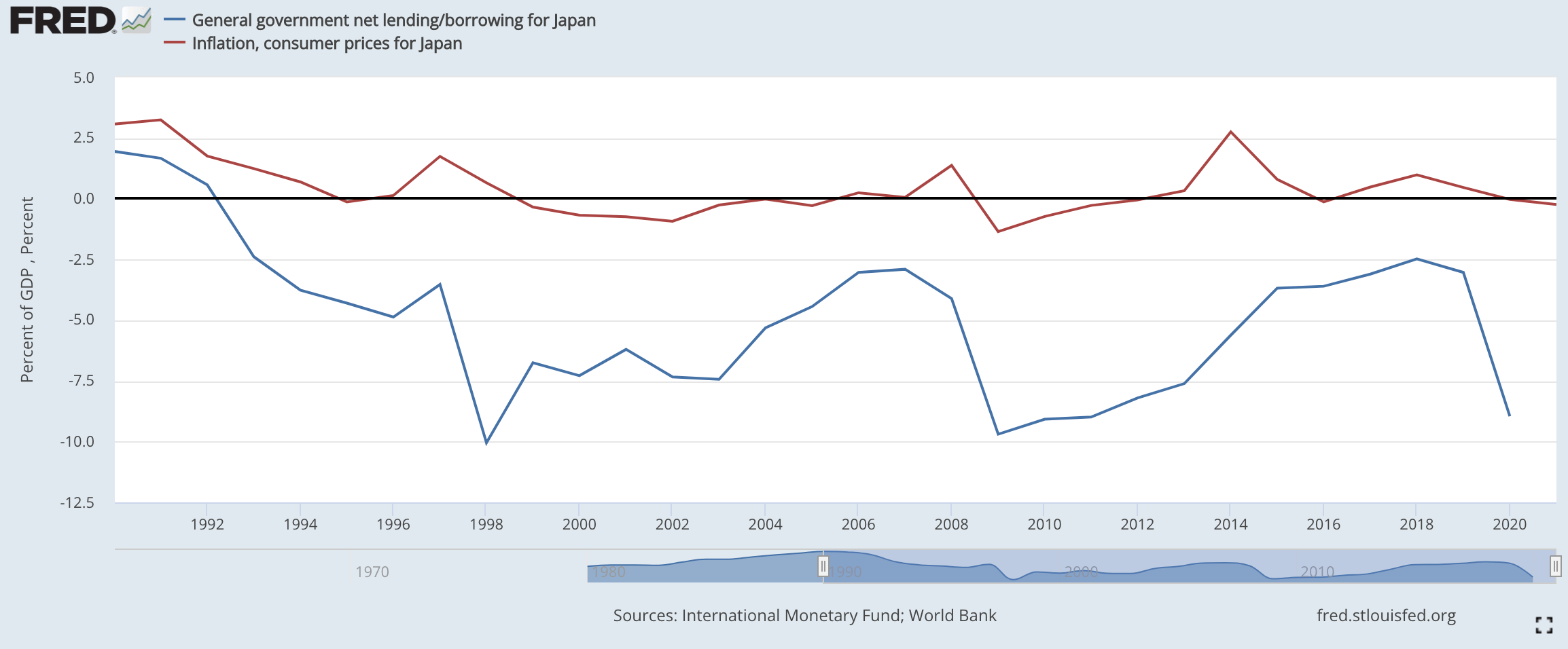
These aren't controversial points, even among mainstream economists. Yet they often get lost in the popular discourse. For example, it's not uncommon to hear lawmakers, media pundits, and other commentators refer to deficits as "evidence of overspending," as if they naturally embody higher inflation.³ So it's important to remember that government deficits (even big ones) can coexist alongside low inflation (or even outright deflation) for prolonged periods of time. That was the situation in Japan for the last three decades.⁴
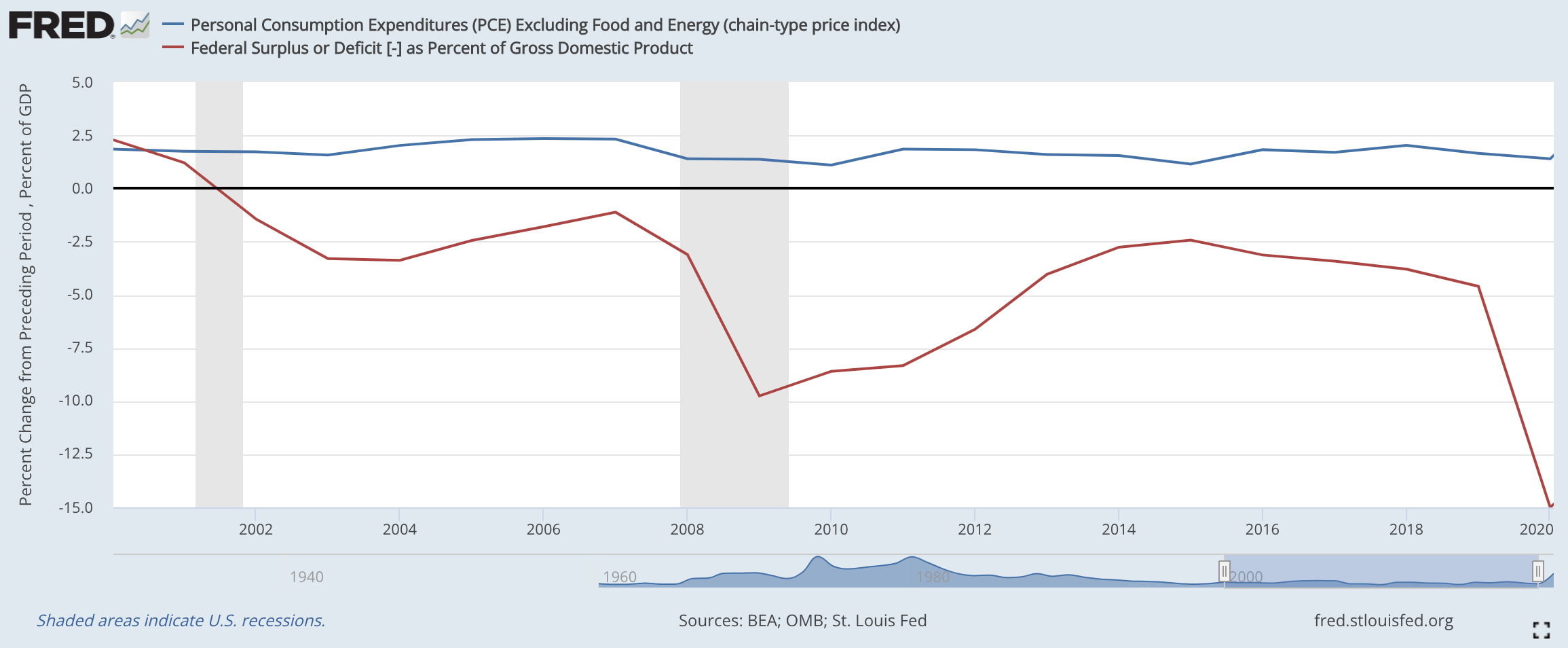
And until COVID came along, it was also the US experience (sans the deflation). Like Japan, the US experienced decades of persistent (and often rising) fiscal deficits with little pressure on inflation. Even as the deficit surged above 10 percent in the wake of the Great Recession, the Fed's preferred inflation measure—core PCE—averaged just 1.6 percent from 2009-2019.
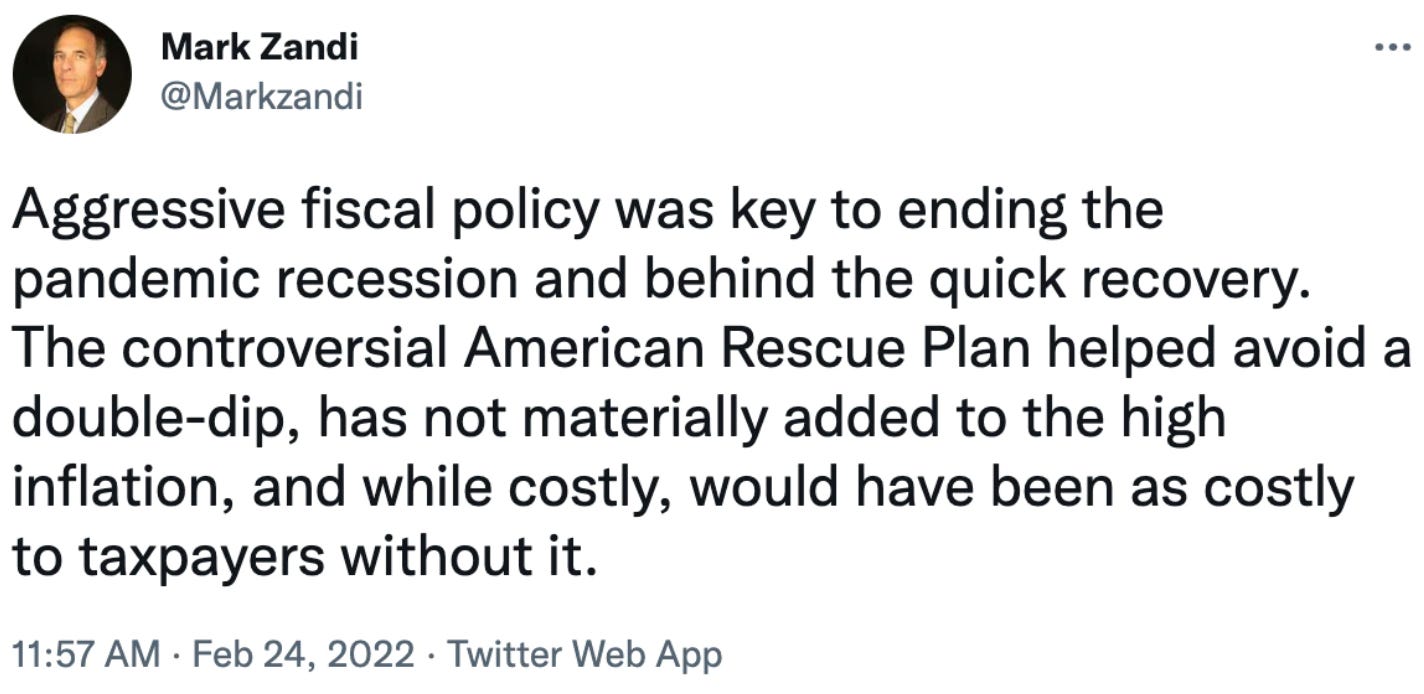
So MMT urges us to think about the economy's productive capacity when we're talking about the limits on spending. And it reminds us that government spending is only one component of total expenditure. Any claim on an economy's productive capacity that comes from government spending has to mix in with household consumption, business investment, and net exports. It's aggregate demand, relative to productive capacity, that matters when it comes to so-called "overheating." When demand leakages rob the economy of too much demand, even large fiscal deficits may not move the needle on inflation. Getting back to the question, the answer is yes. Fiscal deficits can be too big, and inflation can be evidence of a deficit that has gotten too big. But that is not—and this is really important—tantamount to saying that any increase in inflation is de facto evidence of a deficit that is too big. Government deficits are only one potential source of inflationary pressure. It's always possible for CPI (or PPI or PCE) to rise for reasons unrelated to swings in the fiscal deficit.⁵ My view is that the much-maligned American Rescue Plan (ARP) Act (March 2021), which reduced unemployment and boosted real GDP growth, had only a modest impact on overall inflation. That's also what the chief economist and his team at Moody's Analytics have found.
Even if you believe the ARP was much too big, the reality is that the Congressional Budget Office (CBO) has just announced that the federal budget deficit is expected to shrink to $1 trillion in 2022, down from $2.8 trillion last year. That is the most rapid collapse in the fiscal deficit in my lifetime. Here's what I wrote back in March:
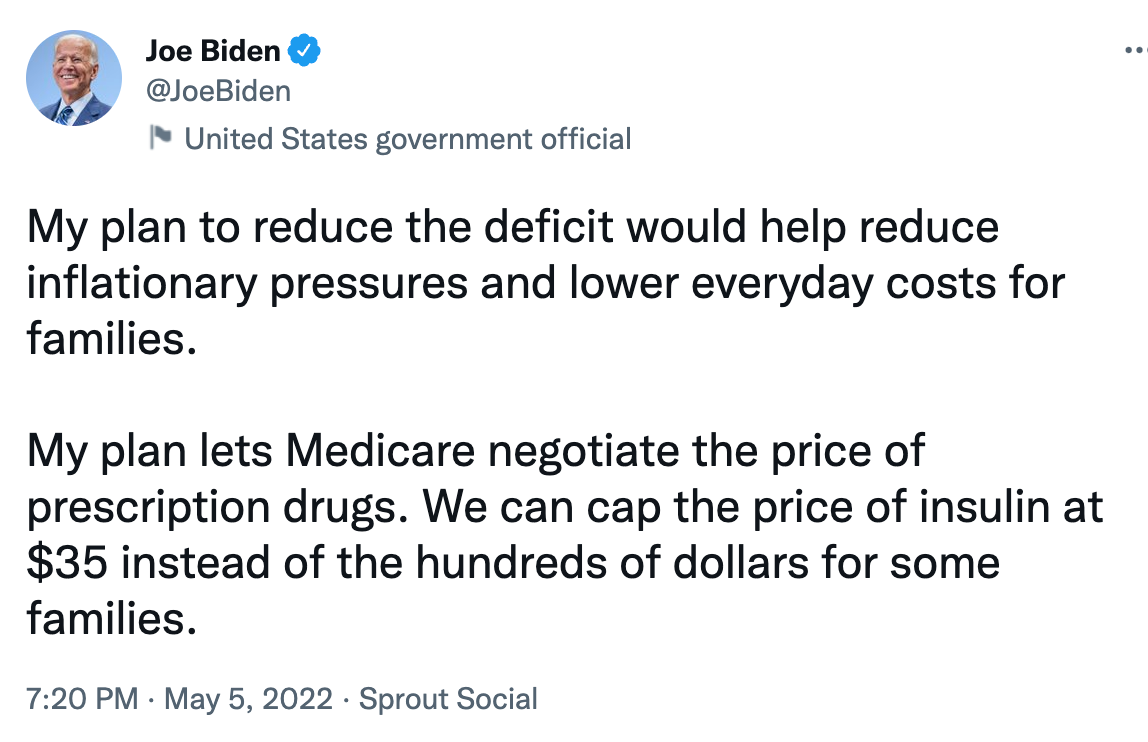
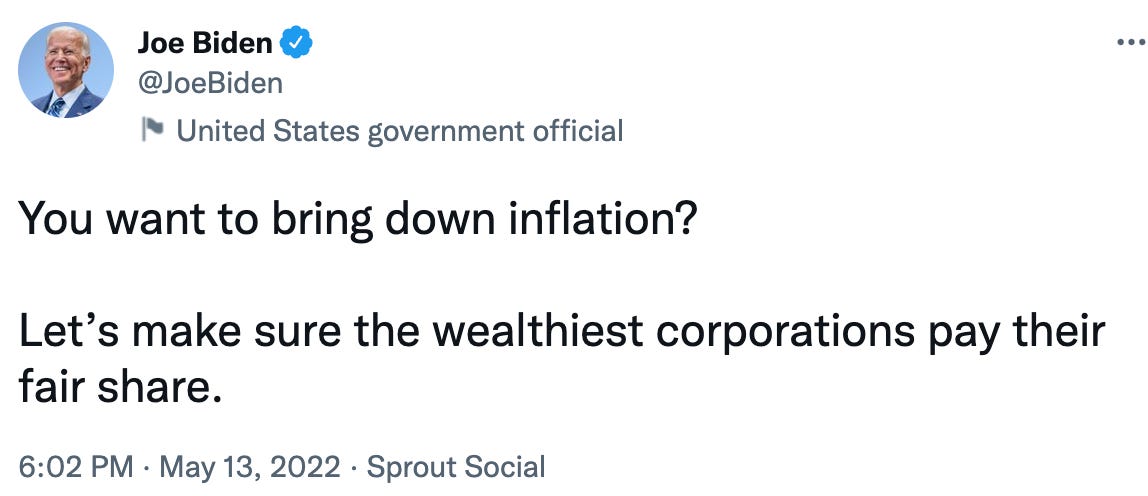
Since then, we've seen some softening in the labor market, a big drop in new home sales, and some increasingly worrying retail data. So do I think Congress should be working with the White House to pass immediate tax hikes or spending cuts in order to bring down inflation? No. There's already more than enough fiscal tightening baked in.⁶ What's needed now is a continued focus on repairing supply-chains, a concerted effort to get vaccines to countries with low vaccination rates, a resolution to the war in Ukraine, strategies to reduce gas prices, and a plan to secure the global food supply in the face of looming shortages. Although I wouldn't prioritize deficit reduction, the White House is hoping to reach a deal with Congress that would raise taxes by more than enough to offset some proposed new spending. While I don't agree that we need to cut the deficit even further in order to bring inflation down, the president is pushing it.
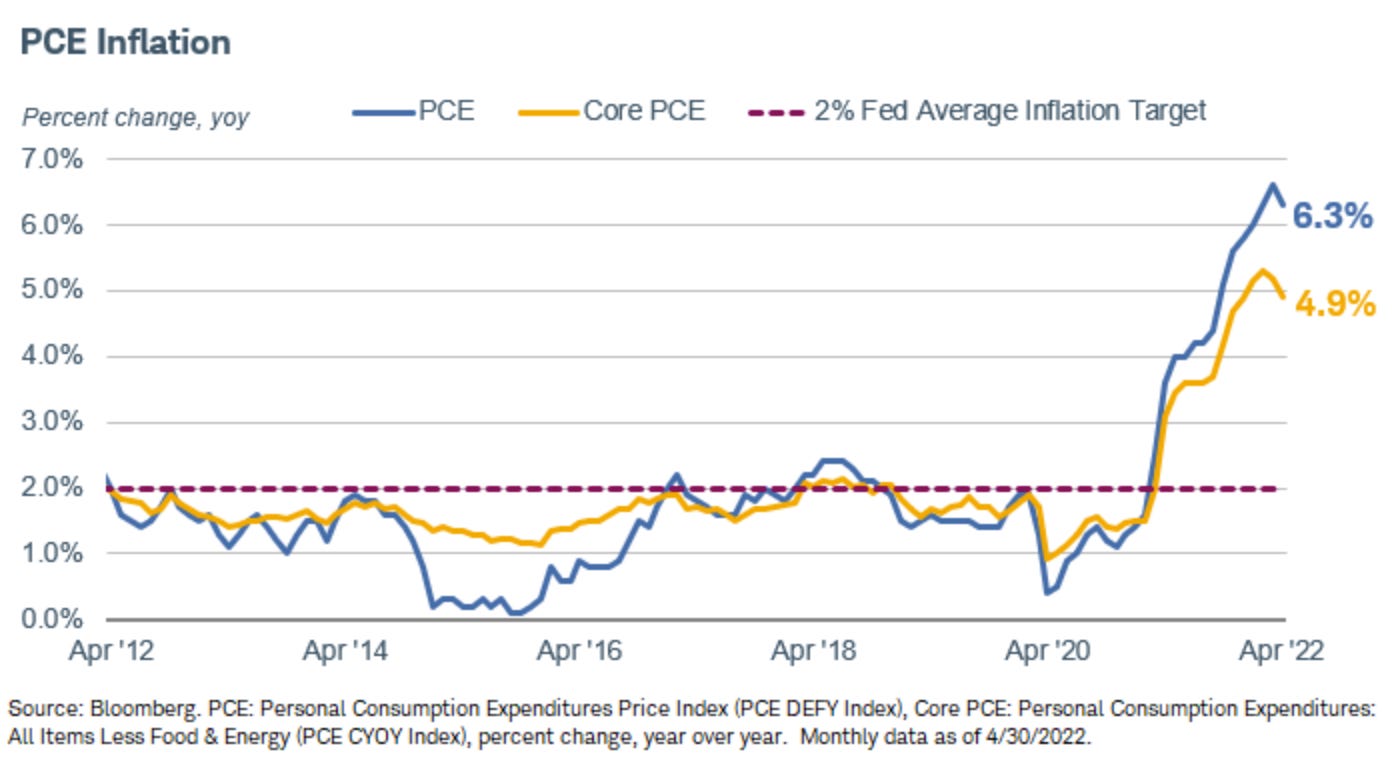
Even if democrats don't ultimately vote for Biden's plan, it's clearly possible for lawmakers to dial back fiscal support when confronted with high inflation. Remember, Congress already massively tightened fiscal policy. A final WordEarlier today, we learned that inflation moderated somewhat in April. It's still unacceptably high, and it's important not to read too much into one monthly report. But this was welcome news.
There are obviously some pretty big wild cards—Ukraine/Russia/China—but as Claudia Sahm wrote in her Substack this morning, "we are on track for core inflation in the second quarter to step down to around 4% at an annual rate from the 5% pace in the first quarter." Claudia spent many years working at the Fed, and she's right to note that the FOMC will carry on raising rates until it sees "clear and convincing evidence" that inflation appears to be heading back down to 2 percent. I wish that wasn't the case. I'll explain why when I answer Question #2. 1 If you hear someone say, "MMT argues that there are no limits on government spending," do yourself a favor and walk away. For there is no surer sign that you have encountered a bad-faith actor or a sloppy thinker. 2 The caveat here is that we are talking about governments that operate with a sovereign currency, as explained here. 3 Senator Mike Enzi (R-WY) was the Chairman of the U.S. Senate Budget Committee when I served as chief economist to the Democrats back in 2015/16. Like many Americans, Sen. Enzi interpreted the mismatch between outlays and receipts—i.e. the fiscal deficit—as "evidence of overspending." The government should, he routinely lectured, learn to "live within its means." 4 If you're interested, we've written about how to think about the Japanese experience from an MMT perspective. 5 It's also possible for inflation to (or remain elevated) even in the presence of a rapidly falling deficit or a growing budget surplus. 6 As I pointed out in a recent appearance on Bloomberg's Odd Lots podcast, the deficit is already collapsing rapidly. You don't have to raise tax rates to raise tax revenue. Fiscal tightening is baked in, partly because of our progressive tax code (higher nominal income growth) but also because a lot of fiscal support (expanded child tax credit, direct cash payments, etc.) that was was in place in 2021 is gone now.
This post is only for paid subscribers of The Lens. |


 |
先月、私はクライアントイベントのためにブリュッセルにいました。通常の基調講演の代わりに、私は彼らの上級市場アナリストの一人と暖炉のそばでチャットをしました。彼は私に7つの質問をし、聴衆との広範なQ&Aを司会しました。とても楽しかった。
残念ながら、それはプライベートなイベントだったので、私があなたと共有するための録音はありません。しかし、私は質問と私の回答が興味深いかもしれないと思いました。非常に長い投稿を1つ書くのを避けるために、私はそれを7部構成のシリーズに分割することにしました。
今日は最初の質問に答えますが、これから何が起こるかをプレビューします。
質問1:あなたは、赤字が大きすぎる可能性があり、インフレが大きすぎる赤字の証拠である可能性があると言います。赤字が大きすぎませんか?もしそうなら、議会は即時の増税や支出削減を通過させるべきではありませんか?それは政治的に可能でしょうか?
質問2:受容性が低い、または政治的膠着状態のために議会が財政政策を引き締めることができない場合、これは独立した中央銀行がインフレと戦うためにより良い立場にあることを意味しますか?
質問3:MMTは低い失業率を求めています。投資収益率が不十分になるリスクがありますか?
質問4: 政府は、投資の資金を調達するために、空中からお金を生み出すことができます。パンデミックはこの真実を押し出し、危険な前例を作りましたか。人々は今、彼らの昇給や消費を支払うために、より多くの借り入れを期待しませんか?
質問5: 政府債務はどのくらい多すぎますか?米国だけが債務上限を免除されていますか?
質問6: 過剰な債務水準を解決するために、より多くのインフレを歓迎しますか?
質問7: 政府はあなたの見解で金利を設定する必要があります– 2022年にどこで金利を取りますか?
質問1:あなたは、赤字が大きすぎる可能性があり、インフレが大きすぎる赤字の証拠である可能性があると言います。赤字が大きすぎませんか?もしそうなら、議会は即時の増税や支出削減を通過させるべきではありませんか?それは政治的に可能でしょうか?
質問の最初の部分から始めましょう。確かに、政府の赤字は大きすぎる可能性があります。MMTエコノミストはこれまでこれに異議を唱えたことはありません。¹当初から私たちが主張してきたのは、財政赤字と財政の持続可能性に関する従来の議論 とは対照的に、政府支出に関連する制約はインフレであるということです。²
2009年のMMTエコノミストL.RandallWrayは次のとおりです。
完全雇用を達成するために必要なレベルを超えて赤字を押し続けることは明らかにインフレになるでしょう。しかし、完全雇用の時点まで、赤字は必ずしもインフレではありません。それでも、政策は完全雇用の前でさえインフレを引き起こす可能性のあるボトルネックやその他の構造的問題を認識する必要があります。
ここには3つのポイントがあります。
経済に未開拓の能力がある場合、つまり失業中の労働力、遊休または十分に活用されていない工場や設備、そしてすぐに利用できる原材料がある場合、政府の赤字は本質的にインフレではありません(例:2000-2020)
経済が余剰能力を使い果たす前でさえ、インフレは加速し始める可能性があります(例:2021)
完全雇用を超えて経済を押し上げようとする政府の赤字は、価格を押し上げるでしょう(例:第二次世界大戦)
これらは、主流派経済学者の間でさえ、物議を醸すポイントではありません。しかし、彼らはしばしば人気のある談話で迷子になります。たとえば、議員、メディア専門家、および他のコメンテーターが、あたかも彼らがより高いインフレを自然に体現しているように、赤字を「過剰支出の証拠」と呼ぶのを聞くのは珍しいことではありません。³したがって、政府の赤字(大きなものでさえ)は、低インフレ(または完全なデフレ)と長期間共存する可能性があることを覚えておくことが重要です。それが過去30年間の日本の状況でした。⁴
 |
そして、COVIDが登場するまで、それは米国の経験でもありました(デフレはありません)。日本と同様に、米国はインフレにほとんど圧力をかけずに、何十年にもわたって持続的な(そしてしばしば増加する)財政赤字を経験しました。大不況をきっかけに赤字が10%を超えて急増したとしても、FRBが推奨するインフレ指標であるコアPCEは、2009年から2019年の平均でわずか1.6%でした。
 |
したがって、MMTは、支出の制限について話しているときに、経済の生産能力について考えるように促します。そしてそれは、政府支出が総支出のほんの一要素であることを私たちに思い出させます。政府支出に起因する経済の生産能力に対する主張は、家計消費、事業投資、純輸出と混同する必要があります。いわゆる「過熱」に関して重要なのは、生産能力に対する総需要 です。需要の漏れが過剰な需要の経済を奪うとき、大きな財政赤字でさえインフレに針を動かさないかもしれません。
質問に戻ると、答えはイエスです。財政赤字は大きすぎる可能性があり、インフレは赤字が大きくなりすぎた証拠である可能性があります。しかし、それはそうではなく、これは本当に重要です。インフレの増加は、赤字が大きすぎるという事実上の 証拠であると言うことと同じです。政府の赤字は、インフレ圧力の唯一の潜在的な原因です。財政赤字の変動とは関係のない理由で、CPI(またはPPIまたはPCE)が上昇する可能性は常にあります。⁵ 私の見解では、失業率を減らし、実質GDP成長率を押し上げた、非常に悪意のあるアメリカ救済計画(ARP)法(2021年3月)には、全体的なインフレへのささやかな影響。それは、ムーディーズアナリティクスのチーフエコノミストと彼のチームが見つけたものでもあります。
 |
ARPが大きすぎると思われる場合でも、実際には、議会予算局(CBO)が、連邦予算の赤字が昨年の2.8兆ドルから1兆ドルに縮小すると発表したばかりです。それは私の生涯で最も急速な財政赤字の崩壊です。
これが私が3月に書き戻したものです:
[T]彼は急速に縮小している政府の赤字が経済の足かせとなっている。民間部門の需要は財政の足かせを相殺する以上に十分に強いため、回復を消し去るには十分ではありません。それでも、州、地方、および連邦の財政政策の複合的な影響により、2021年の第4四半期のGDP成長率は推定3.3パーセントポイント減少しました。バイデンは、赤字をさらに早く縮小しようとすることに注意する必要があります。
それ以来、労働市場の軟化、新築住宅販売の大幅な落ち込み、そしてますます懸念される小売データが見られます。
それで、議会はインフレを下げるためにホワイトハウスと協力して即時の増税または支出削減を通過させるべきだと思いますか?いいえ。すでに十分な財政引き締めが行われています。⁶今必要なのは、サプライチェーンの修復、ワクチン接種率の低い国にワクチンを届けるための協調的な取り組み、ウクライナでの戦争の解決、削減戦略に引き続き焦点を当てることです。ガス価格、そして迫り来る不足に直面して世界的な食糧供給を確保する計画。
私は赤字削減を優先しませんが、ホワイトハウスは、提案されたいくつかの新しい支出を相殺するのに十分以上に税金を引き上げる議会との合意に達することを望んでいます。インフレを下げるためにさらに 赤字を削減する必要があることに同意しませんが、大統領はそれを推し進めています。
 |
 |
民主党が最終的にバイデンの計画に投票しなくても、高インフレに直面したときに議員が財政支援をダイヤルバックすることは明らかに可能です。議会はすでに財政政策を大幅に強化したことを忘れないでください。
最後の言葉
今日の初めに、4月にインフレがやや緩和したことを知りました。それはまだ許容できないほど高いので、1つの月次レポートを読みすぎないことが重要です。しかし、これは歓迎すべきニュースでした。
 |
明らかにいくつかのかなり大きなワイルドカード(ウクライナ/ロシア/中国)がありますが、Claudia Sahmが今朝のサブスタックで書いたように、「第2四半期のコアインフレは、年率で約4%に低下する予定です。第1四半期のペースは5%です。」
クラウディアはFRBで長年働いていましたが、インフレ率が2%に戻っているように見える「明確で説得力のある証拠」が見つかるまで、FOMCは利上げを続けることに注意する必要があります。
そうでないことを望みます。質問2に答えるときにその理由を説明します。
誰かが「MMTは政府支出に制限はないと主張している」と言うのを聞いたら、あなた自身に賛成して立ち去ってください。なぜなら、あなたが悪意のある俳優やずさんな思想家に出会ったという確かな兆候はないからです。
ここでの注意点は、ここで説明されているように、ソブリン通貨で運営されている政府について話しているということです。
マイク・エンジ上院議員(R-WY)は、私が2015/16年に民主党のチーフエコノミストを務めたとき、米国上院予算委員会の委員長を務めていました。多くのアメリカ人と同様に、エンジ上院議員は、支出と領収書の不一致、つまり財政赤字を「過剰支出の証拠」と解釈しました。政府は、彼が定期的に講義し、「その手段の範囲内で生きる」ことを学ぶべきです。
急激に減少する赤字や増大する財政黒字が存在する場合でも、インフレが上昇する(または上昇したままになる)可能性もあります。
ブルームバーグのOddLotsポッドキャストの最近の出演で指摘したように、赤字はすでに急速に崩壊しています。税収を上げるために税率を上げる必要はありません。累進課税(名目所得の伸びが大きい)のせいもありますが、2021年に実施されていた多くの財政支援(児童税額控除の拡大、直接現金支払いなど)がなくなったこともあり、財政の引き締めが進んでいます。 。

0 件のコメント:
コメントを投稿