Watch again: Fed Chair Jerome Powell announces interest rate decisionhttps://t.co/PJ4qdzdU8E
— slowslow2772 (@slowslow2772) February 2, 2023
2023/02/02 pic.twitter.com/3IQvvq4wYg
| ||||||||||||||||||||||||



| ||||||||||||||||||||||||

| ||||||||||||||||||||||||
インフレ率を長期的に2%に戻すのに十分な金融政策スタンスを達成するために、継続的な引き上げが適切であると引き続き考えている。
我々の焦点は短期的な動きではなく、より広範な金融情勢の持続的な変化にあると言えるでしょう。展望を踏まえ、どの程度が十分な制限的なのか、細かい判断をしようとしているところです。
ただ、今年中に利下げを行うとは考えていません。もし私たちの見通しが当たれば。もしインフレ率がもっと急速に低下するなら、それは我々の政策に反映されることになるでしょう。
FEDがタイムリーに行動できなかった場合の影響から経済を守れるとは誰も思わないはずです。
勝利を宣言したり、これで本当に手に入れたと思ったりするのは非常に時期尚早だ。まだやるべきことは残っている。
| ||||||||||||||||||||||||

https://stephaniekelton.substack.com/p/the-tldr-on-powell
2023/02/02ケルトンレンズ The tl;dr on Powell
The tl;dr on Powell
The trillion-dollar question. Answers inside.
The Fed did what it was widely expected to do today, nudging the policy rate up another quarter of a percentage point (that's 25 basis points). How many more rate hikes will we see? Will the Fed pause here or continue hiking?
Fed Chair Jerome Powell answered these questions—and more—during today's press conference.
If your BINGO card had "ongoing increases," then you can mark that spot. You can mark two more spots if you had "more work to do" and "restrictive for some time."
You can also mark a spot if your card included the question, "Would the Fed accept a trillion-dollar platinum coin from the Treasury?" But you might not have realized that was the question.
If you missed the live commentary, you can watch the whole thing here. If you're pressed for time and just want a rough summary, I'm here with another tl;dr. So here's my (very) loose paraphrasing of the question-and-answer portion of the news conference.
https://www.c-span.org/video/?523967-1/jerome-powell-speaks-reporters-fed-raises-interest-rates-025
https://www.cato.org/events/40th-annual-monetary-conference
LIVE: Fed Chair Jerome Powell holds news conference following FOMC meeting
2023/02/02
https://www.youtube.com/live/wSEzHsVwjbM?t=36m30s
36:30
Question: Financial conditions have loosened since fall. The market is up. Will you have to go harder to blunt Wall Street's enthusiasm?
Powell: Financial conditions have tightened very significantly over the past year. And we're not done.
Question: Inflation is decelerating. Can't we just let this play out? Do you still think we need to see rising unemployment in order to bring inflation back down to target?
Powell: We can tell a good story about disinflation except where it matters most—core services ex housing. And that's bad news.
Question: It's January. Have your views on inflation changed since December?
Powell: No.
Question: You've been trying to bring the ratio job openings relative to job seekers closer to balance. The ratio just moved higher.
Powell: I know. The labor market is stubbornly strong.
Question: Do you still think you'll have to push rates to 5.25 percent?
Powell: That was our December view. We'll update you in March.
Question: You're walking a fine line. How do you view the balance of risk?
Powell: We might do too much. If we over tighten, we can reverse course pretty easily. But if we do too little, inflation expectations could get entrenched, and then we'll get accused of "wimping out" like Arthur Burns.
Question: Financial markets want to put inflation in the rear-view mirror. You think they're getting ahead of themselves.
Powell: The disinflation process has started. We see it most clearly in the goods sector, where we actually have transitory deflation. We know disinflation is coming in housing services. And we expect to see it soon in core services ex housing, but we don't see it yet. And that's our focus. Until we see it there, we're not convinced inflation is in the rear-view mirror.
Watch again: Fed Chair Jerome Powell announces interest rate decision
https://youtu.be/yw8TMCSIqGQ?t=19m
Question: You were wrong in the past re: the Phillips curve. You might be wrong again. So why not pause now and see if inflation will keep falling even if the labor market remains strong?
Powell: The story we're telling ourselves is that the Phillips curve is right.
Question: In the privacy of your closed-door meetings, is the FOMC talking about what—specifically—it will take to reach the end of this tightening cycle?
Powell: We talk about a lot of things. You can read the minutes when they're released.
Question: When Secretary Yellen sends you a trillion-dollar platinum coin, will you credit the Treasury's General Account (TGA) without hesitation—in keeping with your fiscal agent duties—or do you think you need to check with legal council first?
[https://www.youtube.com/live/TLqL0D-wm0A?t=1h5m32s
解説付き]??
[watch again
https://youtu.be/yw8TMCSIqGQ?t=21m ]
Powell: Um, can you repeat the question.
Question: You're the Treasury's fiscal agent. If a platinum coin shows up, what do you do?
Powell: So you're asking about prioritization of payments.
Question: The Fed has raised rates at every meeting since March 2022. Instead of talking about "ongoing increases," has there been any discussion of pausing and restarting the rate hikes if you feel you need to later in the year?
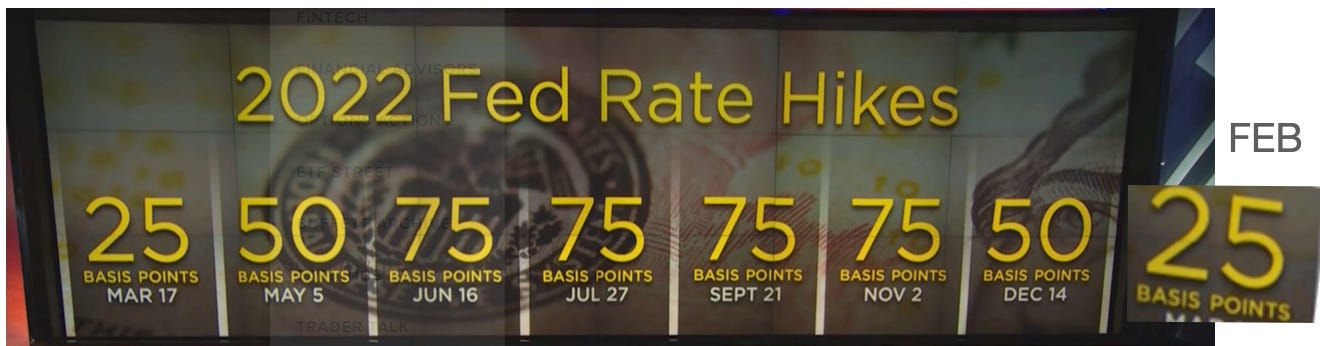
Powell: We obviously didn't pause today, and we anticipate the need for further rate hikes. We'll write down new forecasts in March.
Question: I get that. What I'm asking is, could you have gaps in the tightening? Like a pause and then a restart if inflation isn't stepping down the way you want?
Powell: There was a time when the Fed would hike every other meeting and it was considered fast. We go every meeting now.
Question: The Summary of Economic Projections (SEP) from December already seems inconsistent with the facts-on-the-ground. Could your understanding of the inflation dynamics be wrong?
Powell: Goods deflation is transitory. To get core PCE back down to 2 percent, we'll need to see a better balance in the labor market. We could get there without a significant decline in economic activity and rise in employment.
Question: Can we get there if you stop raising rates after you get to 5 percent?
Powell: There's a chance.
Question: Recession indicators are flashing red. They're telling us we're going to see recession this year. You've baked in a lot of tightening that hasn't even hit yet. Are you close to tipping us into recession?
Powell: Well, there are a lot of tailwinds. The labor market is "very, very strong." We think we'll eek out enough growth to avoid recession. State and local governments are flush with cash, and there's federal spending in the pipeline too.
Question: When you say that the Fed needs to see "substantially more evidence" that inflation is retreating, how many months are we talking about? Or are you really just focused on the labor market?
Powell: We want to see a lot of things but especially wages coming down.
Question: We've seen inflation come down without hammering the labor market. Is the hard part yet to come? Could inflation get stuck at a level much higher than 2 percent?
Powell: It could. We're in disinflation, but "we've got a long way to go."
Question: How long do you expect to hold interest rates at an elevated level?
Powell: Do not expect rate cuts this year.
Question: You talk of "ongoing increases," which implies at least two more hikes. Markets expect one more rate hike, followed by a pause. Who's right?
Powell: We have different views, and I don't care about the divergence. The market is optimistic. I don't see us cutting rates this year.
Question: Is the pandemic no longer weighing on the economy? You've dropped references to public health in your assessment of economic conditions.
Powell: Eventually, you have to take it out. We're "handling" COVID better, so it's not an ongoing economic risk, even though it remains a health issue.
Question: Vice-chair Lael Brainard isn't worried about a wage-price spiral. Do you agree?
Powell: We don't see it but that doesn't mean it's not a risk.
Question: You believe consumer's expectations are important?
Powell: Inflation expectations are a very important part of the process of creating inflation. But expectations are "well anchored" so I agree with the Vice-chair Brainard.
Question: In the December minutes, the Fed raised concerns about an unwarranted easing of financial conditions. You haven't mentioned that today. Is it still a concern?
Powell: Markets need to reflect the tightening of financial conditions because we are tightening. And—don't forget—we expect to keep rates higher for longer.
Question: Does the Fed take into account the debt ceiling when it comes to unwinding its balance sheet? More aggressive Quantitative Tightening (QT) runs the Treasury up the debt ceiling even faster.
Powell: It's hard to think about our role in accelerating the timeline. It's really up to Congress to act. If they don't raise the debt limit, it puts everything—the economy, financial markets, inflation—at risk.
This was the trillion-dollar question. You had to know something about the whole platinum coin debate to recognize it immediately. Here's how the question was actually posed: "I want to ask about the debt ceiling. If the US goes past the X-Date, will the Fed do whatever the Treasury directs as it relates to making payments as the fiscal agent, or will it do its own analysis of any legal constraints?" In other words, does the Fed recognize a clear obligation to deposit the coin, or would it feel compelled to check with its lawyers first? I'm reasonably certain this piece by Nathan Tankus inspired the question.
um hi chair pal I wanted to ask about the debt ceiling given that we've now hit up against it I was wondering if the U.S goes past the X date will the FED do whatever the treasury directs as it relates to making payments as the FiscalAgent or will it do its own analysis of any legal constraints?
what treasury directs as it relates to making payments or will it do its own analysis of any legal constraints?
so that the United States government can pay all of its obligations when due and any deviations from that path would be highly risky and that no one should assume that the FED can protect the economy from the consequences of failing to act in a timely manner in terms of our relationship with the treasury we are their Fiscal Agent and I'm just going to leave it at that are probably doing any planning of what
I'm just going to leave it at that this is a matter that's to be resolved between really it's really congress's
job to raise the debt ceiling and uh I gather their discussions happening but they don't involve us we're not uh we're not involved in those discussions so we're the Fiscal Agent.
21:07um hi chair pal I wanted to ask about the debt ceiling given that we've now hit up against it I was wondering if the
21:13U.S goes past the X date will the FED do whatever the treasury directs as it relates to making payments as the Fiscal
21:19Agent or will it do its own analysis of any legal constraints
21:25so your question is would we say your question again will the FED do
21:30what treasury directs as it relates to making payments or will it do its own analysis of any legal constraints so
21:37you're really asking about but I I you're asking about prioritization in effect okay so I I
21:44feel like I have to say this there's only one way forward here and that is for Congress to raise the debt ceilings
21:49so that the United States government can pay all of its obligations when due and any deviations from that path would be
21:56highly risky and that no one should assume that the FED can protect the economy from the consequences of failing
22:03to act in a timely manner in terms of our relationship with the treasury we are their Fiscal Agent and I'm just
22:08going to leave it at that are probably doing any planning of what
22:15I'm just going to leave it at that this is a matter that's to be resolved between really it's really congress's
22:20job to raise the debt ceiling and uh I gather their discussions happening but they don't involve us we're not uh we're
22:27not involved in those discussions so we're the Fiscal Agent
2023/02/02ケルトンレンズ The tl;dr on Powell - ステファニー・ケルトン著 - The Lens
| ||||||||||||||||||||||||
https://stephaniekelton.substack.com/p/the-tldr-on-powell
パウエルのtl;dr
兆ドルの質問。中で答えます。
FRB は今日広く期待されていたことを実行し、政策金利をさらに 4 分の 1 パーセント ポイント (25 ベーシス ポイント) 引き上げました。あと何回の利上げが見られるでしょうか?FRB はここで一時停止するか、それとも利上げを続けるか?
FRB 議長のジェローム・パウエルは、本日の記者会見でこれらの質問やその他の質問に答えました。
BINGO カードに「継続増加」がある場合は、その場所に印を付けることができます。「やるべきことがもっとある」「しばらく制限がある」場合は、さらに 2 つのスポットに印を付けることができます。
カードに「FRB は財務省から 1 兆ドルのプラチナ コインを受け入れるでしょうか?」という質問が含まれている場合は、スポットをマークすることもできます。しかし、それが問題であることに気付いていないかもしれません。
ライブ解説を見逃した場合は、ここですべてを見ることができます。時間がなくて大まかな要約が必要な場合は、別のtl;drでここにいます。では、記者会見の質疑応答の部分を私の(非常に)大雑把に言い換えたものを以下に示します。
LIVE: Fed Chair Jerome Powell holds news conference following FOMC meeting
2023/02/02
https://www.youtube.com/live/wSEzHsVwjbM?feature=share
こっちか
https://www.youtube.com/live/LH1TbRQIeds?feature=share
https://www.c-span.org/video/?523967-1/jerome-powell-speaks-reporters-fed-raises-interest-rates-025
はサーバー落ち
補完
https://www.youtube.com/live/TLqL0D-wm0A?feature=share
2022
Fed Chair Jerome Powell participates at the Cato Institute 40th Annual M...
https://www.youtube.com/live/5lk7w3OVZ_U?feature=share
https://iitomo2010.blogspot.com/2023/02/with-that-i-will-let-all-of-viewers.html
質問:秋以降、金融環境は緩和しています。市場は上昇しています。ウォール街の熱意を鈍らせるためにもっと頑張らなければなりませんか?
パウエル:財政状況は過去 1 年間で非常に大幅に引き締まりました。まだ終わりではありません。
質問:インフレは減速しています。これを放っておけばいいんじゃない?インフレ率を目標に戻すには、失業率の上昇が必要だとまだお考えですか?
パウエル:ディスインフレについては、それが最も重要な場合を除いて、良い話をすることができます。そして、それは悪いニュースです。
質問: 1 月です。12 月以降、インフレに対する見方は変わりましたか。
パウエル:いいえ。
質問:求職者に対する求人数の比率をバランスに近づけようとしてきました。比率が上昇しただけです。
パウエル: わかっています。労働市場は頑固に強い。
質問:金利を 5.25% まで引き上げる必要があると思いますか?
パウエル:それが 12 月の見解でした。3月に更新します。
質問:あなたは紙一重です。リスクのバランスをどのように見ていますか?
パウエル:やりすぎかもしれません。締めすぎると、かなり簡単にコースを逆にすることができます。しかし、私たちが手を緩めなければ、インフレ期待が定着し、アーサー・バーンズのように「弱気になった」と非難されるでしょう。
質問:金融市場はインフレをバックミラーに映したいと考えています。あなたは彼らが先を行っていると思います。
パウエル:ディスインフレプロセスが始まっています。私たちは、実際に一時的なデフレが起きている財部門でそれを最も明確に見ています。私たちは、ディスインフレが住宅サービスに来ていることを知っています。そして、住宅を除くコアサービスですぐにそれが見られると予想していますが、まだ見られません. そして、それが私たちの焦点です。私たちがそれを見るまでは、インフレがバックミラーに映っているとは確信できません。
質問:あなたは過去にフィリップス曲線に関して間違っていました。あなたはまた間違っているかもしれません。では、労働市場が引き続き堅調であってもインフレ率が低下し続けるかどうか、今一度立ち止まって見てみませんか?
パウエル: 私たちが自分自身に語りかけているのは、フィリップス曲線が正しいということです。
質問: FOMC は非公開の会議で、この引き締めサイクルの終わりに到達するために何が必要か、具体的には何について話しているのでしょうか?
パウエル:私たちは多くのことについて話します。公開された議事録を読むことができます。
質問:イエレン長官があなたに 1 兆ドルのプラチナ コインを送ってきたとき、あなたはためらうことなく財務省の一般会計 (TGA) に入金しますか?それとも、財務代理人としての職務に沿ってですか?それとも、最初に法務委員会に確認する必要があると思いますか?
パウエル:ええと、質問を繰り返してもらえますか。
質問:あなたは財務省の会計代理人です。プラチナコインが出たらどうする?
パウエル:では、支払いの優先順位について質問しています。
質問: FRB は 2022 年 3 月以降、すべての会議で利上げを行ってきました。「継続的な利上げ」について話す代わりに、年内に必要だと感じた場合に利上げを一時停止して再開することについての議論はありましたか?
パウエル:今日は明らかに一時停止しませんでした。さらなる利上げが必要になると予想しています。3月に新しい予測を書き留めます。
質問:わかりました。お聞きしたいのですが、締め付けに隙間はありませんか?一時停止して、インフレが思うように下がらない場合に再開するようなものですか?
パウエル: FRBが1回おきの会合で利上げを行った時期があり、それは速いと考えられていました。私たちは今、すべての会議に行きます。
質問: 12 月の経済予測の概要 (SEP) は、すでに現場の事実と矛盾しているようです。インフレのダイナミクスに対するあなたの理解は間違っているのでしょうか?
パウエル:商品のデフレは一時的なものです。コア PCE を 2% に戻すには、労働市場のバランスを改善する必要があります。経済活動の大幅な低下や雇用の増加なしに、そこにたどり着くことができました。
質問: 5% に達した後、金利の引き上げを停止した場合、そこに到達できますか?
パウエル:可能性はあります。
質問:不況インジケーターが赤く点滅しています。彼らは、今年は景気後退が見られるだろうと言っています。まだ打っていない締めもたっぷり焼き込みましたね。私たちを不況に陥れようとしていますか?
パウエル:うーん、多くの追い風があります。労働市場は「非常に強い」。景気後退を回避するのに十分な成長が見込めると考えています。州政府と地方政府は資金が潤沢で、連邦政府の支出も予定されています。
質問: FRBがインフレが後退しているという「実質的により多くの証拠」を確認する必要があるとあなたが言うとき、それは何ヶ月のことですか? それとも、あなたは本当に労働市場に焦点を当てていますか?
パウエル:私たちは多くのことを見たいと思っていますが、特に賃金が下がることを望んでいます。
質問:労働市場に打撃を与えずにインフレ率が低下するのを見てきました。難しい部分はまだ来ていませんか?インフレ率が 2% をはるかに超える水準で立ち往生する可能性はありますか?
パウエル:可能性はあります。私たちはディスインフレ状態にありますが、「まだ先は長い」のです。
質問:高水準の金利をいつまで維持すると予想していますか?
パウエル:今年の利下げは期待しないでください。
質問:あなたは「継続的な上昇」について言及していますが、これは少なくともあと 2 回の利上げを意味します。市場はもう 1 回の利上げとその後の一時停止を予想しています。誰が正しいですか?
パウエル:私たちは異なる見解を持っており、意見の相違は気にしません。市場は楽観的です。今年は利下げは見られません。
質問:パンデミックはもはや経済に重くのしかかっていませんか? 経済状況の評価において、公衆衛生への言及を削除しました。
パウエル:最終的には、それを取り除かなければなりません。私たちはCOVIDをより適切に「処理」しているため、健康上の問題は残っていますが、継続的な経済的リスクではありません.
質問:副議長のラエル・ブレナードは、賃金価格のスパイラルについて心配していません。同意しますか?
https://youtu.be/yw8TMCSIqGQ?t=39m35s
パウエル:私たちはそれを見ていませんが、それはリスクがないという意味ではありません.
質問:消費者の期待は重要だと思いますか?
パウエル:インフレ期待は、インフレを生み出すプロセスの非常に重要な部分です。しかし、期待は「十分に固定されている」ので、副議長のブレイナードに同意します。
質問: 12 月の議事録で、FRB は金融環境の不当な緩和について懸念を表明しました。今日、あなたはそれについて言及していません。それはまだ懸念事項ですか?
パウエル:市場は引き締めを行っているため、金融環境の引き締めを反映する必要があります。そして忘れてはならないのは、金利がより長く維持されることを期待しているということです。
質問: FRB は、バランスシートを解消する際に債務上限を考慮に入れていますか? より積極的な量的引き締め(QT)により、財務省は債務上限をさらに急速に引き上げます。
パウエル:タイムラインを加速する上での私たちの役割について考えるのは難しいです。実際に行動するのは議会次第です。債務上限を引き上げなければ、経済、金融市場、インフレなどすべてが危険にさらされます。
これは1兆ドルの質問でした。プラチナコインの議論全体について何かを知っていなければ、すぐにそれを認識できませんでした. 質問が実際にどのように提起されたかは次のとおりです。法的制約について独自の分析を行いますか?」言い換えれば、FRBはコインを預ける明確な義務を認識していますか、それとも最初に弁護士に確認する必要があると感じますか? 私は、ネイサン・タンカスのこの作品が質問に影響を与えたと確信しています。
https://mobile.twitter.com/NathanTankus
https://www.ft.com/content/afb6ef8f-be7c-45ac-8a7d-56550b64fd9e
Three questions for Fed Chair Jay Powell
About the platinum coin and the US Constitution

Nathan Tankus is the research director of the Modern Money Network. He also writes the Notes on the Crises newsletter.
There has been more buzz about the trillion-dollar platinum coin since my last piece for FT Alphaville, where I argued that the Federal Reserve would have to accept the coin if the Treasury tried to deposit it.
Treasury Secretary Janet Yellen was asked by the Wall Street Journalabout the trillion dollar platinum coin; she said the Federal Reserve might not accept the deposit, and further claimed that it isn’t legally obliged to, either.
She didn’t say that issuing a trillion-dollar coin is illegal, however. This, in and of itself, is remarkable. It suggests that while she isn’t comfortable with the platinum coin proposal, she does not want to completely close the door to it by claiming it is not a legal option at all.
More generally, the responses to my argument have highlighted a normally neglected part of the Fed’s responsibilities: its role as fiscal agent. The most substantive engagement came from writer Josh Barro, who argued that other end runs around the debt ceiling such as issuing low face value bonds were better because they don’t require the Fed’s reluctant co-operation. I disagree with this claim, but it is understandable why Barro believes it. Most people do not realise that the Fed’s fiscal agent responsibilities extend beyond providing bank accounts for the Treasury Department and processing payments for it.
As the longtime house historian of the New York Fed Kenneth Garbade has documented, “Treasury securities” are in practice a book-entry system administered by the Fed, even as they remain the Treasury’s liabilities. They are held in “securities accounts” and when a bank or insurance company wants to sell a Treasury security, they use the Fed’s “Fedwire Securities Service”. The book-entry system, incidentally, was introduced in response to a couple of crises, including the disappearance of $7.5mn of Treasuries in 1963 and threats to liquidity from an “insurance crisis” in 1970.
The Fed is also integrally involved in Treasury auctions. As its services website explains: “the Federal Reserve assists in the auction by accepting and processing tenders, issuing securities to the successful bidders and serving financial institutions.” The New York Fed administers all of the Fed’s open-market operations, trading with a select group of bond dealers called “primary dealers” who, in exchange, are required to bid on Treasury auctions.
In other words, if you’re trying to avoid requiring the close co-operation of the Fed or its regional banks as a fiscal agent, auctioning a Treasury security is the wrong strategy. It may sound like a process that is more independent from the Fed than depositing a high-face-value platinum coin, but this is a myth generated by neglect of the details of how the Treasury market works.
Additionally, as Bloomberg’s Treasuries reporter Elizabeth Stanton pointed out, there are a number of operational issues with trying to modify the Treasury auction schedule and issue new types of Treasury securities, especially ones that would be clouded with the same (at best) legal uncertainties as the coin. In contrast, depositing the trillion-dollar coin is operationally simple even if its legal uncertainties are different from any unconventional-Treasury-security-related gimmicks.
Bottom line: issuing a weird bond may be more attractive to DC pundits and play well with an audience that likes needless complexity, but when you examine it up close it is not actually a more viable or less risky option.
Nevertheless, Barro’s commentary brings up a few questions that need attention: how seriously does the Fed take its fiscal agent responsibilities, and does it believe it can pick and choose which responsibilities to carry out? Perhaps most explosively, does the Fed believe it can interfere with the White House’s determination that breaking the debt ceiling is the least unconstitutional option?
Put differently, do Fed officials believe that their judgment on constitutional questions supersedes the executive branch?
Interestingly, former Fed chair Alan Greenspan said a number of times behind closed doors that the Fed was not independent in its role as a fiscal agent. In 1995, for example, he said: “On the issue of how we deal with the Treasury in this government, as fiscal agent we involve ourselves in various types of support for the Treasury and that does in one sense impinge on the independence of this institution.” In 2004 he reiterated these comments, saying “there are a number of awkward relationships that we have in our role as fiscal agent, none of which to my knowledge has ever triggered any event that would be of concern to us”.
Yet.
This brings me to my questions for Fed Chair Jay Powell, which I hope journalists will ask at the press conference on Wednesday. These questions are important; it matters if the leadership of the Fed believes that it’s their prerogative to decide whether the government defaults, or to interfere with Treasury issuance under any circumstances.
1) If the Treasury attempted to avoid default by depositing a trillion dollar coin at a regional Fed Bank, would the Fed’s Board direct that bank to reject the deposit of the coin?
2) Would the Fed fully co-operate with a Treasury attempt to avoid default by issuing consols or low-face-value, high-coupon bonds once the debt ceiling is reached?
3) If the Treasury attempted to avoid default by issuing more Treasury securities beyond the limit set by the debt ceiling, would the Fed interfere with their issuance in any way, including (but not limited to) its role as a fiscal agent?
I hope Powell gets asked these questions and answers them. They are profoundly important. The trillion dollar platinum coin — or the quirky Treasury bond proposals, for that matter — may seem silly. However, they have brought up fundamental constitutional questions which are very serious. Powell can clarify at tomorrow’s press conference that the Fed’s judgment does not supersede the President’s when it comes to questions of constitutional interpretation.
FRB議長ジェイ・パウエルへの3つの質問
プラチナコインと米国憲法について
Nathan Tankus は、 Modern Money Networkのリサーチ ディレクターです。 彼はまた、危機のニュースレターに関するメモも書いてい ます。
FT Alphaville の前回の記事で、財務省が預金しようとした場合、連邦準備制度理事会はコインを受け入れなければならないと主張して以来、1 兆ドルのプラチナ コインについての話題が増えています。
ジャネット・イエレン財務長官 は、ウォール・ストリート・ジャーナルから、1兆ドルのプラチナ・コインについて尋ねられました。彼女は、連邦準備制度理事会が預金を受け入れない可能性があると述べ、法的にも義務付けられていないと主張した.
しかし彼女は、1兆ドル硬貨の発行が違法だとは言いませんでした。これは、それ自体が驚くべきことです。彼女はプラチナコインの提案に満足していませんが、それが合法的な選択肢ではないと主張して、それへの扉を完全に閉じたくないことを示唆しています.
より一般的に言えば、私の議論に対する反応は、通常は無視されている Fed の責任の一部である、財政代理人としての役割を浮き彫りにしました。最も実質的な関与は 作家のジョシュ・バロ氏によるもので、彼は 額面価格の低い債券を発行するなど、債務上限を回避する他の手段の 方が優れていると主張しました。私はこの主張に同意しませんが、Barro がそれを信じる理由は理解できます。ほとんどの人は、連邦準備制度理事会の財政代理人の責任が、財務省に銀行口座を提供し、その支払いを処理することだけにとどまらないことを認識していません。
ニューヨーク連銀の長年のハウス ヒストリアンであるケネス ガーベイド が文書化したように、「国庫証券」は実際には連邦準備制度によって管理される簿記システムですが、財務省の負債のままです。それらは「証券口座」に保管されており、銀行や保険会社が米国債を売却したい場合は、FRB の「Fedwire 証券サービス」を使用します。ちなみに、簿記制度は、1963 年の 750 万ドルの国債の消失や 1970 年の「保険危機」による流動性への脅威など、いくつかの危機に対応して導入されました。
FRB はまた、財務省のオークションに完全に関与しています。その サービスのウェブサイトが説明しているように、「連邦準備制度理事会は、入札を受け入れて処理し、落札者に証券を発行し、金融機関にサービスを提供することにより、オークションを支援します。」ニューヨーク連邦準備制度理事会は、連邦準備制度理事会のすべての公開市場操作を管理し、「プライマリー ディーラー」と呼ばれる厳選された債券ディーラー グループと取引を行い ます 。
言い換えれば、連邦準備制度理事会やその地方銀行の財政代理人としての緊密な協力を必要とすることを避けようとしているのであれば、財務省証券をオークションにかけることは間違った戦略です。額面価格の高いプラチナ コインを預け入れるよりも、FRB から独立したプロセスのように聞こえるかもしれません が、これは国債市場の仕組みの詳細を無視することによって生み出された神話です。
さらに、ブルームバーグの米国債レポーターであるエリザベス・スタントン が指摘したように、米国債オークションのスケジュールを変更し、新しいタイプの米国債を発行しようとする試みには、多くの運用上の問題があります。コイン。対照的に、1兆ドル硬貨の入金は、法的な不確実性が従来の財務省セキュリティ関連の仕掛けとは異なる場合でも、操作は簡単です。
要するに、変な債券を発行することは、DC の評論家にとってより魅力的であり、不必要な複雑さを好む視聴者にとってはうまくいくかもしれませんが、詳しく調べると、実際にはより実行可能またはリスクの低いオプションではありません.
それにもかかわらず、Barro の解説は、注意が必要ないくつかの質問を提起します。FRB は 財政代理人としての 責任をどれほど真剣に受け止めているのでしょうか。おそらく最も爆発的なのは、債務上限を破ることが 最も違憲でない選択肢であるというホワイトハウスの決定を連邦準備制度理事会が妨害できると信じていることでしょうか?
別の言い方をすれば、FRB当局者は、憲法上の問題に関する彼らの判断が行政府に取って代わると信じているのでしょうか?
興味深いことに、元FRB議長のアラン・グリーンスパンは密室で何度も、FRBは財政代理人としての役割において独立していないと述べました. たとえば、1995 年に彼は次のように述べてい ます。機関。" 2004年 、彼はこれらのコメントを繰り返し、「 財政代理人としての我々の役割には多くの ぎこちない関係があり、私の知る限り、我々にとって懸念となる出来事を引き起こしたことはありません」.
まだ。
これは、FRB議長のジェイ・パウエルに対する私の質問につながります.ジャーナリストが水曜日の記者会見で質問することを願っています. これらの質問は重要です。FRB の指導部が、政府が債務不履行に陥るかどうかを決定する権限、またはいかなる状況下でも財務省の発行に干渉する権限があると信じているかどうかは重要です。
1) 財務省が地域の FRB 銀行に 1 兆ドル硬貨を預けることで債務不履行を回避しようとした場合、FRB の理事会はその銀行に硬貨の預け入れを拒否するように指示しますか?
2) 連邦準備制度理事会は、債務上限に達した場合、財務省が慰謝料や低額面高クーポン債を発行して債務不履行を回避しようとする試みに全面的に協力するでしょうか?
3) 財務省が、債務上限によって設定された限度を超えて国債を発行することで債務不履行を回避しようとした場合、連邦準備制度理事会は財政代理人としての役割を含む (ただしこれに限定されない) 何らかの方法でそれらの発行を妨害しますか?
パウエルがこれらの質問をされて答えてくれることを願っています。それらは非常に重要です。1兆ドルのプラチナコイン、または風変わりな財務省の債券提案は、ばかげているように見えるかもしれません。しかし、彼らは非常に深刻な根本的な憲法問題を提起しました。パウエル議長は明日の記者会見で、憲法解釈の問題に関して連邦準備制度理事会の判断が大統領の判断に取って代わるものではないことを明確にすることができます。
https://stephaniekelton.substack.com/p/the-tldr-on-powell-this-morning
今朝のパウエルのtl;dr
ステファニー・ケルトン 2022 年 9 月 9 日34 14
CATO インスティテュートは本日、第 40 回年次通貨会議を開催します。私は、FRB議長のジェローム・パウエルとのモデレートされた質疑応答を特徴とするオープニングセッションを見ました。終日開催のカンファレンスで、午後 3 時 40 分 (ET) に終了します 。今すぐオンラインに接続すれば、残りの部分を視聴できます 。そして、後で戻って見たい人のために、各パネルのビデオが利用できると思います.
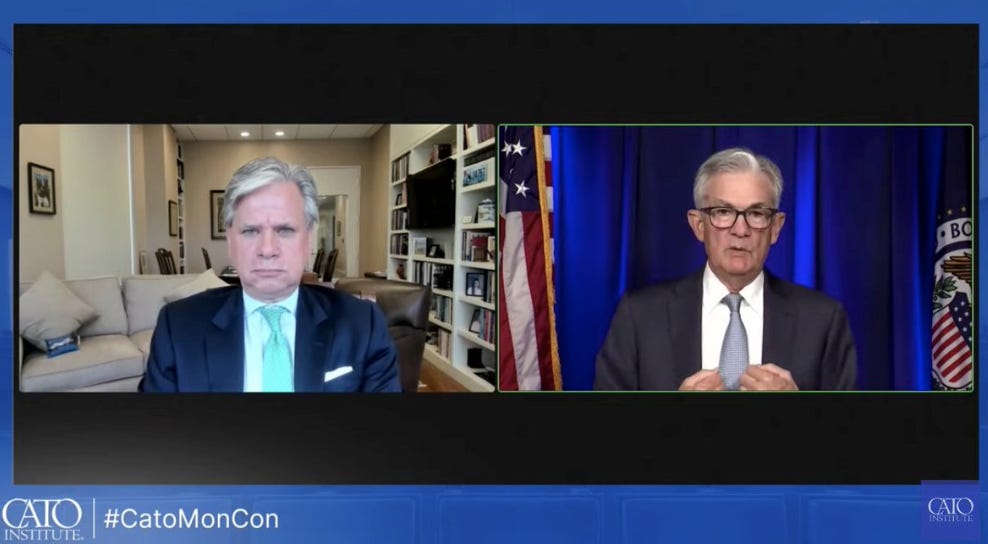
パウエルとのセッションの後、私は見るのをやめました。この元FRBエコノミストのよう に、私は交換全体がかなり奇妙だと感じました。

実際、 アン・サフィール (ロイターのFRB担当)が観察したように、パウエル議長は、現在金融政策について考えているほとんどの人が頭に浮かんでいるようなことについて尋ねられることさえありませんでした。

何か重要なことや少なくとも役に立つことを聞くかもしれないと思って、私はわざわざメモを取りました。しませんでした。しかし、私は朝の一部をそれに費やしたので、言い換え て交換を共有 しようと思い ました.
CATO: パンデミックと関連するサプライ チェーンの問題のために高インフレになっていると言う人もいますが、それは実際には過度の紙幣印刷と過度の財政刺激策でしたね。
パウエル: いいえ。政策対応は強い需要を支えましたが、パンデミックの背景と供給側の制約がなければ、私たちが見たようなインフレは見られなかったでしょう. 需要と供給のドライバーを解きほぐすのは簡単ではありませんが、あなたが示唆するようなものではありません.
CATO: ボルカーがその男でした。必要なものはありますか?
パウエル: はい、そうでした。そして、はい、そうです。
CATO: 連邦準備制度理事会の 柔軟な平均インフレ目標 (FAIT) 戦略は間違いでした。それを変更または放棄する時が来ていませんか?
パウエル: それは既成事実です。
CATO: 人々が仕事を見つけるのはまだかなり簡単で、賃金は上がり続けています。それはあなたの仕事を難しくしませんか?
パウエル: そうです。私たちは、労働市場を「より良いバランス」にしようとしています。最近の労働参加率の増加は歓迎すべきことであり、強い労働市場があることは社会にとって重要です。しかし、現時点では強すぎると考えています。私たちはそれを変えようとしています。
CATO: なぜ誰もがミルトン フリードマンを忘れたのですか?
パウエル: 時代に乗りなさい。通貨総量の変化は、何十年もの間、インフレの良い予測因子ではありませんでした。金額の集計に夢中になっている場合は、プロットを見逃しています。私たちはそれらに注意を払っておらず、金融政策の策定においてそれらが何らかの役割を果たすことを認めていません.
CATO: 私たちは法定通貨や裁量的な金融政策のファンではありません。私たちはルールが好きです。私たちは 名目 GDP 目標を気に入っています。
パウエル: ハードパスです。テイラー・ルールは金融政策分析の構造の一部になっていますが、どの中央銀行も、そして連邦準備制度理事会も、そのようなルールに手を差し伸べたことはありません。私たちは NGDP ターゲティングを検討しましたが、それは「正しい方法ではない」と結論付けました。私の異議は NGDP ターゲティングの支持者にはよく知られていることであり、それを繰り返しても CATO の誰も説得できません。
加藤: 二重義務の完全雇用の側面は捨てるべきです。
パウエル: いいえ、すべきではありません。それは「大衆に十分に役立っており、一般的に実行可能です。」
CATO: 一部の人々は、FRB のマンデートを拡大して、人種的公平性や金融の安定性をより重視することなどを含めます。私たちはそれが好きではありません。
パウエル: 私もです。私は二重の義務に満足しており、それを狭めたり広げたりしたくありません.
CATO: あなたは大きなバランス シートの上に座っています。それを縮小する計画は何ですか? また、これらすべての裁量的な大規模資産購入 (LSAPS) が始まる前の「不足準備体制」に戻ることができるでしょうか?
パウエル: 私たちはバランスシートを縮小していますが、世界は不確実な場所です. 何かが起こり、私たちはドアを閉めていません。必要が生じた場合、そしていずれ必ずそうなるでしょうが、私たちは LSAP を再び展開する権利を留保します。後戻りはありません。私たちは現在、「十分な準備体制」の下で生活しています。それに慣れる。
CATO: FRB は、中央銀行デジタル通貨 (CBDC) の導入を検討しています。私たちは、プライバシーと経済的抑圧をめぐってさまざまな懸念を抱いています。私の恐れを和らげてください。
パウエル: 決定は下されていません。私たちは、議会と行政府による特定の認可法が必要になると考えています。CBDC はプライバシーを保護する必要があります。それは私たちにとって「非常に重要」です。中国のようにはしません。急いでいません。私たちはこの問題を研究し続けています。
CATO: 私たちは暗号通貨が好きです。私たちは、未公開市場のイノベーションを法定通貨に代わるものとして見たいと考えています。私たちは規制当局を心配しています。
パウエル: 私には仮想通貨が大好きな家族がいますが、裏付けのないもの、例えばビットコインは「お金」として機能していないようです。人々が何かを「お金」だと思うなら、それはお金の性質を持っている必要があります。たとえば、ビットコインは優れた価値の保存手段ではありません。しかし、安定したコインは潜在的に別の動物です。私は、それらは金融システムの正当な部分になり得ると考えており、その点でイノベーションを抑圧したくはありません. しかし、適切な規制が必要です。
CATO: うーん、規制ですね。
POWELL: 私はイノベーションに賛成ですが、適切な規制があります。
CATO: ギアを変えましょう。私たちの国の持続不可能な財政経路について何か言ってください。「清算の日」と、私たちが未来の世代に与えている害について、私の懸念を共有していただけますか?
パウエル: 財政政策は議会と政権のためのものです。FRB は、これらの問題に加担することを避けようとしています。しかし、私の前任者のほぼ全員がこの質問に直面したときに提示したボイラープレートを繰り返して検討させてください。私たちの連邦財政政策は持続可能な道を進んでおらず、より早く持続可能な道に戻る必要があります。遅かれ早かれ遅かれ早かれ。
CATO: あなたが学んだ重要な教訓や若いマネタリストへのアドバイスは何ですか?
パウエル: まず、目の前の仕事を受け入れてください。インフレを抑えるのが私たちの仕事です。第二に、失敗は許されません。第三に、証拠に照らして自分の見解を変える準備をしてください。そして最後に、FRBで働くことを検討してください。とても特別な場所です。
Fed Chair Jerome Powell participates at the Cato Institute 40th Annual M...
https://www.youtube.com/live/5lk7w3OVZ_U?feature=share
44:00?
https://stephaniekelton.substack.com/p/the-tldr-on-powell-this-morning
The tl;dr on Powell This Morning
Stephanie Kelton Sep 9, 2022 34 14
The CATO Institute is holding its 40th annual monetary conference today. I just watched the opening session, which featured a moderated Q&A with Fed Chair Jerome Powell. It’s an all-day conference, ending at 3:40 pm (ET), so you can watch the remainder if you hop online now. And I suspect videos of each panel will be available for those who want to go back and watch at a later date.
I stopped watching after the session with Powell. Like this former Fed economist, I found the whole exchange pretty odd.

Indeed, as Ann Saphir (who covers the Fed for Reuters) observed, Powell wasn’t even asked about the kind of stuff that is front of mind for most people who are thinking about monetary policy right now.

I went to the trouble of taking notes, thinking we might hear something important or at least useful. We didn’t. But since I spent part of my morning doing it, I thought I’d paraphrase and share the exchange.
CATO: Some people say we have high inflation because of the pandemic and related supply-chain problems, but it was really excessive money-printing and too much fiscal stimulus, wasn’t it?
POWELL: No. The policy response supported strong demand, but you wouldn’t have seen anything like the inflation we’ve seen without the backdrop of the pandemic and the supply-side constraints. It’s not easy to disentangle the demand versus supply drivers, but it’s not as you suggest.
CATO: Volcker was the man. Do you have what it takes?
POWELL: Yes, he was. And, yes, I do.
CATO: The Federal Reserve’s flexible average inflation targeting (FAIT) strategy was a mistake. Isn’t it time to modify or abandon it?
POWELL: It is a fait accompli.
CATO: It’s still pretty easy for people to find a job, and wages keep rising. Doesn’t that make your job harder?
POWELL: It does. We are trying to bring the labor market into “better balance.” The recent increase in labor force participation was welcome, and it’s important for society that we have a strong labor market. But we think it’s too strong at the moment. We’re trying to change that.
CATO: Why did everyone forget their Milton Friedman?
POWELL: Get with the times. Changes in monetary aggregates haven’t been a good predictor of inflation for decades. If you’re obsessed with monetary aggregates, you’re missing the plot. We don’t pay attention to them and certainly don’t allow them to play any role in our formulation of monetary policy.
CATO: We’re not fans of fiat money or discretionary monetary policy. We like rules. We like nominal GDP targeting.
POWELL: Hard pass. While Taylor rules have become part of the fabric of monetary policy analysis, no central bank—and certainly not the Federal Reserve—has ever tied its hands to such a rule. We have looked at NGDP targeting, and we’ve concluded that it’s “not the right way to go.” My objections are well-known to advocates of NGDP targeting, and repeating them won’t persuade anyone at CATO.
CATO: You should ditch the full-employment side of the dual mandate.
POWELL: No, we shouldn’t. It “has served the public well and is generally workable.”
CATO: Some people would expand the Fed’s mandate to include things like racial equity or greater emphasis on financial stability. We don’t like that.
POWELL: Me neither. I’m content with the dual mandate and wouldn’t want it narrowed or broadened.
CATO: You’re sitting on a big balance sheet. What’s the plan to shrink it, and can we go back to the “scarce reserve regime” we had before all of these discretionary large-scale asset purchases (LSAPS) started?
POWELL: We’re shrinking the balance sheet, but the world is an uncertain place. Stuff happens, and we’re not closing any doors. When the need arises—and it surely will in due time—we reserve the right to roll out LSAPs again. There is no turning back. We live under an “ample reserves regime” now. Get used to it.
CATO: The Fed has been thinking about possibly introducing a central bank digital currency (CBDC). We have a variety of concerns surrounding privacy and financial repression. Assuage my fears.
POWELL: No decision has been made. We think we would need a specific authorizing law from Congress and the executive branch. Any CBDC should be privacy protecting. That is “extremely important” to us. We would not do it like China. We’re in no hurry. We continue to study the issue.
CATO: We like cryptocurrencies. We want to see private market innovation as alternatives to fiat. We worry about regulators.
POWELL: I have family members who love crypto, but the unbacked stuff—e.g. Bitcoin—doesn’t appear to work as “money.” If people are going to think something is “money” it needs to have the qualities of money. Bitcoin is not a great store of value, for example. But stable coins are potentially a different animal. I think they can be a legitimate part of the financial system, and I wouldn’t want to stifle innovations in that regard. But you need appropriate regulation.
CATO: Ugh, regulation.
POWELL: I’m in favor of innovation but with appropriate regulation.
CATO: Let’s shift gears. Say something about our nation’s unsustainable fiscal path. Do you share my concerns about a “day of reckoning” and the harm we’re doing to future generations?
POWELL: Fiscal policy is for Congress and the administration. The Fed tries to avoid weighing in on those issues. But let me weigh in by repeating the boilerplate that nearly every one of my predecessors has offered when faced with this question: Our federal fiscal policy isn’t on a sustainable path, and we’ll need to get back to a sustainable path sooner or later and sooner is better than later.
CATO: What are some key lessons you’ve learned or advice you’d give to young monetarists?
POWELL: First, embrace the task at hand. It’s our job to get inflation down. Second, failure is not an option. Third, be prepared to change your views in light of the evidence. And, finally, consider working at the Fed. It’s a very special place.
★
インフレを下げることは、ワントリックポニーの仕事ではありません

連邦準備制度理事会は、経済を不況に陥れさせる恐れのある一連の利上げに着手したため、インフレと戦う方法を再考する時が来ました。
中央銀行がとった行動である金融政策は、過去数十年の間、米国の経済安定化のための支配的なツールでした。これにより、議会は財政政策に対する自分の責任をほとんど回避することができ、しばしば政治に陥り、周囲の赤字や債務の大小の争いを争うことができました。
中央銀行は、経済に対する科学的アプローチに基づいて政策を策定する姿勢をとっているが、大部分が消滅した信用を失った経済理論に努力を続けている。失業とインフレの間の想定されるトレードオフを入力してください。この観点によると、失業率が「自然な」レベル(一定でさえない)を下回ると、インフレプロセスが扇動されます。この想定されるトレードオフに基づいて、過去にFRBは、失業率が「低すぎる」ため、実際のインフレがなかった場合でも、金利を先制的に引き上げることが多かった。
現在の経験が示すように、FRBの金利に関する意思決定は科学的とは程遠い。金利はどのくらい高くなるべきですか?彼らはどのくらいの速さで育てられるべきですか?FRBは、これらの非常に重要な政策決定を知らせるための確固たる理論的裏付けはありません。
COVID以前は、中央銀行家でさえ、金融政策立案の理論的基礎の欠如を公然と認めていた。2019年7月、FRBのジェローム・パウエル議長は、失業とインフレのトレードオフを「弱く、弱く、弱く、弱く、今聞こえるほど、弱く、今聞こえるほどです」と呼びました。米国の失業率は、予想されるインフレなしに何度も「自然な」率を下回っている。2017年、FRBのダニエル・タルロ総裁は、FRBは「リアルタイムの金融政策立案のビジネスに使用するために十分に機能するインフレダイナミクスの理論を持っている」と述べた。しかし、政策立案を支える経済理論に疑問を投げかけているにもかかわらず、FRBは再びインフレに対処するための同じアプローチにたどり着きました。
金融政策のすべての技術的専門用語の背後には、FRB当局者でさえ現在認めている単純な現実があります。私たちはインフレと戦うためのツールとして失業を使用しています。ボストン連邦準備制度理事会のスーザン・コリンズ総裁は、「物価安定を達成するには、雇用成長の鈍化とやや高い失業率が必要になると予想している」と認めた。2022年8月の演説で、パウエルも同様に「労働市場の軟化が非常に高い」と認めたが、「仕事が終わると確信するまでそれを続ける」と約束した。FRBは、失業率が現在の3.5%から4.6%(または5%)まで高くなると予測しています。
エコノミストは、価格安定がどのように達成されるべきかについて同様に明確にしています。ラリー・サマーズは、「インフレを抑えるには、5%を超える5年間の失業率が必要です。言い換えれば、7.5%の2年間、6%の失業率の5年間、または10%の失業率の1年間が必要です」というニュースを発表しました。エズラ・クラインとのインタビューで、彼は「失業率が増加しても、FRBがインフレを封じ込める決意の強いシグナルを送ることが非常に重要だった」と認めた。サマーズの推論は、インフレがより高い失業率を引き起こすことによってのみ制御される現在の政策の枠組みの中で正確ですが、これはまさに私たちが再考する必要がある枠組みです。
FRBは、患者を正常に手術するためにさまざまなツールを使用して、自分自身を外科医と考えています。実際には、それは1つの鈍いツール、金利を持っており、それを使用するための多くのガイダンスを持っていません。患者を手術するのではなく、それが持っている唯一のツールでそれを叩きのめす。患者がこの試練から健康に出て来れば、それはFRBのせいではなく、それにもかかわらず。
インフレはさまざまな理由で緩和されており、そのほとんどが金利とは無関係です。それでも、私たちは、ある問題である失業を生み出し、別のインフレを解決することに依存するアプローチを再考する機会を利用しなければなりません。
価格の安定を達成するための別の方法が利用可能です。削減しようとしている総支出であれば、財政政策を使用して、よりターゲットを絞った方法で行うことができます。財政政策はまた、不足が発展する可能性が高い地域に投資を向けることによって、FRBが行うことができないインフレの供給側のボトルネックを軽減することができます。私たちは、再生可能エネルギーと半導体部門で追加の容量を創出するためのターゲットを絞った投資を行うインフレ削減法とCHIPSと科学法の形で正しい方向に赤ちゃんの一歩を踏み出しました。
必要なのは、FRBの役割を格下げしながら、議会などの財政当局の役割(および責任)を高めるために、価格安定を達成するための枠組みを全体的に再考することです。
イェバ・ネルシシアは、フランクリン&マーシャル・カレッジの経済学教授であり、バード・カレッジのレビー・エコノミクス・インスティテュートの研究学者です。
Lowering inflation isn’t a job for a one-trick pony
As the Federal Reserve has embarked on a series of interest rate hikes that threaten to throw the economy into a recession, it is time we rethink how we fight inflation.
Monetary policy, the actions taken by the central banks, has been the dominant tool for economic stabilization in the United States for the past few decades. This has allowed Congress to largely shirk their own responsibilities for fiscal policy, that so often get mired in politics and squabbles big and small surrounding deficits and debt.
While central banks have postured as developing policy based on a scientific approach to the economy, they continue to hinge efforts on largely defunct and discredited economic theories. Enter the supposed tradeoff between unemployment and inflation. According to this perspective, once unemployment falls below its “natural” level (which is not even constant), an inflationary process is instigated. Based on this supposed tradeoff, in the past the Fed often raised interest rates preemptively, even when there was no actual inflation because the unemployment rate was “too low”.
As current experience shows, the Fed’s decision-making about interest rates is far from scientific. How high should interest rates go? How quickly should they be raised? The Fed has no solid theoretical backing to inform these extremely important policy decisions.
Before COVID, even central bankers were openly admitting the lack of theoretical foundations for monetary policymaking. In July 2019, Fed Chair Jerome Powell called the trade-off between unemployment and inflation “weaker and weaker and weaker to the point where it’s a faint heartbeat that you can hear now.” The unemployment rate in the U.S. has been pushed below its “natural” rate time and again without the expected inflation. In 2017, Fed Governor Daniel Tarullo stated the Fed did not “have a theory of inflation dynamics that works sufficiently well to be of use for the business of real-time monetary policymaking.” But despite casting doubt on the economic theories underpinning its policymaking, the Fed has once again reached for the same approach to deal with inflation.
Behind all the technical jargon of monetary policy is a simple reality that even Fed officials are currently admitting — we are using unemployment as the tool to fight inflation. Susan Collins, president of the Boston Fed, admitted, “I do anticipate that accomplishing price stability will require slower employment growth and a somewhat higher unemployment rate.” In an August 2022 speech, Powell similarly acknowledged that “[t]here will very likely be some softening of labor market,” but promised to “keep at it until we are confident the job is done.” The Fed is forecasting that the unemployment rate will go as high as 4.6 percent (or even 5%), from its current level of 3.5 percent.
Economists have been equally explicit about how price stability is supposed to be achieved. Larry Summers made news for saying, “[w]e need five years of unemployment above 5 percent to contain inflation—in other words, we need two years of 7.5 percent unemployment or five years of 6 percent unemployment or one year of 10 percent unemployment.” In an interview with Ezra Klein, he admitted “it was so important for the Fed to send strong signals of its determination to contain inflation, even with increases in unemployment.” Summers’ reasoning is accurate within the current policy framework — where inflation is only brought under control by causing higher unemployment — but this is exactly the framework that we need to rethink.
The Fed considers itself a surgeon, using different tools to successfully operate on a patient. In reality, it has one blunt tool, interest rates, and not much guidance for how to use it. Rather than operating on the patient, it’s hammering it to death with the only tool it has. If the patient comes out of this ordeal healthy, it won’t be because of the Fed, but despite it.
Inflation is moderating for a variety of reasons, most unrelated to interest rates. Still, we have to use the opportunity to rethink our approach, which relies on creating one problem, unemployment, to solve another, inflation.
Alternative ways to achieve price stability are available. If it’s aggregate spending we are trying to decrease, we can use fiscal policy to do it in a more targeted manner. Fiscal policy can also alleviate inflationary supply-side bottlenecks, something the Fed cannot do, by directing investment to areas where shortages are likely to develop. We have made baby steps in the right direction in the form of the Inflation Reduction Act and the CHIPS and Science Act, which make targeted investments to create additional capacity in renewable energy and semiconductors sectors, respectively.
What we need is a wholesale rethinking of our framework for achieving price stability to elevate the role (and responsibility) of fiscal authorities, such as Congress, while downgrading the role of the Fed.
Yeva Nersisya is a professor of economics at Franklin & Marshall College and a research scholar at Bard College’s The Levy Economics Institute

返信削除Bloomberg TV
@BloombergTV
Federal Reserve Chair Jerome Powell: “We think that we’re going to need to do further rate increases.”
He speaks with David Rubenstein following last week’s FOMC decision to slow down the pace of US interest rate hikes.
Follow for updates: trib.al/PXyf7Ja pic.twitter.com/RoAJU0ISAb
2023/02/08 3:06
https://twitter.com/bloombergtv/status/1623020292669902849?s=61&t=6199AYlHs2vgeRxSJO6NNQ
Pavlina R Tcherneva
@ptcherneva
"What we need is a wholesale rethinking of our framework for achieving price stability to elevate the role (and responsibility) of fiscal authorities, such as Congress, while downgrading the role of the Fed."
- Yeva Nersysian @LevyEcon Research Associate
thehill.com/opinion/congre…
2023/02/04 5:35
https://twitter.com/ptcherneva/status/1621608319986159616?s=61&t=6199AYlHs2vgeRxSJO6NNQ