| ||||||||||||||||||||||||



https://www.somo.nl/shells-agm-back-to-fossil-fuel-business-as-usual/
Shell's AGM: back to fossil fuel business as usual
How Shell and its shareholders sacrifice the energy transition
The oil industry is no longer trying to fake concern about climate change. At the Shell 2023 AGM on 23 May new CEO, Wael Sawan, and the Board made clear that renewable energy is not profitable enough to increase value for the shareholders. They blatantly stated that oil and gas are better investments. The pursuit of shareholder value is one of the most significant obstacles to addressing climate change.
Shell's 2023 AGM made the news because it was interrupted by climate protestors. Outside of the financial press, far less attention was paid to the shareholder value issue, the impact of which was on this occasion, sadly, far greater.
Well ahead of the AGM, Reuters reported in February that Shell's CEO openly hinted at reversing the company's climate strategy, doing so against the backdrop of a 10% rise in BP's share value after that oil major announced a reduction in its climate ambitions. He has since reduced the numbers of executive vice-presidents responsible for renewables and energy solutions and has withdrawn from some climate friendly projects.
Rather than keeping a commitment to let oil production fall by 1-2% a year, Shell's current management insisted at the AGM that fossil fuels are again the core focus of its business and investments since renewables are not profitable enough. According to Sawan "cutting oil and gas production is not healthy" as demand remains high and "Shell is a great company and we're changing to ensure we become a great investment too".
Shareholder value vs. the planet
Shell has long focused on delivering big returns to shareholders, through dividends and share buybacks. When a company re-purchases its own shares to drive up the value of the shares on the stock market and the income per share, the remaining shares become more attractive. In 2022 alone, Shell paid almost US$ 26 billion to its shareholders: US$ 7.4 billion in dividends and more than double (US$ 18.4 billion) in share buybacks. It finished an additional US$ 4 billion share buyback programme in April 2023.
Notwithstanding the billions returned to shareholders, the value of the shares is not high enough according to Sawan. He is concerned that the total value of Shell's shares traded on the stock exchanges (called "market capitalisation") is almost half of that of its US rivals Exxon and Chevron. This lowers Shell's competitiveness to cheaply invest in oil and gas, according to Shell's Chair.
Resolution 26
Activist pro-climate shareholders called on the company to speed up its energy transition plans by supporting Resolution 26 at this year's Shell AGM. Shell's Board vehemently advised against the resolution, stating that the Shell "board does not consider Resolution 26 to be in the best interests of the company, its shareholders as a whole, our customers, and the climate".
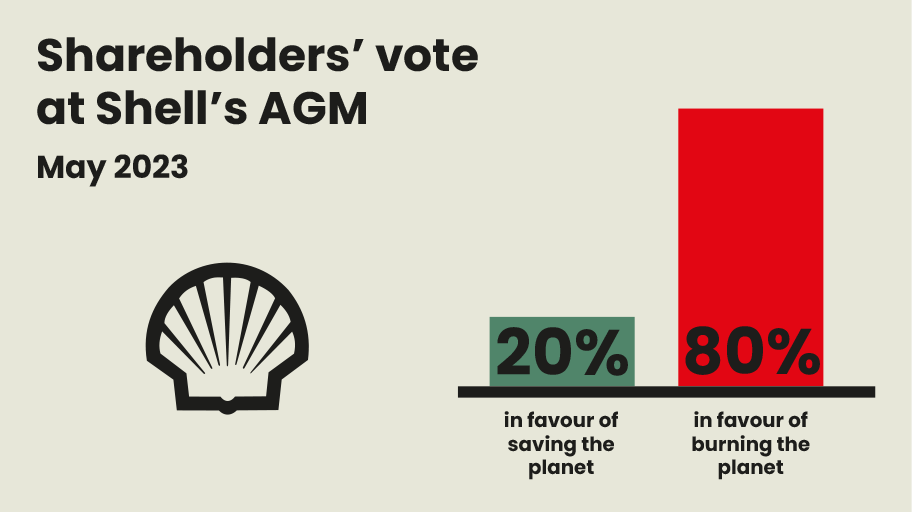
Eighty percent of shareholders followed Shell's recommendation. And an even higher number gave approval for Shell to continue repurchasing up to 10% of Shell's shares into 2024. The voting outcome will influence Shell's new energy transition strategy, to be announced on 14 June 2023 at Shell's "capital day", from which we can expect a higher focus on oil and gas. Shareholders will have to approve the new energy transition strategy at the 2024 AGM. They would so agree with Shell's intent, stated at the AGM, to disobey the 2021 Dutch court order to reduce Shell's emissions by 45% by 2030 as compared to 2019.
Puppet masters or passives?
So, who are the shareholders whom Shell wants to please by focusing on fossil fuels and what is their rationale for voting as they do? It is important to remember that very few shareholders are individual people. Around 63% of Shell's shareholders are estimated to be institutional investors. The largest institutional investor is the US asset management firm, BlackRock, which is also the largest asset manager in the world. By mid-April 2023, Blackrock held 10.6% of Shell's publicly traded stock. . The second largest investor, and the world's second largest asset manager, is Vanguard, which holds 3.41 % of the outstanding Shell shares . As the major shareholders they have often significant influence on corporate strategies. A "growing number of major investors" had reportedly pressed Shell to focus on higher financial returns "rather than energy transition plans". It is not disclosed – at the tiem of writing – if BlackRock or Vanguard are among them or how they voted on 26.
However, most asset managers and other institutional or retail investors own less than 1% of the shares of the many listed companies worldwide in which they invest: this is a standard strategy to reduce the risk of financial losses. These investors seldom do their own scrutiny and due diligence when it comes to AGM proposals, many preferring to rely on advisory firms instead. The proxy vote advisory business is dominated by two firms: the Institutional Shareholder Services (ISS) and Glass Lewis. Both firms advised their clients to vote against Resolution 26. The much smaller UK based advisor, Pensions & Investment Research Consultants, recommended voting against the Shell 2022 energy transition report and against re-appointment of the chair of the board, due to "heightened climate-related financial risks" for shareholders.
Another way in which shareholders passively acquiesce in planet-damaging corporate strategies is due to investment funds, including those managed by BlackRock and Vanguard, that combine shares of many companies. The value of their index funds simply track the value of the shares on the stock market. Those investing in such funds hardly consider the strategy of the companies in whose shares the fund invests, nor are they informed how the fund managers vote on their behalf ("proxy voting"). BlackRock also manages Shell's shares for pension funds and smaller institutional investors, who often do not scrutinise how their asset manager is voting.
In turn, BlackRock also satisfies its own shareholders by returning $4.9 billion to its shareholders in 2022, including $1.9 billion in share buybacks. And the largest shareholders of BlackRock are … Vanguard (9%) and BlackRock (7%). BlackRock recommended to its own shareholders to vote against three resolutions on social and climate sustainability.
The bottom line
The system is one of exceptional deniability and lack of responsibility. The oil companies, asset managers and proxy advisory firms, as well as other institutional investors and financiers, have no legal obligation to plan or make financial provisions for the energy transition. They are part of an out-of-control competition on financial markets to maximise shareholder value in the short term. This dangerous dynamic squanders billions dollars, euros, etc. in dividends and share buybacks rather than energy transition investments. It saddles societies globally, and especially the poorest, with the increasing costs of climate chaos, and with financial devastation in the long term.
Politicians must now surely realise that without legal limits on fossil fuel investment and rules governing things like dividends and share buybacks, the fossil fuel industry will remain a huge impediment to keeping global warming to 1.5 degrees. Sadly, policymakers are being bamboozled into giving oil companies and investors (more) subsidies to deal with energy transition, using public money to help massive multinationals to keep ensuring high shareholder value.
Sign up
Stay up-to-date with SOMOs Newsletter
シェルのAGM:いつものように化石燃料事業に戻る
シェルとその株主がエネルギー転換を犠牲にする方法
石油産業はもはや気候変動に対する懸念を偽装しようとしていない。5月23日のシェル2023 AGMで、新しいCEOのWael Sawanと取締役会は、再生可能エネルギーが株主の価値を高めるのに十分な収益性がないことを明らかにしました。彼らは石油とガスがより良い投資であると露骨に述べました。株主価値の追求は、気候変動に対処するための最も重要な障害の1つです。
シェルの2023年のAGMは、気候抗議者によって中断されたため、ニュースになりました。金融報道以外では、株主価値問題への関心ははるかに少なく、その影響は、悲しいことに、はるかに大きかったです。
AGMに先立ち、ロイターは2月に、石油メジャーが気候の野心の削減を発表した後、BPの株価が10%上昇したことを背景に、シェルのCEOが同社の気候戦略を逆転させることを公然とほのめかしたと報じた。彼はそれ以来、再生可能エネルギーとエネルギーソリューションを担当する執行副社長の数を減らし、いくつかの気候に優しいプロジェクトから撤退しました。
シェルの現在の経営陣は、石油生産量を年間1〜2%減少させるというコミットメントを維持するのではなく、再生可能エネルギーが十分に収益性がないため、化石燃料が再び事業と投資の中心的な焦点であるとAGMで主張しました。サワンによると、「石油とガスの生産削減は健全ではない」、需要は依然として高く、「シェルは素晴らしい会社であり、私たちも素晴らしい投資になるように変化しています」。
株主価値対地球
シェルは長い間、配当と株式買い戻しを通じて、株主に大きなリターンを提供することに注力してきました。企業が株式市場の株式の価値と1株当たりの収入を押し上げるために自社株を買い戻すと、残りの株式はより魅力的になります。2022年だけでも、シェルは株主に約260億米ドルを支払いました。配当は74億米ドル、株式買い戻しは2倍以上(184億米ドル)です。2023年4月にさらに40億米ドルの株式買い戻しプログラムを終了しました。
株主に返された数十億ドルにもかかわらず、サワンによると、株式の価値は十分に高くありません。彼は、証券取引所で取引されているシェルの株式の総額(「時価総額」と呼ばれる)が、米国のライバルであるエクソンとシェブロンのほぼ半分であることを懸念している。シェルの議長によると、これは石油とガスに安く投資するシェルの競争力を低下させる。
決議26
活動家の気候を支持する株主は、今年のシェルAGMで決議26を支援することにより、エネルギー移行計画をスピードアップするよう同社に求めた。シェルの取締役会は、決議に対して激しく助言し、シェルは「取締役会は決議26が会社、株主全体、顧客、および気候にとって最善の利益であるとは考えていない」と述べた。
株主の80%がシェルの勧告に従った。そして、さらに高い数字は、シェルが2024年までシェルの株式の最大10%を再購入し続けることを承認しました。投票結果は、2023年6月14日にシェルの「資本の日」で発表されるシェルの新しいエネルギー移行戦略に影響し、そこから石油とガスに重点を置くことが期待できます。株主は2024年のAGMで新しいエネルギー移行戦略を承認する必要があります。彼らは、2019年と比較して2030年までにシェルの排出量を45%削減するという2021年のオランダの裁判所命令に背くという、AGMで述べたシェルの意図に同意するだろう。
パペットマスターかパッシブか?
では、シェルが化石燃料に焦点を当てて喜ばしたい株主は誰ですか?また、彼らが投票する理由は何ですか?個人の株主はほとんどいないことを覚えておくことが重要です。シェルの株主の約63%が機関投資家であると推定されています。最大の機関投資家は、世界最大の資産運用会社でもある米国の資産運用会社ブラックロックです。2023年4月中旬までに、ブラックロックはシェルの上場株式の10.6%を保有していた。2番目に大きい投資家であり、世界2番目に大きい資産運用会社はヴァンガードで、シェルの発行済株式の3.41%を保有しています。大株主として、彼らはしばしば企業戦略に大きな影響を与えます。「主要な投資家の増加」は、シェルに「エネルギー移行計画ではなく」より高い財務リターンに焦点を当てるよう圧力をかけたと報じられた。ブラックロックやヴァンガードがその中にいるかどうか、または彼らが26にどのように投票したかは、書面の時点で開示されていません。
しかし、ほとんどの資産運用会社やその他の機関投資家や個人投資家は、投資する世界中の多くの上場企業の株式の1%未満を所有しています。これは、財務損失のリスクを軽減するための標準的な戦略です。これらの投資家は、AGMの提案に関しては、独自の精査とデューデリジェンスを行うことはめったになく、多くは代わりにアドバイザリー会社に頼ることを好みます。代理投票アドバイザリー事業は、Institutional Shareholder Services(ISS)とGlass Lewisの2社が支配しています。両社は、決議26に反対票を投じるよう顧客に助言した。はるかに小規模な英国に拠点を置くアドバイザーであるPensions & Investment Research Consultantsは、株主の「気候関連の財務リスクの高まり」により、シェル2022年のエネルギー移行報告書と取締役会長の再任命に反対票を投じることを推奨しました。
株主が地球に損害を与える企業戦略を受動的に黙認するもう1つの方法は、多くの企業の株式を組み合わせたブラックロックやヴァンガードが管理する投資ファンドによるものです。インデックスファンドの価値は、株式市場の株式の価値を追跡するだけです。そのようなファンドに投資する人は、ファンドが投資する株式の企業の戦略をほとんど考慮せず、ファンドマネージャーが彼らに代わってどのように投票するかも知らされていません(「代理投票」)。ブラックロックはまた、年金基金や小規模な機関投資家のためにシェルの株式を管理しており、資産運用会社がどのように投票しているかを精査しないことがよくあります。
順番に、ブラックロックはまた、2022年に99億ドルの株式買い戻しを含む49億ドルを株主に還元することで、自身の株主を満足させます。そして、ブラックロックの最大株主は...ヴァンガード(9%)とブラックロック(7%)です。ブラックロックは、自社の株主に、社会と気候の持続可能性に関する3つの決議に反対票を投じることを推奨した。
一番下の行
このシステムは、例外的な否認と責任の欠如の1つです。石油会社、資産運用会社、代理アドバイザリー会社、その他の機関投資家や金融業者は、エネルギー移行のための財務準備を計画または行う法的義務を負いません。彼らは、短期的に株主価値を最大化するために、金融市場での制御不能な競争の一部です。この危険なダイナミクスは、エネルギー移行投資ではなく、配当や株式買い戻しに数十億ドル、ユーロなどを浪費します。それは、気候の混乱のコストの増加と、長期的には財政的荒廃を伴う、世界中の社会、特に最も貧しい人々を悩ませています。
政治家は、化石燃料投資の法的制限や、配当や株式買い戻しなどを管理する規則がなければ、化石燃料産業は地球温暖化を1.5度に保つための大きな障害であり続けることを確実に認識しなければなりません。悲しいことに、政策立案者は、大規模な多国籍企業が高い株主価値を確保し続けるのを助けるために公的資金を使用して、エネルギー移行に対処するために石油会社や投資家に(より多くの)補助金を与えることにだまされています。





 私の研究は、市場、リスク、民主政治を結集しています。より具体的には、リスクと正義の問題の3つの補完的な側面として、金融規制、利益の歴史、社会運動の参加型政治を研究しています。