Book Review: The Deficit Myth: Modern Monetary Theory and the Birth of the People’s Economy by Stephanie Kelton
書評:赤字の神話:現代通貨理論とステファニー・ケルトン著「人々の経済の誕生」
で 赤字神話:現代の貨幣理論と人民経済の誕生、 ステファニー・ケルトンは、 代わりに赤字が経済を強化し、より高速な成長につながることを主張し、本質的に悪いとして赤字の従来の理解を形作ってきた6つの主要な神話を払拭します。この本は勝利であり、ハンスG.デスパイン教授は書き 、政府支出の規範的な根拠を、どの支出プログラムを優先すべきかを決定する生産的な政治活動に赤字は無責任で破滅的であるという誤った非生産的な考えから遠ざけます。
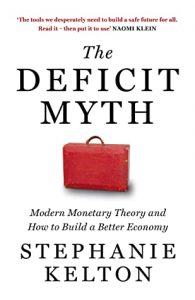
赤字の神話:現代通貨理論と人民経済の誕生。ステファニー・ケルトン。PublicAffairs。2020。
 COVID-19と戦うために、世界中の国々が経済を閉鎖しました。政府支出の大幅な増加は家計や企業に救済をもたらしましたが、多くの政治家や経済学者によると、この政府支出は「国家債務のジレンマ」を生み出してい ます。
米国 と 英国は 公的債務水準は国内総生産(GDP)の100パーセントを超える舞い上がる持つことが予測されています。 日本の公的債務対GDP比は250%を超えると予想されます。 IMF は、先進国の平均GDP比が120%を超えると予測しています。
債務対GDP比率が非常に高いため、主流の経済学者は、パンデミック後の債務のオーバーハングが発生すると警告 し、将来の公共支出の削減と増税を強制すると発表しました。増税により、家計の消費支出と企業の投資支出が減少します。その結果、GDP成長が鈍化し、労働者の賃金と給与が停滞します。
ステファニーケルトンは、彼女の新しい著書 「赤字神話:現代通貨理論と人民経済の誕生」で、公的債務のオーバーハングに関する懸念が根拠のないものであることを示しています。ケルトン氏は、政府支出は適切に対象を定められており、政府債務は問題である必要はないと主張している。実際、彼女は公的財政赤字は経済にとって非常に健全であり得ると主張している。ケルトンは、より大きな赤字は経済を強化し、より速い成長につながる可能性があると主張しています。
しかし、赤字に関する常識では、赤字は経済成長を阻害し、経済を弱体化させる。従来の知恵は、「問題を解決するために赤字を使用することに対して警告します。
現在、米国の国債は24兆ドルを超え 、GDPの106%です。しかし、6兆ドルの国債は、社会保障信託基金などの政府機関が保有しています。奇妙に思われる場合、連邦政府はそれ自体がお金を借りている可能性があります。確かに、連邦債務は奇妙です。
この奇妙さは、非常に多くの「神話」が公的債務に対する私たちの理解を曇らせる理由の1つです。ケルトンは、公的債務の6つの主要な神話を特定します。彼女の本の最初の6つの章は、それぞれの主要な神話を払拭します。第7章と第8章では、赤字を利用して繁栄を共有し、不平等やその他の社会的病気を軽減する、より強い経済を生み出す方法について説明しています。そうすることで、ケルトンの本は2つの 画期的な勝利を達成し 、1つの大きな「欠点」を持っています。

まず、欠点。ケルトンの議論は現代の通貨理論(MMT)に基づいており、これは正統なお金の見方に対する批判にかかっています。貨幣の正統な見方は、貨幣の価値は歴史的に貴金属とのつながり、特に交換手段としてのその機能に基づいていると断言します。MMTは、(現代の)お金の価値はクレジット(および負債)へのリンクから派生していることを主張し、国家がお金のオントロジーに関して果たす重要な役割を強調しています。ジョージ・ナップ(1924)はこれを「お金の国家理論」と呼び、JMケインズはそれを『お金に関する論争』 (1930)でさらに発展させ、 最近では L.ランドールレイ(1998)と ウォーレンモスラー (1993)によって推進されています。。
ケルトンは、MMTのお金のオントロジーに対処していません。これは、MMTの理論的理解が未開発のままであるため、欠点と見なすことができます。しかし、ケルトンの私の読書は、彼女の議論をより幅広い読者にはるかにアクセスしやすくするため、大きな強みとしての欠点があります。さらに、MMTのより難解な理論的および歴史的なお金の説明は、他の場所で入手できます(たとえば、 Wray、1998年)。
ケルトンの画期的な勝利は2つあります。第一は、ケルトンが赤字のタカと赤字の鳩の両方の公的債務に対する見方を打ち砕くということです。赤字のタカは債務に関する従来の知恵を構成し、赤字がある場合、政府は無責任であると主張し、したがって、ほぼすべてのコストで予算のバランスをとる必要があります。赤字のタカ派は、公的債務は通貨と国自体にとって破滅的だと主張している。赤字のタカ派は、長期的な災害を回避するために、国は財布のひもを引き締め、短期的な結果に苦しむべきだと主張しています。赤字のハトは同意しますが、緊急事態や経済危機の克服のために短期的に赤字を使用することができます。
ケルトンは、これは赤字が罪深いという誤った考えで議論が行き詰まっていると主張している。ケルトンによれば、私たちは視点を変え、赤字に関してより賢くする必要があります。ケルトンは自分自身を「欠陥のあるフクロウ」と呼んでいます。なぜなら、フクロウにはより良い視点のために頭をほぼ360度回転させる能力があり、知恵に関連しているからです(76)。
従来の話は、政府が税金を徴収し、それを政府支出の支払いに使用することを主張しています。政府支出が税収よりも大きい場合、政府は投資家に債券を発行して残りを借りなければなりません(21-24)。従来の話では、政府の借入には巨大なスネアが伴うと主張しています。ローンからの需要の増加は金利を上げます。債券の販売を介した政府借入は、限られた額の貯蓄をめぐって競争するため、民間投資は減少する傾向があるか、「混雑」し(101-104)、GDPは低下します。さらに、赤字は国を海外投資家に依存させます(81-84)。
ケルトンは、従来の物語は一連の神話であると主張している。まず、ケルトンは、政府は家計のように財政的に運営されるべきであるという神話を引き受けます(第1章)。政府は家計や民間企業に近いものではないため、これは誤りです。大きな違いは、世帯と企業は お金の利用者 であり、政府は お金の発行者 であるということです(17 – 18)。
このように考えてください。もしあなたが法的権利とあなたが望むだけ多くの米ドルを印刷する能力を与えられたら、それはあなたの負債を変えるでしょうか?もちろん、答えはイエスです。あなたはいつでもより多くのお金を印刷できるので、あなたの借金はもはや重要ではありません。
第二に、政府の財政赤字が他人の黒字 を生み出すため、財政赤字を過剰支出と見なすことは神話である(第2章) 。3番目の神話は、赤字が次世代に負担をかけるということです(第3章)。赤字が次世代を貧しくすることは誤りであり、赤字を減らすことは次世代を豊かにすることも誤りです。むしろ、歴史的な記録は、高い国の債務が富を生み出し、次世代の収入を増加させることを示しています。
第4の神話は、赤字が民間事業を混雑させることです(第4章)。ケルトン氏は、適切にターゲットを絞った赤字支出は、民間企業の成長を刺激する、つまり「混雑」させると主張している。第5の神話は、赤字は私たちを海外の国々に依存させることです(第5章)。代わりに、貿易赤字は「もの」の余剰として理解されるべきです。例えば、中国は米国財務省債を取得し、米国はアップルのコンピュータやその他の「もの」を取得します。第6の神話は、社会保障と公衆衛生プログラムが財政危機に向かって私たちを推進しているということです(第6章)。ここでは、ケルトンは政府が人口統計学的および医療財政上の義務を常に満たすことができることを示しています。

突然の経済的閉鎖を踏まえた現在の公共支出の急増は、ケルトンの主張を非常に伝え、支持しています。政府は自己資金であり、必ずしも税金を徴収したり借用したりする必要はありません。彼らは単に、達成したい仕事の活動にドルを支払う必要があるだけです。彼らは、フットボールの試合のスコアキーパーがポイントを使い果たすことができる以上のお金を使い果たすことはできません。国がその通貨で主権を握っている限り、つまり、その国がその通貨の供給を発行および管理している限り(たとえば、英国および米国政府)、通貨が不足することはありません。
政府債務は重要ですが、私たちは理解を変える必要があります。連邦政府はより多くのお金を発行することができるので、政府の債務は個人の債務に似ていません。それにもかかわらず、徴収された税金と連邦政府が費やした金額の不均衡ではありません。むしろ重要なのは、ボトルネックの発生を回避するための実際のリソースのバランス(257 – 260)とインフレの脅威(44-47)です。
現時点では、インフレはまったく脅威ではありません。家計の消費需要と企業の投資需要の深刻な欠如により、デフレはインフレよりも大きな懸念となっています。経済が回復し始めると、政策立案者はインフレに注意を向ける必要があります。それにもかかわらず、40年近くの間、インフレは十分に抑制されてきました。これは、部分的には、国際的なサプライチェーンの競争と、低価格で構築された大企業(Amazon、ウォルマートなど)のビジネスモデルによるものです。低インフレをそのまま維持するいくつかの力があります。
インフレもボトルネックもないので、政府は財政赤字のない真の財政赤字(第7章)、たとえば、良好な雇用の赤字、医療の赤字、教育の赤字、インフラの赤字、緑の気候の赤字、民主主義の赤字に対処できます。制約。そのため、ケルトンは、MMTの規範的な側面は、利益よりも人々、バランスの取れた予算よりも人々に向けられた経済の構築をサポートするべきだと主張しています(第8章)。
ケルトンは視点の二重シフトを生み出します。最初に、彼女は財政政策措置が経済のステアリング、安定化および管理のための金融政策をしのいでいることを示しています。第二に、どの特定の財政政策措置が好まれるのかは、経済学よりも政治と社会選好の問題です。ケルトンが述べているように、彼女の議論の規範的な含意は、伝統的により寛大な政策(例えば、すべての人に対するメディケア、無料の大学、または中流階級の減税)またはより保守的な政策(例えば、軍事支出または法人税の減税)を守るために使用できます'(235)。
確かに、MMTの伝統は 、資本家ブーム・バストサイクルにとって最良の財政バッファーとして職務保証を推進してきまし た。さらに、彼らは保証された雇用プログラムが公共サービス と 「ケア」経済を中心に構築されるべきであることを強調しました 。しかし、誰かがケルトンの経済学に完全に同意し、財政措置の彼女の提案された優先順位に反対することができました。
ケルトンの本は、政治経済に革命をもたらします。ケルトンの最初の大きな業績は、従来のタカ/鳩の赤字の概念を打ち砕いたままにします。彼女は政府の支出に予算上の制約がないことを明確に示しています。代わりに、政府の支出に対する唯一の実質的な制約は、実質的な資源の限界とインフレの脅威です。ケルトンの2番目の大きな成果は、政府支出の規範的な根拠を、連邦の赤字は悪であるという誤った非生産的な考えから移行し、どの支出プログラムを優先すべきかを決定する生産的な政治活動に移すことです。さらに、彼女のコペルニクスの業績は、幅広い視聴者がアクセスできるお金に関する難解な議論を引き起こし、不思議な「空からの」政策は、包括的かつ現実的の両方について議論し ます。現在の経済停止の背景は、現代の通貨理論と赤字神話を 中心的な舞台とするでしょう 。ステファニー・ケルトンは、この議論を前進させる経済学者です。
注:このレビューは著者の見解を示したものであり、LSE Review of Booksブログやロンドンスクールオブエコノミクスの見解ではありません。
In The Deficit Myth: Modern Monetary Theory and the Birth of the People’s Economy, Stephanie Kelton dispels six key myths that have shaped the conventional understanding of deficits as inherently bad, instead arguing that deficits can strengthen economies and lead to faster growth. This book is a triumph, writes Professor Hans G. Despain, shifting normative grounds of government spending away from the false and unproductive idea that deficits are irresponsible and ruinous towards the productive political activity of deciding which spending programmes should be prioritised.
The Deficit Myth: Modern Monetary Theory and the Birth of the People’s Economy. Stephanie Kelton. PublicAffairs. 2020.
Countries across the globe have shut down their economies in an effort to combat COVID-19. Massive increases in government spending have offered relief to households and businesses, but according to many politicians and economists, this government spending has generated ‘national debt dilemmas.’
The United States and the United Kingdom are projected to have public debt levels soar above 100 per cent of gross domestic product (GDP). Japan’s public debt to GDP ratio is expected to grow above 250 per cent. The IMF anticipates the average debt-to-GDP ratios in advanced economies will rise above 120 per cent.
With debt-to-GDP ratios so high, mainstream economists warn there will be a debt overhang post-pandemic, which they proclaim will force a curtailment of public spending in the future and an increase in taxes. The increased taxes will lower consumption spending of households and investment spending of businesses. The result is slower GDP growth and stagnation in worker’s wages and salaries.
Stephanie Kelton, in her new book The Deficit Myth: Modern Monetary Theory and the Birth of the People’s Economy, demonstrates that concerns about public debt overhang are ill-founded. Kelton argues that government spending properly targeted and government debt need not be problematic. Indeed, she argues that public deficits can be very healthy for an economy. Kelton contends bigger deficits can strengthen an economy and lead to faster growth.
However, the conventional wisdom regarding deficits is that they impede economic growth and weaken the economy. Conventional wisdom warns against using ‘deficits to solve problems [when] we continue to think of the deficit itself as a problem’ (8).
Currently the US national debt is more than $24 trillion, 106 per cent of GDP. However, $6 trillion of the national debt is held by government agencies such as the Social Security Trust Fund. If it seems strange the federal government can owe itself money, well indeed, federal debt is strange.
This strangeness is one of the reasons so many ‘myths’ cloud our understanding of public debt. Kelton identifies six primary myths of public debt. The first six chapters of her book dispel each primary myth. Chapters Seven and Eight explain how deficit can be used to generate a stronger economy with shared prosperity to reduce inequality and other social ills. In so doing, Kelton’s book achieves two groundbreaking triumphs and has one major ‘shortcoming’.
First, the shortcoming. Kelton’s argument is based on modern monetary theory (MMT), which hinges on a critique of the orthodox view of money. The orthodox view of money asserts that the value of money is based historically on its link to precious metals and especially on its function as a medium of exchange. MMT contends the value of (modern) money derives from its link to credit (and debt) and underscores the important role the state plays regarding the ontology of money. George Knapp (1924) called this ‘the state theory of money’, J.M. Keynes further developed it in The Treatise on Money (1930), and it has been most recently promoted by L. Randall Wray(1998) and Warren Mosler (1993).
Kelton does not address the ontology of money of MMT. This can be seen as a shortcoming because it leaves a theoretical understanding of MMT undeveloped. However, my reading of Kelton has the shortcoming as a great strength, because it makes her argument far more accessible to a wider readership. Moreover, MMT’s more esoteric theoretical and historical accounts of money are available elsewhere (e.g. Wray, 1998).
Kelton’s groundbreaking triumphs are twofold. The first is that Kelton shatters both the deficit hawk and deficit dove view of public debt. Deficit hawks constitute the conventional wisdom on debt and contend the government is being irresponsible when it has a deficit, and therefore needs to balance its budget at almost any cost. Deficit hawks argue that public debt is ruinous to a currency and the country itself. Deficit hawks argue a country should tighten its purse strings and suffer short-term consequences to avoid long-term disaster. Deficit doves agree, but contend deficits can be used in the short term for emergencies and overcoming economic crises.
Kelton contends this leaves the debate stuck in the faulty idea that deficits are sinful. According to Kelton, we need to change our perspective and be wiser regarding deficits. Kelton calls herself a ‘deficit owl’ because owls have the ability to rotate their heads nearly 360 degrees for better perspectives and are associated with wisdom (76).
The conventional story contends governments levy taxes and then use them to pay for government spending. If government spending is greater than tax revenues, the government must borrow the rest by issuing bonds to investors (21-24). The conventional story contends government borrowing comes with huge snares. The increase in demand from loans increases interest rates. Government borrowing, via selling bonds, competes for the limited amount of savings so that private investment tends to fall, or gets ‘crowded-out’ (101-104), and GDP slows. Further, deficits make a country dependent on overseas investors (81-84).
Kelton contends the conventional story is a series of myths. To begin with, Kelton takes on the myth that governments should be fiscally run like a household (Chapter One). This is false because the government is nothing close to a household or private business. The big difference is that households and businesses are users of money, while governments are issuers of money (17 – 18).
Think of it this way: if you were granted the legal right and the ability to print as many US dollars as you wished, would that change your debt? The answer, of course, is yes. Your debt would no longer matter, because you can always just print more money.
Second, to view public deficits as overspending is a myth (Chapter Two), because a government deficit creates a surplus for someone else. The third myth is that deficits burden the next generation (Chapter Three). It is false that deficits make the next generation poorer, and it is also false that reducing deficits will make the next generation richer. Rather, the historical record shows high national debt creates wealth and increases the income of the next generation.
The fourth myth is that deficits crowd out private business (Chapter Four). Kelton argues that deficit spending properly targeted stimulates, or ‘crowds-in’, private business growth. The fifth myth is that deficits make us dependent on overseas nations (Chapter Five). Instead trade deficits should be understood as a ‘stuff’ surplus: e.g. China gets US Treasury bonds, and the US gets Apple computers and other ‘stuff’. The sixth myth is that Social Security and public health programmes are propelling us toward a fiscal crisis (Chapter Six); here, Kelton shows the governments can always meet demographic and healthcare fiscal obligations.
The current surge in public expenditure given the sudden economic shutdown is quite telling and supports Kelton’s argument. The government is self-financing: they do not necessarily need to collect taxes or borrow; they simply need to pay the dollars for the work activity they want accomplished. They cannot run out of money any more than a score keeper of a football game can run out of points. So long as a country is sovereign in its currency – that is, it issues and controls the supply of its currency (for instance, the UK and US governments) – it cannot run out of currency.
Government debt does matter, but we need to shift our understanding. Government debt is nothing like personal debt, because the federal government can issue more money. Nonetheless, it is not the imbalance between taxes collected and federal monies spent that matters. Rather what matters is the balance of real resources (257 – 260), to avoid generating bottlenecks, and the threat of inflation (44-47).
In the present moment, inflation is no threat whatsoever. The severe lack of consumption demand from households and investment demand from businesses makes deflation a greater worry than inflation. Once the economy begins to recover, policymakers will have to keep their eye on inflation. Nonetheless, for nearly 40 years, inflation has been well controlled. Partially this is due to international supply-chain competition and the business models of big corporations (Amazon, Wal-Mart, etc) that are built on low prices. There are several forces that will keep low inflation intact.
With no inflation and no bottlenecks, the government can address the true deficits (Chapter Seven), such as the good jobs deficit, the healthcare deficit, the education deficit, the infrastructure deficit, the green climate deficit and the democracy deficit, with no fiscal constraint. As such, Kelton contends the normative side of MMT should support building an economy that is geared toward people over profits and people over balanced budgets (Chapter Eight).
Kelton produces a dual shift in perspective. First, she demonstrates fiscal policy measures outdo monetary policy for steering, stabilising and managing the economy. Second, which specific fiscal policy measures are preferred are more a matter of politics and social preference than the science of economics. As Kelton states, the normative implications of her argument ‘can be used to defend policies that are traditionally more liberal (e.g. Medicare for all, free college, or middle-class tax cuts) or more conservative (e.g. military spending or corporate tax cuts)’ (235).
To be sure, the MMT tradition has promoted a job guarantee as the best fiscal buffer for the capitalist boom-bust cycle. Further, they have emphasised a guaranteed jobs programme should be built around public service and a ‘care’ economy. However, someone could fully agree with Kelton’s economics and disagree with her suggested priority of fiscal measures.
Kelton’s book achieves a revolution in political economy. Kelton’s first great achievement leaves the conventional hawk/dove conception of deficits shattered. She decisively shows there is no budgetary constraint on government spending; instead the only real constraints on government spending are the limits of real resources and the threat of inflation. Kelton’s second great achievement is to shift the normative grounds of government spending from the false and unproductive idea that federal deficits are evil, and to the productive political activity of deciding which spending programmes should be prioritised. Her Copernican achievements furthermore make esoteric debates on money accessible to a wide audience and wonky ‘pie-in-the-sky’ policy debates both comprehensible and realistic. The context of the current economic shutdown will place modern monetary theory and The Deficit Myth centre stage. Stephanie Kelton is the economist to carry this debate forward.
Note: This review gives the views of the author, and not the position of the LSE Review of Books blog, or of the London School of Economics.
Image One Credit: Photo by kaleb tappon Unsplash.
Image Two Credit: Image by Krzysztof Dzwonek from Pixabay.

0 件のコメント:
コメントを投稿