ready to use its fiscal capacity to maintain full employment at home, there is no reason to resort to a trade war. Instead, we can envision a new world trade order that works better, not for corporations seeking to exploit cheap labor and escape regulations, but for millions of workers who’ve received such a raw deal under previous “free trade” policies in the post-NAFTA era. Reenvisioning trade also can lead to better policies for developing countries and for the global environment.
Three Buckets
One way to think about trade imbalances is to add a third bucket to the model we used in the last chapter. Previously, we put Uncle Sam in one bucket and everyone else in the other. Whenever Uncle Sam spent dollars, there was only one place for them to go—into a collective bucket we called the nongovernment sector. That was a perfectly reasonable way to illustrate the fact that Uncle Sam’s deficits poured dollars into “our” bucket. Now it’s time to look more closely at the nongovernment bucket. Since this chapter is about international trade, we want to see how dollars flow between the US economy and the rest of the world. To do that, we need to split the nongovernment bucket into two separate buckets. When we do this, we end up with a three-bucket model. We still have the US-government bucket, but now we have a bucket that belongs to all US households and businesses (i.e., the domestic private sector bucket), along with one that belongs to the rest of the world (i.e., the foreign sector bucket). As before, it’s impossible for all of the buckets to be in surplus (or deficit) at the same time. If there’s red ink in one bucket, there must be black ink in at least one other bucket. As Godley told me, “Everything must come from somewhere, and then go somewhere.” For every payment that flows out of one bucket, a payment of equal size must be received into at least one other bucket. As a matter of accounting, that means that the balance across all three buckets must always sum to zero. Exhibit 8 captures these relations.
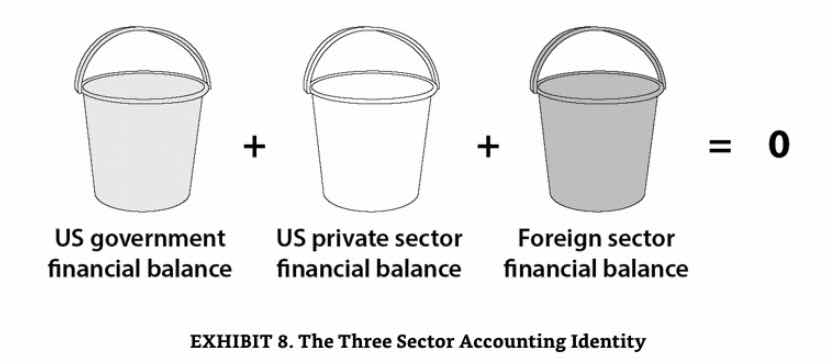
EXHIBIT 8. The Three Sector Accounting Identity
In the real world, dollars flow among the three buckets every day. If the US government buys some bulldozers from Caterpillar Inc. and hires some American workers to build a bridge, dollars will flow into the US private sector bucket as the government makes those payments. American workers and (most) US businesses also pay federal taxes, so Uncle Sam subtracts some of those dollars away from the private sector bucket. To keep it simple, suppose, as before, that Uncle Sam spends $ 100 and taxes $ 90 away, leaving behind a surplus of $ 10 in the private sector bucket. Those dollars can spin around in the US private sector, changing hands as Americans pay for haircuts, theater tickets, and college tuition. They can also switch buckets, as Americans import products from abroad. Let’s say Americans spend $ 5 buying goods and services from the rest of the world, while foreigners spend just $ 3 buying products from the United States. By importing more than it exports, the US is running a trade deficit. When all is said and done, the US trade deficit transfers $ 2 into the foreign sector bucket. Exhibit 9 nets all these payments out, showing that the US government’s fiscal deficit (minus $ 10) is exactly balanced by the sum of the surpluses in the other two buckets ($ 8 plus $ 2). As long as the US economy remains at full employment, there is no inherent problem with this outcome.

EXHIBIT 9. US Fiscal Deficit Plus US Trade Deficit (Twin Deficits) Since Uncle Sam is the issuer of the dollar, he never has to worry about running low. His bucket can manufacture dollars at will. But everyone else has to get the currency from somewhere. And the US
private sector normally wants to accumulate more dollars than it spends—that is, to be in surplus. That’s not to say that the private sector can’t fall into deficit. It can, as it did during the late 1990s and early 2000s. But as Godley warned, that’s usually an unsustainable situation because it often involves the private sector taking on too much debt. 8 (Remember, the private sector isn’t a currency issuer, so it can’t sustain deficits the way Uncle Sam can.) To keep the US private sector from falling into deficit, someone needs to supply that bucket with enough dollars to keep it in surplus. Right now, that “someone” is Uncle Sam. That’s because the US runs persistent trade deficits (aka “stuff ” surpluses), which cause dollars to flow out of the private sector’s bucket and into the foreign bucket. As long as that remains the case, only Uncle Sam can supply enough dollars to keep the private sector in surplus. To do that, the government must run budget deficits that exceed the US trade deficit. 9 Exhibit 10 shows what happens if the government deficit becomes smaller than the trade deficit.

EXHIBIT 10. US Fiscal Deficit Smaller Than US Trade Deficit
In this example, the government has almost balanced its budget. But not quite. Uncle Sam is running a small deficit, spending $ 100 into the US economy and taxing $ 99 back out. 10 As a result, his deficit adds just $ 1 to the US private sector bucket. But the US is sending that dollar—and four more—on to the rest of the world. And foreigners are only sending $ 3 back. So the US is running a trade deficit, spending $ 5 on goods and services produced by the rest of the world but only collecting $ 3 for the things it sells abroad. Looking at all of these payments, the foreign sector accumulates a $ 2 surplus, while the government and the private sector each end up with a $ 1 deficit. A private sector deficit is the inevitable consequence of allowing the government deficit to fall below the trade deficit. What would it take to return the private sector to its usual state of surplus? One option is for Uncle Sam to add more dollars to the private sector’s bucket, either by spending more dollars into the US economy or taxing fewer dollars away. As soon as the government deficit gets bigger than the trade deficit, the private sector’s financial balance will move back into surplus. Another way to
eliminate the private sector’s deficit is to try to shrink (or reverse) the trade deficit. There are a number of ways to try to do this. Sometimes, countries try to hold down the value of their currencies to make their goods more competitive on world markets. President Trump has routinely lashed out at China, accusing the Chinese government of manipulating its currency, the yuan, to gain an advantage over US producers. In December 2019, he accused Brazil and Argentina of “presiding over a massive devaluation of their currencies,
which is not good for our farmers.” 11 Some countries don’t have the option to weaken their
currencies. Nineteen countries in Europe, for example, have formed a currency union (the Economic and Monetary Union or EMU), making it impossible to alter the value of their currencies vis-à-vis one another (one euro equals one euro throughout the eurozone). When an external (i.e., currency) devaluation isn’t an option, countries often pursue internal devaluation as a way to try to “win” at trade. The neoliberal term of art for this particular strategy is structural reform. It’s the polite way of describing an agenda aimed at driving down labor costs (wages and pensions) to increase competitiveness by reducing the costs of production. Essentially, it means that a country uses weaker labor as a substitute for a
weaker currency. When it comes to this strategy, Germany is Europe’s poster child. After the German government committed to this strategy in the early 2000s, it was able to replace its long-standing trade deficits with massive trade surpluses. 12 The thinking behind Trump’s policy was to use tariffs (i.e., taxes on imports) to reduce the US trade deficit. By making certain foreign goods more expensive, Trump believes he is pursuing an America First strategy that will result in American consumers buying fewer imports and spending more money buying domestically produced goods. That would mean fewer dollars leaving the US private sector bucket and flowing into the foreign bucket. Trump sees that as “winning” because his entire worldview is shaped by cash flows. The one with the biggest bucket of money wins. MMT recognizes the importance of maintaining healthy financial balances but views the tariffs as largely counterproductive. That’s because MMT recognizes that imports are real benefits. Viewed this way, Trump’s tariffs are really a tax on US benefits. There are better ways to maintain a healthy balance in the private sector and, as we’ll see, better ways to protect American jobs.
ーーーー
No Full Employment, No Fair Trade
Now that we understand the simple financial flows, we can return to thinking about the human and economic impacts of trade. Too often, the US doesn’t just lose dollars to the rest of the world, it loses jobs, too. As we discussed above, most of the angst people feel when they think about US trade deficits appears to stem from pain—especially the pain that comes from unemployment as American businesses close up shop and ship jobs overseas. As MMT economist Pavlina Tcherneva has documented, unemployment resembles an epidemic: like a virus, it affects other people nearby, resulting not only in lost income but higher mortality and suicide rates and a permanent decline in well-being. 13 But it’s easier to blame immigrant workers, foreign currency manipulators, or even global technology than to come to terms with the fact that joblessness is an official policy in the United States. I have argued that one of the best answers to, “They took our jobs!” is, “Everyone gets a job!” The MMT solution to involuntary unemployment is to introduce a federal job guarantee that establishes a legal right to a good job at good wages with good benefits. This would address one of the most pernicious effects stemming from trade—the unemployment that is too often visited upon whole communities as jobs are lost to foreign competition. It’s not enough just to provide training and other temporary forms of assistance to workers whose jobs are lost to foreign competition. Federal programs like Trade Adjustment Assistance (TAA) 14 are important, but something more is needed. That something is a federal job guarantee. By no means is it a panacea, but at a minimum, it begins to tackle the problem of unemployment directly (as opposed to subsidizing the effects of unemployment). Through the thick and thin of the
ーーーー
No Full Employment, No Fair Trade
Now that we understand the simple financial flows, we can return to thinking about the human and economic impacts of trade. Too often, the US doesn’t just lose dollars to the rest of the world, it loses jobs, too. As we discussed above, most of the angst people feel when they think about US trade deficits appears to stem from pain—especially the pain that comes from unemployment as American businesses close up shop and ship jobs overseas. As MMT economist Pavlina Tcherneva has documented, unemployment resembles an epidemic: like a virus, it affects other people nearby, resulting not only in lost income but higher mortality and suicide rates and a permanent decline in well-being. 13 But it’s easier to blame immigrant workers, foreign currency manipulators, or even global technology than to come to terms with the fact that joblessness is an official policy in the United States. I have argued that one of the best answers to, “They took our jobs!” is, “Everyone gets a job!” The MMT solution to involuntary unemployment is to introduce a federal job guarantee that establishes a legal right to a good job at good wages with good benefits. This would address one of the most pernicious effects stemming from trade—the unemployment that is too often visited upon whole communities as jobs are lost to foreign competition. It’s not enough just to provide training and other temporary forms of assistance to workers whose jobs are lost to foreign competition. Federal programs like Trade Adjustment Assistance (TAA) 14 are important, but something more is needed. That something is a federal job guarantee. By no means is it a panacea, but at a minimum, it begins to tackle the problem of unemployment directly (as opposed to subsidizing the effects of unemployment). Through the thick and thin of the
business cycle, we leave tens of millions of Americans idle in the belief that this makes political, economic, and social sense. Consider the closure of the Harley-Davidson manufacturing facility in Kansas City, Missouri, the city in which I taught for seventeen years. The company’s eight hundred workers were left stunned by the announcement that ultimately resulted in a net loss of 350 jobs. 15 The timing was particularly pernicious,
coming as it did against the backdrop of a dividend increase for shareholders and an announcement that the company would spend millions buying back up to fifteen million shares of its own stock. Had a federal job guarantee program been in place, it would have mitigated the impact of the closure. At a minimum, it would have provided the workers whose jobs were lost with a way to remain employed right in their communities. But it would have done more than that.
The benefits of a federal job guarantee not only include the production of goods, services, and income. The guarantee also features on-the-job training and skill development; poverty alleviation; community building and social networking; social, political, and economic stability; and social multipliers (positive feedback loops and reinforcing dynamics that create a virtuous cycle of socioeconomic benefits). With a program like this in place, the government would have mitigated the localized devastation of communities that directly experienced the loss of well-paying US industrial jobs. It may be hard to imagine an economy that doesn’t allow millions to fall by the wayside. But that’s because America has almost never achieved anything like true full employment. It’s something we’ve rarely experienced, outside of wartime. One of the most important features of a job guarantee program is that it maintains a form of full employment by immediately rehiring the unemployed into public service work, providing them with income and the retraining required when they are displaced by trade shocks. In this way, the job guarantee can serve as the core of a response to both “free trade” and the “trade war.” With a job guarantee, free trade is no longer a threat to full employment, and trade wars are no longer necessary to prevent unemployment. Trade negotiations can then focus on labor standards and environmental sustainability, with the US using its market power to promote acceptable working conditions and environment standards worldwide. 16 Today, Chinese firms sell American households many environmentally unfriendly products. In addition, people all over the world currently endure unsafe and unsanitary working conditions in order to provide America its stuff surplus. If we want to prioritize the well-being of workers worldwide, communities, and the planet as a whole, then we need a new approach to global trade. Especially in an era of global climate crisis, we should not be suckered by the simplistic rhetoric of countries “winning” and “losing” at trade. The quality of trade is at least as important as the quantity of trade. What ends and whose interests are our trade relationships serving? Just like with fiscal policy, the big scary number that is the trade deficit is not worthy of so much attention. As MMT reminds us, real resources, real social needs, and real environmental benefits are what matters most when it comes to trade policy. At this point, it’s important to understand a bit more about our trading partners around the world—and the United States’ special privileges compared to other countries. So far, we’ve discussed how global trade affects the United States and how MMT can make the trade flows into and out of our own country more productive and humane. But what about Britain, France, Saudi Arabia, Turkey, Venezuela, and all the other nations out there?
The Special Position of the US Dollar
Since the 1970s, there has been a fundamental shift in the way our monetary system operates. This shift redefines how we should think about macroeconomics and the role of a national
government that issues its own currency. Unfortunately, on the question of trade, as in so many other matters, policy makers remain locked in an anachronistic framework that belongs to the bygone gold standard era. From the middle of the nineteenth century until the Nixon “gold shock” that ended US dollar convertibility in the early 1970s, the gold standard (in one form or another) served as the common monetary framework regulating domestic economies and trade between them. Although the framework’s restrictions were gradually loosened, the overriding principle remained the same: in all countries, the monetary authority effectively tethered the value of its currency to gold by standing ready to buy or sell gold (or US dollars) to meet any supply or demand imbalance arising from international trade. To carry out these interventions, the central bank (or equivalent in those days) had to maintain enough gold (or US dollars) to back the circulating currency at a fixed exchange rate. A gold standard is only credible if the government can make good on its promise to convert the currency into gold at a fixed price. Having enough gold was critical. And running a trade surplus was the surest way to build up a country’s gold reserves. Conversely, trade deficits led to an outflow of gold, since countries used gold to pay for their imports. To try to prevent the loss of gold reserves, interest rates were frequently raised to draw the flow of gold bullion back into the country. The idea is that

0 件のコメント:
コメントを投稿