conservative commentators like the Washington Post’s George Will. 3 And if you do happen to watch C-SPAN, you might have heard someone like Jason Furman, a Harvard-trained economist who worked in the Obama White House as chair of the Council of Economic Advisers, invoking it in testimony before Congress. For example, on January 31, 2007, he appeared before the US Senate Budget Committee, urging members of Congress to “stem the flow of red ink.” He described the budget outlook as “a major fiscal challenge” that “drives down national savings.” He warned that the chain reaction of events that would ultimately jeopardize our economic well-being would be “slow and gradual but relentless and inevitable.” 4 Crowding out is a story that depicts government deficits as the villains of progress. Saving is considered an act of virtue because it is believed to supply the fuel that is used to fund the kinds of private sector investments that make us a wealthier society. Deficits are said to undermine that prosperity by siphoning away some of that fuel for its own use. Fiscal deficits and private investment are therefore considered to be in tension with each other, as government borrowing necessarily leaves behind a smaller pool of savings to support the needs of private industry. 5 This is the conventional wisdom among mainstream economists. It may appear straightforward and compelling, but it is best thought of as a series of domino-linked myths.
Two Buckets
When Furman urged lawmakers in 2007 to “stem the flow of red ink,” he was worried about a projected fiscal deficit of $ 198 billion, about 1.5 percent of GDP. He encouraged Congress to restore PAYGO to prevent deficits from climbing any further. He also complained that “the private savings rate [was] at its lowest level since 1939.” In his view, the deficit was “driving down national saving.” He had it completely backward. To see why, imagine two buckets. One belongs to Uncle Sam. The other belongs to the rest of us, a sort of collective bucket in the name of everyone who is not Uncle Sam. It’s a simple way to think about how dollars flow back and forth between these two parts of any economy—a government bucket on the one hand and a nongovernment bucket on the other. I learned the value of thinking along these lines from Wynne Godley, a British economist who pioneered the sector balance framework. It was 1997, and I had just been awarded a yearlong research fellowship that took me to the Levy Economics Institute, a think tank located in New York’s Hudson Valley. That’s where I met Godley. I was still in graduate school, but I was given the office adjacent to his, and we would sit and talk for hours. Godley was soft-spoken but intense. He played the oboe (often in his office) and had trained to become a professional musician. He had lived most of his life in the UK, where he had performed as the principal oboist in the BBC Welsh Orchestra before directing the Royal Opera (1976–1987). His other professional love was economics. After a long career at the British Treasury, he was persuaded to move to Cambridge University, where he became the head of the Department of Applied Economics. He was a highly regarded figure in British circles, serving as one of the chancellor of the exchequer’s “seven wise men.” He always seemed to be able to anticipate where the economy was headed. The Times of London referred to him as “the most insightful macroeconomic forecaster of his generation—though often a renegade.” 6 Three years after his death, the New York Times payed tribute to his legacy, featuring him in an article entitled “Embracing Wynne Godley, an Economist Who Modeled the Crisis.” 7 I was fortunate to arrive at the Levy Economics Institute just two years after Godley took up residency in New York. He was a tall, slender man with wispy white hair that he would tug in frustration as he worked to find the perfect turn-of-phrase before allowing any of his work to be published. Godley was a macroeconomist, like me, but his way of thinking about the economy seemed completely original. He built macro models and used them to analyze the US economy. One morning, he invited me to sit with him while he used his model to simulate the effects of an increase in government spending. “You see,” he said, “every payment has to come from somewhere and then it has to go somewhere.” Godley was obsessed with building models that didn’t leave anything out. He constructed huge
matrices with lots of rows and columns in order to connect up all the moving parts in the economy. He told me it was the only way he could be sure he had accounted for every financial payment as it moved through the system. Each time a payment was made by someone in the economy, it had to be received by someone else. That’s what he meant when he said everything had to come from somewhere and go somewhere. He built some pretty sophisticated models, but the one he seemed to find most useful was the one he called his “one-equation model of the world.” It wasn’t like any of the models I had learned about in graduate school. This one didn’t depend on conjecture. There were no hidden behavioral assumptions tucked inside. In fact, it wasn’t really an economic model at all. It was just a simple accounting identity, true by definition under all circumstances. We don’t need a complicated matrix to understand Godley’s most simple model. It has just two moving parts: the government’s financial balance and ours. Since there are only two players in this game—Uncle Sam and everyone else—it stands to reason that every payment the government makes only has one place to go. By the same logic, there’s only one place any payment received by the government could have come from. It’s a simple but powerful way to think about the way the government’s financial balance—its surplus or deficit—impacts the rest of us. And it shows why the crowding-out story gets it wrong, beginning with the first domino. The equation looks like this:
Government financial balance + Nongovernment financial balance = Zero
Because it’s not a theory, it doesn’t rest on any set of assumptions that might not hold in the real world. It’s an ironclad accounting identity that will always produce an accurate statement of fact. You can think of it as a twist on Isaac Newton’s third law of motion, which states that “for every action, there is an equal and opposite reaction.” In the Godley model, we can see that for every deficit that exists in one part of the economy, there is an equal and opposite surplus in some other part. There’s just no way around it. If one part of the economy is paying out more dollars than it’s receiving, the other part must be receiving exactly that many dollars. On the other side of every minus sign (−) lies a plus sign (+) of equal size. Putting the same equation differently, Godley wrote:
Government deficit = Nongovernment surplus
It’s a most powerful observation, and one that deals a fatal blow to the simple crowding-out story. To see why, let’s translate Godley’s model into even simpler language. We’ll need just two buckets. The goal is to look at the part of the crowding-out story that claims that government deficits eat up part of our savings. First, let’s look at an example of how financial payments move between the two parts of our economy. Suppose the government spends $ 100 on a fleet of new vehicles for the presidential motorcade. The vehicles will be produced by workers and businesses in the nongovernment part of the economy. Every dollar the government spends has to go somewhere, and there is only one place those dollars can go—into the nongovernment bucket. Let’s also assume that the rest of us, collectively, pay the government $ 90 in the form of taxes.

EXHIBIT 3. Government Runs a Fiscal Deficit
If these were the only payments made by and to Uncle Sam, the CBO would report that the government had run a fiscal deficit, and it would record a minus $ 10 in its annual budget report. But wait! That’s not all that happened. The government’s fiscal deficit is mirrored by an equal and opposite financial surplus in the nongovernment part of our economy. Uncle Sam’s red ink is our black ink! His deficit is our financial surplus. Just follow the money: $ 100 goes into our bucket; $ 90 goes back out to pay taxes; $ 10 is left in our bucket. Every fiscal deficit makes a financial contribution to the nongovernment bucket. Godley was a stickler for details. His models were, as he put it, stock-flow consistent. It’s a fancy way of saying that all of the financial contributions that flowed into our bucket over time would exactly match the stockpile of dollar assets we must end up accumulating. In other words, every financial outflow had to become a financial inflow, and over time, those flows must accumulate into corresponding stocks of financial assets. To grasp the point, think of your bathtub. Water flows into the tub when you turn on the faucet, and water flows out of the tub when you open the drain. If the water is draining at least as fast as it’s flowing in, the tub will never accumulate any standing water. But if you add water faster than you siphon it away, the water level will rise as the tub begins to fill. That’s what’s happening in Exhibit 3 above. The government is letting $ 100 dollars flow into our bucket and only siphoning $ 90 down the drain. The flow of red ink lamented by Jason Furman fills our bucket with dollars. Fiscal deficits don’t eat up our savings; they enlarge them! If Uncle Sam continues to deficit spend at this pace, he will drop another $ 10 into our bucket every year. Over time, those dollars will accumulate and build up our financial wealth. At this pace, a decade from now, we’ll end up with a stockpile of $ 100 in our bucket. We’ll get to the borrowing in just a bit. But first, let’s consider what would happen if Congress had followed Furman’s advice, eliminating budget deficits and running its budget on a PAYGO basis, as shown in Exhibit 4.
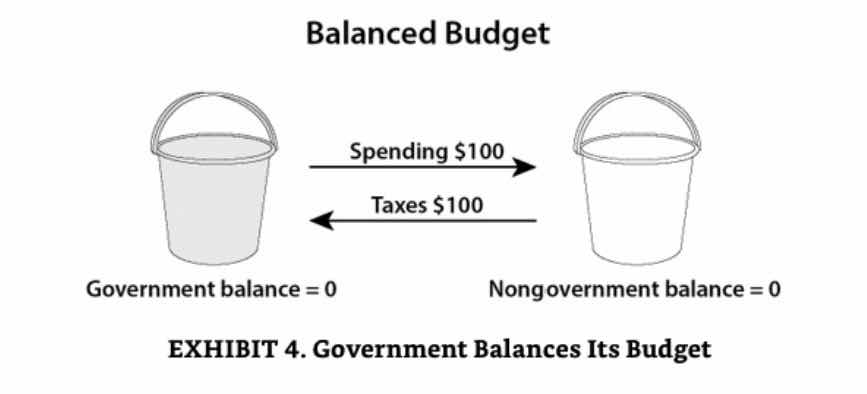
EXHIBIT 4. Government Balances Its Budget
By holding its spending in line with taxes, the dreaded red ink is eliminated. But what’s this? The nongovernment bucket has lost its financial surplus. Now, it’s possible that this is a good outcome. Remember, MMT asks us to focus on economic outcomes, not budgetary outcomes. So, if a balanced budget can deliver good overall conditions in our economy—that is, full employment and price stability—then there’s no reason to complain that the government has balanced its books. Most of the time, however, our economy will need the support of fiscal deficits to keep things in balance. The trick is to prevent the deficit from getting too big or too small. As we learned in Chapter 2, spending too much or taxing too little can lead to problems. Imagine an extreme scenario, where the government allowed us to keep every dollar it put into our bucket, never taxing anything away. That’s like closing the drain in the bathtub and letting every drop of spending accumulate in our bucket. Before long, the tub would overfill, and our economy would overheat. Inflation would quickly take hold as too much money sloshed around in our bucket. The right size deficit is the one that provides just enough support to keep our economy humming along without rising inflation. Deficits can be too big, but they can also be too small. We can use our two buckets to look, one last time, at the much-celebrated Clinton surpluses (1998–2001). Prior to 1998, the government had been running persistent deficits. Then, suddenly, the situation reversed itself. Instead of dollars flowing from Uncle Sam’s bucket into ours, they started moving in the opposite direction. As Exhibit 5 shows, Uncle Sam got the (+) sign, and we got the (−) sign. We can illustrate this using simple numbers. To put Uncle Sam in surplus, the government had to tax away more dollars ($ 100) than it spent ($ 90) into our bucket in 1998. The only way for Uncle Sam to collect more dollars than he currently spends is to take back some of the dollars he supplied us with in prior years. EXHIBIT 5. Government Runs a Fiscal Surplus Once again, we’ve eliminated the dreaded red ink on the government’s balance sheet. Indeed, Uncle Sam is now in the black. But don’t break out the champagne just yet. Remember, on the other side of every financial surplus is a financial deficit of equal size. That means the government’s black ink became our red ink! The Clinton surpluses forced us to sacrifice some of the dollars we had been saving in our bucket. The crowding-out story gets it completely backward. It’s fiscal surpluses, not fiscal deficits, that eat up our financial savings. Why do so few economists bother to point this out? When the CBO publishes its annual budget outlook, they’re only telling half the story. They report the government’s current (and projected) financial balance, but they don’t bother to point out what it implies for those of us in the other bucket. They supply the data—big scary deficit numbers—that politicians and pundits use to terrorize the population, but they make no attempt to show how those deficits necessarily impact our financial balances. So, the public is bombarded with one-sided coverage that only looks at fiscal deficits from one vantage point. For example, in July 2019, the editorial board at the New York Post ran an opinion piece under the headline “Locking in a Future of Trillion-Dollar Deficits.” 8 A year earlier, the Wall Street Journal had foreshadowed this with a similar headline: “Why Trillion-Dollar Deficits Could Be the New Normal.” The problem is that no one bothers to show readers how the pieces fit together. The government’s fiscal outlook is considered the whole story. It’s not. To improve the public discourse, we need to think like a deficit owl. Those hawks and doves we met
in Chapter 3 spend too much time squawking about red ink and not enough time helping the public to see what that red ink means for the rest of us. To see the full picture, you have to be able to look at the flow of payments from a different angle. That’s what makes the deficit owl a better budget bird. (Say that three times fast.) The owl has full range of motion: it can turn its head to see what the others are missing. A handy guy to have around if you want the entire picture. Godley was a deficit owl. That’s why he was able to see what so many others were missing as the government’s budget moved into surplus beginning in 1998. While Democratic politicians and the vast majority of economists cheered the Clinton surpluses, Godley sounded the alarm. 9 Because his model didn’t leave anything out, he was able to see that the government’s surpluses were siphoning away a portion of our financial savings. As the president’s Council of Economic Advisers was busy drafting the infamous “Life After Debt” report, 10 Godley was publishing reports that shined a spotlight on the private sector deficits that nearly everyone else was ignoring. He was virtually alone in predicting that the Clinton surpluses would undermine the recovery and ultimately drive the federal budget back into deficit. 11 That’s because fiscal surpluses rip financial wealth away from the rest of us, leaving us with less purchasing power to support the spending that keeps our economy going. Godley’s approach shows that in purely financial terms, every fiscal deficit is good for someone. That’s because government deficits are always matched—penny for penny—by a financial surplus in the nongovernment bucket. At the macro (big picture) level, Uncle Sam’s red ink is always our black ink. When he spends more dollars into our bucket than he taxes away, we get to accumulate those dollars as part of our financial wealth. But who, exactly, is we? From a thirty-thousand-foot level, all we know is that those dollars flow into a giant bucket that includes everyone not named Uncle Sam. You’re in the big bucket, and so am I. Companies like Boeing and Caterpillar are in there with us. Our trading partners—China, Mexico, Japan, and so forth—are in there, too. President John F. Kennedy liked to say that “a rising tide lifts all boats.” He meant that when our economy does better, all of us do better, too. Godley’s model shows that fiscal deficits will always lift our collective, nongovernment (financial) boat. But what about all of the individual boats that are floating around inside that big bucket? Fiscal deficits have the potential to lift millions of small boats, but too often the benefits of Uncle Sam’s deficits aren’t spread widely throughout the economy. Tax cuts that go disproportionately to the biggest corporations and the wealthiest people in society funnel riches into their buckets, while millions of families struggle to keep their boats afloat. If the goal is broadly shared prosperity, then we need fiscal deficits that channel resources more equitably. For example, investing in health care, education, and public infrastructure won’t just benefit the medical professionals, teachers, and construction workers who get paid to do those jobs, it will also benefit the patients, students, and drivers who benefit from better public services. 12 And, when fiscal deficits help low-and middle-income families, those dollars aren’t hoarded in off-shore bank accounts. They get spent back into the economy, helping to lift the boats that belong to families like theirs. The point is, not every deficit serves the broader public good. Deficits can be used for good or evil. They can enrich a small segment of the population, lifting the yachts of the rich and powerful to new heights, while leaving millions behind. They can fund unjust wars that destabilize the world and cost millions their lives. Or they can be used to sustain life and build a more just economy that works for the many and not just the few. What they can’t do is eat up our collective savings. 13
The Interest Rate Is a Policy Variable
The crowding-out story is rooted in the (TAB) S model we introduced in Chapter 1. Remember, that model treats Uncle Sam as a currency user, who must finance his expenditures either by taxing or borrowing. If he wishes to spend (S) more than he expects to collect in taxes (T), then he must cover the shortfall (i.e., the deficit) by borrowing (B). According to conventional economists—hawks and doves alike—if the government borrows to cover deficits, then it will use up some of the savings that would otherwise have been available to private companies and other borrowers. The story continues that if

0 件のコメント:
コメントを投稿