2022/06/01 ケルトンレンズ Biden's Plan to Fight Inflation - by Stephanie Kelton
Balance of Power Full Show (05/31/2022)
https://youtu.be/ggqWpSJDHU4
https://youtu.be/XuS9YvfY7Ak
| ||||||||||||||||||||||||



https://stephaniekelton.substack.com/p/bidens-plan-to-fight-inflation
バイデンのインフレと戦う計画

ステファニー・ケルトン
2時間前
15 3
今では、今日のウォールストリートジャーナルでバイデン大統領の論説★を読んだ(または少なくとも報道を見た)ことがあるでしょう。そして、あなたはおそらく大統領がほんの少し前に大統領執務室でジェローム・パウエルに会ったことを知っているでしょう。
大統領がFRBの議長と協力してより広範な経済について話し合うことについて、特に重要なこと(珍しいことは言うまでもありません)。この場合、2人の男性は、回復の道筋、サプライチェーンの混乱、ロシアの侵略が世界のエネルギー価格に与える影響、そしてもちろんインフレの短期的な見通しについて話し合うことが期待されていました。
会議は、政策立案者がインフレ問題の解決に真剣に取り組んでいることを国民に安心させるための写真撮影にすぎないと主張する人もいます。会議についてどう思おうと、実体は何も変わらないでしょう。
この時点で、インフレを抑える大統領の計画★は次のように要約できる。
1.FRBは放っておいて、料金を引き上げ、経済を遅らせる
2.いくつかのコストを削減し、より多くの容量を構築するために積極的な措置を講じる
3.財政赤字をさらに削減するための積極的な措置を講じる
私はブルームバーグテレビのデビッド・ウェスティンに加わり、今日の正午にこれについて話しました。★★★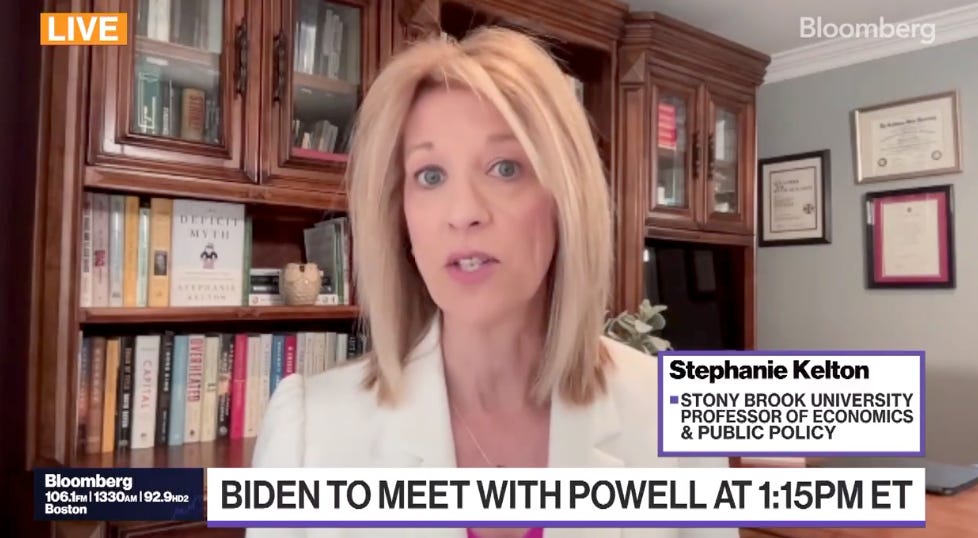
私たちは主に#2に焦点を当てました。そして、私は大統領が彼のopEdでレイアウトしたほぼすべてのことに同情していますが、クリーンエネルギーへの投資、海上貨物会社を取り締まり、メディケアが処方薬の価格を交渉できるようにすることで医療費を削減し、子供や高齢者ケアに投資します。これらのことのほとんどは、議会が法律を可決することを要求するか(それで幸運)、短期的にインフレを下げるために多くのことをしない政策です。
#3では、私は全く異なる見解を持っています。赤字はすでに崩壊している。2021年の2.8Tから今年は約1Tドルに急落した。削減の一部は、単に私たちがより速く成長している経済を持っているという事実によるものであり、それは自然に進歩的な税法を介してより高い連邦収入を生み出します。しかし、削減の大部分は財政支援の積極的な撤退から来ています。例えば、昨年ほとんどのアメリカ人に送られた1,400ドルの小切手(刺激で3500億ドル)が行われます。拡張(CTC)児童税額控除(1,1000億ドル)は12月に失効した。学生ローンの返済は数千万人のアメリカ人のためにバックアップを開始し、数ヶ月後に経済からかなりの支出を奪う可能性が高い。シャットオフモラトリアムは期限切れになったばかりで、家族は公益事業債務で溺れています(3月1日現在、延滞230億ドル)。そして、リストは続きます...
パウエルのコメントを注意深く解析し、彼もおそらくそれを知っていると思います。すでに焼成されている財政の引き締めと、パウエルがFRBの舵取りからエンジニアリングしている財政状況の引き締め付けの組み合わせは、不況のリスクを高めています。
それは、不況が差し迫っている、あるいは避けられないという意味ではありません。ヘザー・ロングは、リスクのバランスについてワシントンポストでアニスピースアップしています。★★
インフレと戦うために私たちがやっていることのいくつかが回復を脅かしていることは、私の心にはほとんど疑いの余地がありません。その一部は逆効果である可能性があり、インフレは低くなるよりも高い傾向にある可能性があります。考慮する必要があるすべてのことを考えると、それは私の基本的なケースではありませんが、明確にする価値のあるMMTの議論があります。
それはバイデンの#1インフレ戦闘戦略に関連しており、それは私が先週立ち上げたシリーズの一部である明日の投稿のトピックです。最初のものを見逃した場合は、ここで見つけることができます。
Should Congress Shrink the Deficit to Fight Inflation?
https://stephaniekelton.substack.com/p/should-congress-shrink-the-deficit?s=w
https://iitomo2010.blogspot.com/2022/05/iitomo20220528_28.html
2022/05/28
いつものように、読んでくれてありがとう。
今すぐ購読する
Biden's Plan to Fight Inflation
Stephanie Kelton 2 hr ago 15 3
There's nothing particularly important (let alone unusual) about a president getting together with his Fed chair to discuss the broader economy. In this case, the two men were expected to discuss the path of the recovery, supply chain disruptions, the impact of the Russian invasion on global energy prices, and of course the near-term outlook for inflation.
Some have argued that the meeting was little more than a photo-op to reassure the public that policymakers are serious about solving the inflation problem. Whatever you might think about the meeting, it's not going to change anything of substance.
Leave the Fed alone to hike rates and slow the economy
Take proactive steps to reduce some costs and build more capacity
Take proactive steps to cut the fiscal deficit even more
I joined Bloomberg TV's David Westin to talk about this at noon today.
There is little doubt in my mind that some of what we're doing to fight inflation threatens the recovery. Some of it might even be counterproductive, meaning that inflation could trend higher rather than lower. That's not my base case, given everything that has to be taken into consideration, but there's an MMT argument that is worth articulating.
As always, thank you for reading.
~~~

文字起こし
~~~~
★
Joe Biden: My Plan for Fighting Inflation - WSJ
世界経済は深刻な課題に直面している。インフレは上昇し、ウラジミール・プーチンのウクライナ戦争によって悪化している。エネルギー市場は混乱している。完全に治癒していないサプライチェーンは、不足と値上げを引き起こしています。
アメリカ人は心配している。その気持ちはわかります。私は、ガスや食料品の価格が上がったときに重要な家族で育ちました。私たちは台所のテーブルの周りでそれを感じた。しかし、アメリカ国民は、私たちの経済が強さの立場からこれらの課題に直面しているという自信を持つべきです。
2021年1月、私が就任したとき、回復は停滞し、コロナウイルスは制御不能だった。1年半足らずで、私の政権の経済と予防接種計画は、現代史上最も強固な回復を達成するのに役立ちました。雇用市場は第二次世界大戦後以来最も強く、830万人の新しい雇用、記録上最速の失業率の減少、何百万人ものアメリカ人がより良い賃金で仕事を得ています。
私が就任して以来、家族は貯蓄を増やし、借金が少なくなっています。最近の連邦準備制度理事会の報告書では、2013年に調査が始まって以来、2021年末に経済的に快適に感じているアメリカ人の割合が高いことがわかりました。ビジネス投資は20%増加し、製造業の仕事は30年間で最速の割合で増加しています。2021年には、前年よりも多くの新しい中小企業向けアプリケーションがありました。
米国は他のどの国よりも優れた経済状態にある。国際通貨基金によると、米国経済は今年末には、パンデミック前の規模と比較して、他の7つの経済グループよりも大きくなるだろう。米国経済は今年、1976年以来初めて中国経済よりも急速に成長するかもしれない。
適切な政策により、米国は回復から安定した着実な成長に移行し、これらすべての歴史的利益をあきらめることなくインフレを抑えることができます。この移行中、成長は違って見えるでしょう。記録的な雇用創出数が少なくなる可能性が高いが、これは懸念の原因ではないだろう。むしろ、来年の平均的な月間雇用創出が現在の50万から15万に近いレベルにシフトした場合、この種の雇用成長は低い失業率と健全な経済と一致しているため、回復の次の段階に成功している兆候になります。パンデミックの数十年前とは、物事が違って見えるはずです。あまりにも頻繁に、低成長、低賃金の上昇、そして最も裕福なアメリカ人にとって最もうまくいった経済がありました。
私はいわゆるトリクルダウン経済にうんざりしていたので、大統領に立候補した。私たちは今、働く家族のために働く経済で歴史的な回復を築く機会があります。急速な回復から安定した着実な成長に移行するために今できる最も重要なことは、インフレを下げることです。だからこそ、私はインフレに取り組むことを経済的最優先事項にしました。私の計画には3つの部分があります。
まず、連邦準備制度理事会はインフレを制御する主な責任を負っています。私の前任者はFRBを侮辱し、過去の大統領はインフレの上昇期にその決定に不適切な影響を与えようとしてきました。私はこれをしません。私はその機関をリードするために両党から優秀な人材を任命しました。私は、インフレと戦うことが今私たちの最大の経済的課題であるという彼らの評価に同意します。
第二に、経済的不確実性のこの瞬間に家族のために物事をより手頃な価格にし、時間の経過とともに経済の生産能力を高めるために、あらゆる実用的な一歩を踏み出す必要があります。ロシアの石油、ガス、精製能力が市場から外れているため、ポンプの価格の大部分が上昇しています。私たちは氏を罰するための世界的な努力を許すことはできません。彼がしたことのためにプーチン大統領、そして私たちはアメリカの消費者のためにこれらの影響を軽減しなければならない。だからこそ、私は世界の石油埋蔵量から史上最大のリリースをリードしました。議会は、私が提案したクリーンエネルギー税額控除と投資を渡すことで、すぐに助けることができます。アメリカ最大の公益事業会社の12人のCEOは今年初めに、私の計画は平均的な家族の年間光熱費を500ドル削減し、独裁者によって生成されたエネルギーからの移行を加速すると私に言いました。
また、壊れたサプライチェーンを修正し、インフラストラクチャを改善し、外国の海上貨物会社が製品を移動するために請求する法外な料金を取り締まることで、日用品のコストを削減することもできます。私の住宅供給行動計画は、100万台以上のユニットを建設し、今後5年間で住宅不足を閉鎖することで、住宅をより手頃な価格にします。メディケアに製薬会社と交渉する力を与え、インスリンのコストを制限することで、処方薬の価格を下げることができます。そして、親が仕事に戻るのを助けるために、子供と高齢者のケアのコストを下げることができます。私はこの困難な時期に働く家族を助けるために自分でできることをしました - そして、私ができるところでコストを削減するために行動し続けます - しかし今、議会も行動する必要があります。
第三に、価格圧力を緩和するのに役立つ連邦赤字を減らし続ける必要があります。先週、無党派議会予算局は、赤字が今年1.7兆ドル減少すると予測しました。これは史上最大の減少です。これにより、経済のシェアとしての赤字はパンデミック前のレベルよりも低く、アメリカの救助計画が可決される前の今年予測されたCBOよりも低くなります。この赤字の進展は事前に定められていなかった。緊急プログラムを責任を持って締めくくることに加えて、私の経済政策が急速な回復を後押ししたため、削減の約半分は収益の増加によって引き起こされます。
私の計画は、税法に常識的な改革を行うことで、赤字をさらに減らすだろう。内国歳入庁は、アメリカ人がすでに負っている税金を徴収するためのリソースを持っている必要があります。企業が海外に雇用や利益をシフトするインセンティブがなくなるように、国際課税の競争の場を平準化する必要があります。そして、億万長者が教師や消防士よりも低い料金を支払うことを可能にする税法の法外な不公平を終わらせるべきです。
インフレに取り組み、経済を安定した着実な成長に動かす計画についての議論を歓迎します。私は上院議員が率いる議会共和党員とはまったく異なるアプローチをとっています。10万ドル未満の人々に税金を引き上げ、議会がメディケア、社会保障、メディケイドなどの岩盤プログラムを5年ごとに再承認することを議会に要求する計画です。それはアメリカの家族をより貧しく、より経済的に不安にするだろう。
今日私たちが行う経済政策の選択は、すべてのアメリカ人に利益をもたらす持続的な回復が可能かどうかを決定します。私は、民主党、共和党、または独立系、アメリカ国民に真の解決策を提供するオープンで正直な議論をすることをいとわない人なら誰とでも協力します。
ミスターバイデンはアメリカ合衆国の第46代大統領です。
Joe Biden: My Plan for Fighting Inflation
I won't meddle with the Fed, but I will tackle high prices while guiding the economy's transition to stable and steady growth.
The global economy faces serious challenges. Inflation is elevated, exacerbated by Vladimir Putin's war in Ukraine. Energy markets are in turmoil. Supply chains that haven't fully healed are causing shortages and price hikes.
Americans are anxious. I know that feeling. I grew up in a family where it mattered when the price of gas or groceries rose. We felt it around the kitchen table. But the American people should have confidence that our economy faces these challenges from a position of strength.
In January 2021, when I took office, the recovery had stalled and Covid was out of control. In less than a year and a half, my administration's economic and vaccination plans helped achieve the most robust recovery in modern history. The job market is the strongest since the post-World War II era, with 8.3 million new jobs, the fastest decline in unemployment on record, and millions of Americans getting jobs with better pay.
Since I took office, families have increased their savings and have less debt: A recent Federal Reserve report found that a higher percentage of Americans reported feeling financially comfortable at the end of 2021 than at any time since the survey began in 2013. Business investment is up 20% and manufacturing jobs are growing at their fastest rate in 30 years. There were more new small business applications in 2021 than in any previous year.
The U.S. is in a better economic position than almost any other country. According to the International Monetary Fund, the U.S. economy will be larger at the end of this year—relative to its prepandemic size—than any other Group of 7 economy. The U.S. economy may grow faster this year than China's economy for the first time since 1976.
With the right policies, the U.S. can transition from recovery to stable, steady growth and bring down inflation without giving up all these historic gains. During this transition, growth will look different. We will likely see fewer record job-creation numbers, but this won't be cause for concern. Rather, if average monthly job creation shifts in the next year from current levels of 500,000 to something closer to 150,000, it will be a sign that we are successfully moving into the next phase of recovery—as this kind of job growth is consistent with a low unemployment rate and a healthy economy. Things should also look different from the decades before the pandemic, when too often we had low growth, low wage gains, and an economy that worked best for the wealthiest Americans.
I ran for president because I was tired of the so-called trickle-down economy. We now have a chance to build on a historic recovery with an economy that works for working families. The most important thing we can do now to transition from rapid recovery to stable, steady growth is to bring inflation down. That is why I have made tackling inflation my top economic priority. My plan has three parts:
First, the Federal Reserve has a primary responsibility to control inflation. My predecessor demeaned the Fed, and past presidents have sought to influence its decisions inappropriately during periods of elevated inflation. I won't do this. I have appointed highly qualified people from both parties to lead that institution. I agree with their assessment that fighting inflation is our top economic challenge right now.
Second, we need to take every practical step to make things more affordable for families during this moment of economic uncertainty—and to boost the productive capacity of our economy over time. The price at the pump is elevated in large part because Russian oil, gas and refining capacity are off the market. We can't let up on our global effort to punish Mr. Putin for what he's done, and we must mitigate these effects for American consumers. That is why I led the largest release from global oil reserves in history. Congress could help right away by passing clean energy tax credits and investments that I have proposed. A dozen CEOs of America's largest utility companies told me earlier this year that my plan would reduce the average family's annual utility bills by $500 and accelerate our transition from energy produced by autocrats.
We can also reduce the cost of everyday goods by fixing broken supply chains, improving infrastructure, and cracking down on the exorbitant fees that foreign ocean freight companies charge to move products. My Housing Supply Action Plan will make housing more affordable by building more than a million more units, closing the housing shortfall in the next five years. We can reduce the price of prescription drugs by giving Medicare the power to negotiate with pharmaceutical companies and capping the cost of insulin. And we can lower the cost of child and elder care to help parents get back to work. I've done what I can on my own to help working families during this challenging time—and will keep acting to lower costs where I can—but now Congress needs to act too.
Third, we need to keep reducing the federal deficit, which will help ease price pressures. Last week the nonpartisan Congressional Budget Office projected that the deficit will fall by $1.7 trillion this year—the largest reduction in history. That will leave the deficit as a share of the economy lower than prepandemic levels and lower than CBO projected for this year before the American Rescue Plan passed. This deficit progress wasn't preordained. In addition to winding down emergency programs responsibly, about half the reduction is driven by an increase in revenue—as my economic policies powered a rapid recovery.
My plan would reduce the deficit even more by making common-sense reforms to the tax code. The Internal Revenue Service should have the resources to collect taxes that Americans already owe. We should level the international taxation playing field so companies no longer have an incentive to shift jobs and profits overseas. And we should end the outrageous unfairness in the tax code that allows a billionaire to pay lower rates than a teacher or firefighter.
I welcome debate on my plan to tackle inflation and move the economy to stable and steady growth. I have a very different approach from Congressional Republicans, led by Sen. Rick Scott, whose plan would raise taxes on people making less than $100,000 and require that Congress reauthorize bedrock programs like Medicare, Social Security and Medicaid every five years. That would make American families poorer and more economically insecure.
The economic policy choices we make today will determine whether a sustained recovery that benefits all Americans is possible. I will work with anyone—Democrat, Republican, or independent—willing to have an open and honest discussion that delivers real solutions for the American people.
Mr. Biden is the 46th president of the United States.
WSJ Opinion: What We Learned From the Republican Primaries

WSJ Opinion: What We Learned From the Republican Primaries
https://www.washingtonpost.com/opinions/2022/05/31/can-us-economy-avoid-recession-amid-inflation/
Opinion The have/have not economy is back in the U.S.

Pessimism abounds about the U.S. economy. Wall Street executives, normally an upbeat bunch, are warning of a “very, very high risk” of recession, as Goldman Sachs’s Lloyd Blankfein recently put it. The head of Wells Fargo says there is “no question” the nation is heading toward a downturn. The stock market has veered dangerously close to a bear market. Top business leaders are as gloomy as they were at the start of the pandemic. Consumers are even more downbeat. Americans rate the economy as badly as they did the Great Recession, largely because of inflation at 40-year highs.
It is easy to explain what could tank the economy in the not-too-distant future. To fight inflation, the Federal Reserve is hiking interest rates, and when the Fed starts pumping the brakes, a recession often follows. Russia war’s in Ukraine, ongoing supply-chain crunches, covid-19 flare-ups and the end of $5 trillion in federal pandemic aid all add strain to an already jittery situation.
Less clear-cut is how to save the country from recession when the United States appears to be returning to a have/have-not economy.
The most straightforward path to avoid a recession is for Americans to keep spending. Voters might not like today’s economy and high prices, but they have boosted their spending every month this year. Luxury brands and stores such as Nordstrom that cater to higher-end shoppers are doing especially well. So is anything related to travel: Flights, hotels and destinations such as Disney theme parks are thriving in what’s been dubbed the summer of “revenge travel.” Even some cruise lines are reporting record bookings.
“If the consumer is not pulling back, you don’t get a recession,” says Joe Brusuelas, chief economist at the tax and consulting firm RSM. “The real economy continues to do very well.”
There’s a lot of money in people’s hands, which is helping to sustain spending. It is unusually easy to get a job — and a pay raise. Many Americans were also able to save more over the past two years because they weren’t going out much and many received pandemic stimulus payments and other aid. Oxford Economics estimateshouseholds saved an extra $2.5 trillion since the pandemic began and only $40 billion has been spent so far. It’s an extra cushion against rising prices. Companiesand state and local governments are also sitting on a lot of extra cash they could spend or return to shareholders and residents.
But while spending overall remains strong, not everyone has money to shell out. Walmart shoppers are cutting back on everything but food and other basics. It’s a similar story with savings. Even after the stock market dip, the top 40 percent still have lots of excess cash. Meanwhile, the savings that the bottom 20 percent accumulated over the past two years is already gone, Morgan Stanley has found.
Hourly workers typically go into survival mode during periods of high inflation. They struggle to keep up with increased costs for gas, food and rent, and there is little superfluous spending they can cut. As the economy slows, they are likely to see their bargaining power diminish and their hours scaled back in some industries.
For now, the wealthy continue to make big purchases, and it’s enough to keep the overall economy afloat. But that spending could also evaporate quickly. Look at the real estate market. Almost overnight, frenzied bidding wars stopped and home sales dried up this spring as consumers finally balked at high prices and rising mortgage rates.
No question, the U.S. economy is undergoing a big shift — actually, multiple shifts. There’s a triple pullback of government support: The Fed is raising interest rates and stopping its bond buying program, and overall federal spending is declining.
At the same time this aid is disappearing, Americans are changing their habits. After two years of mostly staying at home and spending big on goods, they are venturing out again and spending on services. We’re going from the Netflix economy to the Night Out economy, and retailers such as Target admit they have been shocked at how fast spending patterns have shifted.
Transition periods are always hard, and this one is especially difficult to read. How long will consumers keep spending? Are families simply shifting their spending from home renovation and backyard fun to eating out and travel? Or might consumers soon close their wallets? If the stock market and home prices decline this summer, how much will that dissuade consumers from continuing to spend down their cash on hand?
As recession warnings pile up, it is important to keep in mind what matters to the real economy: hiring and consumer spending. It’s fine — even preferable to the Fed — for hiring and consumer spending to downgrade from strong to solid.
As long as the rich and upper-middle class continue to spend, there probably won’t be a recession. But that doesn’t mean the economy will feel good to many, if not most, Americans.

それほど遠くない将来に経済を混乱させる可能性があるものを説明するのは簡単です。インフレと戦うために、連邦準備制度理事会は金利を引き上げており、FRBがブレーキをかけ始めると、不況がしばしば続きます。ウクライナでのロシア戦争、進行中のサプライチェーンクランチ、covid-19のフレアアップ、連邦パンデミック援助の5兆ドルの終わりはすべて、すでに不安な状況に負担をかけます。
あまり明確ではないのは、米国が経済に戻っているように見えるときに国を不況から救う方法です。
不況を避けるための最も簡単な道は、アメリカ人が支出を続けることです。有権者は今日の経済と高い価格を好まなかったかもしれないが、今年は毎月支出を増やしている。高級な買い物客に対応するノードストロームなどの高級ブランドや店舗は、特にうまくいっています。旅行に関連するものはすべてそうです。フライト、ホテル、ディズニーのテーマパークなどの目的地は、「復讐旅行」の夏と呼ばれるもので繁栄しています。一部のクルーズラインでさえ、記録的な予約を報告しています。
「消費者が後退しなければ、不況は得られない」と、税務コンサルティング会社RSMのチーフエコノミスト、ジョー・ブルスエラスは言う。「実質経済は非常にうまくいっています。」
人々の手にはたくさんのお金があり、支出を維持するのに役立っています。仕事と昇給を得るのは異常に簡単です。多くのアメリカ人はまた、あまり外出しておらず、多くの人がパンデミック刺激策の支払いやその他の援助を受けたため、過去2年間でさらに節約することができました。オックスフォード・エコノミクスは、パンデミックが始まってから世帯がさらに2.5兆ドルを節約し、これまでに400億ドルしか費やされていないと推定している。それは価格の上昇に対する余分なクッションです。企業や州政府、地方自治体も、株主や住民に費やしたり戻ったりできる余分な現金をたくさん座っています。
しかし、全体的な支出は依然として強いままですが、誰もがシェルアウトするお金を持っているわけではありません。ウォルマートの買い物客は、食べ物やその他の基本以外のすべてを削減しています。貯蓄も似たような話です。株式市場が下落した後でも、上位40%は依然として過剰な現金をたくさん持っています。一方、過去2年間に過去2年間で累積した下位20%の貯蓄はすでになくなっている、とモルガン・スタンレーは発見した。
時給労働者は通常、高インフレの期間中に生存モードに入ります。彼らはガス、食料、家賃のコストの増加に追いつくのに苦労し、削減できる余分な支出はほとんどありません。経済が減速するにつれて、交渉力が低下し、一部の業界で時間数が縮小する可能性があります。
今のところ、富裕層は大きな買い物をし続けており、経済全体を浮き上がらせるのに十分です。しかし、その支出も急速に蒸発する可能性があります。不動産市場を見てください。ほぼ一晩で、消費者が最終的に高価格と住宅ローン金利の上昇でため、熱狂的な入札戦争が停止し、住宅販売はこの春に枯渇しました。
間違いなく、米国経済は大きな変化を遂げています。実際、複数のシフトです。政府の支援には3つの後退があります。FRBは金利を引き上げ、債券購入プログラムを停止しており、連邦政府全体の支出は減少しています。
この援助が消えつつあると同時に、アメリカ人は習慣を変えている。主に家にいて商品に多額の費用を費やした2年後、彼らは再び冒険し、サービスに費やしています。私たちはNetflix経済からナイトアウト経済に移行しており、ターゲットなどの小売業者は、支出パターンがどれほど速く変化したかにショックを受けたことを認めています。
移行期間は常に難しく、これは特に読みにくいです。消費者はどのくらいの期間支出を続けますか?家族は単に家の改装や裏庭の楽しみから外食や旅行に支出をシフトしているだけですか?それとも、消費者はすぐに財布を閉めるのでしょうか?今年の夏に株式市場と住宅価格が下落した場合、消費者が手元に現金を使い続けるのをどれだけ説得しますか?
不況の警告が積み重なるにつれて、実際の経済にとって重要なこと、つまり雇用と消費者支出を心に留めておくことが重要です。雇用と消費者支出が強いものから堅実に格下げすることは、FRBよりも好ましいです。
裕福で上流中流階級が過ごし続ける限り、おそらく不況ではないだろう。しかし、それは経済がほとんどのアメリカ人ではないにしても、多くのアメリカ人にとって気分が良いという意味ではありません。

https://www.wsj.com/articles/biden-powell-to-meet-with-inflation-at-its-highest-in-40-years-11654018722?st=anvl3i1arafdh1k
President Biden, Fed Chairman Jerome Powell Meet With Inflation at Its Highest in 40 Years
President affirms ‘laser focus on addressing inflation’ while letting central bank do its work
Biden: Top Priority Is Inflation, Will ‘Respect the Fed’

Biden: Top Priority Is Inflation, Will ‘Respect the Fed’
The Tuesday meeting highlighted how much the White House is relying on outside forces to help combat the highest inflation in four decades. Administration officials earlier had played down inflation worries while promoting the $1.9 trillion Covid-19 relief package in March 2021 and in seeking additional spending on healthcare, education and climate change last year.
It was the third meeting between the two men. They most recently met last November for Mr. Biden’s interview that led him to offer a second four-year term to Mr. Powell. They were joined Tuesday by Treasury Secretary Janet Yellen, who is Mr. Powell’s immediate predecessor as Fed chair.
Advertisement - Scroll to Continue
Mr. Biden congratulated Mr. Powell on his recent Senate confirmation and promised to maintain a hands-off approach to the Fed. “I’m not going to interfere with their critically important work,” he said in remarks to reporters at the start of the meeting. “They have a laser focus on addressing inflation, just like I am.”
Brian Deese, the director of the White House National Economic Council, told reporters that it was “a very constructive meeting focused on the outlook for the U.S. and the global economy” but declined to provide details on the private meeting beyond noting Mr. Biden’s respect for the Fed’s independence.
Neither the White House nor the Fed provided additional detail on the meeting.
Newsletter Sign-up
Real Time Economics
The latest economic news, analysis and data curated weekdays by WSJ's Jeffrey Sparshott.
The Fed is in the process of raising interest rates at the most aggressive pace since the 1980s. Minutes from the Fed’s May 3-4 policy meeting, released last week, show the central bank is likely to lift its benchmark interest rate, currently in a range between 0.75% and 1%, by a half percentage point at its next two meetings, in June and July. The Fed raised rates by a half percentage point at its meeting in early May for the first time since 2000.
The Fed is trying to cool demand to moderate price pressures. But Mr. Powell has conceded that the central bank’s ability to do that without forcing the economy into a recession depends on developments outside the central bank’s control, including global energy markets that have been badly disrupted by Russia’s war in Ukraine and supply chains snarled by the Covid-19 pandemic.
“It is going to be a challenging task, and it’s been made more challenging in the last couple of months because of global events,” Mr. Powell said in an interview with The Wall Street Journal on May 17. Mr. Powell indicated the central bank could continue raising rates at a faster clip until it sees clear and convincing evidence that inflationary pressures are easing.
Mr. Biden’s meeting with Mr. Powell, who won Senate confirmation to a second term earlier in May, comes as the White House has been seeking to draw a sharper contrast with Republicans on the economy and inflation ahead of the fall midterm elections.
Senior White House advisers have expressed frustration in recent weeks with their messaging around inflation, according to people familiar with the matter. Some officials have said they should publicly accept that the administration’s stimulus contributed to higher prices while arguing that such steps were worthwhile, while others have been opposed to making such concessions.
Political advisers have trotted out different inflation counterattacks, for example, by linking higher prices to corporate greed or blaming them on Russian President Vladimir Putin. But economic advisers haven’t eagerly embraced those lines.
Mr. Biden also hasn’t said whether he would ease tariffs on certain Chinese imports, resolving an internal split. Several of his economic advisers, including Ms. Yellen, Commerce Secretary Gina Raimondo and members of the Council of Economic Advisers, have favored paring back tariffs imposed by President Donald Trump in an effort to reduce consumer costs. Trade Representative Katherine Tai and others are reluctant to relinquish U.S. leverage over China.
The administration, which together with the Fed once referred to rising inflation as “transitory,” has taken a number of other steps to demonstrate its commitment to easing price pressures but faces difficulty assuring Americans that rising costs will soon subside.
Consumer confidence has slumped amid rising prices of food and gas. Average gasoline prices reached $4.62 a gallon Tuesday. The global oil market could face additional strains following the European Union’s pledgeto ban most Russian oil.
Gasoline prices have risen in recent months even as the Biden administration has tapped oil supplies from the U.S. Strategic Petroleum Reserve, releasing one million barrels of oil a day.
The Fed, meanwhile, has been blamed by lawmakers and economists for failing to move faster to withdraw monetary stimulus after Mr. Biden secured his Covid-19 relief spending in early 2021. The Fed initially believed that surging inflation would abate on its own, but the central bank abandoned that view in November in the midst of signs of growing labor-market imbalances.
Consumer prices rose 6.3% in April from a year earlier, slowing from 6.6% in March, as measured by the Commerce Department’s personal-consumption expenditures price index. So-called core prices—which exclude volatile food and energy prices—increased 4.9% in April from a year earlier, down from 5.2% in the year through March.
The White House’s decision to underscore the role of the Fed in tackling inflation is notable because it is one of the few times in the past 70 years where the country has faced high inflation and in which the government has explicitly called on the central bank to address those price pressures.
During episodes of high inflation after World War II and in the 1960s and 1970s, the White House often pressured the Fed against tightening monetary policy and sought to use other tools, such as tax increase or price controls, to rein in high prices.
The Fed’s autonomy to set interest rates without interference from the executive branch was established in 1951 after a showdown between the central bank and President Harry Truman. In 1970, President Richard Nixon put a loyal, longtime adviser, Arthur Burns, in charge of the Fed and made clear his low regard for the institution’s autonomy. “When we get through, this Fed won’t be independent if it’s the only thing I do in this office,” he said at the time.
The Fed throughout the 1970s both misread the U.S. economy and didn’t believe it had the authority to fight inflation if that required pushing the economy into a recession. Those mistakes prompted the Fed, under Paul Volcker in 1979, to raise interest rates to punishingly high levels, sparking a double-dip recession in the early 1980s that sent unemployment up sharply.
Mr. Biden, in a Wall Street Journal op-ed, again asserted that congressional Republicans wanted to increase taxes on many Americans and sunset programs such as Social Security and Medicare, based on a proposal from Sen. Rick Scott (R., Fla.), who leads the Senate GOP campaign arm. Republican leaders such as Senate Minority Leader Mitch McConnell (R., Ky.) have disavowed Mr. Scott’s plan.
Mr. Biden has pointed to strong job growth and low unemployment during his watch while acknowledging that high inflation is hurting the bottom lines of American households. In the op-ed, he said the administration would be seeking to bring inflation down and “move the economy to stable and steady growth.”
Administration officials were fanning out across cable television this week, with plans for Mr. Biden to cap the initiative with remarks after the coming May jobs report. White House officials said the president intends to focus heavily on his economic agenda in June through travel, events and policy announcements during the month.
“We can approach this challenge and we can focus our efforts on bringing inflation down without having to sacrifice all of the economic gains that we’ve made because of the unique position of strength that we are in because of the progress that we have made,” said the White House’s Mr. Deese.
Dealing With Inflation
Analysis from The Wall Street Journal, selected by the editors
Write to Nick Timiraos at nick.timiraos@wsj.com and Ken Thomas at ken.thomas@wsj.com
Advertisement - Scroll to Continue
バイデン大統領、FRBのジェローム・パウエル議長は40年間で最高水準のインフレと会う
大統領は、中央銀行に仕事をさせながら「インフレに対処することに重点を置いている」と断言している。
バイデン大統領は火曜日の連邦準備制度理事会のジェローム・パウエル議長との会談で、連邦政府の独立性を引き続き尊重すると述べた。写真:ケビン・ディーチュ/ゲッティイメージズ
ニック・ティミラオスとケン・トーマス著Follow
2022年5月31日午後4時50分(東部標準時)更新
収録時間(8分)
バイデン大統領は、連邦準備制度理事会のジェローム・パウエル議長とのホワイトハウス会議で高インフレに対処するための措置について議論し、彼の政権は米国経済を脅かす急激な価格上昇を緩和するための緊急性の高まりを示している。
火曜日の会議では、ホワイトハウスが40年間で最も高いインフレと戦うために外部の力にどれだけ依存しているかを強調した。行政当局は以前、2021年3月に1.9兆ドルのCovid-19救済パッケージを推進し、昨年の医療、教育、気候変動への追加支出を求めながら、インフレの懸念を解消していた。
それは2人の男性の間の3回目の会議でした。彼らは最近、昨年11月に氏のために会いました。バイデンのインタビューにより、彼は氏に2回目の4年間の任期を提供するようになった。パウエル。火曜日にジャネット・イエレン財務長官が加わりました。FRB議長としてのパウエルの直近の前身。
広告 - スクロールして続行
ミスターバイデン氏は祝福した。パウエルは最近の上院の確認について、FRBへのハンズオフアプローチを維持することを約束した。「私は彼らの非常に重要な仕事に干渉するつもりはない」と彼は会議の開始時に記者団に発言した。「彼らは私と同じように、インフレに対処することにレーザー焦点を当てています。」
ホワイトハウス国家経済評議会のディレクターであるブライアン・ディーズは、「米国と世界経済の見通しに焦点を当てた非常に建設的な会議」であると記者団に語ったが、氏に注目するだけでなく、私的な会議の詳細を提供することを拒否した。バイデンのFRBの独立に対する敬意。
ホワイトハウスもFRBも会議に関する追加の詳細を提供しなかった。
ニュースレターの登録
リアルタイム経済学
WSJのジェフリー・スパーショットによって平日にキュレーションされた最新の経済ニュース、分析、データ。
プレビュー
購読する
FRBは1980年代以来、最も積極的なペースで金利を引き上げる過程にあります。先週発表されたFRBの5月3〜4日の政策会議の議事録は、中央銀行が6月と7月の次の2つの会議で、現在0.75%から1%の範囲でベンチマーク金利を0.5パーセントポイント引き上げる可能性が高いことを示しています。FRBは、2000年以来初めて5月上旬の会議で金利を0.5ポイント引き上げました。
FRBは、適度な価格圧力に対する需要を冷やそうとしています。しかし、ミスター。パウエルは、経済を不況に強制することなくそれを行う中央銀行の能力は、ウクライナでのロシアの戦争によってひどく混乱した世界のエネルギー市場や、Covid-19パンデミックによって悩まされたサプライチェーンなど、中央銀行の支配外の発展に依存していることを認めた。
「それは挑戦的な仕事になるだろうし、世界的なイベントのためにここ数ヶ月でより困難になった」と氏。パウエルは5月17日のウォールストリートジャーナルとのインタビューで語った。ミスターパウエルは、中央銀行がインフレ圧力が緩和されているという明確で説得力のある証拠を見るまで、より速いクリップで金利を上げ続けることができると指摘した。
ミスターバイデン氏との会談5月初めに上院の2期目に上院の確認を獲得したパウエルは、ホワイトハウスが秋の中間選挙に先立って経済とインフレについて共和党員とより鋭いコントラストを描こうとしているためです。
バイデン:最優先事項はインフレであり、「FRBを尊重する」
ビデオを再生:バイデン:最優先事項はインフレであり、「FRBを尊重する」
バイデン大統領は火曜日の連邦準備制度理事会のジェローム・パウエル議長との会談で、連邦政府の独立性を引き続き尊重すると述べた。写真:ケビン・ディーチュ/ゲッティイメージズ
この問題に精通している人々によると、ホワイトハウスの上級顧問は、ここ数週間、インフレに関するメッセージに不満を表明している。一部の当局者は、そのような措置は価値があると主張しながら、政権の刺激策が価格の上昇に貢献したことを公に受け入れるべきであると述べたが、他の当局者はそのような譲歩に反対している。
政治顧問は、より高い価格を企業の欲に結びつけたり、ロシアのプーチン大統領のせいにしたりするなど、さまざまなインフレ反撃を踏み出しました。しかし、経済顧問はこれらのラインを熱心に受け入れていません。
ミスターバイデンはまた、特定の中国の輸入品の関税を緩和し、内部分裂を解決するかどうかは述べていない。氏を含む彼の経済顧問の何人か。ジーナ・ライモンド商務長官のイエレンと経済顧問評議会のメンバーは、消費者コストを削減するためにドナルド・トランプ大統領が課した関税の削減を支持している。貿易代表のキャサリン・タイらは、中国に対する米国のレバレッジを放棄することに消極的です。
FRBがかつてインフレの上昇を「過渡的」と呼んでいた政権は、価格圧力緩和へのコミットメントを示すために他の多くの措置を講じたが、コストの上昇がすぐに収まることをアメリカ人に保証することの難しさに直面している。
食料とガスの価格の上昇の中で、消費者の信頼は低迷しています。平均ガソリン価格は火曜日に1ガロン4.62ドルに達した。世界の石油市場は、ほとんどのロシアの石油を禁止するという欧州連合の公約に続いて、追加の株に直面する可能性がある。
バイデン政権が米国からの石油供給を利用したにもかかわらず、ここ数ヶ月でガソリン価格は上昇している。戦略的石油備蓄、1日に100万バレルの石油を放出する。
一方、FRBは、氏の後に金融刺激を撤回するためにより速く動かなかったとして、議員や経済学者によって非難されています。バイデンは2021年初頭にCovid-19の救援支出を確保した。FRBは当初、急増するインフレは単独で和らげると信じていましたが、中央銀行は労働市場の不均衡が高まっている兆候の中で11月にその見解を放棄しました。
消費者価格は、商務省の個人消費支出物価指数で測定されたように、4月に前年同期から6.3%上昇し、3月の6.6%から減速した。不安定な食料とエネルギー価格を除くいわゆるコア価格は、4月に前年比4.9%上昇し、前年同期の5.2%から3月まで下落しました。
インフレに取り組む際のFRBの役割を強調するというホワイトハウスの決定は、国が高インフレに直面し、政府がこれらの価格圧力に対処するよう中央銀行に明示的に求めた過去70年間で数少ない時間の1つであるため、注目に値する。
第二次世界大戦後、1960年代と1970年代の高インフレのエピソードの間、ホワイトハウスはしばしば金融政策の強化に対してFRBに圧力をかけ、増税や価格統制などの他のツールを使用して高価格を抑えようとしました。
執行部からの干渉なしに金利を設定するFRBの自律性は、中央銀行とハリー・トルーマン大統領の対決の後、1951年に設立された。1970年、リチャード・ニクソン大統領は忠実で長年の顧問であるアーサー・バーンズにFRBを担当させ、機関の自律性に対する彼の低い敬意を明らかにした。「私たちが通り抜けるとき、私がこのオフィスでやっているのがそれだけなら、このFRBは独立しないだろう」と彼は当時言った。
1970年代を通じてFRBは、米国経済を誤解し、経済を不況に追い込む必要がある場合、インフレと戦う権限があるとは信じていませんでした。これらの間違いにより、1979年にポール・ボルカーの下でFRBは金利を罰的に高いレベルに引き上げ、失業率を急激に送った1980年代初頭にダブルディップ不況を引き起こした。
ミスターバイデンはウォールストリートジャーナルの論説で、上院議員の提案に基づいて、議会共和党員は社会保障やメディケアなどの多くのアメリカ人や日没プログラムに対する税金を増やしたいと再び主張した。上院共和党の選挙運動部門を率いるリック・スコット(フロリダ州R.)。上院少数党首ミッチ・マコーネル(R.、Ky.)のような共和党指導者は、氏を否定した。スコットの計画。
ミスターバイデンは、高いインフレがアメリカの世帯のボトムラインを傷つけていることを認めながら、彼の時計の間に強い雇用成長と低い失業率を指摘した。論説では、政権はインフレを抑え、「経済を安定した着実な成長に引き下げようとしている」と述べた。
行政当局は今週、ケーブルテレビでファンアウトしていました。バイデンは、来るべき5月の雇用報告書の後、発言でイニシアチブを締めくくる。ホワイトハウス当局者は、大統領は、その月の旅行、イベント、政策発表を通じて、6月に彼の経済議題に重点を置くつもりだと述べた。
「私たちはこの課題に取り組むことができ、私たちが成し遂げた進歩のために私たちが行っている強さのユニークな立場のために私たちが行ったすべての経済的利益を犠牲にすることなく、インフレを下げることに注力することができます」とホワイトハウスの氏は言いました。ディーズ。
