2020年7月2日木曜日

Rough and Rowdy Ways


I Contain Multitudes

Today and tomorrow and yesterday too
The flowers are dying like all things do  
Follow me close - I’m going to Bally-Na-Lee
I’ll lose my mind if you don’t come with me 
I fuss with my hair and I fight blood feuds . . . I contain multitudes

Gotta tell tale heart like Mr. Poe
Got skeletons in the walls of people you know 
I’ll drink to the truth of things that we said
I’ll drink to the man that shares your bed
I paint landscapes - I paint nudes . . . I contain multitudes

A red Cadillac and a black moustache
Rings on my fingers that sparkle and flash
Tell me what’s next - what shall we do 
Half my soul baby belongs to you 
I rollick and I frolic with all the young dudes . . . I contain multitudes

I’m just like Anne Frank - like Indiana Jones
And them British bad boys the Rolling Stones
I go right to the edge - I go right to the end 
I go right where all things lost - are made good again

I sing the songs of experience like William Blake
I have no apologies to make 
Everything’s flowin’ all at the same time 
I live on the boulevard of crime
I drive fast cars and I eat fast foods . . . I contain multitudes

Pink pedal pushers and red blue jeans 
All the pretty maids and all the old queens 
All the old queens from all my past lives
I carry four pistols and two large knives
I’m a man of contradictions and a man of many moods . . . I contain multitudes

Greedy old wolf - I’ll show you my heart 
But not all of it - only the hateful part
I’ll sell you down the river - I’ll put a price on your head
What more can I tell ya - I sleep with life and death in the same bed

Get lost Madam - get up off my knee
Keep your mouth away from me 
I’ll keep the path open - the path in my mind 
I’ll see to it that there’s no love left behind
I play Beethoven sonatas Chopin’s preludes . . . I contain multitudes

https://www.bobdylan.com/songs/false-prophet/

False Prophet

Another day without end - another ship going out
Another day of anger - bitterness and doubt
I know how it happened - I saw it begin
I opened my heart to the world and the world came in

Hello Mary Lou - Hello Miss Pearl
My fleet footed guides from the underworld
No stars in the sky shine brighter than you
You girls mean business and I do too

I’m the enemy of treason - the enemy of strife
I’m the enemy of the unlived meaningless life
I ain’t no false prophet - I just know what I know
I go where only the lonely can go

I’m first among equals - second to none
I’m last of the best - you can bury the rest
Bury ‘em naked with their silver and gold
Put ‘em six feet under and then pray for their souls

What are you lookin’ at - there’s nothing to see
Just a cool breeze encircling me
Let’s walk in the garden - so far and so wide
We can sit in the shade by the fountain side

I’ve searched the world over for the Holy Grail
I sing songs of love - I sing songs of betrayal
Don’t care what I drink - don’t care what I eat
I climbed a mountain of swords on my bare feet

You don’t know me darlin’ - you never would guess
I’m nothing like my ghostly appearance would suggest
I ain’t no false prophet - I just said what I said
I’m here to bring vengeance on somebody’s head

Put out your hand - there’s nothin’ to hold
Open your mouth - I’ll stuff it with gold
Oh you poor Devil - look up if you will
The City of God is there on the hill

Hello stranger - Hello and goodbye
You rule the land but so do I
You lusty old mule - you got a poisoned brain
I’m gonna marry you to a ball and chain

You know darlin’ the kind of life that I live
When your smile meets my smile - something’s got to give
I ain’t no false prophet - I’m nobody’s bride
Can’t remember when I was born and I forgot when I died
Copyright 
© 2020 by Special Rider Music

My Own Version of You

All through the summers and into January
I’ve been visiting morgues and monasteries
Looking for the necessary body parts
Limbs and livers and brains and hearts

I want to bring someone to life - is what I want to do
I want to create my own version of you

It must be the winter of my discontent
I wish you’d taken me with you wherever you went
They talk all night - they talk all day
Not for a second do I believe what they say

I want to bring someone to life - someone I’ve never seen
You know what I mean - you know exactly what I mean

I’ll take Scarface Pacino and the Godfather Brando
Mix ‘em up in a tank and get a robot commando
If I do it upright and put the head on straight
I’ll be saved by the creature that I create
I get blood from a cactus - make gunpowder from ice
I don’t gamble with cards and I don’t shoot no dice
Can you look in my face with your sightless eye
Can you cross your heart and hope to die

I’ll bring someone to life - someone for real
Someone who feels the way that I feel

I study Sanskrit and Arabic to improve my mind
I want to do things for the benefit of all mankind
I say to the willow tree - don’t weep for me
I’m saying the hell with all things that used to be
I get into trouble and I hit the wall
No place to turn - no place at all
I pick a number between one and two
And I ask myself what would Julius Caesar do

I’ll bring someone to life - in more ways than one
Don’t matter how long it takes - it’ll be done when it’s done

I’m gonna make you play the piano like Leon Russell
Like Liberace - like St. John the Apostle
Play every number that I can play
I’ll see you baby on Judgement Day
After midnight if you still want to meet
I’ll be at the Black Horse Tavern on Armageddon Street
Two doors down not that far to walk
I’ll hear your footsteps - you won’t have to knock

I’ll bring someone to life - balance the scales
I’m not gonna get involved in any insignificant details

You can bring it to St. Peter - you can bring it to Jerome
You can move it on over - bring it all the way home
Bring it to the corner where the children play
You can bring it to me on a silver tray

I’ll bring someone to life - spare no expense
Do it with decency and common sense

Can you tell me what it means to be or not to be
You won’t get away with fooling me
Can you help me walk that moonlight mile
Can you give me the blessings of your smile

I want to bring someone to life - use all my powers
Do it in the dark in the wee small hours

I can see the history of the whole human race
It’s all right there - its carved into your face
Should I break it all down - should I fall on my knees
Is there light at the end of the tunnel - can you tell me please
Stand over there by the Cypress tree
Where the Trojan women and children were sold into slavery
Long ago before the First Crusade
Way back before England or America were made
Step right into the burning hell
Where some of the best known enemies of mankind dwell
Mister Freud with his dreams and Mister Marx with his axe
See the raw hide lash rip the skin off their backs
You got the right spirit - you can feel it you can hear it
You got what they call the immortal spirit
You can feel it all night you can feel it in the morn
Creeps into your body the day you are born
One strike of lightning is all that I need
And a blast of ‘lectricity that runs at top speed
Show me your ribs - I’ll stick in the knife
I’m gonna jump start my creation to life

I want to bring someone to life - turn back the years
Do it with laughter - do it with tears
Copyright 
© 2020 by Special Rider Music

I’ve Made Up My Mind to Give Myself to You

Sitting on my terrace lost in the stars
Listenin’ to the sounds of the sad guitars
Been thinking it over and I thought it all through
I’ve made up my mind to give myself to you

I saw the first fall of snow
I saw the flowers come and go
I don’t think anyone else ever knew
I made up my mind to give myself to you

I’m giving myself to you, I am
From Salt Lake City to Birmingham
From East L.A. to San Antone
I don’t think I could bear to live my life alone

My eye is like a shooting star
It looks at nothing, neither near or far
No one ever told me, it’s just something I knew
I’ve made up my mind to give myself to you

If I had the wings of a snow white dove
I’d preach the gospel, the gospel of love
A love so real - a love so true
I made up my mind to give myself to you

Take me out traveling, you’re a traveling man
Show me something that I’ll understand
I’m not what I was, things aren’t what they were
I’m going to go far away from home with her

I traveled the long road of despair
I met no other traveler there
A lot of people gone, a lot of people I knew
I’ve made up my mind to give myself to you

My heart’s like a river - a river that sings
It just takes me a while to realize things
I’ll see you at sunrise - I’ll see you at dawn
I’ll lay down beside you, when everyone is gone

From the plains and the prairies - from the mountains to the sea
I hope that the gods go easy with me
I knew you’d say yes - I’m saying it too
I’ve made up my mind to give myself to you
Copyright 
© 2020 by Special Rider Music

Black Rider

Black Rider Black Rider you been livin’ too hard
You been up all night havin’ to stay on your guard
The path that you’re walkin’ - is too narrow to walk
Every step of the way another stumblin’ block
The road that you’re on - same road that you know
But it’s not the same as - it was a minute ago

Black Rider Black Rider you’ve seen it all
You’ve seen the great world and you’ve seen the small
You fell into the fire and you’re eating the flame
Better seal up your lips if you want to stay in the game
Be reasonable Mister - be honest be fair
Let all of your earthly thoughts be a prayer

Black Rider Black Rider all dressed in black
I’m walking away and you try to make me look back
My heart is at rest I’d like to keep it that way
I don’t want to fight - at least not today
Go home to your wife stop visiting mine
One of these days I’ll forget to be kind

Black Rider Black Rider tell me when - tell me how
If there ever was a time then let it be now
Let me go through - open the door
My soul is distressed my mind is at war
Don’t hug me - don’t flatter me - don’t turn on the charm
I’ll take out a sword and have to hack off your arm

Black Rider Black Rider hold it right there
The size of your cock will get you nowhere
I’ll suffer in silence I’ll not make a sound
Maybe I’ll take the - high moral ground
Some enchanted evening I’ll sing you a song
Black Rider Black Rider you’ve been on the job too long
Copyright 
© 2020 by Special Rider Music

Goodbye Jimmy Reed

I live on a street named after a Saint
Women in the churches wear powder and paint
Where the Jews and the Catholics and the Muslims all pray
I can tell a Proddy from a mile away
Goodbye Jimmy Reed - Jimmy Reed indeed
Give me that old time religion, it’s just what I need

For thine is the kingdom, the power and the glory
Go tell it on the Mountain, go tell the real story
Tell it in that straight forward puritanical tone
In the mystic hours when a person’s alone
Goodbye Jimmy Reed - Godspeed
Thump on the bible - proclaim the creed

You won’t amount to much the people all said
‘Cause I didn’t play guitar behind my head
Never pandered never acted proud
Never took off my shoes and threw them into the crowd
Goodbye Jimmy Reed - goodbye and goodnight
I’ll put a jewel in your crown - I’ll put out the light

They threw everything at me, everything in the book
Had nothing to fight with but a butcher’s hook
They have no pity - they don’t lend a hand
And I can’t sing a song that I don’t understand
Goodbye Jimmy Reed - goodbye and good luck
Can’t play the record ‘cause my needle got stuck

Transparent woman in a transparent dress
It suits you well - I must confess
I’ll break open your grapes I’ll suck out the juice
I need you like my head needs a noose
Goodbye Jimmy Reed, goodbye and so long
I thought I could resist her but I was so wrong

G-d be with you, brother dear
If you don’t mind me asking, what brings you here?
Oh, nothing much, I’m just looking for the man
I came to see where he’s lying in this lost land
Goodbye Jimmy Reed and with everything within ya
Can’t you hear me calling from down in Virginia
Copyright 
© 2020 by Special Rider Music


https://www.bobdylan.com/songs/mother-of-muses/

Mother of Muses

Mother of Muses sing for me
Sing of the mountains and the deep dark sea
Sing of the lakes and the nymphs in the forest
Sing your hearts out - all you women of the chorus
Sing of honor and fame and of glory be
Mother of Muses, sing for me

Mother of Muses sing for my heart
Sing for a love too soon to depart
Sing of the Heroes who stood alone
Whose names are engraved on tablets of stone
Who struggled with pain so the world could go free
Mother of Muses, sing for me

Sing of Sherman - Montgomery and Scott
Sing of Zhukov and Patton and the battles they fought
Who cleared the path for Presley to sing
Who carved out the path for Martin Luther King
Who did what they did and then went on their way
Man, I could tell their stories all day

I’m falling in love with Calliope
She doesn’t belong to anybody - why not give her to me
She’s speaking to me, speaking with her eyes
I’ve grown so tired of chasing lies
Mother of Muses wherever you are
I’ve already outlived my life by far

Mother of Muses unleash your wrath
Things I can’t see - they’re blocking my path
Show me your wisdom - tell me my fate
Put me upright - make me walk straight
Forge my identity from the inside out
You know what I’m talking about

Take me to the river and release your charms
Let me lay down in your sweet lovin’ arms
Wake me - shake me - free me from sin
Make me invisible like the wind
Got a mind to ramble - got a mind to roam
I’m travelin’ light and I’m slow coming home
Copyright 
© 2020 by Special Rider Music

Crossing the Rubicon

I crossed the Rubicon on the 14th day of the most dangerous month of the year
At the worst time at the worst place - that’s all I seem to hear
I got up early so I could greet the Goddess of the Dawn
I painted my wagon - I abandoned all hope and I crossed the Rubicon

The Rubicon is the Red River, going gently as she flows
Redder then your ruby lips and the blood that flows from the rose
Three miles north of purgatory - one step from the great beyond
I prayed to the cross and I kissed the girls and I crossed the Rubicon

What are these dark days I see in this world so badly bent
How can I redeem the time - the time so idly spent
How much longer can it last - how long can this go on
I embraced my love put down my head and I crossed the Rubicon

I feel the bones beneath my skin and they’re tremblin’ with rage
I’ll make your wife a widow - you’ll never see old age
Show me one good man in sight that the sun shines down upon
I pawned my watch and I paid my debts and I crossed the Rubicon

Put my heart upon the hill where some happiness I’ll find
If I survive then let me love - let the hour be mine
Take the high road - take the low, take the one you’re on
I poured the cup and I passed it along and I crossed the Rubicon

You defiled the most lovely flower in all of womanhood
Others can be tolerant - others can be good
I’ll cut you up with a crooked knife and I’ll miss you when you’re gone
I stood between heaven and earth and I crossed the Rubicon

You won’t find any happiness here - no happiness or joy
Go back to the gutter and try your luck - find you some nice young pretty boy
Tell me how many men I need and who I can count upon
I strapped my belt and buttoned my coat and I crossed the Rubicon

I feel the Holy Spirit inside and see the light that freedom gives
I believe it’s within the reach of every man who lives
Keep as far away as possible - it’s darkest ‘fore the dawn
I turned the key and I broke it off and I crossed the Rubicon

Mona Baby, are you still in my mind - I truly believe that you are
Couldn’t be anybody else but you who’s come with me this far
The killing frost is on the ground and the autumn leaves are gone
I lit the torch and I looked to the east and I crossed the Rubicon
Copyright 
© 2020 by Special Rider Music

Key West (Philosopher Pirate)

McKinley hollered - McKinley squalled
Doctor said McKinley - death is on the wall
Say it to me if you got something to confess
I heard all about it - he was going down slow
Heard it on the wireless radio
From down in the boondocks - way down in Key West

I’m searchin’ for love and inspiration
On that pirate radio station
It’s comin’ out of Luxembourg and Budapest
Radio signal clear as can be
I’m so deep in love I can hardly see
Down in the flatlands - way down in Key West

Key West is the place to be
If you’re lookin’ for immortality
Stay on the road – follow the highway sign
Key West is fine and fair
If you lost your mind, you’ll find it there
Key West is on the horizon line

I was born on the wrong side of the railroad track
Like Ginsberg, Corso and Kerouac
Like Louie and Jimmy and Buddy and all of the rest
It might not be the thing to do
But I’m stickin’ with you through and through
Down in the flatlands - way down in Key West

I got both my feet planted square on the ground
Got my right hand high with the thumb down
Such is life - such is happiness
Hibiscus flowers grow everywhere here
If you wear one put it behind your ear
Down on the bottom - way down in Key West

Key West is the place to go
Down by the Gulf of Mexico
Beyond the sea - beyond the shifting sand
Key West is the gateway key
To innocence and purity
Key West - Key West is the enchanted land

I’ve never lived in the land of Oz
Or wasted my time with an unworthy cause
It’s hot down here and you can’t be overdressed
The tiny blossoms of a toxic plant
They can make you dizzy - I’d like to help ya but I can’t
Down in the flatlands - way down in Key West

The fishtail ponds and the orchid trees
They can give you the bleedin’ heart disease
People tell me - I oughta try a little tenderness
Amelia Street - Bay View Park
Walkin’ in the shadows after dark
Down under - way down in Key West

I play the gumbo limbo spirituals
I know all the Hindu rituals
People tell me that I’m truly blessed
Bougainvillea bloomin’ in the summer and spring
Winter here is an unknown thing
Down the flatlands - way down in Key West

Key West is under the sun
Under the radar - under the gun
You stay to the left and then you lean to the right
Feel the sunlight on your skin
And the healing virtues of the wind
Key West - Key West is the land of light

Wherever I travel - wherever I roam
I’m not that far from the convent home
I do what I think is right - what I think is best
Mystery Street off Mallory Square
Truman had his White House there
Eastbound - westbound
Way down in Key West

Twelve years old and they put me in a suit
Forced me to marry a prostitute
There were gold fringes on her wedding dress
That’s my story but not where it ends
She’s still cute and we’re still friends
Down in the bottom - way down in Key West

I play both sides against the middle
Pickin’ up that pirate radio signal
I heard the news - I heard your last request
Fly around my Pretty Little Miss
I don’t love nobody - gimme a kiss
Down at the bottom - way down in Key West

Key West is the place to be
If you’re lookin’ for immortality
Key West is paradise divine
Key West is fine and fair
If you lost your mind you’ll find it there
Key West is on the horizon line
Copyright 
© 2020 by Special Rider Music

2020年7月1日水曜日

MMT理論どう思いますか?

374 金持ち名無しさん、貧乏名無しさん (アウアウウー Sacf-1yds)[sage] 2020/07/01(水) 00:52:18.61  ID:GybMvxeOa 

https://detail.chiebukuro.yahoo.co.jp/qa/question_detail/q14227541089


やはりMMTは単純な需給でインフレを見てるわけではないな。


MMT理論どう思いますか? - ようはデフレ脱却に向けて金をバシバシ刷ってインフ... - Yahoo!知恵袋

https://detail.chiebukuro.yahoo.co.jp/qa/question_detail/q14227541089

MMTという言葉で何を指していらっしゃるのでしょうかね?

もともとMMTとは
Modern Monetary Theory 直訳すれば
現代貨幣理論ですが、
これは91年にアメリカでウォーレン・モズラーという人が自費出版した
小さなパンフレットに端を発して、
オーストラリアのウィリアム・ミッチェルや
アメリカのランダール・レイ、ステファニー・ケルトンと
言った人たちが構築したものです。
その後、パブリナ・チェルヌバやマーシャル・オーエルバック、
マシュー・フォーステーター、スコット・フルワイラー、
エドワード・ネル、
ウィリアム・ブラック、エリック・ティモワーニュ、
マイケル・マリー、、といった人たちが
発展させたものです。

彼らが議論を発展させた1990年代半ばから
2000年代にかけて、
日本を除く世界の景気はかなり良好で、
特にアメリカでは成長率8%など
かなりの好景気を経験しましたが、
この間、失業率こそある程度下がったものの、
賃金は全く上昇せず、
分配率は、一部の資産家に偏るばかりでした。
MMTはこの時期、
この分配率の不均等化を是正することを
様々な形で主張すると同時に、
このままでは金融危機が発生する、と警鐘を
鳴らし続けていました。
特にMMTが強調しているのは
財政が黒字になれば、その後、金融危機が発生せざるを得ない、
ということです。
また、民間部門単独での資本蓄積は不可能であり、
海外部門か政府部門が赤字(「海外部門の赤字」とは
対外経常収支の黒字を意味しています)に
なり続けることが必要だ、ということです。

また、MMTは一貫して
「インフレなき完全雇用」を唱えています。
もっともインフレに対するMMTの考え方は複雑で
簡単なものではありませんが、
フィリップスカーブに基づく考え方、
つまり、失業率が高い間はインフレを目指して
財政赤字を膨らませ、過度なインフレになったら
財政赤字を減らしてインフレを抑制する、
という考え方を
「失業対策手段としてインフレを
インフレ対策手段として失業を用いる
最悪の政策」として非難しています。
いわゆる呼び水政策(ストップアンドゴー政策、
ファインチューニング政策、といわれるもの)は
基本的に否定しています。

MMTでは政府の役割を
「マーケットメーカー」と規定します。
MMTに言わせれば、市場とは
それ自体でうまく機能するものではなく、
政府が下支えすることでようやっと
機能するものだ、ということです。
政府と市場を対立としてとらえているのではなく、
市場も国家の創造物としています。それは
特定の政府が「意図して」作り上げた、
という意味ではなく、市場メカニズムが
機能するためには、政府の役割が不可欠だ、
ということです。
政府のマーケットメーカーとしての役割は
主として3つです。
第一に、国内に安定した貨幣制度を作り出すこと。
(昔は「金融市場に床と天井を与える」と
言っていたのですが、今はそうした姿勢は
やや変化したように思えます。今は
金融市場に政府が床を設定する必要性は
ない、と考えているようです。)
昔から、人間社会には債権債務関係が
つきものです。貨幣とは、こうした債権債務関係を
数字で示すものにすぎません。
政府は、この数字がきちんと機能するように
常に金融市場に介入しています。
中央銀行、政府は様々な金融財政政策を講じることが
可能ですが、この政府の機能に反する政策については
講じようとしても不可能か、あるいは、
その効果を相殺するような形でしか
実行できない、とします。

第二に、民間で蓄積可能な金融資産を
提供することです。企業や家計のバランスシートを考えれば
誰かの金融資産は必ず誰かの負債になっています。
企業部門が全体として利潤を蓄積する、ということ、あるいは
家計部門が全体として貯蓄を行う、ということが
可能であるためには、民間部門以外の
どこかから金融資産を得なければならないのですが、
それは海外か、政府部門しかありません。
現代では植民地政策など認められていませんから
政府が赤字になり、民間部門に
デフォルトフリーの金融資産を提供するしかありません。

第三に、労働市場に床を設定することです。
最低賃金政策や失業手当給付は
それぞれ意味がないとは言いませんが、
あまりにも制約が大きい。だからMMTでは
民間部門で雇用されなかった人たちを
政府が直接雇用するJGPといわれる政策を
主張しています。

また、政府の重要な役割として
民間営利部門では供給できないが
市民生活をするうえで欠かせない有形無形の
インフラストラクチャーを形成することが
挙げられます。教育や高齢者向けサービス、
環境保全、医療サービス、
歴史文化史跡の保存、道路港湾鉄道整備、
安全施設の拡充、、
などがあげられています。


なお、この知恵袋でもよく見られる誤解を
解いておきたいのですが、
MMTでは、インフレ目標政策など主張していません。
というのは、明らかに彼らが見ている経済と
インフレ目標政策は両立しないからです。

MMTのインフレに対する立場はやや複雑ですが、
基本的には賃金と利潤の対抗関係によってインフレは
発生すると考えており、
単純に需要が供給を上回ればインフレになる、と
しているわけではありません。また
インフレもその発生理由によって対応が
異なっており、賃金利潤の対抗関係に由来する
インフレについては、
絶対に許容できないとしていますが、
例えばJGPを採用した当初発生するであろう
しばらくの間の物価上昇については
民間部門における資本の調整が済むまで
許容しなければならない、としています。

他にたまに見られるでたらめとして、
MMTがベーシックインカム政策を主張している、
というモノです。これは全くのでたらめ。
ユニバーサル・ベーシックインカムについては
基本的には拒絶しています。ガイ・スタンディングのような
UBIの主張者とP.チェルヌバやランディ・レイの間には
ベーシック・インカムをめぐってかなり辛辣な
論争が戦わされています。
ランディ・レイは
賃金の代わりにならないような、あるいは
生活に大きく影響しないような金額、つまり
せいぜい小遣い銭程度(おいらのイメージだと
月5~6万円程度)であるなら
いいのではないか、といっているのですが、ただし
これによって他の社会保障等の給付や
給与水準が
減額されてはならない、という前提付きですから
結局、UBIとは違うものになってしまいます。

デフレについては、
ランディ・レイは経済的に悪いもの(いいことはない)としては
いますが、
政府が責任をもって脱却するべく
政策を講じるべきもの、という位置づけでも
ないように思います。基本的には
政府がマーケットメーカーとして上記3つの条件を整えれば
後は、民間で
何とかするべきものとしているのではないでしょうか。
もちろん、政府の責任で
デフレを起こすようなことはあってはならない、
と考えているのだろうとは言えますが。
政府は、デフレを脱却する条件を整える必要は
ありますが(クレジット・クランチの
発生を抑え、完全雇用を実現し、
政府雇用の労務者に対する支払いを通じて
民間部門にデフォルトフリー金融資産を
提供する)、実際にそれでデフレを
脱却できるかどうかは、政府の責任では
ないでしょう。

むしろMMTでは、政府の役割は
マーケットメーカーという点にあるのですから、
マーケットで生じたことはマーケットに処理させるべき、
という立場であるように思われます。
経済危機に際して
経済危機を引き起こす原因を作ったような企業を
「大きすぎてつぶせない」として
救済してしまえば、その会社は
同じことをまた繰り返すでしょう。
大きかろうと小さかろうと、
デフレになろうと危機になろうと、
こうした企業は救済すべきではないのです。
ただし、マーケットメーカーとして
政府は市民の生活権生存権労働権は守らなければならないし、
大きな企業がつぶれたことによって
決済システムがマヒするようなことはあっては
ならないので、
こうした点はカバーしなければなりません。
そのためには中央銀行が
「最後の貸し手」として、そして政府が
「最後の雇い手」として行動しなければ
ならない、としています。

MMTも、実際にはモズラーのパンフレットが出てから
30年たつわけです。
その間、研究の蓄積も大量になります。
胡散臭いかどうか判断するのは、
そうしたものの中から
主要なものを読んでからでも
遅くないと思います。
少なくとも、日本で
「日本版MMT」などといっている人たちの
主張をMMTなどと勘違いしないでいただきたいものです。

ナイス

0

2020/06/28 16:09


399 金持ち名無しさん、貧乏名無しさん (ワッチョイ 8a10-kVpw)[sage] 2020/07/01(水) 10:02:55.57  ID:uevEglHb0 
>>398
俺も理解が怪しいけど
貨幣増やしても貯金するから物価が上がらないってんじゃなくて
貯金しなくて有効需要が増えたとしても単純に物価が上がるとは限らないという細かい企業分析の話っぽいよ


物が売れる→在庫無くなる→生産量拡大or入荷量拡大→価格変化なし

物が売れまくる→在庫無くなる→生産or入荷拡大→一時生産物高騰→コストプッシュ→(価格に添加出来るなら)価格引き上げ

こんな感じらしい


400 金持ち名無しさん、貧乏名無しさん (ワッチョイ 8a10-kVpw)[sage] 2020/07/01(水) 10:14:26.14  ID:uevEglHb0 
要するに貨幣増えたら有効需要も増えるけど
価格に関してはある程度硬直的に作用すると考えてるらしい
JGPによって最低賃金を規定してやればこの硬直性が賃金にも働くから物価安定にも作用する
今の最低賃金は失業を放置しているから実質最低賃金は0


こういう主張との事。リッキーの言う価格のアンカーを置くみたいなのはこういう話らしい

その上で批判したいのが積極財政の必要性を訴える話とは全然関係ないのに「財政リフレ」だのなんだの言ってるのは藁人形では?


431 金持ち名無しさん、貧乏名無しさん (ワッチョイ 7fc9-BHEw)[sage] 2020/07/01(水) 14:59:57.58  ID:jg3+4ql70 
>量的緩和の帰結を見ていると岩田翁論争は翁即ち日銀理論の方に分があったと思うけどな~。

帰結って、元格付け会社、現ハーバードの、ポール・シェアードや、元IMF筆頭エコノミスト、ブランシャール
等、世界中の専門家が反対、おかしいと言っていた、消費税増税等の各種増税をやってるから。
岩田は日銀退任後の日銀日記にデフレ脱却失敗は消費税増税とかいている。黒田日銀も1回目の
消費税増税後のデフレ脱却失敗で、原油と消費税増税が原因と総括してHPに載せていた。ところが
会合では黒田は消費税にはまったくふれず、御用記者も質問しない。軽減税率の新聞にものらない、
本音は増税賛成のテレビでも言わない。公式と大衆操作というダブルスタンダード。

翁日銀理論は、金融内生説で、金融緩和は効果ないというもの。つまりMMTw
キーストロークマネー、ヘリコプターマネーを供給しつづけてインフレにならければ、無税国家が誕生。
ひとり1兆円、一時給付金を全国民に配ってインフレならないわけがない。

2020年6月28日日曜日

The Government Can Afford Anything It Wants | The New Republic

The Government Can Afford Anything It Wants | The New Republic
https://newrepublic.com/article/158221/government-can-afford-anythi-wants

The Government Can Afford Anything It Wants

The idea that programs must be funded by tax dollars is a myth. Stephanie Kelton’s new book explains how money really works.

If you’re like me, once or twice in your life you have jolted awake from the edge of sleep wondering, How exactly does the government pay for the military? As we all know, the military is an expensive endeavor. In 2019, its budget was $716 billion, an increase of $80 billion over the previous year. Does the Department of Defense have a bank account with that $716 billion in it? If they do, who puts money in it, and where does that money come from? Who exactly will pay Raytheon for that sexy new air-to-air Peregrine missile? And where did that $80 billion come from? New taxes? In 2018? I thought that the only major legislative victory of the Trump administration was a tax cut.

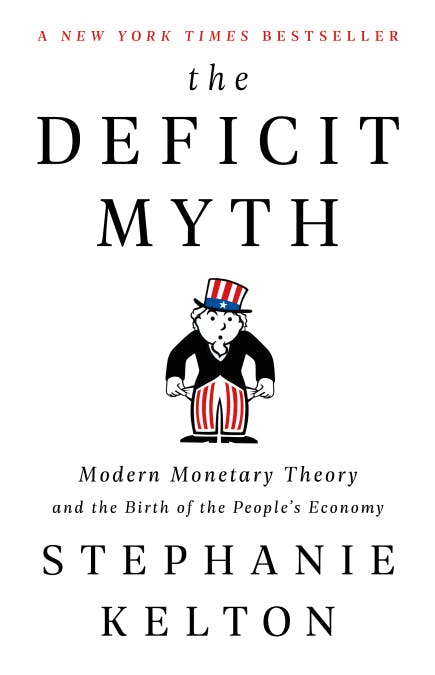
The Deficit Myth: Modern Monetary Theory and the Birth of the People’s Economy
PublicAffairs, 336 pp., $30.00

To find the answers, the economist Stephanie Kelton tells us in The Deficit Myth that we only need to look at congressional proceedings. For any government expenditure that isn’t automatic (like interest expenses or welfare programs), the House and Senate debate and then pass bills that require spending. For example, in 2017 the Senate happily voted 89–9 to pass a 1,215-page bill called the National Defense Authorization Act. It authorized $737 billion in spending. Once this bill passed, the Department of Defense could enter into contracts with weapons manufacturers like Raytheon. As soon as the ink dries, the U.S. Treasury instructs its bank, the Federal Reserve, to go into its computers and mark up Raytheon’s bank account. Money enters its account and it begins paying its workers, suppliers, and its CEO Thomas Kennedy’s $1 million salary.
The important thing here is that the Federal Reserve does not dip its hand into a pot of “tax dollars” to pay military contractors, nor is it required to check some mythical account where tax dollars live before it wires the money. In fact, that account doesn’t exist. As former Federal Reserve Chairman Ben Bernanke once noted, when the government pays for things, it is “not taxpayer money. We simply use the computer to mark up the size of the account.” Alan Greenspan, Bernanke’s libertarian predecessor at the Fed further clarified, “There’s nothing to prevent the federal government from creating as much money as it wants and paying it to someone.” The implication is that if Congress can pass a bill that requires some form of spending, the Federal Reserve can and will spend that money without limit, as is the case with the military. This directly contradicts ideas about government money espoused by leading politicians. The most prominent example was in 2009, when a C-SPAN host asked President Barack Obama, “At one point do we run out of money?” to which he responded, “Well, we are out of money now.” These statements are mutually exclusive; only one can prevail. So who is right?


The idea that the U.S. government can’t run out of money is the bedrock of an idea that Kelton is on the vanguard of promoting: Modern Monetary Theory. As the name implies, MMT is a set of newish ideas that maddeningly reopen a question that you’d think only a novice stoner or seven-year-old would dare ask: Where does money come from, and what does it do? MMT argues that money is a legal and political construct and that limits to government spending are not monetary and only mildly economic; they are primarily political. “MMT clarifies what is economically possible,” Kelton writes, “and thus shifts the terrain of policy debates that get hamstrung over questions of financial feasibility.” The book combats the limiting myths of economic reality, including the pervasive idea of a tax-funded federal government that can or can’t “afford” things.
In the early 1990s, MMT sprang partially formed from the mind of the hedge fund investor Warren Mosler. Mosler noticed that while politicians were concerned over deficit spending and raising tax dollars to pay for their initiatives, when you observed how the Treasury, Federal Reserve, and Congress actually worked, this was inaccurate. Taxes were useful for many things: They constrain spending to keep inflation in check, they guide citizens toward economic activities that the government wants to promote, they make the currency valuable by creating demand for it, and they create norms for encouraging or discouraging certain behavior. But they don’t raise money. When you pay your taxes, the Treasury just goes into your bank account and deletes the numbers from your digital balance.
As Zach Helfand notes in a profile of Kelton in the New Yorker, Mosler then peddled his theory in search of an audience. In 1993, he won over a then-private-sector Donald Rumsfeld in a steam room. Rumsfeld in turn introduced Mosler to Arthur Laffer, the conservative economist who devised the specious trickle-down theory of economics that has justified every major regressive corporate tax cut for the last 40 years.
Kelton skeptically encountered Mosler’s ideas on internet forums in the mid-1990s while studying at Cambridge University. She was soon convinced and published a paper in 1998 that became a foundational text for the field (provocatively titled in accordance with Betteridge’s law of headlines: “Can Taxes and Bonds Finance Government Spending?”). She took a teaching position at the MMT hotbed of University of Missouri Kansas City, and in time was consulting with politicians. In 2014, Senator Bernie Sanders appointed her as his chief economist for the Senate Budget Committee, an experience she draws on heavily in her book. Kelton was also an economic adviser to his 2016 presidential run.
As the title of her book suggests, Kelton sets out to dispel a number of myths about how the economy works, how the federal deficit works, and where money comes from. At the center of the story is the role of the taxpayer. “The taxpayer, according to the conventional view,” Kelton writes, “is at the center of the monetary universe because of the belief that the government has no money of its own.” This idea has been repeated so often that it comes off as common sense. Today, there is almost no part of the political spectrum that doesn’t employ its usage. Both sides gripe about their tax dollars paying for something they don’t approve of, whether it is the imperialist network of 800 U.S. military bases around the world or supposedly lavish lifestyles of welfare cheats. Even Bernie Sanders uses it when he purposes that a financial transaction tax will pay for free public colleges. When the House debates proposed legislation, Speaker Nancy Pelosi insists on enforcing the arbitrary PAYGO rule, which demands that new expenditures are balanced by new tax income. The Senate has a similar self-imposed constraint called the Byrd rule, and the so-called “debt ceiling” limits government spending in the same way.
The first problem with this is that, as Kelton writes, “in practice, the federal government almost never collects enough taxes to offset all of its spending.” The second, as noted in the introduction, is that—also in practice—tax income often doesn’t factor into the actual act of spending. And worse, it’s easy for politicians to game the system. Kelton reports that there are professors for hire, like University of Texas law professor Calvin Johnson, who have a litany of ready-made tax revenue schemes for lawmakers to shove into their bills. But if it’s all a sham, how did the tax-funding imperative emerge, and why does it persist?

The centrality of the taxpayer emerged sometime in the 1970s, likely after the establishment of the Senate Budget Committee and the Congressional Budget Office in 1974. It came to its full expression when Margaret Thatcher declared in 1983 that “the state has no source of money, other than the money people earn themselves. If the state wishes to spend more it can only do so by borrowing your savings or by taxing you more.” But didn’t the money come from the government in the first place? MMT says that Thatcher has it backward: The government spends money into the society and then taxes some of it back. Every dollar that is not taxed back is a person’s profit. “The government doesn’t need our money.” Kelton writes, “We need their money.” Intuitively, this seems true. Hard currency in the United States declares it is “Federal Reserve Note.” It’s the government’s money.
If this is true, we need a better understanding of how money gets into society. From a distance you might assume that there is one way—the Treasury printing money—when in fact currency enters society chaotically, from multiple possible vectors. One method is that the U.S. Mint prints paper dollars and coins and then sells them to the Federal Reserve, which then distributes them to banks. But most money is not distributed in hard currency. The Federal Reserve is in charge of adjusting interest rates and private banks’ “reserves,” which theoretically determines how much money they can carry. Then the banks lend that money out to their customers, often by adjusting their customers’ bank balance. In this case, the private bank has just conjured money out of thin air. The Federal Reserve also buys Treasury bonds, which Kelton asserts are like a special version of the U.S. dollar that pays a little interest. All of these banking activities are thought of as monetary policy.
The other way that money is created is not through banks but through fiscal policy, of which military spending and welfare programs are prime examples. When the Federal Reserve marks up a defense contractor’s bank account, here too money originates. Whenever the government directly spends somewhere, money is created. But if money is being created by a variegated, largely uncoordinated bizarre range of actors, what is the limit? The constraint, MMTers argue, is that if too much money enters the system, it can cause inflation. This erodes the value of the currency. Understood this way, MMT argues the limit to government spending is not the amount it brings back in tax dollars, but the amount of inflation that the spending incurs.


The problem, for Kelton, is that since the 1980s we have over-relied on monetary policy (that is, Federal Reserve and Treasury actions) to originate, control, and disburse the money supply. We depend almost entirely on the Federal Reserve’s interest rate tweaks to get money into society, but the Federal Reserve really only opens and closes the spigot on credit, which privileges banks and large corporations that fund themselves primarily through certain types of credit. As we have seen during the recent ongoing economic crisis, the Federal Reserve does not and cannot directly intervene in specific areas that need help, such as for instance restaurants or black and brown communities that have been historically denied access to credit and resources. A fiscal method of controlling inflation and dealing with a crisis would be to enact wage controls, welfare spending, or possibly a jobs guarantee. This might remind you of New Deal programs, and for good reason. That was a time when the government stimulated the economy by giving people jobs and paying them money directly, instead of just expanding credit. The federal government created Social Security, an infusion of government money into the hands of retired citizens. As Kelton notes, all of these successful programs of fiscal spending, including the passage of Medicare, were signed into law with almost no awareness of what they would actually cost. The concerns of justice easily overrode petty questions of governmental deficits, and in the face of crisis, the threat of inflation was low.
Today, the threat of inflation is once again extremely low, even prior to the current economic catastrophe. Inflation since the Great Recession has barely crawled up to the Fed’s desirable goal of 2 percent. The truth is that we are further than ever from an activist government that engages in direct fiscal policy to make sure money and resources are distributed in a just way. The government could be regularly handing out money to people with no ill effects, and yet it almost always refuses to do so. (Except, of course, in the case of the paltry $1,200 checks the Treasury cut.) Furthermore, when it comes to averting disaster for working people and changing society, monetary policy has proven itself to be a limited tool. In response to the coronavirus pandemic, the Federal Reserve had engaged in the extreme limits of monetary policy by lowering interest rates to zero, buying and guaranteeing corporate debt, and in some cases lending money directly to some big businesses. Yet unemployment still exploded, and civil unrest seethes.

MMT argues that money is not an abstraction but a method for facilitating the distribution of real resources. Inflation occurs when too much money is chasing actually scarce resources. If, say, home health care workers were all paid $10 million a year, this would probably make the prices of homes explode. This wouldn’t be good. We should aim to have home health care workers paid as much as possible without raising inflation. Maybe this could be done through wage control, or maybe by limiting the prices of houses, or by placing a high tax on incomes to limit spending. But what the specific policy is, and at what level, is hard to say. It behooves us as a society to debate and figure that out. This is to say that MMT refocuses our attention away from budget squabbles in Congress and back to the real question for any government with complete control over its own currency: How do we best distribute the real resources of a society?
When you consider governing from an MMT lens, you have to consider different questions. Is there enough insulin in the world for every diabetic? Do we have enough concrete and steel to build permanently cheap public housing? Enough asphalt to fix our roads? Enough hospitals to treat the sick? In a wealthy country like the United States, the answer is observably yes. Kelton writes that, “MMT teaches us that if we have the real resources we need … then the money can always be made available.” The taxpayer myth and deficit fears are convenient fables that allow politicians to do nothing about rampant poverty, crumbling infrastructure, or a debt-crushed working class. “If they couldn’t hide behind the deficit myth,” Kelton writes, “what excuse would they use to justify withholding support? It helps to have a bad cop.” (It should be noted that states and cities, because they do not issue their own currency and are often legally mandated to balance their budgets, are technically dependent on tax income to balance their budgets. But federal aid, upon which they all rely, is, in MMT’s lens, limited only by inflation.)


The irony of this conclusion is that it reveals MMT to be an economic theory that demotes economics, from being a field that dictates how, why, and when resources are distributed, to one that is more janitorial; one that is useful primarily to monitor inflation and interest rates. It puts politics back on the steering wheel, theoretically democratizing economic decisions. This is, of course, a dangerous proposition. As we have seen, MMT is already practiced by warmongering politicians who see no problem with unlimited military spending.
But if MMT is a dangerous proposition, it is because democracy itself is a dangerous proposition. That’s why it is inaccurate to describe it as a lefty economic theory, as much of the media does. At best, it reinvigorates some basic functions of the democratic process and provides tools to engage in mortal combat with deficit hawks like Mitch McConnell and Nancy Pelosi. It can’t prescribe change in a particular partisan direction (though Kelton, a liberal, provides a few ideas of her own in the final chapter, like a federal jobs guarantee). MMT is simply a different way to describe the basic mechanisms of how money functions. 
“The problem we have today,” Kelton writes, “is that economic policy is often prescribed by people who, despite holding advanced degrees in economics, possess no real understanding of how our monetary system works.” The idea is that a basic understanding of how money works, of MMT precepts, could empower any citizen to fight for a better world. But this will only happen once we reconcile what the country is capable of and what the people are willing to do. “Austerity,” Kelton writes, “is a failure of imagination.” So what kind of society do we want to imagine, if we unshackle ourselves from the language of taxpayer-funded, deficit-diminishing government? Are we willing to stop shoveling resources into the military (and its domestic paramilitary offshoot, police departments) and start diverting them to working-class communities? If everyone deserves to be safe, housed, and prosperous, let’s instruct the Federal Reserve to start marking up some different accounts.