| ||||||||||||||||||||||||




| ||||||||||||||||||||||||

| ||||||||||||||||||||||||

| ||||||||||||||||||||||||
| ||||||||||||||||||||||||
| ||||||||||||||||||||||||

| ||||||||||||||||||||||||

| ||||||||||||||||||||||||
| ||||||||||||||||||||||||
| ||||||||||||||||||||||||
| ||||||||||||||||||||||||
Godley, W. and L.R. Wray (1999) 'Can Goldilocks Survive,' Policy Note 1999/4 (Annandale-on-Hudson, NY: Levy Economics Institute of Bard College).


Contributions to Stock-Flow Modeling: Essays in Honor of Wynne Godley


投資の羅針盤ブログ

かの有名な経済学者、竹中平蔵さんが2020年11月下旬に放送された朝まで生テレビで発言した内容が大いに話題となっています。
竹中さんは「財政均衡論が誤りであったことがわかった」と言ったのです。小泉政権下において、プライマリーバランス黒字化を目標としていた竹中さんが、自らの誤りを認めたと考えることができます。
深刻な景気悪化は財政均衡を目指した後に起こる
アメリカの歴史が語る
クリントン政権下での財政黒字達成
日本はどうか
最後に
深刻な景気悪化は財政均衡を目指した後に起こる
財政赤字が縮小する、あるいは黒字化するということは、政府が国民経済から税金を多く吸い上げていることにほかなりません。
税金を多く取られれば、消費や投資に回る資金が少なくなり、景気が悪くなるのは小学生でもわかります。
ステファニー・ケルトン教授の著書、『財政赤字の神話』によれば、アメリカでも過去数度の深刻な景気後退はいずれも長期にわたる財政均衡の後に起きていると指摘されています。
アメリカの歴史が語る
具体的には以下の例が取り上げられています。
| 政府債務の返済期間 | 債務減少率 | 景気後退の始まり |
| 1817-1821年 | 29% | 1819年 |
| 1823-1836年 | 100% | 1837年 |
| 1852-1857年 | 59% | 1857年 |
| 1867-1873年 | 27% | 1873年 |
| 1880-1893年 | 57% | 1893年 |
| 1920-1930年 | 36% | 1929年 |
クリントン政権下での財政黒字達成
近年でもアメリカは短期間ではありますが、財政黒字を達成した時期がありました。クリントン政権時代の1998年から2001年です。
そして、2012年には国家債務を返済可能という見立てでした。
しかし、2001年のITバブル崩壊による株式市場の下落を受け、2002年には景気後退に陥り、結局のところ再び財政赤字へと転じることになってしまいました。
日本はどうか
日本はバブル崩壊後、一貫してデフレが継続しています。
税収は落ち込み、景気をなんとかしようと国債発行を続けていますが、プライマリーバランス黒字化などというもはやなんの意味も持たない目標のために、国債発行は抑制的なものとなっています。
唯一救われるとしたら、赤字国債を出し続けたこと。もしも税収に合わせて政府支出を減らすような愚行をしていたら、日本は恒常的にマイナス成長に陥っていたことでしょう。
以下は日本の歳出歳入の推移と国債の残高推移です。


(出所:財務省(一部加筆))
民間需要の減少を埋め合わせるべく、もっと国債を発行すべきでした。とりわけ、緑のラインでは政府支出の額が税収に合わせて減っています。
1つめは2001年から2007年にかけて、2つめは2010年から2019年にかけてです。1つめは小泉内閣、2つめは悪夢の民主党内閣から安倍内閣となります。竹中さんはまさに小泉政権下の経済ブレーンでした。
結果的に中途半端な対策を打っており、デフレからなかなか脱出できないというのが今の日本の姿です。
竹中さんはこの誤りにようやく気が付いたというわけです。
最後に
日本を代表する経済学者の一人である竹中さんが自らの認識を改めてくれたことは大きい。政府の諮問会議などに多く参加している大物だけに日本全体に影響を及ぼします。
しかし、財務官僚の頭はなかなか変わらないはずです。一般論として、民間企業は時代から5年遅れ、政治家は10年遅れ、官僚は15年遅れるといわれます。
半ば政治家に近い竹中さんが変わったとしても財務省の頭はあと5年は変わらず、むしろ財政均衡論の維持に腐心すると思われます。それが誤りなのは明らかなのですが・・・。
【関連記事】
実はちっとも新しくなかった現代貨幣理論(MMT)
菅政権の経済政策は重大な危険性を抱えている
経団連は財務省とグルになって消費増税を画策。メディアは宣伝工作
プライマリーバランス黒字化という愚行。ドッジ不況から学ぶ
日本が財政破綻すると信じている人は洗脳と詐欺に注意が必要
- 関連記事

Even worse than deficit growth reduction is debt reduction. That leads to depressions:
1804-1812: U. S. Federal Debt reduced 48%. Depression began 1807.
1817-1821: U. S. Federal Debt reduced 29%. Depression began 1819.
1823-1836: U. S. Federal Debt reduced 99%. Depression began 1837.
1852-1857: U. S. Federal Debt reduced 59%. Depression began 1857.
1867-1873: U. S. Federal Debt reduced 27%. Depression began 1873.
1880-1893: U. S. Federal Debt reduced 57%. Depression began 1893.
1920-1930: U. S. Federal Debt reduced 36%. Depression began 1929.
1997-2001: U. S. Federal Debt reduced 15%. A recession began 2001.
The good bad news about the Inflation Reduction Act
Now that Senator Sinema has signed on, the Inflation Reduction Act will pass by the scant majority of 51 to 50, including the Vice President’s vote.
Sinema had opposed closing the so-called carried interest tax loophole. Carried interest is treated as a long-term capital gain. Because it’s taxed at a lower rate than ordinary income, private equity, venture capital, and hedge fund operators benefit.
Presumably, she is in bed with those people.
Giving these over-paid number pushers an extra benefit is an anathema to anyone who wants the Gap between the rich and the rest narrowed. So, on that basis, the loophole should be closed.
But it is a federal tax, and federal tax dollars do not fund anything — they are destroyed upon receipt. So whatever reduces federal taxes (i.e., leaves more money in the private sector) benefits the economy.
The dollars you use to pay federal taxes are part of the M2 money supply measure. When those dollars reach the U.S. Treasury, they cease to be part of any money supply measure. Those dollars are destroyed.
When the government spends, it creates new dollars, ad hoc.
Because the Monetarily Sovereign Treasury has the infinite ability to create dollars, there is no answer to the question, “How much money does the Treasury have?” Thus, no measure includes Treasury dollars.
So, there is good and bad in that loophole, but on balance, including the loophole is good because it benefits the entire private sector.

If the Committee for a Responsible Federal Budget’s numbers are correct, and federal deficits are reduced by $305 billion, that would be recessionary.

Even worse than deficit growth reduction is debt reduction. That leads to depressions:
1804-1812: U. S. Federal Debt reduced 48%. Depression began 1807.
1817-1821: U. S. Federal Debt reduced 29%. Depression began 1819.
1823-1836: U. S. Federal Debt reduced 99%. Depression began 1837.
1852-1857: U. S. Federal Debt reduced 59%. Depression began 1857.
1867-1873: U. S. Federal Debt reduced 27%. Depression began 1873.
1880-1893: U. S. Federal Debt reduced 57%. Depression began 1893.
1920-1930: U. S. Federal Debt reduced 36%. Depression began 1929.
1997-2001: U. S. Federal Debt reduced 15%. A recession began 2001.
The CRFB predicts the federal debt would be reduced by nearly $2 trillion.
This means the federal government will take $2 trillion from the private sector (aka “the economy”) and destroy those dollars.
The most popular measure of an economy is Gross Domestic Product (GDP). It measures the total spending by the federal government everyone else in America, plus the net dollars flowing in from across our borders.
Mathematically, for GDP to grow, the private sector must have more dollars. A growing economy requires a growing supply of dollars; when the dollar supply shrinks, GDP shrinks. Simple arithmetic.
When GDP shrinks for two or more months, we call that a “recession,” and if the recession is exceptionally severe, we call it a “depression.”
[Depressions are often defined as recessions lasting longer than three years or resulting in a drop in annual GDP of at least 10 percent.]
The CRFB predicts a depression, though you wouldn’t know it from the tone of their article.
The Congressional Budget Office (CBO) just released its score of the Inflation Reduction Act (IRA) of 2022, legislation which would use Fiscal Year (FY) 2022 reconciliation instructions to raise revenue; lower prescription drug costs; fund new energy, climate, and health care provisions; and reduce the budget deficits.
Mixed bag:
- Raising revenue is bad. That means “take more dollars from the private sector.” The federal government neither needs nor uses the dollars, while the private sector does both, need and use.
- Lowering prescription drug costs would be good if it meant the government was going to pay. Unfortunately, it means the pharmaceutical companies will pay. Dollars will be shifted around in the private sector, and fewer will be available for research and development.
- Fund new energy is good if “new energy” will mean “renewable” and “non-polluting.”
- The climate and healthcare provisions seem good, depending on how they are implemented. One good thing, the Affordable Care Act will be strengthened financially.
- “Reduce the budget deficits” is bad, bad, bad.
Unfortunately, getting the bill through the reconciliation process was legally and politically necessary. But reducing deficits does not reduce inflation.
Inflation is caused by shortages of crucial goods and services, most often oil and food. The only part of the Act that comes even close to reducing inflation is the “fund new energy” part, and again, we’ll have to see how that is implemented.
To call the bill the “Inflation Reduction Act” is both humorous and cynical, but that’s government.
Based on the CBO score, the legislation would reduce deficits by $305 billion through 2031 – including over $100 billion of net scoreable savings and another $200 billion of gross revenue from stronger tax compliance.
Again, that’s $305 billion taken from Gross Domestic Product at a time when the economy is in a recession and needs more, not fewer dollars.
Because the prescription drug savings would be larger than new spending, CBO finds the legislation would modestly reduce net spending by almost $15 billion through 2031, including by nearly $40 billion in 2031.
It’s unclear what the above paragraph is saying, but either $15 billion or $40 billion will be taken from pharmaceutical companies, a loss for the economy.
Once fully phased in, the plan would also slightly cut net taxes by about $2 billion per year – with expanded energy and climate tax credits roughly matching the size of new tax increases.
Cutting taxes benefits the private sector.
The legislation would generate nearly $300 billion of net revenue over a decade.
Translation: The legislation would generate nearly $300 billion of net loss for the economy over a decade.
Unlike prior versions of this reconciliation bill, such as the House-passed Build Back Better Act, this legislation would reduce deficits. Along with other elements of the bill, it is likely to reduce inflationary pressures and thus reduce the risk of a possible recession.
The above paragraph is wrong. Reducing deficits does not reduce inflationary pressures, and it absolutely does not reduce the risk of a possible recession.
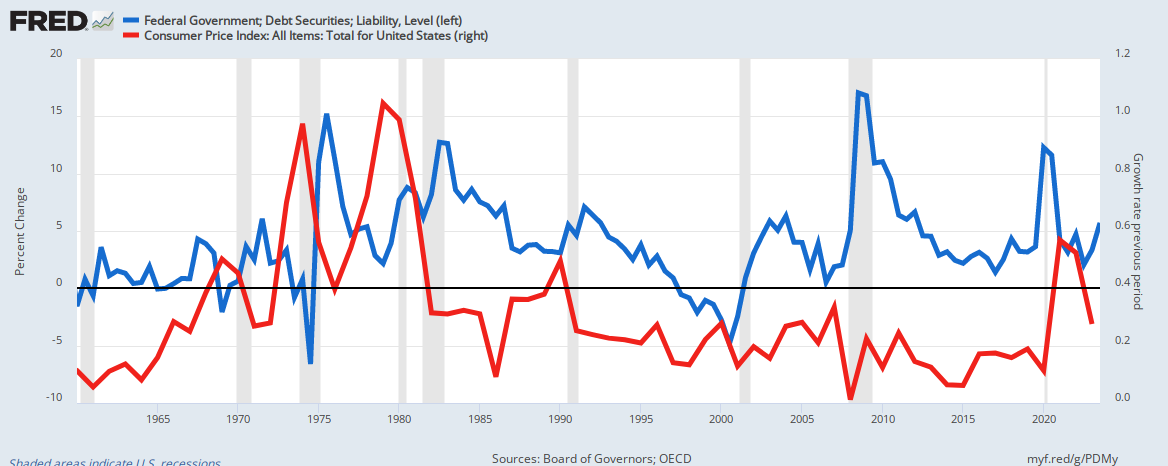
SUMMARY Inflation, i.e., a general price increase, is caused by shortages, not federal deficit spending.
Federal deficit spending can cure inflation when the spending helps cure the shortages. Example: Deficit spending to fund more oil/gas production.
Deficit reductions mathematically lead to GDP reductions by taking dollars from the private sector.
The Inflation Reduction Act will do many things, some good and some bad, but it will not reduce inflation.
——-//——-
[No rational person would take dollars from the economy and give them to a federal government that has the infinite ability to create dollars.]
Rodger Malcolm Mitchell
Monetary Sovereignty
Twitter: @rodgermitchell Search #monetarysovereignty
Facebook: Rodger Malcolm Mitchell
……………………………………………………………………..
THE SOLE PURPOSE OF GOVERNMENT IS TO IMPROVE AND PROTECT THE LIVES OF THE PEOPLE.
The most important problems in economics involve:
- Monetary Sovereignty describes money creation and destruction.
- Gap Psychology describes the common desire to distance oneself from those “below” in any socio-economic ranking, and to come nearer those “above.” The socio-economic distance is referred to as “The Gap.”
Wide Gaps negatively affect poverty, health and longevity, education, housing, law and crime, war, leadership, ownership, bigotry, supply and demand, taxation, GDP, international relations, scientific advancement, the environment, human motivation and well-being, and virtually every other issue in economics. Implementation of Monetary Sovereignty and The Ten Steps To Prosperity can grow the economy and narrow the Gaps: Ten Steps To Prosperity:
- Eliminate FICA
- Federally funded Medicare — parts A, B & D, plus long-term care — for everyone
- Social Security for all
- Free education (including post-grad) for everyone
- Salary for attending school
- Eliminate federal taxes on business
- Increase the standard income tax deduction, annually.
- Tax the very rich (the “.1%”) more, with higher progressive tax rates on all forms of income.
- Federal ownership of all banks
- Increase federal spending on the myriad initiatives that benefit America’s 99.9%
The Ten Steps will grow the economy and narrow the income/wealth/power Gap between the rich and the rest.
MONETARY SOVEREIGNTY
インフレ抑制法に関する良い悪いニュース
シネマ上院議員が署名したことで、インフレ抑制法は副大統領の投票を含め51対50のわずか多数で可決されることになる。
シネマ社は、いわゆる繰越利子税の抜け穴をふさぐことに反対していた。繰り上げ利息は長期キャピタルゲインとして扱われます。通常の所得よりも低い税率で課税されるため、プライベートエクイティ、ベンチャーキャピタル、ヘッジファンド運営者は恩恵を受ける。
おそらく彼女はその人たちと一緒にベッドに入っているのだろう。
こうした過払い番号の押し売りに追加の利益を与えることは、富裕層とそれ以外の層の間の格差を縮めたいと願う人にとっては忌まわしいことだ。したがって、これに基づいて抜け穴は塞がれる必要があります。
しかし、これは連邦税であり、連邦税は何の資金にもなりません。受け取った時点で破棄されます。したがって、連邦税を削減するもの(つまり、民間部門により多くの資金を残すもの)は、経済に利益をもたらします。
連邦税の支払いに使用されるドルは、M2 マネーサプライ措置の一部です。これらのドルが米国財務省に到達すると、通貨供給手段の一部ではなくなります。それらのドルは破壊されます。
政府が支出すると、その場限りで新たなドルが生み出されます。
金融主権を持つ財務省にはドルを無限に創造する能力があるため、「財務省はどれくらいのお金を持っているのか?」という質問には答えがありません。したがって、財務省ドルを含む指標はありません。
したがって、その抜け穴には良い面と悪い面がありますが、民間部門全体に利益をもたらすため、全体として抜け道を含めることは良いことです。

責任連邦予算委員会の数字が正しく、連邦財政赤字が3,050億ドル削減されれば、それは景気後退となるだろう。

赤字成長の削減よりもさらに悪いのは債務削減です。それはうつ病につながります。
1804 ~ 1812 年: 米国連邦債務は 48% 減少しました。大恐慌は 1807 年に始まりました。 1817
~ 1821 年: 米国連邦債務は 29% 減少しました。大恐慌は 1819 年に始まりました。
1823 ~ 1836 年: 米国連邦債務は 99% 減少しました。大恐慌は 1837 年に始まりました。
1852 ~ 1857 年: 米国連邦債務は 59% 減少しました。大恐慌は 1857 年に始まりました。 1867
~ 1873 年: 米国連邦債務は 27% 減少しました。大恐慌は 1873 年に始まりました。 1880
~ 1893 年: 米国連邦債務は 57% 減少しました。大恐慌は 1893 年に始まりました。
1920 ~ 1930 年: 米国連邦債務は 36% 減少しました。大恐慌は 1929 年に始まりました。
1997 ~ 2001 年: 米国連邦債務は 15% 減少しました。不況は 2001 年に始まりました。
CRFBは連邦債務が2兆ドル近く削減されると予測している。
これは、連邦政府が民間部門(別名「経済」)から2兆ドルを徴収し、そのドルを破壊することを意味します。
経済の最も一般的な尺度は国内総生産 (GDP) です。これは、連邦政府によるアメリカ国民全員の総支出に加え、国境を越えて流入する純ドルを測定します。
数学的に言えば、GDPが成長するには、民間部門がより多くのドルを保有する必要があります。経済の成長にはドルの供給量の増加が必要です。ドルの供給が縮小すると、GDPは縮小します。簡単な算術。
GDPが2か月以上縮小した場合を「景気後退」と呼び、不況が極めて深刻な場合を「恐慌」と呼びます。
[恐慌とは、多くの場合、3 年以上続く不況、または年間 GDP が少なくとも 10% 減少する不況と定義されます。]
CRFB は不況を予測しているが、記事の論調からはそれがわからないだろう。
議会予算局 (CBO) は、2022 年のインフレ削減法 (IRA) のスコアを発表したところです。この法律は、歳入を増やすために 2022 会計年度 (FY) の調整指示を使用することになります。処方薬のコストが下がる。新エネルギー、気候変動、医療対策に資金を提供する。そして財政赤字を削減する。
混合バッグ:
- 収益を上げることは悪いことです。それは「民間部門からより多くの資金を引き出す」ことを意味します。連邦政府はドルを必要とせず、使用もしないが、民間部門はドルを必要とし、使用する両方を行う。
- 政府が支払うことを意味するのであれば、処方薬のコストを引き下げるのは良いことだろう。残念ながら、それは製薬会社が支払うことを意味します。資金は民間部門に移され、研究開発に利用できる資金は少なくなるだろう。
- 「新エネルギー」が「再生可能」で「無公害」を意味するのであれば、新エネルギーに資金を提供するのは良いことです。
- 気候と医療の規定は、その実施方法によっては良好に見える。良いことの 1 つは、医療費負担適正化法が財政的に強化されることです。
- 「財政赤字を削減する」というのは悪い、悪い、悪い。
残念ながら、法案を和解プロセスに通すことは法的にも政治的にも必要でした。しかし、赤字を削減してもインフレは低下しません。
インフレは重要な物品やサービス、ほとんどの場合石油や食料の不足によって引き起こされます。同法の中でインフレ抑制にさらに近づいている唯一の部分は「新エネルギーへの資金提供」の部分であり、これがどのように実施されるのかを見極める必要がある。
この法案を「インフレ抑制法」と呼ぶのはユーモラスであり皮肉でもあるが、それが政府だ。
CBOスコアに基づくと、この法案は2031年までに赤字を3,050億ドル削減することになる。これには、1,000億ドルを超えるネットスコア可能な節約と、税務コンプライアンスの強化によるさらに2,000億ドルの総収入が含まれる。
繰り返しになりますが、経済が不況に陥り、ドルを減らすのではなく、より多くのドルを必要としているときに、これは国内総生産から3,050億ドルを奪ったことになります。
処方薬の節約額は新たな支出よりも大きいため、CBOは、この法案により純支出が2031年までに150億ドル近く減少し、その中には2031年には400億ドル近くの減少が含まれるとしている。
上の段落が何を言っているのかは不明だが、150億ドルか400億ドルが製薬会社から奪われ、経済にとっては損失となる。
この計画が完全に段階的に導入されれば、新たな増税の規模とほぼ同じ規模のエネルギーおよび気候変動税控除の拡大により、純税が年間約20億ドルわずかに削減されることになる。
減税は民間部門に利益をもたらします。
この法案により、10年間で3,000億ドル近くの純収益が生み出されることになる。
翻訳: この法案は、10 年間で経済に 3,000 億ドル近くの純損失をもたらすことになります。
下院で可決された再建改善法などのこれまでの和解法案とは異なり、この法案は財政赤字を削減することになる。法案の他の要素と同様に、インフレ圧力を軽減し、景気後退の可能性のリスクを軽減する可能性が高い。
上の段落は間違っています。赤字削減はインフレ圧力を軽減するものではなく、景気後退の可能性のリスクを軽減するものでもありません。
概要インフレ、つまり一般的な物価上昇は、連邦政府の財政赤字による支出ではなく、不足によって引き起こされます。
連邦政府の赤字支出が不足を解消するのに役立つ場合、その支出はインフレを治すことができます。例: より多くの石油/ガス生産に資金を提供するための支出の赤字。
赤字削減は数学的には民間部門からドルを奪うことによりGDPの削減につながります。
インフレ抑制法は、良いことも悪いことも含めて多くのことを行いますが、インフレは減少しません。
——-//——-
[理性的な人間であれば、経済からドルを取り出して、それを無限のドル創造能力を持つ連邦政府に渡すことはないだろう。]
ロジャー・マルコム・ミッチェル
通貨主権
Twitter: @rodgermitchell #monetarysovereignty を検索
Facebook: ロジャー・マルコム・ミッチェル
……………………………………………………………………..
政府の唯一の目的は、人々の生活を改善し保護することです。
経済学における最も重要な問題には次のようなものがあります。
- 貨幣主権は 貨幣の創造と破壊を表します。
- ギャップ心理学は、社会経済的ランキングにおいて「下位」の人々から距離を置き、「上」の人々に近づきたいという共通の願望を説明します。社会経済的距離は「ギャップ」と呼ばれます。
幅広い格差は、貧困、健康と長寿、教育、住宅、法律と犯罪、戦争、リーダーシップ、所有権、偏見、需要と供給、税金、GDP、国際関係、科学の進歩、環境、人間のモチベーションと幸福に悪影響を及ぼします。そして経済学における他の事実上すべての問題。 通貨主権の導入と繁栄への10のステップは、経済を成長させ、格差を縮めることができます:繁栄への10のステップ:
- FICAを排除する
- 連邦資金によるメディケア (パート A、B、D、および長期ケア) をすべての人に提供
- すべての人のための社会保障
- すべての人に無料の教育(大学院生を含む)を提供
- 学校に通うための給料
- ビジネスに対する連邦税を廃止する
- 標準的な所得税控除を毎年増加させます。
- あらゆる形態の所得に対してより高い累進税率を適用し、超富裕層(「0.1%」)にさらに課税します。
- すべての銀行の連邦所有権
- アメリカの99.9%に利益をもたらす無数の取り組みに対する連邦支出を増やす
10 のステップは経済を成長させ、富裕層とその他の人々の間の収入、富、権力の格差を縮めます。
https://www.washingtonpost.com/blogs/wonkblog/post/you-know-the-deficit-hawks-now-meet-the-deficit-owls/2011/08/25/gIQAHsoONR_blog.html
You know the deficit hawks. Now meet the deficit owls.
About 11 years ago, James K. “Jamie” Galbraith recalls, hundreds of his fellow economists laughed at him. To his face. In the White House.
 A discounted poster presenting US dollars bills in circulation is seen in the visitor center of the Bureau of Engraving and Printing in Washington on August 09, 2011. (MLADEN ANTONOV/AFP/GETTY IMAGES)
What’s more, his father, John Kenneth Galbraith, was the most famous economist of his generation: a Harvard professor, best-selling author and confidante of the Kennedy family. Jamie has embraced a role as protector and promoter of the elder’s legacy.
But if Galbraith stood out on the panel, it was because of his offbeat message. Most viewed the budget surplus as opportune: a chance to pay down the national debt, cut taxes, shore up entitlements or pursue new spending programs.
He viewed it as a danger: If the government is running a surplus, money is accruing in government coffers rather than in the hands of ordinary people and companies, where it might be spent and help the economy.
“I said economists used to understand that the running of a surplus was fiscal (economic) drag,” he said, “and with 250 economists, they giggled.”
Galbraith says the 2001 recession — which followed a few years of surpluses — proves he was right.
A decade later, as the soaring federal budget deficit has sharpened political and economic differences in Washington, Galbraith is mostly concerned about the dangers of keeping it too small. He’s a key figure in a core debate among economists about whether deficits are important and in what way. The issue has divided the nation’s best-known economists and inspired pockets of passion in academic circles. Any embrace by policymakers of one view or the other could affect everything from employment to the price of goods to the tax code.
In contrast to “deficit hawks” who want spending cuts and revenue increases now in order to temper the deficit, and “deficit doves” who want to hold off on austerity measures until the economy has recovered, Galbraith is a deficit owl. Owls certainly don’t think we need to balance the budget soon. Indeed, they don’t concede we need to balance it at all. Owls see government spending that leads to deficits as integral to economic growth, even in good times.
The term isn’t Galbraith’s. It was coined by Stephanie Kelton, a professor at the University of Missouri at Kansas City, who with Galbraith is part of a small group of economists who have concluded that everyone — members of Congress, think tank denizens, the entire mainstream of the economics profession — has misunderstood how the government interacts with the economy. If their theory — dubbed “Modern Monetary Theory” or MMT — is right, then everything we thought we knew about the budget, taxes and the Federal Reserve is wrong.
Keynesian roots
“Modern Monetary Theory” was coined by Bill Mitchell, an Australian economist and prominent proponent, but its roots are much older. The term is a reference to John Maynard Keynes, the founder of modern macroeconomics. In “A Treatise on Money,” Keynes asserted that “all modern States” have had the ability to decide what is money and what is not for at least 4,000 years.
This claim, that money is a “creature of the state,” is central to the theory. In a “fiat money” system like the one in place in the United States, all money is ultimately created by the government, which prints it and puts it into circulation. Consequently, the thinking goes, the government can never run out of money. It can always make more.
This doesn’t mean that taxes are unnecessary. Taxes, in fact, are key to making the whole system work. The need to pay taxes compels people to use the currency printed by the government. Taxes are also sometimes necessary to prevent the economy from overheating. If consumer demand outpaces the supply of available goods, prices will jump, resulting in inflation (where prices rise even as buying power falls). In this case, taxes can tamp down spending and keep prices low.
But if the theory is correct, there is no reason the amount of money the government takes in needs to match up with the amount it spends. Indeed, its followers call for massive tax cuts and deficit spending during recessions.
Warren Mosler, a hedge fund manager who lives in Saint Croix in the U.S. Virgin Islands — in part because of the tax benefits — is one proponent. He’s perhaps better know for his sports car company and his frequent gadfly political campaigns (he earned a little less than one percent of the vote as an independent in Connecticut’s 2010 Senate race). He supports suspending the payroll tax that finances the Social Security trust fund and providing an $8 an hour government job to anyone who wants one to combat the current downturn.
The theory’s followers come mainly from a couple of institutions: the University of Missouri-Kansas City’s economics department and the Levy Economics Institute of Bard College, both of which have received money from Mosler. But the movement is gaining followers quickly, largely through an explosion of economics blogs. Naked Capitalism, an irreverent and passionately written blog on finance and economics with nearly a million monthly readers, features proponents such as Kelton, fellow Missouri professor L. Randall Wray and Wartberg College professor Scott Fullwiler. So does New Deal 2.0, a wonky economics blog based at the liberal Roosevelt Institute think tank.
Their followers have taken to the theory with great enthusiasm and pile into the comment sections of mainstream economics bloggers when they take on the theory. Wray’s work has been picked up by Firedoglake, a major liberal blog, and the New York Times op-ed page. “The crisis helped, but the thing that did it was the blogosphere,” Wray says. “Because, for one thing, we could get it published. It’s very hard to publish anything that sounds outside the mainstream in the journals.”
Most notably, Galbraith has spread the message everywhere from the Daily Beast to Congress. He advised lawmakers including then-House Speaker Nancy Pelosi (D-Calif.) when the financial crisis hit in 2008. Last summer he consulted with a group of House members on the debt ceiling negotiations. He was one of the handful of economists consulted by the Obama administration as it was designing the stimulus package. “I think Jamie has the most to lose by taking this position,” Kelton says. “It was, I think, a really brave thing to do, because he has such a big name, and he’s so well-respected.”
Wray and others say they, too, have consulted with policymakers, and there is a definite sense among the group that the theory’s time is now. “Our Web presence, every few months or so it goes up another notch,” Fullwiler says.
A divisive theory
The idea that deficit spending can help to bring an economy out of recession is an old one. It was a key point in Keynes’s “The General Theory of Employment, Interest and Money.” It was the chief rationale for the 2009 stimulus package, and many self-identified Keynesians, such as former White House adviser Christina Romer and economist Paul Krugman, have argued that more is in order. There are, of course, detractors.
A key split among Keynesians dates to the 1930s. One set of economists, including the Nobel laureates John Hicks and Paul Samuelson, sought to incorporate Keynes’s insights into classical economics. Hicks built a mathematical model summarizing Keynes’s theory, and Samuelson sought to wed Keynesian macroeconomics (which studies the behavior of the economy as a whole) to conventional microeconomics (which looks at how people and businesses allocate resources). This set the stage for most macroeconomic theory since. Even today, “New Keynesians,” such as Greg Mankiw, a Harvard economist who served as chief economic adviser to George W. Bush, and Romer’s husband, David, are seeking ways to ground Keynesian macroeconomic theory in the micro-level behavior of businesses and consumers.
Modern Monetary theorists hold fast to the tradition established by “post-Keynesians” such as Joan Robinson, Nicholas Kaldor and Hyman Minsky, who insisted Samuelson’s theory failed because its models acted as if, in Galbraith’s words, “the banking sector doesn’t exist.”
The connections are personal as well. Wray’s doctoral dissertation was advised by Minsky, and Galbraith studied with Robinson and Kaldor at the University of Cambridge. He argues that the theory is part of an “alternative tradition, which runs through Keynes and my father and Minsky.”
And while Modern Monetary Theory’s proponents take Keynes as their starting point and advocate aggressive deficit spending during recessions, they’re not that type of Keynesians. Even mainstream economists who argue for more deficit spending are reluctant to accept the central tenets of Modern Monetary Theory. Take Krugman, who regularly engages economists across the spectrum in spirited debate. He has argued that pursuing large budget deficits during boom times can lead to hyperinflation. Mankiw concedes the theory’s point that the government can never run out of money but doesn’t think this means what its proponents think it does.
Technically it’s true, he says, that the government could print streams of money and never default. The risk is that it could trigger a very high rate of inflation. This would “bankrupt much of the banking system,” he says. “Default, painful as it would be, might be a better option.”
Mankiw’s critique goes to the heart of the debate about Modern Monetary Theory — and about how, when and even whether to eliminate our current deficits.
When the government deficit spends, it issues bonds to be bought on the open market. If its debt load grows too large, mainstream economists say, bond purchasers will demand higher interest rates, and the government will have to pay more in interest payments, which in turn adds to the debt load.
To get out of this cycle, the Fed — which manages the nation’s money supply and credit and sits at the center of its financial system — could buy the bonds at lower rates, bypassing the private market. The Fed is prohibited from buying bonds directly from the Treasury — a legal rather than economic constraint. But the Fed would buy the bonds with money it prints, which means the money supply would increase. With it, inflation would rise, and so would the prospects of hyperinflation.
“You can’t just fund any level of government that you want from spending money, because you’ll get runaway inflation and eventually the rate of inflation will increase faster than the rate that you’re extracting resources from the economy,” says Karl Smith, an economist at the University of North Carolina. “This is the classic hyperinflation problem that happened in Zimbabwe and the Weimar Republic.”
The risk of inflation keeps most mainstream economists and policymakers on the same page about deficits: In the medium term — all else being equal — it’s critical to keep them small.
Economists in the Modern Monetary camp concede that deficits can sometimes lead to inflation. But they argue that this can only happen when the economy is at full employment — when all who are able and willing to work are employed and no resources (labor, capital, etc.) are idle. No modern example of this problem comes to mind, Galbraith says.
“The last time we had what could be plausibly called a demand-driven, serious inflation problem was probably World War I,” Galbraith says. “It’s been a long time since this hypothetical possibility has actually been observed, and it was observed only under conditions that will never be repeated.”
Critics’ rebuttals
According to Galbraith and the others, monetary policy as currently conducted by the Fed does not work. The Fed generally uses one of two levers to increase growth and employment. It can lower short-term interest rates by buying up short-term government bonds on the open market. If short-term rates are near-zero, as they are now, the Fed can try “quantitative easing,” or large-scale purchases of assets (such as bonds) from the private sector including longer-term Treasuries using money the Fed creates. This is what the Fed did in 2008 and 2010, in an emergency effort to boost the economy.
According to Modern Monetary Theory, the Fed buying up Treasuries is just, in Galbraith’s words, a “bookkeeping operation” that does not add income to American households and thus cannot be inflationary.
“It seemed clear to me that . . . flooding the economy with money by buying up government bonds . . . is not going to change anybody’s behavior,” Galbraith says. “They would just end up with cash reserves which would sit idle in the banking system, and that is exactly what in fact happened.”
The theorists just “have no idea how quantitative easing works,” says Joe Gagnon, an economist at the Peterson Institute who managed the Fed’s first round of quantitative easing in 2008. Even if the money the Fed uses to buy bonds stays in bank reserves — or money that’s held in reserve — increasing those reserves should still lead to increased borrowing and ripple throughout the system.
Mainstreamers are equally baffled by another claim of the theory: that budget surpluses in and of themselves are bad for the economy. According to Modern Monetary Theory, when the government runs a surplus, it is a net saver, which means that the private sector is a net debtor. The government is, in effect, “taking money from private pockets and forcing them to make that up by going deeper into debt,” Galbraith says, reiterating his White House comments.
The mainstream crowd finds this argument as funny now as they did when Galbraith presented it to Clinton. “I have two words to answer that: Australia and Canada,” Gagnon says. “If Jamie Galbraith would look them up, he would see immediate proof he’s wrong. Australia has had a long-running budget surplus now, they actually have no national debt whatsoever, they’re the fastest-growing, healthiest economy in the world.” Canada, similarly, has run consistent surpluses while achieving high growth.
To even care about such questions, Galbraith says, marked him as “a considerable eccentric” when he arrived from Cambridge to get a PhD at Yale, which had a more conventionally Keynesian economics department. Galbraith credits Samuelson and his allies’ success to a “mass-marketing of economic doctrine, of which Samuelson was the great master . . . which is something the Cambridge school could never have done.”
The mainstream economists are loath to give up any ground, even in cases such as the so-called “Cambridge capital controversy” of the 1960s. Samuelson debated post-Keynesians and, by his own admission, lost. Such matters have been, in Galbraith’s words, “airbrushed, like Trotsky” from the history of economics.
But MMT’s own relationship to real-world cases can be a little hit-or-miss. Mosler, the hedge fund manager, credits his role in the movement to an epiphany in the early 1990s, when markets grew concerned that Italy was about to default. Mosler figured that Italy, which at that time still issued its own currency, the lira, could not default as long as it had the ability to print more liras. He bet accordingly, and when Italy did not default, he made a tidy sum. “There was an enormous amount of money to be made if you could bring yourself around to the idea that they couldn’t default,” he says.
Later that decade, he learned there was also a lot of money to be lost. When similar fears surfaced about Russia, he again bet against default. Despite having its own currency, Russia defaulted, forcing Mosler to liquidate one of his funds and wiping out much of his $850 million in investments in the country. Mosler credits this to Russia’s fixed exchange rate policy of the time and insists that if it had only acted like a country with its own currency, default could have been avoided.
But the case could also prove what critics insist: Default, while technically always avoidable, is sometimes the best available option.
https://www.washingtonpost.com/blogs/wonkblog/post/you-know-the-deficit-hawks-now-meet-the-deficit-owls/2011/08/25/gIQAHsoONR_blog.html
あなたは赤字タカ派を知っています。今度は赤字のフクロウに会いましょう。
約11年前、ジェームズ・K・“ジェイミー”・ガルブレイスは、何百人もの同僚の経済学者が彼を笑ったと回想する。彼の顔に。ホワイトハウスにて。
流通している米ドル紙幣を示す割引ポスター。2011年8月9日、ワシントン彫刻印刷局のビジターセンターで見られる。(ムラデン・アントノフ/AFP/ゲッティイメージズ)さらに、彼の父親であるジョン・ケネス・ガルブレイスは、ハーバード大学教授、ベストセラー作家、そしてケネディ家の親友であり、彼の世代で最も有名な経済学者でした。ジェイミーは、長老の遺産の保護者および推進者としての役割を受け入れました。
しかし、もしガルブレイスがパネルで目立っていたとしたら、それは彼の風変わりなメッセージのせいでした。ほとんどの人が、財政黒字は好機、つまり国債を返済し、減税し、権利を強化し、あるいは新たな支出プログラムを追求するチャンスであると考えていた。
彼はそれを危険だとみなした。政府が黒字を出している場合、お金は一般の人々や企業の手に渡らずに政府の金庫に蓄積され、そこで使われて経済を助ける可能性がある。
同氏は、「エコノミストは黒字の継続が財政(経済)の足かせになることを以前は理解していたと私が言った。すると、250人のエコノミストは笑い出した」と述べた。
ガルブレイス氏は、数年間の黒字の後に続いた2001年の景気後退が、自分の正しさを証明したと語る。
10年後、連邦財政赤字の急増によりワシントンでの政治的、経済的差異が先鋭化する中、ガルブレイス氏は主に財政赤字を小さくしすぎることの危険性を懸念している。同氏は、財政赤字が重要かどうか、そしてどのような意味で重要かという経済学者の間の中心的な議論の中心人物である。この問題は国内で最も著名な経済学者の意見を二分し、学界の一部の熱意を刺激した。政策立案者がどちらかの見解を受け入れれば、雇用から物価、税法に至るまであらゆるものに影響を与える可能性がある。
赤字を緩和するために今すぐ歳出削減と歳入増加を求める「赤字タカ派」や、経済が回復するまで緊縮策を延期したい「赤字ハト派」とは対照的に、ガルブレイス氏は赤字フクロウだ。フクロウは確かに、すぐに予算のバランスをとる必要があるとは思っていません。実際、彼らは私たちがバランスを取る必要があることをまったく認めていません。フクロウは、財政赤字につながる政府支出は、たとえ景気が良いときであっても、経済成長に不可欠であると考えています。
この用語はガルブレイスのものではありません。この言葉は、ミズーリ大学カンザスシティ校のステファニー・ケルトン教授によって造語されたもので、彼はガルブレイスとともに、議会議員、シンクタンクの住人、経済学の専門家の主流全体など、すべての人が経済学者であると結論付けた少数の経済学者グループの一員である。 —政府が経済とどのように関わるかを誤解している。「現代貨幣理論」またはMMTと呼ばれる彼らの理論が正しいなら、予算、税金、連邦準備制度について私たちが知っていると思っていたことはすべて間違っていることになる。
ケインズ主義のルーツ
「現代貨幣理論」は、オーストラリアの経済学者で著名な提唱者であるビル・ミッチェルによって造られましたが、そのルーツははるかに古いです。この用語は、現代マクロ経済学の創始者であるジョン・メイナード・ケインズに由来しています。ケインズは『貨幣論』の中で、「すべての近代国家」は少なくとも 4,000 年間にわたって、何が貨幣で何が貨幣でないかを決定する能力を持っていたと主張した。
お金は「国家の創造物」であるというこの主張は、この理論の中心です。米国で導入されているような「法定通貨」システムでは、すべてのお金は最終的に政府によって作成され、政府がそれを印刷して流通させます。したがって、政府の資金が不足することは決してない、と考えられます。常にもっと多くのものを生み出すことができます。
だからといって税金が不要だというわけではありません。実際、税金はシステム全体を機能させる鍵となります。税金を支払う必要があるため、人々は政府が印刷した通貨を使用せざるを得ません。税金は経済の過熱を防ぐために必要な場合もあります。消費者の需要が利用可能な商品の供給を上回ると、価格が急騰し、インフレ(購買力が低下しても価格が上昇する状態)が発生します。この場合、税金によって支出が抑制され、価格が低く抑えられる可能性がある。
しかし、この理論が正しければ、政府が受け取る資金の量が支出の量と一致する必要がある理由はない。実際、その支持者たちは不況時の大規模な減税と財政赤字支出を要求している。
米領バージン諸島のセントクロイ島に住むヘッジファンドマネージャーのウォーレン・モズラー氏は、税制上の優遇措置も受けて、支持者の一人だ。彼はおそらく、自身のスポーツカー会社と、頻繁に行ったあぶのような政治活動でよく知られている(2010年のコネチカット州上院議員選挙では無所属として得票率1パーセント弱を獲得した)。彼は、社会保障信託基金の財源である給与税を一時停止し、現在の不況と闘うために政府の仕事を希望する人に時給 8 ドルを提供することを支持している。
この理論の支持者は主に、ミズーリ大学カンザスシティ校の経済学部と吟遊詩人大学のレヴィ経済研究所といういくつかの機関から来ており、どちらもモズラーから資金提供を受けている。しかし、主に経済ブログの爆発的な普及により、この運動は急速にフォロワーを獲得している。『Naked Capitalism』は、毎月100万人近くの読者を抱える金融と経済について不遜で情熱的に書かれたブログで、ケルトン氏、同じくミズーリ州教授のL・ランドール・レイ氏、ウォートバーグ大学教授のスコット・フルワイラー氏らの支持者が登場する。リベラル派のシンクタンク、ルーズベルト研究所を拠点とする奇妙な経済ブログ、ニューディール 2.0 も同様だ。
彼らのフォロワーはこの理論を熱狂的に受け入れており、主流の経済ブロガーがこの理論を取り上げるとコメント欄に殺到します。レイの作品は、大手リベラルブログである Firedoglake や、ニューヨーク・タイムズの論説ページで取り上げられている。「危機は助けになりましたが、それを引き起こしたのはブロゴスフィアでした」とレイ氏は言います。「一つには、それを出版できるからです。主流から外れているようなものをジャーナルに掲載するのは非常に難しいことです。」
最も注目すべきは、ガルブレイスがデイリー・ビースト紙から議会まであらゆる場所にメッセージを広めたことだ。同氏は2008年に金融危機が発生した際、当時の下院議長ナンシー・ペロシ氏(民主党、カリフォルニア州)を含む議員らに助言を行った。昨夏には債務上限交渉について下院議員のグループと協議した。同氏は、景気刺激策を策定する際にオバマ政権から相談を受けた数少ないエコノミストの1人だった。「ジェイミーがこのポジションに就くことで失うものが最も大きいと思う」とケルトンは言う。「これは本当に勇気のいることだったと思います。なぜなら彼はとても有名で、とても尊敬されているからです。」
レイ氏らは、自分たちも政策立案者らと相談しており、グループ内には今がこの理論の時代であるという明確な感覚があると述べている。「当社の Web での存在感は、数か月ごとにさらにレベルアップします」と Fullwiler 氏は言います。
意見が分かれる理論
赤字支出が経済を不況から脱却させるのに役立つという考えは古い。これはケインズの「雇用、利子、貨幣の一般理論」の重要なポイントでした。これは2009年の景気刺激策の主な根拠であり、元ホワイトハウス顧問クリスティーナ・ローマー氏や経済学者ポール・クルーグマン氏など、ケインジアンを自認する多くの人々は、さらなる政策が必要だと主張してきた。もちろん、批判する人もいます。
ケインズ派の間で重要な意見が分かれたのは 1930 年代に遡ります。ノーベル賞受賞者のジョン・ヒックスやポール・サミュエルソンを含む一組の経済学者は、ケインズの洞察を古典経済学に取り入れようとした。ヒックスはケインズの理論を要約する数学的モデルを構築し、サミュエルソンはケインズのマクロ経済学(経済全体の動きを研究する)と従来のミクロ経済学(人々と企業がどのように資源を配分するかを調べる)を融合させようとしました。これにより、それ以降のほとんどのマクロ経済理論の舞台が整いました。今日でも、ジョージ・W・ブッシュの首席経済顧問を務めたハーバード大学の経済学者グレッグ・マンキューやローマーの夫デービッドなどの「ニューケインジアン」たちは、企業のミクロレベルの行動にケインズのマクロ経済理論を根付かせる方法を模索している。そして消費者。
現代の金融理論家は、ジョーン・ロビンソン、ニコラス・カルドー、ハイマン・ミンスキーなどの「ポスト・ケインジアン」によって確立された伝統を堅持しており、サミュエルソンの理論はガルブレイスの言葉を借りれば「銀行セクターは存在しない」かのようにモデルが機能するため失敗したと主張した。 」
つながりも個人的なものです。レイの博士論文はミンスキーの助言を受け、ガルブレイスはケンブリッジ大学でロビンソンとカルドアに師事した。彼は、この理論は「ケインズ、私の父、そしてミンスキーに伝わるもう一つの伝統」の一部であると主張する。
また、現代貨幣理論の支持者はケインズを出発点とし、不況時には積極的な財政赤字支出を主張しているが、彼らはそのようなタイプのケインズ主義者ではない。赤字支出の拡大を主張する主流派経済学者でさえ、現代貨幣理論の中心的な教義を受け入れることに消極的である。クルーグマン氏を例に挙げてみましょう。彼は定期的にさまざまな分野の経済学者たちと熱心な議論を交わしています。同氏は好況期に巨額の財政赤字を追求するとハイパーインフレにつながる可能性があると主張してきた。マンキュー氏は、政府が資金を使い果たすことは決してないという理論の要点を認めているが、これは理論支持者が考えているような意味ではないと考えている。
厳密に言えば、政府が大量のお金を印刷してもデフォルトは起こらないというのは本当だ、と彼は言う。リスクは、非常に高いインフレ率を引き起こす可能性があることだ。そうなれば「銀行システムの大部分が破綻する」だろうと彼は言う。「デフォルトは、苦痛ではあるものの、より良い選択肢かもしれません。」
マンキュー氏の批判は、現代貨幣理論、そして現在の赤字をいつ、どのようにして解消するか、さらには解消するかどうかについての議論の核心に触れている。
政府の赤字が支出されると、公債を発行して公開市場で購入されます。主流派エコノミストらによると、債務負担が大きくなりすぎると、債券購入者はより高い金利を要求し、政府はより多くの利払いを支払わなければならなくなり、結果的に債務負担が増大するという。
このサイクルから抜け出すために、国の通貨供給と信用を管理し、金融システムの中心に位置するFRBは、民間市場を迂回して、より低い金利で債券を購入することができるだろう。FRBが財務省から債券を直接購入することは禁止されており、これは経済的制約というよりは法的な制約である。しかし、FRBは発行した通貨で債券を購入することになるので、通貨供給量が増加することになる。それに伴いインフレ率も上昇し、ハイパーインフレの可能性も高まるだろう。
「お金を使って、望むレベルの政府に資金を供給することはできません。なぜなら、暴走インフレが起こり、最終的にはインフレ率が経済から資源を抽出する速度よりも速く上昇するからです」とカール氏は言う。スミス氏はノースカロライナ大学の経済学者。「これはジンバブエとワイマール共和国で起きた典型的なハイパーインフレ問題です。」
インフレのリスクがあるため、ほとんどの主流派経済学者や政策立案者は財政赤字について同じ考えを持っている。中期的には、他のすべてが同じであれば、財政赤字を小さく保つことが重要だ。
現代通貨派の経済学者らは、財政赤字がインフレを引き起こす場合があることを認めている。しかし彼らは、これは経済が完全雇用のとき、つまり働く能力と意欲のあるすべての人が雇用され、遊休している資源(労働力、資本など)がないときだけ起こり得る、と主張している。この問題の現代的な例は思い浮かびません、とガルブレイス氏は言います。
「需要主導型の深刻なインフレ問題と呼べるような問題が最後に起こったのは、おそらく第一次世界大戦の時でしょう」とガルブレイス氏は言う。「この仮説上の可能性が実際に観測されてから長い年月が経ちましたが、それは決して繰り返されない条件下でのみ観測されました。」
批評家の反論
ガルブレイスらによれば、FRBが現在行っている金融政策は機能しないという。FRBは通常、成長と雇用を拡大するために2つの手段のうちの1つを使用します。公開市場で短期国債を買い取ることで短期金利を下げることができる。現在のように短期金利がゼロに近い場合、FRBは「量的緩和」、つまりFRBが創出した資金を使って長期国債を含む民間部門から資産(債券など)を大規模に購入することを試みることができる。 。これはFRBが2008年と2010年に景気刺激のための緊急の取り組みとして行ったことだ。
現代貨幣理論によれば、ガルブレイスの言葉を借りれば、FRBが米国債を買い取ることは単なる「帳簿操作」に過ぎず、アメリカの家計に収入を追加しないため、インフレを引き起こすことはあり得ない。
「それは私には明らかだった。。。国債を買い占めて経済にお金をあふれさせる。。。誰かの行動を変えるわけではありません」とガルブレイス氏は言う。「最終的には銀行システムに眠ったままの現金準備金が残るだけであり、まさにそれが実際に起こったことだ。」
2008年にFRBの量的緩和第1弾を管理したピーターソン研究所のエコノミスト、ジョー・ギャニオン氏は、理論家たちは「量的緩和がどのように機能するのか全く分かっていない」と語る。たとえFRBが債券購入に使った資金が準備預金に残っていたとしても――あるいは準備金として保有されている資金――これらの準備金を増やせば、やはり借入の増加とシステム全体への波及につながるはずだ。
主流派は、財政黒字それ自体が経済に悪影響を与えるという理論の別の主張にも同様に困惑している。現代貨幣理論によれば、政府が黒字を出している場合、政府は純貯蓄者となり、これは民間部門が純債務者であることを意味します。ガルブレイス氏は、事実上、政府は「私腹から金を引き出し、さらに借金を重ねることでその埋め合わせを強いている」と述べ、ホワイトハウスのコメントを繰り返した。
主流派の人々は、ガルブレイスがクリントンにこの議論を提示したときと同じように、今でもこの議論を面白いと感じている。「それに答えるには2つの言葉があります。オーストラリアとカナダです」とギャニオンは言う。「ジェイミー・ガルブレイスがそれらを調べれば、自分が間違っているという証拠がすぐに見つかるでしょう。オーストラリアは現在長期にわたって財政黒字を維持しており、実際には国家債務は一切なく、世界で最も急速に成長している健全な経済国だ。」カナダも同様に、高い成長を達成しながら一貫した黒字を計上してきました。
ガルブレイスによれば、そのような疑問を気にすることさえ、彼がケンブリッジから博士号を取得するためにエール大学に来たとき、彼は「かなりの変わり者」であるとマークされたという。エール大学にはより伝統的なケインズ派の経済学部があった。ガルブレイスは、サミュエルソンとその同盟者の成功は、「サミュエルソンが偉大な達人であった経済主義のマスマーケティングのおかげである」と信じている。。。これはケンブリッジ学校では決してできなかったことです。」
主流派経済学者は、1960年代のいわゆる「ケンブリッジ資本論争」のような場合でさえ、いかなる根拠も放棄することを好まない。サミュエルソンはポストケインジアンについて議論したが、彼自身の認めによれば敗北した。ガルブレイスの言葉を借りれば、そのような問題は経済学の歴史から「トロツキーのようにエアブラシで描かれてきた」。
しかし、MMT 自体と現実世界の事件との関係には、多少の当たり外れがある可能性があります。ヘッジファンドマネージャーのモズラー氏は、市場がイタリアが債務不履行に陥るのではないかとの懸念を強めた1990年代初頭の啓蒙運動における自身の役割を信じている。モズラー氏は、当時まだ独自通貨リラを発行していたイタリアは、リラを増刷する能力がある限りデフォルトすることはないと考えた。彼はそれに応じて賭け、イタリアが債務不履行にならなかったとき、かなりの金額を稼いだ。「債務不履行はあり得ないという考えを持ち込めれば、莫大な金が儲かるはずだった」と彼は言う。
その 10 年後、彼は失われるべきお金もたくさんあることを知りました。ロシアについても同様の懸念が浮上したとき、同氏は再び債務不履行に賭けた。ロシアは独自の通貨を持っていたにもかかわらず債務不履行に陥り、モズラー氏は自身のファンドの1つを清算せざるを得なくなり、同国への投資額8億5000万ドルの大半が消滅した。モズラー氏はこれは当時のロシアの固定為替政策のおかげだとし、ロシアが自国通貨を持つ国のように行動していればデフォルトは避けられただろうと主張する。
しかしこの訴訟は、批評家が主張していることを証明する可能性もある。デフォルトは技術的には常に回避可能であるが、場合によっては利用可能な最良の選択肢であるということだ。

0 件のコメント:
コメントを投稿