| ||||||||||||||||||||||||



| ||||||||||||||||||||||||

https://stephaniekelton.substack.com/p/magical-thinking-monetary-thinking
Magical Monetary Thinking at the Fed Killed SVB
By L. Randall Wray and Stephanie Kelton
Today's post is a joint effort, written with my friend and former teacher/colleague, Randy Wray. Randy was a student of Hyman Minsky (and author of many books, including Why Minsky Matters.) We were trading e-mails about the collapse of Silicon Valley Bank (SVB) over the weekend, and I suggested that we team up and write something for readers of The Lens. So here it is.
Before we turn to the story about how the Federal Reserve helped to blow up Silicon Valley Bank (SVB), let's take a step back. It really is just another case of history repeating itself.
In the early postwar era, Keynesian ideas dominated policymaking. Fiscal policy—what Congress and the Treasury do—was front and center, focusing mostly on managing aggregate demand. While monetary policy had been freed from wartime constraints by the Treasury Accord of 1951, in practice the Federal Reserve played a mostly supportive role. Keynesians doubted that spending was sufficiently interest-sensitive to warrant assigning an important role to the Fed in demand management. In practice, the Fed kept the fed funds rate between 1 and 3% for most of the decade, but it raised rates to about 3.5% and then 4% as the economy went into double-dip recessions between 1958 and 1960.
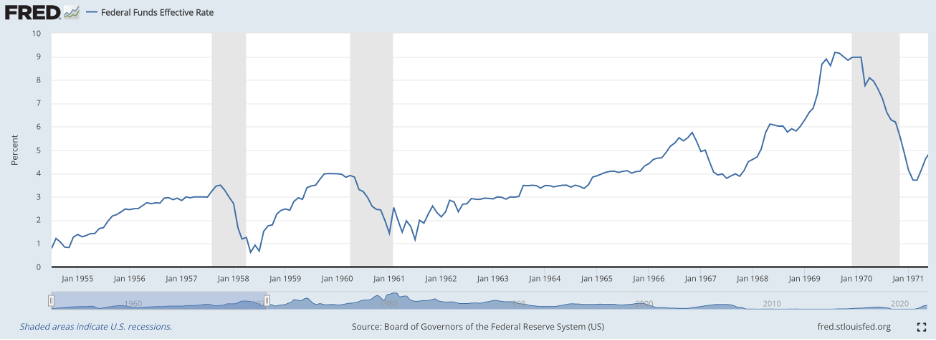
By the mid 1960s, the Fed had taken rates above 5.5 percent, triggering the so-called credit crunch of 1966. It was the first financial crisis of the postwar period and one that required the first important postwar intervention by the Federal Reserve.
As Minsky described it:
By the end of August, the disorganization in the municipals market, rumors about the solvency and liquidity of savings institutions, and the frantic position-making efforts by money-market banks generated what can be characterized as a controlled panic. The situation clearly called for Federal Reserve action.
The Fed was forced to intervene as a lender-of-last resort to rescue the municipal bond market, which in effect validated the very practices that had stretched market liquidity. As a result of Fed intervention, confidence was restored, and the economy continued to expand. Before long, new financial practices would emerge and be validated, leverage ratios increased, memories of the "big one" (Great Depression) faded, and markets came to expect that big government and the Fed would come to the rescue as needed.
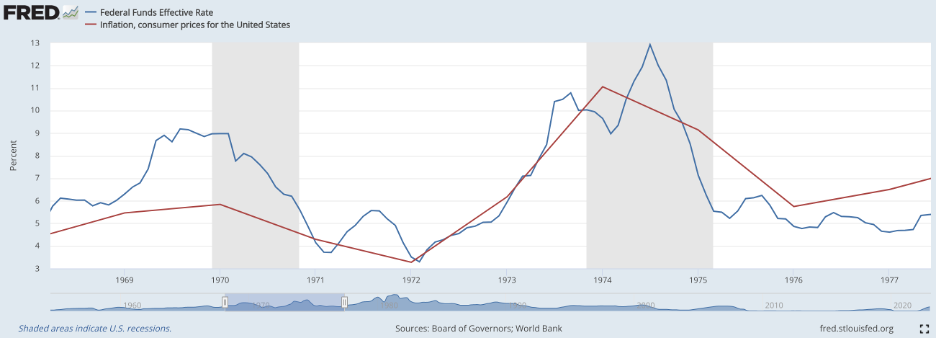
After the brief U-turn (Dec. 1966-July 1967) to ease the credit crunch, the Fed embarked on an aggressive rate hiking campaign that added 500-basis points of tightening between August 1967 and August 1969. It was a policy error that triggered another financial crisis, this time in the commercial paper market. The rate hikes led to a default (and then bankruptcy) by Penn Central railroad.
In December 1969, the economy entered a recession. Although inflation briefly retreated, it returned and then accelerated following the first oil price shock in 1973. With inflation moving higher, the Fed again hiked aggressively, taking the fed funds rate up by 850-basis points (July 1972-July 1974). Franklin National Bank failed in October, 1974—the biggest bank failure up to that time. And the economy crashed into the deepest postwar recession up to that period, ushering in the economy's first stagflation.
As Minsky wrote in Stabilizing an Unstable Economy:
During 1974-75 more banks failed, and more assets were affected than in any other period since WWII. Moreover, the Real Estate Investment Trust (REIT) industry, with some $20 billion in assets, experienced a severe run that led to many bankruptcies…
In addition, 1975 was marked by New York city's financial crisis, the failure of W.T. Grant and company, the need for Consolidated Edison to sell assets to New York state in order to meet payment commitments, and the walking bankruptcy of Pan Am.
Keynesianism fell out of favor largely because it offered no cure for the malaise: the inflation should be treated with fiscal austerity while the unemployment called for a dose of fiscal stimulus.
The Beginning of Magical Thinking
As inflation picked up at the end of the 1970s, the Fed embraced a new view: Monetarism. Fiscal policy would focus on deficit reduction, while the central bank would target the growth rate of the money supply. Monetarists argued that the Phillips Curve trade-off was illusory. There was a "natural rate of unemployment," and the central bank could bring down inflation without pain by reducing the rate of growth of the money supply.
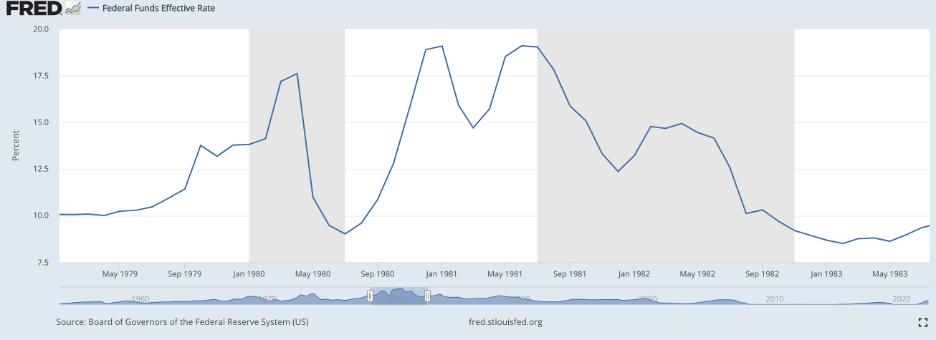
In 1979, a new sheriff came to town—Long Tall Paul Volcker. Interest rates were raised to 17% in May 1980 and to 19% by January 1981. And once again we experienced a financial crisis—one that spilled over into the rest of the world—along with a deep (double-dip) recession.
Minsky observed:
In 1982, a virtual epidemic of savings banks failed, and in midyear a spectacular bank failure—that of Penn Square in Oklahoma City—led to large losses at some of the citadels of American banking…. Then, in mid-1982 the Mexican peso collapsed, and default on multi-billion-dollar debts by a spate of Latin American countries seemed imminent.
Two years later, in May 1984, Continental Illinois Bank failed after a run on deposits. It was the biggest bank failure up to that point.
The most severe financial crisis since the Great Depression wiped out half the thrifts in the United States. And the knock-on effects from the rate hikes hit developing country debt, putting all the big banks that were holding that debt underwater by the end of the decade. But unlike the "tough love" shown to the S&Ls, the big banks were thrown various lifelines—lower interest rates, "extend and pretend" (banking supervisors didn't look to closely at their books, hoping they wouldn't crater), and safe government debt that allowed the big banks to recover.
Part of the reason for hesitancy to resolve insolvent banks was the understanding that the FDIC could not possibly cover losses on the deposits of technically insolvent big banks—the FSLIC (insurer for the S&Ls) had already gone bankrupt—coupled with the fact that Congress was in no mood for a "bail-out."
Volcker's grand monetarist experiment—letting go of interest rates and targeting the money supply to try to bring down inflation—forever changed the banking industry. The Jimmy Stewart savings & loan sector was allowed to recess into a distant memory of Christmas past. Banks started treating borrowers like one-night stands and loans like toxic waste, something to bundle up and quickly offload onto pension funds and other investors. Underwriting became passé. No need for regulations, either, because securities will be rated by professionals. Bank regulation and supervision took a long vacation. The age of securitization had arrived.
In 1987, Minsky wrote, "That which can be securitized will be securitized":
Securitization reflects a change in the weight of market and bank funding capabilities: market funding capabilities have increased relative to the funding abilities of banks and depository financial intermediaries. It is in part a lagged response to monetarism. The fighting of inflation by constraining monetary growth opened opportunities for nonbanking financing techniques. The monetarist way of fighting inflation, which preceded the 1979 "practical monetarism" of [then–Federal Reserve Chairman Paul] Volcker, puts banks at a competitive disadvantage in terms of the short-term growth of their ability to fund assets…. The interest rates of the monetarist experiment destroyed the funding capabilities of the thrift "industry" in the United States by undermining the value of mortgages and thus impairing their net worth. The ability of the thrifts to create mortgages was unimpaired even as their ability to fund holdings was greatly impaired…. Although modern securitization may have begun with the thrifts, it has now expanded well beyond the thrifts and mortgage loans.
For policymakers, however the Volcker fiasco exposed a problem. Central banks can't control the money supply (despite the carnage, the Fed never hit its money targets), and money supply growth isn't related to inflation (money grew rapidly as inflation finally began to drop). What, then, should they target?
Enter more magical thinking as Greenspan took the reins in 1987. Greenspan embraced the view that inflation is driven by expected inflation, not by observable economic phenomena. Let's target inflation expectations, which can be manipulated to control actual inflation! But we need some signal to communicate the Fed's intentions. The Fed henceforth would openly announce the fed funds rate (believe it or not, the target was kept top secret until 1994). And the Fed would use the fed funds rate to indicate its intentions.
Sure, we know that spending isn't very sensitive to interest rates, but expectations are, and that's what matters. A rate hike will magically prevent inflation by creating the expectation that there will be no inflation. Believing that the Fed will prevent inflation will prevent inflation! As Peter Pan put it: "All the world is made of faith, and trust, and pixie dust."
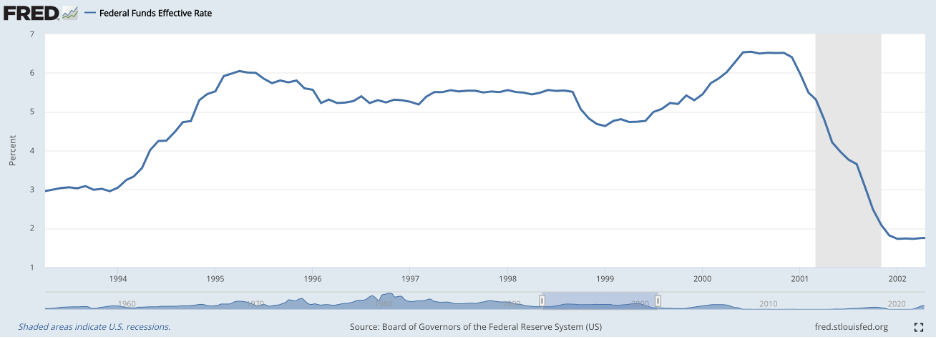
After Greenspan's 1987 fiasco (the biggest stock market crash ever as rates were quickly pushed up from about 6% to nearly 7.5%), the Fed learned that a long series of small hikes is the best way to communicate intentions. Markets can gradually adjust to changed interest rate environments. Policy would change slowly—once headed in one direction, the Fed would continue to move in that direction for many months.

So the Fed continued to push rates up until it got the first Bush recession (1990/91)—followed by the first jobless recovery ever. A housing and tech stock boom finally restored reasonable growth in the mid-1990s during Clinton's second term. Greenspan briefly fretted about irrational exuberance, but the Fed showed restraint, waiting until July 1999 to restart rate hikes.

Before long, the dot.com bubble burst, and the economy was in recession (2001). Another jobless recovery ensued. Continuing a familiar pattern, new financial bubbles emerged—this time in commodities, housing and equities—helping the economy pick up steam.
In 2004, the Fed began a series of rate hikes that eventually culminated in the Global Financial Crisis. Washington Mutual failed in September 2008—the biggest bank failure up to that point. (Are you beginning to see a pattern?)

The rate hikes rippled through the financial system, driving mortgages underwater and pushing the economy into the most protracted economic downturn since the Great Depression. It took roughly seven years to claw back the jobs that were lost in the Great Recession. It was the ugliest "recovery" of all time.
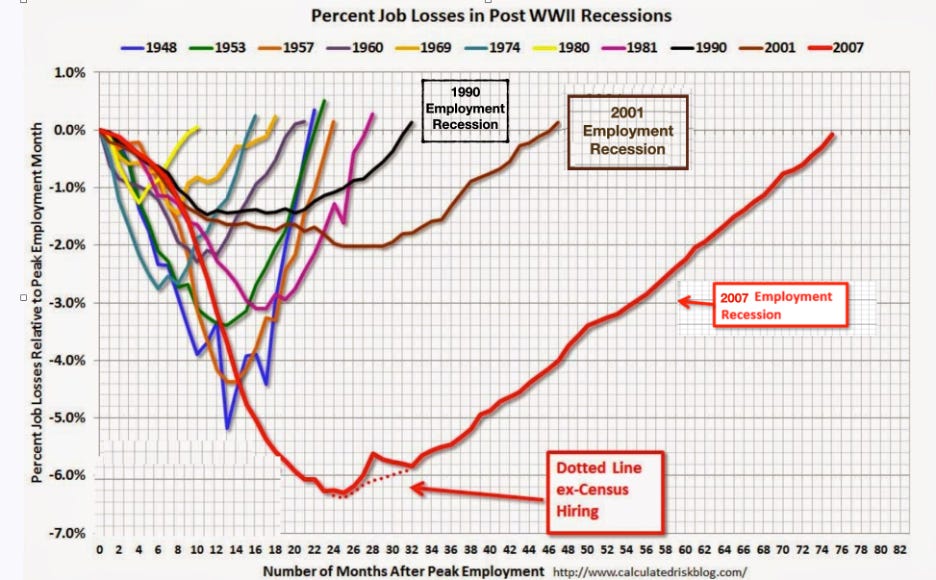
Income inequality soared. And for the better part of a decade, the Federal Reserve waged battle against an inflation rate that was considered too low. The whole world watched as the Fed (and other central banks) attempted to raise expectations of inflation to bring actual inflation up to the 2% target. But neither zero interest rate policy (ZIRP) nor trillions of dollars of Quantitative Easing (QE) succeeded in restoring inflation to the Fed's target.
Fed policy was trumped by expectations that had converged to the new reality. There was no inflationary pressure and no matter what the Fed did it could not get markets on board with its magical thinking.
Gradually, markets adapted to persistently low interest rates. In this new environment, leverage made sense. Holding long term assets made sense again. Financial markets bubbled. People got rich. Regulations were relaxed. The Trump administration exempted medium-sized banks like SVB from stricter rules. Banking supervisors went to sleep.
And then came a global pandemic.
After a bout of outright deflation in 2020, inflation picked up. But expectations remained stubbornly low. Clearly, expectations were not driving inflation, even as headline inflation rose well above 2 percent. Markets accepted Chairman Powell's view that it was a transitory annoyance.
One year ago, the FOMC still expected interest rates to be in the 2% range for 2023 with inflation in the 2-3% range. Holding long maturity treasury bonds and mortgage-backed securities still seemed safe. Why waste money hedging interest rate risk? The Fed wasn't even bothering to stress-test bank portfolios for losses due to rising interest rates.
But inflation didn't go away. Financial markets were signaling that inflation expectations remained, as they say, "well anchored," but actual inflation wasn't responding in kind. Eventually, the Fed decided it was time to return to the old playbook: quickly raise rates to show that the Fed is serious about bringing down inflation. However, financial markets were highly leveraged and portfolios were built on a perceived pact that the Fed would not destroy equity by over tightening.
But that raised a problem: banks that loaded up on safe government bonds and mortgage-backed securities had to either move them into the hold to maturity (HTM) category, or recognize losses due to largely non-hedged positions in longer term assets that could not be unloaded. Short sellers were able to pick out the banks with vulnerabilities and then start rumors that led to runs on uninsured deposits.
In the past week, we've had the second (SVB) and third (Signature) biggest bank failures up to this point. First Republic bank is being rescued by a consortium of 11 banks. Credit Suisse is a basket case. New bank failure records may be waiting in the wings.
Quick and decisive action by the Fed and FDIC can always avert calamity, but they failed to do so in the case of SVB. To prevent systemic crisis, FDIC insurance must be expanded to all bank deposits regardless of size. We need to move—quickly—to a system of FDIC insured banks, not FDIC insured depositors. Unfortunately, we may find that insurance will have to be provided outside the commercial banking system—to deposit-like liabilities of shadow banks (as we did for the money market mutual funds in the GFC).
It could get ugly. It will be a "bail-out", no matter what the President says. We hope he sticks to his promise that shareholders and management will not be bailed-out. We hope that he claws-back bonuses and investigates the lax supervisors at the Fed. There's growing evidence that Chairman Powell and others at the top of the regulatory food chain are at least partly responsible for the lack of oversight that allowed banks like SVB to take on risk. Perhaps some early retirements and resignations are in order.
So what is to be done?
We see two routes for long-term solutions:
Continue to embrace the free market. Reduce government-provided backstops. Continue to rely on monetary policy for aggregate demand management: raise rates to fight inflation, and then lower them to ease the damage of recession. Allow the bank failures that rate hikes inevitably generate. Learn to live with periodic financial crises. And expect a great depression every generation—which was the norm before the New Deal with its regulation of financial institutions and tremendous increase of the size of government.
Stabilize interest rates—stop using them for demand management and instead focus on financial stability. Regulate and supervise financial institutions. Retain backstops like deposit insurance and lender of last resort when necessary to stop crises from spreading. And restore a proper role for fiscal policy in managing aggregate demand.
ランダル・レイ&ステファニー・ケルトン「"マジカル・マネタリー・シンキング":SVBを殺したFRBの呪術的思考」(2023年3月18日)

今日の記事は、私の友人で、かつての教師、同僚だったランダル・レイとの共同執筆になる。ランディはハイマン・ミンスキーの教え子で、『Why Minsky Matters』(邦訳)など多くの著作がある。彼とは週末にシリコンバレー銀行(SVB)の破綻についてメールでやり取りをしていて、『The Lens』(当ブログ)の読者に向けて二人で何か書いてみないかと提案した。というわけで、以下がその本文だ。
米連邦準備制度理事会(FRB)がシリコンバレー銀行(SVB)の破綻の一因だったという話をする前に、一歩引いて考えてみよう。これはまさに、歴史は繰り返されるという事例の一つに過ぎない。
戦後間もない頃、ケインズ主義的な考え方が政策立案の主流だった。財政政策は、議会と財務省が行うものであり、総需要を管理することに主眼が置かれていた。金融政策は、1951年の財務省協定〔アコード〕によって戦時中の制約から解放されたが、実際にはFRBが担う役割ははほとんど補助的なものにとどまった。ケインズ主義者は、需要管理においてFRB に重要な役割を与えるほど支出が金利の変化に影響されやすいとは考えなかった。実際には、FRB はその後の10 年間の大半でフェデラル・ファンドレート(政策金利)を1~3%の間に維持したが、1958 年から1960 年にかけては経済がW字型(二番底)不況に陥ったため、金利を約3.5%に引き上げ、その後4%に引き上げた。

1960年代半ばまでにFRBは金利を5.5%以上に引き上げ、いわゆる1966年の信用収縮の引き金になった。これは戦後初の金融危機であり、FRBによる戦後初の重要な介入を必要とした。
ミンスキーは次のように説明している。
8月末には、地方自治体債市場の混乱、貯蓄金融機関の支払能力や流動性にかんする流言、さらには、短期金融市場取引銀行の狂乱じみたポジション形成努力などがパニックを惹起したが、これは統制パニックと呼ぶことができる。この状況は明らかに連銀の出動を要請するものであった。

FRBは地方債市場を救済するために最後の貸し手として介入せざるを得なかったが、これは事実上、市場の流動性を水増していた慣行そのものを正当化することになった。FRBの介入の結果、信用は回復し、経済は拡大し続けた。やがて、新たな金融慣行が出現し、認証され、レバレッジ比率が高まり、「大いなる危機」(大恐慌)の記憶が薄れ、市場は、大きな政府とFRBが必要に応じて救済に乗り出すことを期待するようになった。
信用収縮を緩和するための短期間のUターン(1966年12月~1967年7月)の後、FRBは積極的な利上げキャンペーンに乗り出し、1967年8月から1969年8月にかけて500ベーシスポイントの利上げによる引き締めを行った。この政策の誤りは、今度はコマーシャルペーパー(CP)市場で、再び金融危機を引き起こすことになった。利上げは、ペン・セントラル鉄道のデフォルト(そして倒産)につながった。
1969年12月、経済は不況に突入した。インフレは一時的に低下したが、1973年の第一次オイルショックで再び上昇し、その後加速した。インフレの上昇に伴い、FRBは再び積極的な利上げを行い、金利を850ベーシスポイント引き上げた(1972年7月から1974年7月)。1974年10月、フランクリン・ナショナル銀行が破綻した。当時の銀行の破綻としては過去最大級だった。そして経済は戦後最大の不況に陥り、初のスタグフレーションが始まった。

ミンスキーは『Stabilizing an Unstable Economy(不安定な経済の安定化)』(邦題『金融不安定性の経済学—歴史・理論・政策』)で次のように書いている。
1974−75年の間、さらに多くの銀行が倒れ、第2次大戦後かつて例をみないほど多くの資産が影響を被った。さらに、不動産投資信託(REIT)業では200億ドル余りの資産を保有しながら厳しい経営状況にあり、多数が倒産と廃業に追い込まれた。…
加えて、1975年は、ニューヨーク市の財政危機、W.T.グラント・アンド・カンパニーの破産、コンソリデイティド・エディソンが支払のためニューヨーク州に資産を売却せざるをえない破目になったこと、さらに、パンナムが破産一歩手前に追い込まれたこと、等によって特記される年となった。ミンスキー、1989:17-18

ケインズ主義が支持されなくなったのは、インフレーションには緊縮財政を、失業には財政刺激策をという処方箋では問題の解決にならなかったことが大きい。
呪術的思考(マジカル・シンキング)のはじまり
1970年代末にインフレが進行すると、FRBは新たな見解を取り入れることになった。マネタリズムの登場だ。財政政策は財政赤字の削減に重点を置き、中央銀行はマネーサプライの成長率を目標にするようになった。マネタリストは、フィリップス曲線のトレードオフは幻想であると主張した。「自然失業率」(natural rate of unemployment)なるものが存在し、中央銀行はマネーサプライの成長率を下げることで、痛みを伴うことなくインフレを退治することができる、と。
1979年、町に新しい保安官がやってきたーー長身のポール・ボルカーその人である〔1987年までFRB議長を務めた〕。金利は1980年5月に17%、1981年1月には19%に引き上げられた。そして、再び金融危機が発生し、それが世界中に波及して、深刻な(W字型)不況に陥った。

ミンスキーは次のように述べている:
1982年には貯蓄銀行の流行が事実上終わりを迎え、同年半ば、衝撃的な銀行倒産ーーオクラホマシティのペン・スクエアの倒産ーーがアメリカ銀行界の砦ともいえるいくつかの銀行…に大きな損失を与える結果となった。さらに、1982年央、メキシコ・ペソの暴落があり、多数の南米諸国による数十億ドルに達する債務不履行がいまにも火を噴きそうな状況であった。
その2年後の1984年5月、コンチネンタル・イリノイ銀行が預金の取り崩しの末に破綻した。それまでで最大の銀行破綻だった。
大恐慌以来最も深刻な金融危機によって、米国の貯蓄銀行の半数が破綻した。また、金利引き上げの波及効果は途上国の債務を直撃し、10年後にはその債務を保有していた大手銀行がすべて水面下に沈むことになった。しかし、S&Lに対して示された「愛のムチ」とは異なり、大手銀行に対しては、低金利、「先延ばしして見て見ぬふり(extend and pretend)」(銀行監督者は、破綻しないことを願い、帳簿をきちんとチェックしなかった)、安全な国債といったさまざまなライフラインが投じられ、大手銀行は回復することができた。
破綻した銀行の救済を躊躇した理由の一部には、FDIC(米連邦預金保険公社)が表向きは破綻している大手銀行の預金損失をカバーすることは不可能であり、FSLIC(S&Lの保険会社)はすでに破綻していたこと、加えて議会が「救済」を望んでいなかったことが挙げられる。

ボルカーが行った壮大なマネタリストの実験、すなわち金利を引き上げるに任せ、マネーサプライを目標にしてインフレを沈静化しようとしたことは、銀行業界に恒久的な変化をもたらした。ジミー・スチュワートの貯蓄貸付(S&L)部門は、過去のクリスマスの遠い記憶と成り下がった [1] 。
銀行は借り手を一夜限りの恋人のように、融資を有毒廃棄物のように扱うようになった(セット売りにして、年金基金や他の投資家に素早く売却された)。引受業務は時代遅れになった。証券はプロが評価するものだから、規制も必要ないとされ、銀行の規制と監督は長いバカンスを取得した。証券化の時代が到来したのである。
1987年にミンスキーは「証券化が可能なものは、何でも証券化されるだろう」と述べている。
証券化は、市場と銀行それぞれの資金調達能力の比重の変化を反映している。市場の資金調達能力は、銀行と預託金融仲介機関の資金調達能力と比べて増大している。これはマネタリズムに対する遅行的な反応でもある。マネーサプライの成長への抑制によるインフレ対策は、ノンバンクの資金調達手法に機会を与えた。1979年のボルカー(当時FRB議長)の「実践的マネタリズム」に先立つマネタリズム流インフレ対策によって、銀行は資金調達能力の短期的成長という点で競争上不利な立場に置かれる…。マネタリズムの実験下で、金利は住宅ローンの価値を低下させ、その結果純資産に損害を与えた。これにより、米国における貯蓄機関「産業」の資金調達能力は壊滅的なものとなった。もっとも、貯蓄機関の資金調達能力が大きく損なわれても、住宅ローンを融資する能力は損なわれていない……。現代の証券化は貯蓄機関から始まったかもしれないが、現在では貯蓄機関と住宅ローンの枠を大きく超えて広がっている。
しかし、政策立案者にとっては、ボルカーの失策によってある問題が明るみになった。中央銀行はマネーサプライをコントロールできないし(大惨事にもかかわらず、FRBはマネーサプライの目標を達成しなかった)、マネーサプライの増加はインフレと関係がないことが分かったのである(マネーサプライが急速に増加したのは、インフレがようやく低下し始めたときである)。では、何を目標にすればいいのだろうか?
1987年、グリーンスパンが議長の座に着くと、さらに呪術的な思考が登場する。グリーンスパンは、インフレは観察可能な経済現象によってではなく、インフレへの期待によって引き起こされるという見解を採用した。期待インフレ率を目標とし、それを操作することで実際のインフレをコントロールしよう!というわけだ。しかし、それにはFRB の意思を伝えるシグナルが必要になる。これ以降、FRBはフェデラル・ファンドレート(政策金利)を公に発表するようになる(信じられないかもしれないが、1994年まで金利目標は極秘にされていたのだ)。そしてFRBは、政策金利を使って、その意思を示すようになる。
確かに、支出は金利の変動にあまり敏感ではないが、期待は金利に敏感であり、そしてこのことが重要になる。利上げは、インフレが起きないという期待を抱かせることで、魔法のようにインフレを防ぐことができる。FRBがインフレを防ぐと信じることが、インフレを防ぐ!ピーター・パンが言ったように 、「この世はすべて、信仰と信頼と妖精の粉でできている。」 [2]
1987年にグリーンスパンの政策が大失敗に終わった後(金利が約6%から7.5%近くまで急激に引き上げられ、史上最大の株式市場の暴落となった)、FRBは、金利を長期にわたって少しずつ引き上げることが、自らの意思を伝える最善の方法だと学んだ。徐々にであれば、市場は金利環境の変化に適応することができる。政策がゆっくりと変化し、いったんある方向に向かえば、FRBは何カ月もその方向に動き続けるだろう。

FRBは、ブッシュ〔シニア〕政権初の不況(1990〜91年)が訪れるまで金利を上げ続けたが、その後、史上初の雇用なき景気回復(jobless recovery)を経験した。1990年代半ば、クリントン政権の2期目に、住宅ブームとハイテク株ブームによって、ようやく妥当な成長に戻った。グリーンスパンは一時、根拠なき熱狂(irrational exuberance)を心配したが、FRBは抑制的な態度を示し、1999年7月まで利上げを再開するのを待った。

やがてドットコムバブルが崩壊し、不況に陥ったが(2001年)、その後またもや雇用なき回復が続いた。おなじみのパターンで、コモディティ(商品)、住宅、株式といった新たな金融バブルが発生し、経済を加熱した。
2004年、FRBは一連の利上げを開始したが、最後は世界金融危機(GFC)に終わった。2008年9月にワシントン・ミューチュアルが破綻し、それまでで最大の銀行破綻となった。(パターンが見えてきただろうか?)

利上げは金融システムに波及し、住宅ローン需要は水面下に沈み、経済は世界恐慌(1929-39年)以来最も長引く低迷に陥った。大不況(2007-09年)で失われた雇用を取り戻すには、およそ7年の歳月を要した。それは、史上最も醜い「回復」だった。

所得格差は急激に拡大した。そして10年間のうちの大半を、FRBは低すぎるとされるインフレ率との戦いに明け暮れた。FRB(および他の中央銀行)がインフレ期待を高めて実際のインフレ率を目標の2%に引き上げようとするのを世界中が見ていた。しかし、ゼロ金利政策(ZIRP)も何兆ドルもの量的緩和(QE)も、インフレ率をFRBの目標水準まで回復させることはできなかった。
FRBの政策は、新しい現実に収斂した期待に打ち消されたのである。インフレ圧力はなく、FRBが何をしても、その呪術的思考に対する市場の賛同を得ることはできなかった。
市場は徐々に低金利の継続に適応していった。この新しい環境では、レバレッジが意味を持つようになった。長期的な資産の保有が再び意味を持つことになったのである。そして金融市場はバブル化し、人々は裕福になり、規制は緩和された。トランプ政権は、SVBのような中堅銀行をより厳しい規則から除外した。銀行監督当局は眠りについていた。
そして、〔新型コロナウイルス感染症による〕世界的なパンデミックが起こった。
2020年には一時に完全なデフレに陥ったが、その後インフレに戻った。しかし、インフレ期待は頑なに低いままだった。消費者物価指数は2%を大きく上回っていたのであり、インフレ期待が実際のインフレを牽引していないことは明らかだ。市場は、「一過性の煩わしさである」というパウエル議長の見解を受け入れた。
1年前のFOMC(連邦公開市場委員会)では、2023年のインフレ率を2~3%台に維持するのに必要な金利は2%台と予想されていた。長期の国債や住宅ローン担保証券を保有することはまだ安全だと見なされていた。金利リスクをヘッジするためにお金を浪費する必要はない。FRBは、金利上昇による銀行のポートフォリオの損失について、ストレステストをする気もなかった。
しかし、インフレは解消されなかった。金融市場は、インフレ期待が依然として「十分に押さえつけれられている」というシグナルを発していたが、実際のインフレは同じ反応を見せなかった。やがてFRBは、FRBがインフレ抑制に真剣に取り組んでいることを示すため、速やかに金利を引き上げるという従来のやり方に戻る時が来たと判断した。しかし、金融市場は高度にレバレッジが効いており、FRBが過剰な引き締めによって株式を破壊することはないという暗黙の了解のもとにポートフォリオが構築されていた。
そしてここで問題が生じる。安全な国債や住宅ローン担保証券を大量に抱え込んだ銀行は、それらを満期まで保有する(HTM)カテゴリーに移すか、あるいは売却できない長期資産でほとんどヘッジされていないポジションのために損失を計上しなければならなかった。空売り筋は脆弱性のある銀行を選び出し、噂を流して無保険預金の取り崩しにつなげることができた。
この1週間で、これまでで2番目(SVB)と3番目(Signature)に大きな銀行の破綻が起きた。ファースト・リパブリック・バンクは11行の銀行からなるコンソーシアムからの救済を受けていおり、クレディ・スイスは弱体化している。新たな銀行破綻の記録がひそかに待ち受けているかもしれない。
FRBとFDICによる迅速かつ果断な行動は、常に災難を回避することができるが、SVBのケースでは破滅を回避できなかった。システミックな危機を防ぐには、FDICの保険を規模に関係なくすべての銀行預金に拡大する必要がある。FDIC保険に加入している預金者のシステムではなく、FDIC保険に加入している銀行のシステムに(早急に)移行する必要がある。残念ながら、商業銀行システムの外で、シャドーバンクの預金に類似する負債に保険をかける必要が生じるかもしれない(世界金融危機でマネーマーケット投資信託に対して行ったように)。
ひどいことになる可能性はある。大統領が何と言おうと、これは「救済措置」となる。人々は、大統領が株主や経営陣は救済しないという約束を守ることを望んでいる。大統領がボーナスを取り戻し、FRBの杜撰な監督者らを調査することを望んでいる。パウエル議長ら規制の食物連鎖の頂点に立つ者たちが、SVBのような銀行にリスクを負わせた監督不行き届きの少なくとも一因であるという証拠が増えつつある。早期の退職と辞任が妥当ではないだろうか。
では、どうすればいいのか?
長期的な解決策としては、我々には2つの道がある。
1.引き続き自由市場を信奉する。政府による緊急支援策を削減する。総需要管理のために金融政策に依存し続ける。インフレと戦うために金利を上げ、不況のダメージを和らげるために金利を下げる。利上げが必然的に引き起こす銀行の破綻を許容する。定期的な金融危機と共存することを学ぶ。そして、一世代ごとに大不況がやってくるだろう。ニューディール政策によって金融機関を規制し、政府の規模を大幅に拡大するようになるまでは、それが常態だった。
2.金利を安定化させる。金利を需要管理のために用いるのではなく、金融の安定に焦点を当てる。金融機関の規制と監督を行う。危機の拡大を防ぐため、要すれば預金保険や最後の貸し手といった緊急対策を維持する。総需要管理における財政政策の適切な役割を回復させる。
L. Randall Wray and Stephanie Kelton, "Magical Monetary Thinking at the Fed Killed SVB", The Lens, March 18, 2023.
〔翻訳:goethe_chan〕
一般社団法人経済学101は皆様の寄付によって賄われています。活動方針にご賛同頂ける方がいましたら、以下の「気に入ったらサポート」タブからの温かい支援をお待ちしています。

0 件のコメント:
コメントを投稿