|
|---|
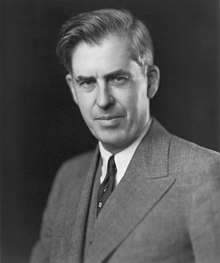 |
|
| 33rd Vice President of the United States |
|---|
In office
January 20, 1941 – January 20, 1945 |
| President | Franklin D. Roosevelt |
|---|
| Preceded by | John Nance Garner |
|---|
| Succeeded by | Harry S. Truman |
|---|
| 10th United States Secretary of Commerce |
|---|
In office
March 2, 1945 – September 20, 1946 |
| President | Franklin D. Roosevelt
Harry S. Truman |
|---|
| Preceded by | Jesse H. Jones |
|---|
| Succeeded by | W. Averell Harriman |
|---|
| 11th United States Secretary of Agriculture |
|---|
In office
March 4, 1933 – September 4, 1940 |
| President | Franklin D. Roosevelt |
|---|
| Preceded by | Arthur M. Hyde |
|---|
| Succeeded by | Claude R. Wickard |
|---|
| Personal details |
|---|
| Born | October 7, 1888
Orient, Iowa, U.S. |
|---|
| Died | November 18, 1965 (aged 77)
Danbury, Connecticut, U.S. |
|---|
| Political party | Republican (before 1924)
Progressive (1924–1932)
Democratic (1932–1947)
Progressive (1947–1953) |
|---|
| Spouse(s) | |
|---|
| Children | 3 |
|---|
| Relatives | Henry Cantwell Wallace (Father) |
|---|
| Education | Iowa State University (BS) |
|---|
| Signature |  |
|---|
The oldest son of
Henry Cantwell Wallace, who served as the U.S. Secretary of Agriculture from 1921 to 1924, Henry A. Wallace was born in
Adair County, Iowa in 1888. After graduating from
Iowa State University in 1910, Wallace worked as a writer and editor for his family's farm journal,
Wallaces' Farmer. He also founded the
Hi-Bred Corn Company, a
hybrid corn company that eventually became extremely successful. Wallace displayed an intellectual curiosity about a wide array of subjects, including statistics and economics, and he explored various religious and spiritual movements, including
Theosophy. After the death of his father in 1924, Wallace increasingly drifted away from the
Republican Party, and he supported
Democratic presidential nominee
Franklin D. Roosevelt in the
1932 election.
Wallace served as Secretary of Agriculture under President Roosevelt from 1933 to 1940. He strongly supported Roosevelt's
New Deal and presided over a major shift in federal agricultural policy, implementing measures designed to curtail agricultural surpluses and ameliorate rural poverty. Overcoming strong opposition from conservative party leaders, Wallace was nominated for Vice President at the
1940 Democratic National Convention. The Democratic ticket of Roosevelt and Wallace triumphed in the
1940 presidential election, and Wallace continued to play an important role in the Roosevelt administration before and during
World War II. At the
1944 Democratic National Convention, conservative party leaders defeated Wallace's bid for re-nomination, replacing him on the Democratic ticket with
Harry S. Truman. The ticket of Roosevelt and Truman won the
1944 presidential election, and in early 1945 Roosevelt appointed Wallace as Secretary of Commerce.
Roosevelt died in April 1945 and was succeeded by Truman. Wallace continued to serve as secretary of commerce until September 1946, when Truman fired him for delivering a speech urging conciliatory policies towards the
Soviet Union.
[1] Wallace and his supporters established the Progressive Party and launched a
third-party campaign for president. The Progressive party platform called for conciliatory policies towards the Soviet Union,
desegregation of public schools,
racial and
gender equality,
free trade, a
national health insurance program, and other left-wing policies. Accusations of
Communist influences and Wallace's association with controversial Theosophist figure
Nicholas Roerich undermined his campaign, and he received just 2.4 percent of the nationwide popular vote. Wallace broke with the Progressive Party in 1950 over the
Korean War, and in 1952 he published
Where I Was Wrong, in which he declared the Soviet Union to be "utterly evil." Wallace largely fell into political obscurity after the early 1950s, though he continued to make public appearances until the year before his death in 1965.
During
World War I, Wallace and his father helped the
United States Food Administration (USFA) to develop policies to increase hog production.
[20] After USFA director
Herbert Hoover abandoned the hog production policies favored by the Wallaces, the elder Wallace joined an effort to deny Hoover the presidential nomination at the
1920 Republican National Convention. Partly as a response to Hoover, Wallace published
Agricultural Prices, in which he advocated government policies to control agricultural prices.
[21] He also warned farmers of an imminent price collapse following the end of the war. Wallace's prediction proved accurate, as the postwar period saw the beginning of a farm crisis that extended into the 1920s. Reflecting a broader decrease in agricultural prices, the price of corn fell from $1.68 per bushel in 1918 to 42 cents per bushel in 1921.
[22] Wallace proposed various remedies to combat the farm crisis, which he believed stemmed primarily from overproduction by farmers. Among his proposed policies was the "
ever-normal granary," a policy under which the government buys and stores agricultural surpluses during periods of low agricultural prices and sells those surpluses during periods of high agricultural prices.
[23]
Both Wallaces backed the
McNary–Haugen Farm Relief Bill, which would have required the federal government to market and export agricultural surpluses in foreign markets. The bill was defeated in large part due to the opposition of President
Calvin Coolidge, who became president after President Harding's death in 1923.
[24] Wallace's father died in October 1924, and in the November
1924 presidential election, Henry Wallace voted for
Progressive third party candidate
Robert La Follette.
[25] Partly due to Wallace's continued lobbying, Congress passed the McNary–Haugen bill in 1927 and 1928, but President Coolidge vetoed the bill both times.
[26] Dissatisfied with both major party candidates in the
1928 presidential election, Wallace tried to get Governor
Frank Lowden of Illinois to seek the presidency. He ultimately supported Democratic nominee
Al Smith, but Republican Herbert Hoover won a landslide victory.
[27][28] The onset of the Great Depression during
Hoover's administration devastated Iowa farmers as farm income fell by two-thirds from 1929 to 1932.
[29] In the
1932 presidential election, Wallace campaigned for Democrat
Franklin D. Roosevelt, who favored the agricultural policies of Wallace and economist
M. L. Wilson.
[30]
After Roosevelt defeated Hoover in the 1932 presidential election, he appointed Wallace as secretary of agriculture.
[31] Despite his past affiliation with the Republican Party, Wallace strongly supported President Roosevelt and his
New Deal domestic program, and he became a registered member of the Democratic Party in 1936.
[32] Upon taking office, Wallace appointed
Rexford Tugwell, a member of Roosevelt's "
Brain Trust" of important advisers, as his deputy secretary. Though Roosevelt was initially focused primarily on addressing the banking crisis, Wallace and Tugwell convinced the president of the necessity of quickly passing major agricultural reforms.
[33] Roosevelt, Wallace, and
House Agriculture Committee Chairman
John Marvin Jones rallied congressional support around the
Agricultural Adjustment Act, which established the Agricultural Adjustment Administration (AAA).
[34] The aim of the AAA was to raise prices for commodities through artificial scarcity by using a system of "domestic allotments" that set the total output of agricultural products. The AAA paid land owners subsidies for leaving some of their land idle.
[35] Farm incomes increased significantly in the first three years of the New Deal, as prices for commodities rose.
[36] After the passage of the Agricultural Adjustment Act, the Department of Agriculture became the single largest department in the federal government.
[37]
The Supreme Court struck down the Agricultural Adjustment Act in the 1936 case of
United States v. Butler. Wallace strongly disagreed with the Court's holding that agriculture was a "purely local activity" and thus could not be regulated by the federal government, stating that "were agriculture truly a local matter in 1936, as the Supreme Court says it is, half of the people of the United States would quickly starve."
[38] Nonetheless, he quickly proposed a new agriculture program designed to meet the Supreme Court's objections; under the new program, the federal government would reach rental agreements with farmers to plant
green manure rather than crops like corn and wheat. Less than two months after the Supreme Court handed down
United States v. Butler, Roosevelt signed the
Soil Conservation and Domestic Allotment Act of 1936 into law.
[39] In the
1936 presidential election, Wallace served as an important campaign surrogate for Roosevelt's successful re-election campaign.
[40]
In 1935, Wallace fired general counsel
Jerome Frank and some other Agriculture Department officials who sought to help
Southern sharecroppers by issuing a reinterpretation of the Agricultural Adjustment Act.
[41] Wallace became more committed to aiding sharecroppers and other groups of impoverished farmers as a result of a trip to the South in late 1936, after which he wrote, "I have never seen among the peasantry of Europe poverty so abject as that which exists in this favorable cotton year in the great cotton states." He helped lead passage of the
Bankhead–Jones Farm Tenant Act of 1937, which authorized the federal government to issue loans to tenant farmers so that they could purchase land and equipment. The law also established the
Farm Security Administration,
[a] which was charged with ameliorating rural poverty, within the Agriculture Department.
[42] The failure of Roosevelt's
Judicial Procedures Reform Bill of 1937, the onset of the
Recession of 1937–38, and a wave of strikes led by
John L. Lewis badly damaged the Roosevelt administration's ability to pass major legislation after 1936.
[43] Nonetheless, Wallace helped lead passage of the
Agricultural Adjustment Act of 1938, which implemented Wallace's ever-normal granary plan.
[44] Between 1932 and 1940, the Agriculture Department grew from 40,000 employees and an annual budget of $280 million to 146,000 employees and an annual budget of $1.5 billion.
[45]
A Republican
wave in the
1938 elections effectively brought an end to the New Deal legislative program, and foreign policy increasingly became the focus of the Roosevelt administration.
[46] Unlike many Midwestern progressives, Wallace supported
internationalist policies, such as Secretary of State
Cordell Hull's efforts to lower tariffs.
[47] He joined Roosevelt in attacking the aggressive actions of
Nazi Germany and the
Empire of Japan, and in one speech derided
Nazi eugenics as a "mumbo-jumbo of dangerous nonsense."
[48] After the outbreak of
World War II in September 1939, Wallace supported Roosevelt's program of military build-up and, anticipating future hostilities with Germany, pushed for initiatives like a
synthetic rubber program and closer relations with
Latin American countries.
[49]
Election of 1940
As Roosevelt refused to commit to either retiring or seeking re-election
[b] during his second term, supporters of Wallace and other leading Democrats such as Vice President
John Nance Garner and Postmaster General
James Farley laid the groundwork for a presidential campaign in the
1940 election.
[50] After the outbreak of
World War II in Europe in September 1939, Wallace publicly endorsed a third term for Roosevelt.
[51] Though Roosevelt never declared his presidential candidacy, the
1940 Democratic National Convention nominated him for president.
[52] Shortly after being nominated, Roosevelt informed his supporters that he favored Wallace for Vice President. Wallace had a strong base of support among farmers, had been a loyal lieutenant in both domestic and foreign policy, and, unlike some other high-ranking New Dealers like
Harry Hopkins, was in good health.
[53] However, due to his liberal stances and former affiliation with the Republican Party, many conservative Democratic party leaders disliked Wallace.
[54] Roosevelt convinced
James F. Byrnes,
Paul V. McNutt, and other contenders for the Democratic vice presidential nomination to support Wallace, but conservative Democrats rallied around the candidacy of Speaker of the House
William B. Bankhead of Alabama. Eventually, Wallace gained the party's vice presidential nomination by a wide margin over Bankhead.
[55]
Though many Democrats were disappointed by the nomination of Wallace, his selection was generally well-received by newspapers.
Arthur Krock of
The New York Times wrote that Wallace was "able, thoughtful, honorable–the best of the New Deal type."
[56] Wallace left office as Secretary of Agriculture in September 1940, and was succeeded by Undersecretary of Agriculture
Claude R. Wickard.
[57] The Roosevelt campaign settled on a strategy of keeping Roosevelt largely out of the fray of the election, leaving most of the campaigning to Wallace and other surrogates. Wallace was dispatched to the Midwest, giving speeches in states like Iowa, Illinois, and Missouri. He made foreign affairs the main focus of his campaigning, telling one audience that "the replacement of Roosevelt ... would cause [Adolf]
Hitler to rejoice."
[58] Although both campaigns predicted a close election, Roosevelt won 449 of the 531
electoral votes and won the popular vote by a margin of nearly ten points.
[59] After the election, Wallace toured
Mexico as a goodwill ambassador, delivering a well-received speech regarding
Pan-Americanism and Roosevelt's
Good Neighbor policy. On his return from the trip, Wallace convinced the
Rockefeller Foundation to establish an agricultural experiment center in Mexico, which would be the first of many such centers established by the Rockefeller Foundation and the
Ford Foundation.
[60][c]
Tenure
Wallace was sworn in as Vice President on January 20, 1941. He quickly grew frustrated with his ceremonial role as the presiding officer of the
United States Senate, the one duty assigned to the Vice President by the
Constitution.
[62] Roosevelt named Wallace chairman of the
Board of Economic Warfare (BEW)
[d] and of the
Supply Priorities and Allocation Board (SPAB) in 1941.
[64] These appointments gave Wallace a key role in organizing Roosevelt's program of military mobilization. One journalist noted that Roosevelt made Wallace the first "Vice President to work really as the number two man in government–a conception of the vice presidency popularly held but never realized."
[65] Reflecting Wallace's role in organizing mobilization efforts, many journalists began referring to him as the "Assistant President."
[66][67] Wallace was also named to the Top Policy Group, which advised Roosevelt on the development of
nuclear weapons, an initiative Wallace supported. He did not hold any official role in the subsequent
Manhattan Project, which developed the first nuclear weapons, but he was informed on its progress.
[68]
The Century of the Common Man (excerpt)
"Some have spoken of the "American Century." I say that the century on which we are entering—the century which will come into being after this war—can be and must be the century of the common man. Perhaps it will be America's opportunity to—to support the Freedom[s] and Duties by which the common man must live. Everywhere, the common man must learn to build his own industries with his own hands in practical fashion. Everywhere, the common man must learn to increase his productivity so that he and his children can eventually pay to the world community all that they have received. No nation will have the God-given right to exploit other nations. Older nations will have the privilege to help younger nations get started on the path to industrialization, but there must be neither military nor economic imperialism."[69]
The United States entered World War II after the December 7, 1941
Attack on Pearl Harbor by Japan. In early 1942, Roosevelt established the
War Production Board to coordinate war-time production, and named
Donald Nelson, rather than Wallace, as the head of the board. Wallace became a member of the War Production Board and continued to serve as head of the BEW, which was charged with procuring and protecting the natural resources necessary for war production.
[70] Wallace struggled to carve out authority for the BEW, clashing with both the State Department and the
Reconstruction Finance Corporation (RFC).
[71] On May 8, 1942, Wallace delivered what became his best remembered speech, known for containing the phrase "the Century of the Common Man". He cast World War II as a war between a "free world" and a "slave world," and held that "peace must mean a better standard of living for the common man, not merely in the United States and England, but also in India, Russia, China, and Latin America–not merely in the
United Nations, but also in Germany and Italy and Japan." Though some conservatives disliked the speech, it was translated into twenty languages, and millions of copies were distributed around the world.
[72]
In early 1943, Wallace was dispatched on a goodwill tour of Latin America; he made twenty-four stops across
Central America and
South America. Partly due to his ability to deliver speeches in
Spanish, Wallace received a warm reception; one State Department official noted that "never in
Chilean history has any foreigner ever been received with such extravagance and evidently sincere enthusiasm." During his trip, several Latin American countries declared war against Germany.
[73] After a long, public battle between Wallace and RFC head
Jesse H. Jones, in July 1943 Roosevelt abolished the BEW and replaced it with the newly-created
Office of Economic Warfare, led by
Leo Crowley.
[74] The abolition of the BEW was widely viewed as a major blow to Wallace's standing within the administration, but Wallace remained a loyal supporter of the president. He continued to deliver speeches, stating after the
Detroit race riot of 1943 that "we cannot fight to crush Nazi brutality abroad and condone race riots at home."
[75] Though Roosevelt's domestic agenda was largely blocked by Congress, Wallace continued to call for the passage of progressive programs; one newspaper wrote that "the New Deal today is Henry Wallace ... the New Deal banner in his hands is not yet furled."
[76]
Election of 1944
After the abolition of the BEW in mid-1943, speculation began as to whether Roosevelt would drop Wallace from the ticket in the
1944 election.
[82] Nonetheless,
Gallup polling published in March 1944 showed that Wallace was by far the most popular choice for Vice President among Democrats, and many journalists predicted that he would win re-nomination.
[83] As Roosevelt was in declining health, party leaders expected that the party's vice presidential nominee would eventually succeed Roosevelt,
[84] and Wallace's many enemies within the Democratic Party organized to ensure his removal.
[85] Much of the opposition to Wallace stemmed from his open denunciation of
racial segregation in the South,
[84] but others were concerned by Wallace's unorthodox religious views and pro-Soviet statements.
[86] Shortly before the
1944 Democratic National Convention, party leaders such as
Robert E. Hannegan and
Edwin W. Pauley convinced Roosevelt to sign a document expressing support for either Associate Justice
William O. Douglas or Senator
Harry S. Truman for the vice presidential nomination. Nonetheless, Wallace got Roosevelt to send a public letter to the convention chairman in which he stated, "I personally would vote for [Wallace's] renomination if I were a delegate to the convention."
[87]
With Roosevelt not fully committed to keeping or dropping Wallace, the vice presidential balloting turned into a battle between those who favored Wallace and those who favored Truman.
[88] Wallace did not organize an effective organization in support of his candidacy, though allies like
Calvin Benham Baldwin,
Claude Pepper, and
Joseph F. Guffey pressed for him. Truman, meanwhile, was reluctant to put forward his own candidacy, but Hannegan
[f] and Roosevelt convinced him to run.
[90] At the convention, Wallace galvanized supporters with a well-received speech in which he lauded Roosevelt and argued that "the future belongs to those who go down the line unswervingly for the liberal principles of both political democracy and economic democracy regardless of race, color, or religion."
[91] After Roosevelt delivered his acceptance speech, the crowd began chanting for the nomination of Wallace, but
Samuel D. Jackson adjourned the convention for the day before Wallace supporters could call for the beginning of vice presidential balloting.
[92] Party leaders worked furiously to line up support for Truman overnight, but Wallace received 429 1/2 votes (589 were needed for nomination) on the first ballot for vice president; Truman finished with 319 1/2 votes, and the remaining votes went to various
favorite son candidates. On the second ballot, many delegates who had voted for favorite sons shifted into Truman's camp, giving him the nomination.
[93]
Wallace believed that Democratic party leaders had unfairly stolen the vice presidential nomination from him, but he supported Roosevelt's ultimately successful campaign in the 1944 presidential election. Roosevelt, hoping to mend ties with his popular vice president, offered Wallace any position in the Cabinet other than that of secretary of state, and Wallace asked to replace his old rival Jones as
secretary of commerce.
[94] In that position, Wallace expected to play a key role in the postwar transition of the economy.
[95] In January 1945, with the end of Wallace's term as vice president, Roosevelt nominated Wallace for the position of secretary of commerce.
[96] Wallace's nomination prompted an intense debate as many senators objected to his support for liberal policies designed to boost wages and employment.
[97] Conservatives failed to block the nomination, but Senator
Walter F. George led passage of a measure removing the Reconstruction Finance Corporation from the Commerce Department.
[98] After Roosevelt signed George's bill, Wallace was confirmed by a vote of 56 to 32 on March 1, 1945.
[99]
World War II came to an end in September 1945 with the
Surrender of Japan, and relations with the Soviet Union became a central matter of foreign policy. Various issues, including the fate of post-war governments in Europe and Asia and the administration of the
United Nations, had already begun to strain the wartime alliance between the Soviet Union and the United States.
[106] Critics of the Soviet Union objected to the oppressive
satellite states that the Soviet Union established in
Eastern Europe and Soviet involvement in the
Greek Civil War and the
Chinese Civil War. In February 1946,
George F. Kennan laid out the doctrine of
containment, which called for the United States to resist the spread of Communism.
[107] Wallace feared that confrontational policies towards the Soviet Union would eventually lead to war, and he urged Truman to "allay any reasonable Russian grounds for fear, suspicion, and distrust."
[108] Historian
Tony Judt wrote in
Postwar that Wallace's "distaste for American involvement with Britain and Europe was widely shared across the political spectrum."
[109]
Though Wallace was dissatisfied with Truman's increasingly confrontational policies towards the Soviet Union, he remained an integral part of Truman's Cabinet during the first half of 1946.
[110] Wallace broke with administration policies in September 1946 when he delivered a speech in which he stated that "we should recognize that we have no more business in the political affairs of Eastern Europe than Russia has in the political affairs of Latin America, Western Europe and the United States." Though Wallace's speech was booed by the pro-Soviet Union crowd he delivered it to, it was even more strongly criticized by Truman administration officials and leading Republicans like
Robert A. Taft and
Arthur Vandenberg.
[111] Truman stated that Wallace's speech did not represent administration policy but merely Wallace's personal views, and on September 20 he demanded and received Wallace's resignation.
[112]
Shortly after leaving office, Wallace became the editor of
The New Republic, a progressive magazine.
[113] He also helped establish the
Progressive Citizens of America (PCA), a progressive political organization that accepted members regardless of race, creed, or political affiliation. Though Wallace was not a member of the PCA, he was widely regarded as the organization's leader and was criticized for the PCA's acceptance of Communist members. In response to the creation of the PCA, anti-Communist liberals established a rival group,
Americans for Democratic Action (ADA), which explicitly rejected any association with Communism.
[114] Wallace strongly criticized the president in early 1947 after Truman promulgated the
Truman Doctrine and issued
Executive Order 9835, which began a purge of government workers affiliated with political groups deemed to be subversive.
[115] He initially favored the
Marshall Plan, but later opposed it because he believed the program should have been administered through the United Nations.
[116] Wallace and the PCA began receiving close scrutiny from the
Federal Bureau of Investigation (FBI) and the
House Un-American Activities Committee (HUAC), both of which sought to uncover evidence of Communist influence.
[117]
Many in the PCA favored the establishment of a
third party, but other long-time Wallace allies warned him against leaving the Democratic Party.
[118] On December 29, 1947, Wallace launched a third party campaign, declaring, "we have assembled a
Gideon's Army, small in number, powerful in conviction ... We face the future unfettered, unfettered by any principal but the general welfare."
[119] He won backing from many intellectuals, union members, and military veterans; among his prominent supporters were Rexford Tugwell, Congressmen
Vito Marcantonio and
Leo Isacson, musicians
Paul Robeson and
Pete Seeger, and future presidential nominee
George McGovern.
[120] Calvin Baldwin became Wallace's campaign manager and took charge of fundraising and ensuring that Wallace appeared on as many state ballots as possible.
[121] Wallace's first choice for running mate, Claude Pepper, refused to leave the Democratic Party, but Democratic Senator
Glen H. Taylor of Idaho agreed to serve as Wallace's running mate.
[122] Wallace accepted the endorsement of the
American Communist Party, stating, "I'm not following their line. If they want to follow my line, I say God bless em."
[123] Truman responded to Wallace's left-wing challenge by pressing for liberal domestic policies, while pro-ADA liberals like
Hubert Humphrey,
Robert F. Wagner, and
James Roosevelt linked Wallace to the Soviet Union and the Communist Party.
[124] Many Americans came to see Wallace as a
fellow traveller to Communists, a view that was reinforced by Wallace's refusal to condemn the
1948 Czechoslovak coup d'état.
[125] In early 1948, the CIO and the AFL both rejected Wallace, with the AFL denouncing him as a "front, spokesman, and apologist for the Communist Party."
[126] With Wallace's foreign policy views overshadowing his domestic policy views, many liberals who had previously favored his candidacy returned to the Democratic fold.
[127]
Wallace embarked on a nationwide speaking tour in support of his candidacy, encountering resistance in both the North and South.
[128] He openly defied the
Jim Crow regime in the South, refusing to speak before segregated audiences.
[129] Time magazine, which opposed the Wallace candidacy, described Wallace as "ostentatiously" riding through the towns and cities of the segregated South "with his Negro secretary beside him".
[130] A barrage of eggs and tomatoes were hurled at Wallace and struck him and his campaign members during the tour. State authorities in Virginia sidestepped enforcing their own segregation laws by declaring Wallace's campaign gatherings as private parties.
[131] The Pittsburgh Press began publishing the names of known Wallace supporters, and many pro-Wallace academics lost their positions.
[132] With strong support from
Anita McCormick Blaine, Wallace exceeded fundraising goals, and he ultimately appeared on the ballot of every state except for Oklahoma, Nebraska, and Illinois.
[133] However, Gallup polling showed support for Wallace falling from seven percent in December 1947 to five percent in June 1948, and some in the press began to speculate that Wallace would drop out of the race.
[134] Nationwide, just three newspapers endorsed Wallace's candidacy; one of those papers was the
National Guardian, which was established in 1948 by
Norman Mailer and other Wallace supporters.
[135]
Wallace's supporters held a national convention in
Philadelphia in July, formally establishing a new
Progressive Party.
[136][h] The party platform addressed a wide array of issues, and included support for the desegregation of public schools,
gender equality, a
national health insurance program, free trade, and public ownership of large banks, railroads, and power utilities.
[138][i] Another part of the platform stated, "responsibility for ending the tragic prospect of war is a joint responsibility of the Soviet Union and the United States."
[140] During the convention, Wallace faced questioning regarding letters he had written to guru
Nicholas Roerich; his refusal to comment on the letters was widely criticized.
[141] Wallace was further damaged days after the convention when
Whittaker Chambers and
Elizabeth Bentley testified before the House Unamerican Activities Committee that several government officials associated with Wallace (including
Alger Hiss and
John Abt) were Communist infiltrators.
[142] Meanwhile, many Southern Democrats, outraged by the Democratic Party's pro-civil rights plank, bolted the party and nominated
Strom Thurmond for president. With the Democrats badly divided, Republicans were confident that Republican nominee
Thomas Dewey would win the election.
[143] Wallace himself predicted that Truman would be "the worst defeated candidate in history."
[144]
Though polls consistently showed him losing the race, Truman ran an effective campaign against Dewey and the conservative
80th United States Congress. He ultimately defeated Dewey in both the popular and electoral vote.
[145] Wallace won just 2.38 percent of the nationwide popular vote, and failed to carry any state. His best performance was in New York, where he won eight percent of the vote. Just one of the party's congressional candidates, incumbent Congressman Vito Marcantonio, won election.
[146] Though Wallace and Thurmond probably took many voters from Truman, their presence in the race may have boosted the president's overall appeal by casting him as the candidate of the center-left.
[147] In response to the election results, Wallace stated, "Unless this bi-partisan foreign policy of high prices and war is promptly reversed, I predict that the Progressive Party will rapidly grow into the dominant party. ... To save the peace of the world the Progressive Party is more needed than ever before."
[148]
Wallace initially remained active in politics following the 1948 campaign, and he delivered the keynote address at the 1950 Progressive National Convention. In early 1949, Wallace testified before Congress in the hope of preventing the ratification of the
North Atlantic Treaty, which established the
NATO alliance between the United States, Canada, and several European countries.
[149] He became increasingly critical of the Soviet Union after 1948, and he resigned from the Progressive Party in August 1950 due to his support for the UN intervention in the
Korean War.
[150] After leaving the Progressive Party, Wallace endured what biographers John Culver and John Hyde describe as a "long, slow decline into obscurity marked by a certain acceptance of his outcast status."
[151] In the early 1950s, he spent much of his time rebutting attacks by prominent public figures like General
Leslie Groves, who claimed to have stopped providing Wallace with information regarding the Manhattan Project because he considered Wallace to be a security risk. In 1951, Wallace appeared before Congress to deny accusations that in 1944 he had encouraged a coalition between Chiang-Kai Shek and the Chinese Communists.
[152] In 1952, he published an article,
Where I Was Wrong, in which he repudiated his earlier foreign policy positions and declared the Soviet Union to be "utterly evil."
[66]
Wallace continued to co-own and take an interest in the company he had established,
Pioneer Hi-Bred (formerly known as the Hi-Bred Corn Company), and he established an experimental farm at his New York estate. He focused much of his efforts on the study of
chickens, and Pioneer Hi-Bred's chickens at one point constituted three-quarters of all commercially sold eggs worldwide. He also wrote or co-wrote several works on agriculture, including a book on the history of corn.
[153]
Wallace did not endorse a candidate in the
1952 presidential election, but in the
1956 presidential election he endorsed incumbent Republican President
Dwight D. Eisenhower over Democratic nominee
Adlai Stevenson. Wallace, who maintained a correspondence with Eisenhower, described Eisenhower as "utterly sincere" in his efforts for peace.
[154] Wallace also began a correspondence with Vice President
Richard Nixon, but he declined to endorse either Nixon or Democratic nominee
John F. Kennedy in the
1960 presidential election. Though Wallace criticized Kennedy's farm policy during the 1960 campaign, Kennedy invited Wallace to his 1961 inauguration, the first presidential inauguration Wallace had attended since 1945. Wallace later wrote Kennedy, "at no time in our history have so many tens of millions of people been so completely enthusiastic about an inaugural address as about yours." In 1962, he delivered a speech commemorating the centennial anniversary of the establishment of the Department of Agriculture.
[155] He also began a correspondence with President
Lyndon B. Johnson regarding methods to alleviate rural poverty, though privately he criticized Johnson's escalation of American involvement in the
Vietnam War.
[156] In the
1964 election, Wallace returned to the Democratic fold, supporting Johnson over Republican nominee
Barry Goldwater.
[157] Due to declining health, he made his last public appearance that year; in one of his last speeches, he stated, "We lost
Cuba in 1959 not only because of
Castro but also because we failed to understand the needs of the farmer in the back country of Cuba from 1920 onward. ... The common man is on the march, but it is up to the uncommon men of education and insight to lead that march constructively."
[158]
Wallace was diagnosed with
amyotrophic lateral sclerosis (ALS) in 1964. He consulted numerous specialists and tried various methods of treating the disease, stating, "I look on myself as an ALS guinea-pig, willing to try almost anything."
[159] He died in
Danbury, Connecticut, on November 18, 1965.
[160] His remains were cremated and the ashes interred in Glendale Cemetery in
Des Moines, Iowa.
[161] Due to his successful business career and wise investments, he left an estate valued at tens of millions of dollars.
[162]
Wallace was raised in the
Calvinist branch of
Protestant Christianity, but showed an interest in other religious teachings during his life.
[67] He was deeply interested in religion from a young age, reading works by authors like
Ralph Waldo Emerson,
Ralph Waldo Trine, and
William James, whose
The Varieties of Religious Experience had a particularly strong impact on Wallace.
[171] After his grandfather's death in 1916, he left the
Presbyterian Church and became increasingly interested in
mysticism. He later said, "I know I am often called a mystic, and in the years following my leaving the United Presbyterian Church I was probably a practical mystic ... I'd say I was a mystic in the sense that
George Washington Carver was – who believed God was in everything and therefore, if you went to God, you could find the answers." Wallace began regularly attending meetings of the
pantheistic Theosophical Society, and, in 1925, he helped organize the Des Moines parish of the
Liberal Catholic Church.
[172] Wallace left the Liberal Catholic Church in 1930 and joined the
Episcopal Church, but he continued to be interested in various mystic groups and individuals.
[173]
Among those who Wallace corresponded with were author
George William Russell,
[174] astrologer L. Edward Johndro, and Edward Roos, who took on the persona of a
Native American medicine man.
[175] In the early 1930s, Wallace began corresponding with
Nicholas Roerich, a prominent Russian émigré, artist, peace activist, and Theosophist.
[176] With Wallace's support, Roerich was appointed to lead a federal expedition to the
Gobi Desert to collect drought-resistant grasses.
[177] Roerich's expedition ended in a public fiasco, and Roerich fled to
India after the
Internal Revenue Service launched a tax investigation.
[178]
The letters that Wallace wrote to Roerich from 1933 to 1934 were eventually acquired by Republican newspaper publisher
Paul Block.
[179] The Republicans threatened to reveal to the public what they characterized as Wallace's bizarre religious beliefs prior to the November 1940 elections but were deterred when the Democrats countered by threatening to release information about Republican candidate Wendell Willkie's rumored extramarital affair with the writer
Irita Van Doren.
[180] The contents of the letters did become public seven years later, in the winter of 1947, when right-wing columnist
Westbrook Pegler published what were purported to be extracts from them as evidence that Wallace was a "messianic fumbler", and "off-center mentally". During the 1948 campaign Pegler and other hostile reporters, including
H. L. Mencken, aggressively confronted Wallace on the subject at a public meeting in Philadelphia in July. Wallace declined to comment, accusing the reporters of being Pegler's stooges.
[181] Many press outlets were critical of Wallace's association with Roerich; one newspaper mockingly wrote that if Wallace became president "we shall get in tune with the Infinite, vibrate in the correct plane, outstare the Evil Eye, reform the witches, overcome all malicious spells and ascend the high road to health and happiness."
[182]
During his time in the Roosevelt administration, Wallace became a controversial figure, attracting a mix of praise and criticism for various actions.
[187][67] He remains a controversial figure today.
[188][189][190] Historian
Arthur M. Schlesinger Jr. pronounced Wallace to be both "an incorrigibly naive politician" and "the best secretary of agriculture the country has ever had."
[191] Journalist
Peter Beinart writes that Wallace's "naive faith in U.S.-Soviet cooperation" damaged his legacy. Historian Andrew Seal lauds Wallace for his focus on combating both economic and racial inequality.
[189] Wallace's vision of the "Century of the Common Man," which denied
American exceptionalism in foreign policy, continues to influence the foreign policy of individuals like
Bernie Sanders.
[192] In 2013, historian Thomas W. Devine wrote that "newly available Soviet sources do confirm Wallace's position that Moscow's behavior was not as relentlessly aggressive as many believed at the time." Yet Devine also writes that "enough new information has come to light to cast serious doubt both on Wallace's benign attitude toward Stalin's intentions and on his dark, conspiratorial view of the Truman administration."
[193]
Alex Ross of
The New Yorker writes, "with the exception of
Al Gore, Wallace remains the most famous almost-president in American history."
[66] Journalist
Jeff Greenfield writes that the 1944 Democratic National Convention was one of the most important political events of the twentieth century, since the leading contenders for the nomination might have governed in vastly different ways.
[84] In
The Untold History of the United States,
Oliver Stone argues that, had Wallace become president in 1945, "there might have been no atomic bombings, no nuclear arms race, and no Cold War.”
[194][195] By contrast, Ron Capshaw of the conservative
National Review argues that a President Wallace would have practiced a policy of
appeasement that would have allowed the spread of Communism into countries like Iran, Greece, and Italy.
[196]



 コロナウイルスの影響で閑散とするウォールストリート(Getty Images)
 アル・ゴア元副大統領。コロナ問題と地球温暖化には明確な共通点があると指摘した。(Getty Images)


.jpg)


.jpg)