| ||||||||||||||||||||||||



| ||||||||||||||||||||||||

https://youtube.com/channel/UCpSAHCjqEyj3C9xKFTEwZMQ
| ||||||||||||||||||||||||
| ||||||||||||||||||||||||
差出人: "Modern Monetary Theory: Economics for the 21st Century Course Staff" <MMT101x-no-reply@courseupdates.edx.org>
日時: 2021年3月31日 16:08:09 JST
宛先:p
件名: MMT101x: Farewell and thank you
edX Course Update for Modern Monetary Theory: Economics for the 21st Century

Course Update
Course Update from:Modern Monetary Theory: Economics for the 21st Century
Go to Course
Modern Monetary Theory: Economics for the 21st Century WELCOME
Hi ,
Thank you for learning with us!
We have come to the end of MMT101x Modern Monetary Theory: Economics for the 21st Century.
Four weeks have certainly passed swiftly and we have covered a lot of information but we hope it has given you a strong foundational understanding of MMT to build on in futureVerified students: Certificates will be issued on April 1st to all verified students that achieved 50% or higher overall grades. You will be able to access the certificate as a digital file through your edX dashboard section.
Remember that as verified students you will continue to be able to access all of the course learning content. The forums are currently still active but will be put into read-only mode shortly. The archived discussion forums will remain a useful resource to revisit to see the resources, experiences and examples shared other students.
For our audit students please be aware that your access has been for six weeks counted from the date and time that you first enrolled in the course, or if you enrolled before the course started, it counts from the date and time that the course opened.
This means that later enrolling students will have a different access end dates. The edX Help Centre article on audit access parameters can be found here.
As promised at the beginning of Week 4 with the MMT Bill Board, there is now a video answering some of the questions voted for in the student poll. The blog post can be accessed here: http://bilbo.economicoutlook.net/blog/?p=47157 and the direct video here: https://youtu.be/ttE0M76K1hA
If we have any future MMT offerings here on edX then all currently enrolled students will get email update letting them know of the content and schedule.
We hope you have enjoyed our course.
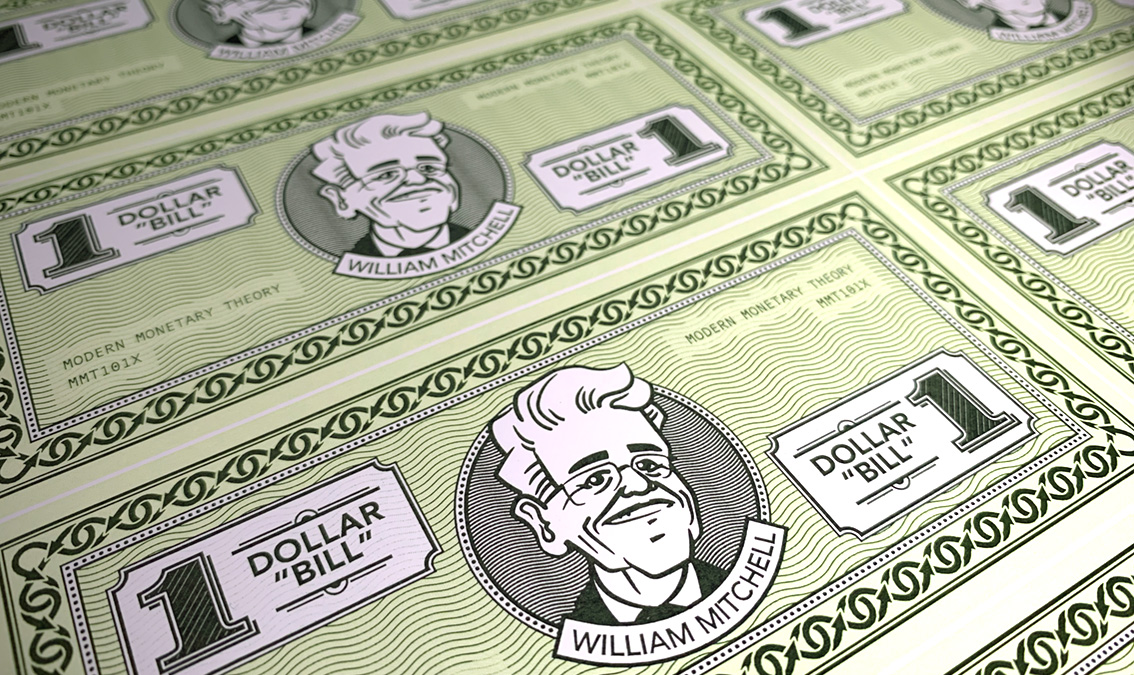
William Mitchell and the MMT101x TeamThe University of Newcastle, Australia
Go to Course
Share your edX experience!


You are receiving this email because you are enrolled in the edX course Modern Monetary Theory: Economics for the 21st Century
Modify course email settings.
unsubscribe
Copyright © 2021 edX, All Rights Reserved.141 Portland St, Cambridge, MA 02142
Federal Labor has gone back to the future with a post-war employment policy aimed at creating jobs for everyone that wants one.
In a major speech on Tuesday, shadow treasurer Jim Chalmers endorsed an explicit full employment target, echoing the 1945 Curtin government.
Dr Chalmers promised Labor's spending strategy would create jobs and lift wages growth from its current record low, in stark contrast to the Coalition's policy to focus on budget repair once unemployment falls "comfortably below 6 per cent".
"Labor's goal isn't to merely 'snap back' to the economic weakness we've seen for eight long years," Dr Chalmers told an ALP congress.
"We want more ambition in the pursuit of strong, inclusive, sustainable growth – and rejecting the false choice between growth that is strong and growth that is fair."
The new policy platform, signed off at a virtual conference on Tuesday, pledges to put Australia "back on the path to full employment as soon as possible", through a spending strategy that's "responsive to the economic conditions of the time".
During the same party congress, Labor also promised to tackle insecure work and unveiled a $15 billion package to support local manufacturing jobs.
Dr Chalmers' speech came after leading economists urged Treasurer Josh Frydenberg to revise the Coalition's spending strategy, in a bid to boost wages growth and curb wealth inequality.
The government has pledged to stabilise gross net debt as a share of the economy when unemployment (currently 5.8 per cent) falls "comfortably below 6 per cent".
But economists including RBA governor Philip Lowe argue that Australia can sustain a much lower unemployment rate without triggering an unsustainable surge in wages and inflation.
That's because globalisation and a rise in part-time work since the 1990s have eroded workers' bargaining power, making it easier for bosses to hire workers on lower pay and creating more spare capacity in the labour market.
In fact, Dr Lowe has suggested unemployment may need to fall below 4 per cent before wages growth picks up, pledging to keep interest rates at record lows until that happens – an economic policy that is exacerbating inequality.
Independent economist Saul Eslake is among those calling on the Morrison government to take a more ambitious approach to government spending and job creation.
"It would be consistent with the emerging conventional wisdom for the federal government to be more ambitious about where it wants unemployment to go before it starts to begin the process of budget repair,'' he told The New Daily.
University of Melbourne professor Jeff Borland, a leading labour market economist, has also argued for a revision to government targets.
"We should wait until we get much closer towards 4 per cent [unemployment] before we shift towards stabilising and reducing debt,'' he told The New Daily.
Dr Chalmers attacked Mr Frydenberg's admiration of former British prime minister Margaret Thatcher's conservative economics on Tuesday, warning of a return to the pre-pandemic period of record-low wages growth.
"They see trickle-down Thatcherism, not as a cautionary tale from the past but as a template to dust off in the here and now," he said.
In a pitch to voters before the next federal election, Labor's new platform recognises "the most responsible and effective way to manage the budget in the current circumstances is to support the economy and job creation".
The government will consider revising its employment targets in the lead up to the May budget, with Treasury preparing to adjust its models soon.
"The extent to which the unemployment rate can be lowered before inflation pressures rise will be an ongoing consideration for government," Treasury secretary Steven Kennedy told Senate Estimates last week.
"The government's two-stage fiscal strategy accommodates flexible targeting of the unemployment rate and the considered and prudent approach to medium-term consolidation in the light of near-time uncertainties."

Earlier this week, as the $90 billion JobKeeper program ended, Mr Frydenberg warned about rising federal debt levels.
"While we are not out of this crisis yet, we must remain disciplined when it comes to economic policy," Mr Frydenberg wrote in The Australian on Monday.
"To do otherwise would subject the current generation to higher taxes and bequeath future generations a higher debt burden."
Shadow finance minister Katy Gallagher, meanwhile, promised Labor would manage the budget prudently if elected while pursuing full employment.
"We will manage the nation's finances prudently and responsibly in a way that allows us to invest in the Australian people," she told the ALP congress on Tuesday.
Mr Frydenberg's debt warning came as the RBA continued to buy government bonds to reduce borrowing costs for the federal government through a program worth more than $100 billion over the past 12 months.
But Indeed APAC economist Callam Pickering said the RBA's efforts would be largely wasted unless the government continued to support the economic recovery through the May budget.
"In the absence of fiscal policy I just don't think [wages growth] is a likely scenario," Mr Pickering told The New Daily.
2021年04月01日(木) 13:00 は
2021年04月02日(金) 03:00 です。
時差は 14時間 です。

ジョー・バイデンはアメリカ合衆国の大統領ですが、彼はステファニー・ケルトンの世界に住んでいます。
いわゆる現代貨幣理論の経済学者でありチャンピオンであるケルトンは、この主題に関する彼女のベストセラー本のタイトルでもある「赤字神話」と彼女が呼ぶものに対して長い間動揺してきました。
最も基本的なレベルでは、ケルトンは、米国政府が人々の生活をより良くするために、通常よりもはるかに多く、またはほとんどの人が考えているよりもはるかに多くの投資を行うことができると信じています。そして彼女は、そうすることへの抵抗の多くは、今日現実には存在しない時代遅れの、ゴールドスタンダードの考え方に基づいていると主張します。
支持者の数が急速に増えており、ラリー・サマーズを泣かせる傾向がある彼女のアイデアについてあなたが考えるものは何でも、彼らがアメリカの公開討論でその日を運んでいることは間違いありません。確かに、バイデン自身の過去の性質に反して、新しいバイデン政権が多額の政府支出で快適に過ごしたことを理解するには、議論の条件がどれだけ変化したか、そしてケルトン自身がその変化とどの程度関係しているのかを理解する必要があります。
それで、今日、彼女とのこのインタビューをお届けできることに興奮しています。
ただし、最初に、今日はニューヨーク時間の午後1時、太平洋時間の午前10時、ロンドン時間の午後6時に通常のライブチャット/ウェビナーを行います。The Inkを初めて使用する場合は、楽しく魅力的です。まだ登録していない場合は、今すぐ登録して参加してください。サブスクライバーは、事前にログインの詳細を受け取ります。
The Inkを購読することは、Inkを無料ですべての人に公開し、独立したメディアをサポートして、会話を考えさせ、活気づけるための最良の方法です。この取り組みへのご支援に感謝いたします。すべての加入者が違いを生みます。
アナンド:アメリカの救助計画の通過をきっかけに、私たちはあらゆる種類の反応を聞いてきました。ジョー・バイデンは危険な社会主義者です。ジョー・バイデンは緊縮財政の豚に口紅をつけています。ジョーバイデンはFDRの再臨です。または多分LBJ。何が起こったのか、そしてそれがこの大統領職の方向性について私たちに何を教えてくれるのかをどのように評価しますか?
ステファニー:私は、経済に関するバイデン・サンダースの「統一タスクフォース」の8人のメンバーの1人を務めました。他のメンバーの何人かは現在管理下にあります。バイデンの最初の100日間に何を期待していたのか正確にはわかりませんが、1.9兆ドルのアメリカ救助計画法は、私が予想していたものを超えていました。
そして、それらは完了していません。今週後半には、数兆ドル規模のインフラストラクチャパッケージの詳細を入手します。私たちが直面している大きな課題を考えると、それはほぼ間違いなく小さすぎるでしょう。そして、提案された支出のどれだけがより高い税金で「支払う」ことを試みるのかは明らかではありません。彼らが支出のすべて(またはほとんどすべて)を相殺するために多数の税金を引き上げることを主張する場合、 50人の上院民主党員全員をまとめることがより困難になる可能性があります。ずれが発生すると、値札が減り、さらに小さなパッケージが提供されるリスクがあります。
しかし、大統領が一時的な救済では不十分であると認識するのを見るのは心強いことです。彼は、2007年から2009年の大不況後に私たちが経験したような「回復」を主宰する余裕がないことを知っていると思います。それが「BuildBackBetter」のアジェンダです。
バイデンは社会主義者ではありませんが、彼の大統領職は、主に、彼の政策が人々の生活に物質的な改善をもたらす程度に基づいて判断されることを理解しているようです。
FDRやLBJと比較するには時期尚早です。FDRについて数冊の本を書いたハーベイ・ケイがこの権利を持っていると思います。彼は つぶやいた 民主党員がインフラ法案を渡すことに成功したが、議事妨害をバストと渡すことができない場合はバイデンが少ないFDRまたはLBJようになり、よりドワイト・アイゼンハワーのようになることPRO法と人民法について。
アナンド:救助計画の討論中に吠えなかった犬は赤字不安でした。あなたはその犬が吠えるのをやめるように訓練することに何年も費やしてきました。文化からの赤字不安の衰退に関してこの討論で観察したことと、それが重要である理由を説明できますか?
ステファニー: 2020年3月に、私 は「赤字の神話を殺すにはウイルスが必要だった」と言いました。それは死んでいませんが、あなたは正しいです。昨年は休眠状態でした。コビッドが国家緊急事態になるとすぐに、赤字に対する不安は薄れました。議会は、いわゆる「賃金」なしで複数のパッケージをスピンアウトしました。最大の— CARES法—は2.2兆ドルの支出法案でした。私たちは12月にもう1つ(9000億ドル)、約1か月前にもう1つ(1.9兆ドル)を手に入れました。そのすべてが赤字に加わった。
時折、赤字がまだ発生しました。12月に9000億ドルのパッケージを作成した超党派グループは、「値札」について公然と心配し、サバイバルチェックを600ドルにまで減らしたことを忘れないでください。しかし、バイデンは建国の父を呼び出すことによって1.9兆ドルを擁護しました。彼は、連邦政府に州や地方政府ができないこと、つまり赤字支出を行う能力を与えたと説明しました。彼 は私が一生の間に大統領がするのを見たことがない方法で赤字を 公に受け入れました。
私が今見ているのは、行政が次に進むところです。財務長官のジャネット・イエレンは、確認聴聞会で債務と赤字について懸念を表明し、彼女は幻の債務危機について心配してきた長い歴史があり ます。彼女は 、「長期的な赤字を上げないために」永続的なビルドバックベターアジェンダの部分を「支払う」必要性について話しました。赤字削減へのオバマ政権の要点は、私の心に開いた傷のままです。バイデンチームが赤字に目をつぶって、実体経済の回復に集中し続けることを願っています。
アナンド:あなたは現代貨幣理論と呼ばれるものの主要なチャンピオンです。それは熱心なファンベースとそれについてのことを理解していない多くの人々がいるドメインです。古い考え方とは何か、MMTがそれを置き換えようとしていることについて、10歳の子供に説明してください。
ステファニー:私の本の最初の章 は「家庭のことを考えないでください」と呼ばれています。セサミストリートのリファレンスで開くので、これはほとんどの5歳児が理解できる説明です。ショーを見て育った人々のために、頻繁なセグメントは、子供たちがいくつかの根本的に異なる特徴を持っているものから似ているものを区別するのを助けることを目的としていました。
「これらのうちの1つは他のものとは異なります」と歌は行きました。それで、これらの4つのことについて考えてください:家庭、企業、州および地方政府、そして連邦政府。最初の3つは、共通して重要なことを共有しています。それらのいずれも米ドルを発行できません。使うために、彼らは最初 にお金を考え出さなければなりません 。
連邦政府は完全に異なります。通貨を発行する唯一の法的権限があります。バイデンは正しかった!米国憲法の第1条第8項は、その権力を祀っています。私たちの他の人々とは異なり、連邦政府は持っていないお金を使うことができます。連邦政府が支出するたびに、新しいドルが作成されます。
Covid救済パッケージを取ります。議会はその法案を可決する前に出て行って1.9兆ドルを「見つけ」ませんでした。それは私たちの他の人にはない何か、つまり財布の力を持っているので、そうする必要はありませんでした。この法案は、連邦準備制度と呼ばれる銀行に実質的に1.9兆ドルの新規ドルを注文しました。連邦準備制度は、適切な銀行口座番号を変更するためにコンピューターのキーボードを使用するだけで、財務省に代わって支払いを実行します。
1,400ドルの刺激小切手のいずれかを受け取った場合、そのお金は家族を助けるためにキーストロークされて存在しました。あなたが失業していて、失業手当で週に300ドルの追加収入を得ている場合は、連邦政府の厚意により、新たに作成されたドルも受け取ります。
家計、企業、知事、市長がこの力を持っていれば、彼らは自分たちで予算の穴を塞ぐでしょう。しかし、彼らはできません。彼らは財政的に制約されています。連邦政府はそうではありません。
MMTは、今日存在する金融システムと政府の金融メカニズムの正確な説明を提供することを目的としています。言い換えれば、MMT は 物事がどのように機能するかを説明します。私たちはもはやゴールドスタンダードではありませんが、それが何を意味するのかについては合意に達していません。
私たちは、連邦政府が その請求書を支払うために私たちのお金を必要としているというこの考えをまだ持ってい ます。それは間違いです。議会はあまりにも多くを費やすことができますか?絶対に!しかし、過剰支出に対する罰は、ロン・ポール、テッド・クルーズ、リンジー・グラハムが私たちに信じさせたものとは反対に、破産ではなくインフレです。
MMTの核となるのは、政府予算制約の(欠陥のある)概念を天然資源(インフレ)制約に置き換えることです。制限がないわけではありません。がある!しかし、彼らは資金調達の 側ではありません (私たちが信じるように訓練されているので)。オバマ大統領がかつて誤って主張したように、私たちの政府は「お金を使い果たす」ことはできません 。私たちはギリシャのように終わることはできず、これらの経済学者とは対照的に 、私たちは財政危機に直面したことはありませんでした。
MMTは、「どのように支払い ますか」と尋ねないように教えて います。しかし、「どのように リソースを提供 しますか?」政治は難しいですが、Medicare for All、授業料無料の大学、または巨大なインフラストラクチャパッケージのためのお金を考え出すのは簡単な部分です。私たちの生産的資源の使用を管理し、私たちの生態学的制約を尊重することは、私たちの時代の決定的な課題です。
ANAND:新しい児童手当はどれほど重要であり、それがアメリカの生活の基本的な収入の基礎を生み出すと思いますか?
ステファニー:それは重要です。ペンを一筆するだけで子どもの貧困を半分に減らすことができるときはいつでも、バイデンが言うように、それは「大したこと」です。それは人生を変えるものであり、何百万もの家族にとって重要です。それは、貧困が政策の選択であり、常にそうであったことを示しています。しかし、それは潜在的に、彼らの経済ステーションの一時的な改善でもあります。
また、特定の特定のニーズ(つまり、子供関連の費用)に基づいて特定のグループの人々を対象とした援助もあります。そのため、この点では、ベーシックインカムとは異なります。それは、すべての人が最低所得を保証されるポイントに私たちを近づけます。ただし、プレキンダーの拡大やその他のケア関連インフラの構築と合わせて検討されているため、「現金を渡して市場に整理させる」だけではありません。
ANAND:アメリカの救助計画のこれらの最も重要な、さらには哲学的に重要な要素の多くが一時的であり、やがて更新が必要になることについてどう思いますか?これは物事を進めるための危険な方法ですか、それとも、変化に対する国民の欲求を刺激し、その欲求が高まったときにそれを押し進める巧妙な方法ですか?
ステファニー:民主党員が最新の救済パッケージを予算調整と呼ばれるプロセスに通したことを忘れないでください。また、上院は現在、バード規則に拘束されていることを忘れないでください。これは、とりわけ、議員が10年の予算枠外で赤字を増やす法案を可決するために和解を使用することを防ぎます。
つまり、共和党が2017年12月に減税を可決したときと少し似ています。彼らも和解を利用し、バードに準拠するために特定の条項を廃止しなければなりませんでした。具体的には、法人税の減税を恒久的にしたが、個人所得税の減税は一時的なものにした。
民主党が議事妨害を実施したまま、独立した法案を通じてパッケージを入手する方法はありませんでした。大胆でFDRのようなことを自由に行えるようにするには、自主的に課せられた予算のルールと制約のスイート全体を取り除く必要があります。しかし、あなたは正しいと思います。国民の食欲は衰えてきました。共和党の減税とは異なり、バイデンの救済 パッケージは非常に人気があり、それは議員が一時的な措置のいくつかをより長期的な約束に変えることを容易にするはずです。
ANAND:最低賃金についてお聞きしたいと思います。15ドルへの増加は、この救助計画から有名に削除されました。しかし、その規定を好まなかったジョー・マンチン上院議員のような同じ議員は、1.9兆ドルの政府支出に問題はありませんでした。
私が寛大であるならば、それは懸念が中小企業の苦痛であるかどうか私に不思議に思います。最低賃金を引き上げるが、中小企業の負担を軽減する方法はありますか?本質的に、個々の企業ではなく、社会にその増加を支払うようにする何らかの公的支援を介して?それはひどい考えですか?
ステファニー:方法はあると思いますが、それは社会にお金を払わせることではありません。議員は、最低賃金を引き上げるために必要な票を得るために、中小企業の減税を交渉することができます。それは基本的に、議会が最後に最低賃金が引き上げられたときにそれをした方法です。
2007年、議会は1938年の公正労働基準法を改正し、連邦の最低賃金を1時間あたり5.15ドルから7.25ドルに徐々に引き上げました。どうやってそうなった?この法案は2007年1月5日に下院で提出され、1月10日に可決されました。233人の下院民主党員全員が「賛成」に投票しました。82人の共和党員が「賛成」の投票に参加しました。
ジョージ・W・ブッシュ大統領が、悪影響を受ける可能性のある中小企業経営者の減税を望んでいると述べた後、上院でのクローチャー運動(議論を止めて投票に移る)は失敗した。上院は減税を含み、修正された法案は94-3の投票で通過した。なぜそのようなことが二度とできなかったのか分かりません。
アナンド:それで、私はよく耳にする混乱があります。現代貨幣理論は、私たちがどのような税金を引き上げることができるかという観点から、私たちがどのようなプログラムを実行できるかについて考えるのをやめるべきだと提案しています。
それでも、超富裕層に対する増税を求めるこれらの重要な要求があります。エリザベスウォーレンであろうとバーニーサンダースであろうと、収入で支払うことができるもののために、彼らは主にそれらを正当化します。これはそれを売り込むのに問題のある方法ですか?
富裕税をすべきですか?そして、物事にお金を払わないのなら、なぜですか?
ステファニー:まず、従来の税金の考え方の背後にある経済学には欠陥があります。ニューヨーク連邦準備制度理事会の元首長が1946年にさかのぼって観察したように、「歳入税は廃止されました」。世間一般の通念は、時代遅れの金本位制の考え方に由来しており、もはや私たちと一緒にいない通貨制度があるかのように、税制について議論するのをやめるべきです。州および地方政府は、運営するために税収を必要としています。連邦政府はそうではありません。連邦税政策について実りある議論をするために、「歳入」という言葉は決して出てはなりません。
経済学を誤解することに加えて 、ジェフ・ベゾスの財産の一部を彼からうまく奪わない限り、崩壊しつつあるインフラを修理したり、人々の世話をしたりする余裕がないふりをすることは政治的に有害だと思います 。
つまり、さあ。議会は子どもの貧困を半減させる何かをしただけで、それを行うために単一の税金を引き上げることはありませんでした。したがって、もちろん、 人口の大多数に利益をもたらすプログラムに数兆ドルを費やすことができるようにするために、金持ちに課税する必要はありません 。私がここで議論し たように、私たちはずっとその力を持っていました。
これが私がそれを「赤字の神話」に入れる方法です:
私たちは金持ちに課税することができ、そして課税しなければなりません。しかし、それなしでは何もする余裕がないからではありません。富と収入の分配を再調整し、民主主義の健全性を保護するために、億万長者に課税する必要があります。
しかし、貧困を根絶したり、コレッタ・スコット・キングが戦った生活賃金で連邦政府の雇用を保証したりするために、貯金箱を開ける必要はありません。必要なツールはすでにあります。信じられないほどの富を持つ人々への依存を装うことは間違ったメッセージを送り、彼らを私たちの目的にとって彼らよりも重要であるように見せます。
すべてのMMT学者は、私たちの社会で最も裕福な人々に対する大幅な増税を強く支持していると思います。 彼らが公正な分配を支払っていないからではなく 、彼らが公正な分配 よりも長い間 取っているから です。 あなた自身について書かれています。私たちは危険なレベルの所得と富の不平等を抱えており、それがウォーレン上院議員とサンダース上院議員が提案した増税の多くを支持するために私が必要とするすべての正当化です。
しかし、私たちはさらに先に進まなければなりません。ウォーレン上院議員は、超富裕層が彼女の2%の富裕税のピンチをほとんど感じないことを認めています(10億ドルを超える財産でさらに1%エスカレートします)。どうして?彼女が認めているのは、彼らの富は2〜3%をはるかに超える年間クリップで成長する傾向があるため、極端な富の集中を扱っている場所に私たちを連れて行かないことを意味します。
皮肉なことに、これは、富裕税が主に進歩的な議題の一部を「支払う」方法として宣伝されているという事実と関係があると思います。 民主主義を弱体化させてきた富の集中に積極的に対処するのではなく、普遍的なpre-Kや一部の学生の債務免除などを「支払う」と主張するのに十分なだけ目標を剥がす ことであるかのようです。 。
それは変わっているかもしれません。私は先週、サンダース上院議員がMMTの見方に近づいているようだと気づきました。ニヴ・エリス が ヒルで書いたように、「サンダースはまた、問題が有利な政策にお金を払うことではなく、より公平な社会を作ることの問題であると彼が見ていることを明らかにした」。
アナンド:冷戦の歴史的残骸と、大きな政府と共産主義に対するアメリカの長引く恐れを考えると、経済政策の観点からあなたが望むものを望む人々は、どうすればそれらの何百万ものメンバーに彼らのアイデアを売り込むより良い仕事をすることができますか敵対的ではないにしても、懐疑的な国民の?
ステファニー:バイデンはかなり素晴らしいメッセンジャーだと思います。彼は2兆ドル近くのレスキューパッケージの必要性で国民を売り、彼は彼のBuild BackBetterアジェンダのためにさらに3から4兆ドルのサポートを構築するために国を襲撃する寸前です。彼はさらに大きくなる可能性があり、反対側に彼を吊るすためのロープを与えることなくそれを行うことができたと思います。
それは共産主義や社会主義ではなく、より進歩的な一連の経済政策への支援を構築するために彼が首尾よく身を乗り出すことができた一種の保護貿易主義です。
ドナルド・トランプは保護貿易主義の物語を首尾よく推し進めました。典型的には人種差別的で醜い種類の保護貿易主義ですが、それでも保護貿易主義です。その多くは純粋に人種差別主義者でした。それは「私たち」を「彼ら」から守ることでした。しかし、彼はまた、経済システムの失敗と、生の貿易協定などから労働者を保護することを意図した方法についても話しました。
「助けは途上にある」と彼は、何十年にもわたる新自由主義の貿易、労働、環境政策によって空洞化され、町やコミュニティがかつての自分の影になるのを見た労働者階級の有権者の痛みを理解するふりをして、大げさに言った。
バイデンは共産主義や社会主義を売っていませんが、彼は別の種類の保護貿易主義でアメリカを売ることができました。
そして今、私たちは完全に一周します。FDRの 経済的権利章典 は保護貿易主義の文書でした。それは、この国のすべての人に与えられるべき一連の本質的な保護を列挙しました。仕事とまともな賃金の権利、不公正な競争と独占のない事業を運営する権利、教育、住宅と医療、そして安全な退職の権利。
私たちは皆、資本主義の気まぐれが私たちの道を投げ出すかもしれないことを知っていることから来る安心感を望んでいます。貧困と剥奪から私たち全員を保護するための特定の保護手段があります。
バイデンは、FDRをワンアップして、21世紀版の経済的権利章典を提示することさえできました。これらの 線に沿った何か 。
アナンド:何年もの間、私たちは資本の時代、つまりこの新自由主義の時代を終わらせ、改革の時代を立ち上げなければならないということを願っていました。その長い弧の中で、私たちは現時点でどこにいると思いますか?
ステファニー:私たちは長い間よりも近づいていると思いますが、良くなる前にもっと悪くなる可能性があります。私が間違っているといいのですが、気候変動は私たちにいくつかの非常に悪い状況に直面するでしょう。私たちが共感と共同体主義のコミットメントの基本的なレベルを再構築できない場合、それらの悪い状況は私たちを以前よりも卑劣で、より怖く、より利己的に、そして最終的にはより暴力的にするでしょう。
ステファニーケルトンは、経済学者、教授、そしてバーニーサンダースの2016年大統領選挙の元顧問です。彼女の最新の本「赤字神話:現代貨幣理論と人民経済の誕生」はこちらから注文できます。このインタビューは、わかりやすくするために編集および要約されています。
Joe Biden is president of the United States, but he lives in Stephanie Kelton's world.
An economist and champion of so-called Modern Monetary Theory, Kelton has long agitated against what she calls "the deficit myth," which is also the title of her bestselling book on the subject.
At the most basic level, Kelton believes the United States government is capable of investing far more than it ordinarily does, or than most people think it should, in making people's lives better. And she argues that much of the resistance to doing so is grounded in outdated, gold-standard thinking that has no place in reality today.
Whatever you think of her ideas, which have a rapidly growing number of adherents, and which tend to make Larry Summers cry, there is no question that they are carrying the day in the American public debate. Indeed, it is hard to understand the comfort the new Biden administration has had with significant government spending — contrary to Biden's own past nature — without understanding how much the terms of the debate have shifted, and how much Kelton herself has to do with that shift.
So I'm excited to bring you this interview with her today.
But first: I will be doing my regular live chat/webinar thing today at 1 p.m. New York time, 10 a.m. Pacific time, and 6 p.m. London time. If you're new to The Ink, they're fun and engaging. If you haven't yet, subscribe today to join us. Subscribers will receive login details beforehand.
Subscribing to The Ink is the best way to keep it free and open to all, and to support independent media that hopefully makes you think and enlivens your conversations. I appreciate your support for this undertaking. Every subscriber makes a difference.
ANAND: In the wake of the passage of the American Rescue Plan, we've heard every manner of reaction. Joe Biden is a dangerous socialist. Joe Biden is putting lipstick on the pig of austerity politics. Joe Biden is the second coming of FDR. Or maybe LBJ. How would you assess what happened and what it tells us about where this presidency is headed?
STEPHANIE: I served as one of eight members on the Biden-Sanders "unity task force" on the economy. Some of the other members are now in the administration. I'm not sure exactly what I expected to see from Biden in his first 100 days, but the $1.9 trillion American Rescue Plan Act went beyond anything I would have anticipated.
And they're not done. Later this week, we'll get the details of a multi-trillion-dollar infrastructure package. It will almost certainly be too small, given the enormous challenges we face, and it isn't clear how much of the proposed spending they will try to "pay for" with higher taxes. If they insist on raising a slew of taxes to offset all (or mostly all) of the spending, it could make it more difficult to hold all 50 Senate Democrats together. Any slippage risks paring back the price tag and, thus, delivering an even smaller package.
But it's encouraging to see the president recognize that temporary relief wasn't enough. I think he knows that he can't afford to preside over the kind of "recovery" we experienced after the Great Recession of 2007-2009. That's what the "Build Back Better" agenda is about.
Biden is no socialist, but he does seem to understand that his presidency will be judged, in large part, on the degree to which his policies deliver material improvements in people's lives.
It's way too early for comparisons to FDR and LBJ. I think Harvey Kaye, who has written several books on FDR, has this right. He tweeted that Biden will be less like FDR or LBJ and more like Dwight Eisenhower if Dems succeed in passing an infrastructure bill but can't bust the filibuster and pass the PRO Act and the For the People Act.
ANAND: The dog that didn't bark during the rescue plan debate was deficit anxiety. You've devoted years of life to training that dog to stop barking. Can you explain what you observed in this debate regarding deficit angst fading from the culture, and why that matters?
STEPHANIE: Back in March 2020, I said, "It took a virus to kill the deficit myth." It's not dead, but you're right. It's been dormant for the last year. Angst over the deficit faded as soon as Covid became a national emergency. Congress spun out multiple packages without so-called "pay-fors." The biggest — the CARES Act — was a $2.2 trillion spending bill. We got another one ($900 billion) in December and one more ($1.9 trillion) about a month ago. All of it added to the deficit.
Occasionally, the deficit still came up. Remember, the bipartisan group that worked out the $900 billion package in December openly worried about the "price tag" and whittled the survival checks down to $600. But Biden defended the $1.9 trillion by invoking the founding fathers, who he explained had given the federal government the ability to do what state and local governments can't do — deficit-spend! He publicly embraced the deficit in a way I haven't seen any president do in my lifetime.
What I'm watching for now is where the administration goes next. The Treasury secretary, Janet Yellen, raised concerns about debt and deficits in her confirmation hearings, and she has a long history of worrying about a phantom debt crisis. She has talked about the need to "pay for" the parts of the Build Back Better agenda that are permanent, "to not raise long-term deficits." The Obama administration's pivot to deficit reduction remains an open wound in my heart. I hope the Biden team will turn a blind eye to the deficit and stay focused on healing the real economy.
ANAND: You are a leading champion of what's called Modern Monetary Theory. It's a domain with a devoted fan base and many people who don't understand a thing about it. Give me the explanation you'd give to a 10-year-old about what the old thinking was and what MMT seeks to replace it with.
STEPHANIE: The first chapter in my book is called "Don't Think of a Household." I open with a Sesame Street reference, so this is an explanation that most 5-year-olds can grasp. For those who grew up watching the show, a frequent segment was aimed at helping kids distinguish things that are alike from things that have some fundamentally different characteristics.
"One of these things is not like the other," the song went. So think about these four things: A household, a business, state and local governments, and the federal government. The first three share something important in common: none of them can issue the U.S. dollar. In order to spend, they must first come up with the money.
The federal government is completely different. It has the sole legal authority to issue the currency. Biden was right! Article 1, Section 8, of the U.S. Constitution enshrined that power. Unlike the rest of us, the federal government can spend money it doesn't have. New dollars are created every time the federal government spends.
Take the Covid relief package. Congress didn't go out and "find" $1.9 trillion before passing that legislation. It didn't have to, because it has something the rest of us don't — the power of the purse. The bill effectively ordered up $1.9 trillion new dollars from a bank called the Federal Reserve. The Federal Reserve carries out payments on behalf of Treasury, using nothing more than a computer keyboard to change the appropriate bank account numbers.
If you received one of those $1,400 stimulus checks, that money was keystroked into existence to help your family. If you're unemployed, and you're getting an extra $300 a week in unemployment benefits, you're also receiving newly created dollars, courtesy of the federal government.
If households, businesses, governors, and mayors had this power, they would plug any holes in their budgets on their own. But they can't. They are financially constrained. The federal government isn't.
MMT is about providing an accurate description of the monetary system that exists today and government finance mechanics. In other words, MMT describes how things work. We're not on a gold standard anymore, but we haven't come to terms with what that means.
We still have this idea that the federal government needs our money in order to pay its bills. That is wrong. Could Congress spend too much? Absolutely! But the punishment for overspending is inflation, not insolvency, contrary to what Ron Paul, Ted Cruz, and Lindsey Graham would have us believe.
At its core, MMT is about replacing the (flawed) concept of a government budget constraint with a natural resource (inflation) constraint. It's not that there aren't any limits. There are! But they're not on the financing side (as we have been trained to believe). Our government cannot run "out of money," as President Obama once falsely claimed. We cannot end up like Greece, and, contra these economists, we were never facing a fiscal crisis.
MMT teaches us to ask not, "How will you pay for it?" but "How will you resource it?" The politics are hard, but coming up with the money for Medicare for All, tuition-free college, or a huge infrastructure package is the easy part. Managing the use of our productive resources, and respecting our ecological constraints, is the defining challenge of our time.
ANAND: How significant is the new child benefit, and do you think it creates the rudiments of a basic income in American life?
STEPHANIE: It's significant. Anytime you can cut child poverty in half with a stroke of the pen, it is, as Biden says, "a big f-ing deal." It is life-changing and significant for millions of families. It shows that poverty is and always has been a policy choice. But it's also, potentially, a temporary improvement in their economic station.
It's also the case that the aid is targeted to a particular group of people based on specific identified needs (i.e., child-related expenses), so in that respect, it is not like a universal basic income. It does get us closer to a point where every person has a guaranteed minimum income. However, it is also being considered in concert with an expansion of pre-K and a buildout of other care-related infrastructure, so it's not just "give them cash and let the market sort it out."
ANAND: What do you think about many of these most significant — even philosophically significant — elements of the American Rescue Plan being temporary and requiring renewal before long? Is this a dangerous way of going about things, or perhaps a clever way of whetting the public appetite for change and then pushing it through when that appetite has grown?
STEPHANIE: Remember that Democrats passed the latest rescue package through a process known as budget reconciliation. And remember that the Senate is currently bound by the Byrd Rule, which, among other things, prevents lawmakers from using reconciliation to pass legislation that increases the deficit outside the 10-year budget window.
So it's a bit like when Republicans passed their tax cuts in December 2017. They used reconciliation as well, and they had to sunset specific provisions to comply with Byrd. Specifically, they made the corporate tax cuts permanent, but the individual income tax cuts temporary.
There was just no way for Democrats to get a package through a standalone bill with the filibuster in place. To have the kind of freedom to do bold, FDR-like stuff, they need to get rid of a whole suite of self-imposed budget rules and constraints. I think you're right, though. The public's appetite has been whetted. Unlike the GOP tax cuts, Biden's rescue package was enormously popular, and that should make it easier for lawmakers to turn some of the temporary measures into longer-term commitments.
ANAND: I wanted to ask you about the minimum wage. The increase to $15 was famously removed from this rescue plan. But the same legislators like Senator Joe Manchin, who didn't like that provision, didn't have a problem with $1.9 trillion of government spending.
If I'm generous, it makes me wonder if the concern is the pain on small businesses. Is there any way to raise the minimum wage but spare small businesses the burden — via some public support that would, in essence, make the society pay that increase, not individual firms? Is that a terrible idea?
STEPHANIE: I think there is a way, but it's not really about making society pay. Lawmakers could negotiate a tax cut for small businesses to get the votes needed to raise the minimum wage. It's basically how Congress did it the last time the minimum wage was increased.
In 2007, Congress amended the Fair Labor Standards Act of 1938 to gradually raise the federal minimum wage from $5.15 per hour to $7.25 per hour. How did it happen? The bill was introduced in the House on January 5, 2007, and passed on January 10. All 233 House Democrats voted "aye." Eighty-two Republicans joined them in voting "aye."
A cloture motion — to stop debate and move to a vote — in the Senate failed after President George W. Bush said he wanted tax cuts for small business owners who might be adversely impacted. The Senate included the tax cuts, and the amended bill sailed through with a vote of 94-3. I don't see why we couldn't do something like that again.
ANAND: So here's confusion I hear a lot. Modern Monetary Theory proposes that we should stop thinking about what programs we can do in terms of what taxes we can raise.
Yet there are these important calls for raising taxes on the ultra-rich — and whether it's Elizabeth Warren or Bernie Sanders, they justify them in large part because of what can be paid for with the revenues. Is this a problematic way to pitch it?
Should we do a wealth tax? And if not for paying for things, then why?
STEPHANIE: First, the economics behind the conventional way of thinking about taxes is simply flawed. As the New York Federal Reserve's former head observed way back in 1946, "Taxes for Revenue are Obsolete." The conventional wisdom derives from outmoded, gold-standard thinking, and we should stop debating tax policy as if we have a monetary system that is no longer with us. State and local governments need tax revenue to operate. The federal government does not. To have a fruitful discussion about federal tax policy, the word "revenue" should never come up.
In addition to getting the economics wrong, I believe it is politically harmful to pretend that we cannot afford to fix our crumbling infrastructure, or care for our people, unless and until we successfully wrest part of Jeff Bezos' fortune away from him.
I mean, come on. Congress just did something that will halve child poverty, and it didn't raise a single tax to do it. So, of course, we don't need to tax the rich in order to be able to spend trillions on programs that benefit the majority of the population. As I argued here, we've had that power all along.
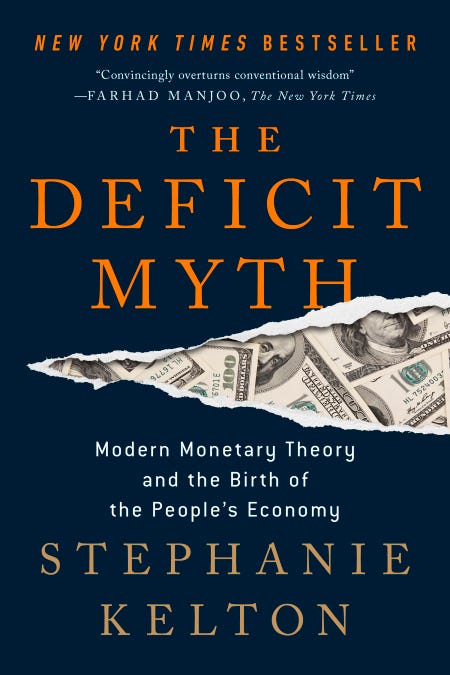
Here's how I put it in "The Deficit Myth":
We can, and must, tax the rich. But not because we can't afford to do anything without them. We should tax billionaires to rebalance the distribution of wealth and income and to protect the health of our democracy.
But we don't need to crack open their piggy banks to eradicate poverty or to have the federal job guarantee with a living wage that Coretta Scott King fought for. We already have the tools we need. Feigning dependence on those with incredible wealth sends the wrong message, making them appear more vital to our cause than they are.
I think every MMT scholar strongly favors substantial tax increases on the wealthiest people in our society — not so much because they're not paying their fair share but — because they have been taking more than their fair share for too long, something you've written about yourself. We have dangerous levels of income and wealth inequality, and that is all the justification I need to support many of the tax increases Senators Warren and Sanders have proposed.
But we must go further. Senator Warren admits that the uber-wealthy will barely feel the pinch of her 2 percent wealth tax (escalating by another 1 percent on fortunes over $1 billion). Why? Because, she admits, their wealth tends to grow at an annual clip that far exceeds 2 or 3 percent, meaning it doesn't get us to a place where we're dealing with extreme concentrations of wealth.
Ironically, I think this has to do with the fact that the wealth tax is being touted primarily as a way to "pay for" parts of the progressive agenda. It's almost as if the goal is to peel off just enough to claim that it will "pay for" universal pre-K, some student debt cancellation, etc., rather than to aggressively deal with the concentrations of wealth that have been undermining our democracy.
That may be changing. I noticed last week that Senator Sanders seems to be inching closer to the MMT view. As Niv Elis wrote in the Hill, "Sanders also made it clear that he sees the issue not so much as a matter of paying for favored policies, but in creating a more equitable society."
ANAND: Given the historical residue of the Cold War and the lingering American fear of big government and communism around the corner, how can those who want what you want in terms of economic policy do a better job of pitching their ideas to those millions of members of the public who are skeptical, if not hostile?
STEPHANIE: I think Biden is a pretty terrific messenger. He sold the population on the need for a nearly $2 trillion rescue package, and he's on the verge of barnstorming the country to build support for another $3 to $4 trillion for his Build Back Better agenda. He could go even bigger, and I think he could do it without giving the other side any rope to hang him with.
It's not communism or socialism but a kind of protectionism that he could successfully lean into to build support for a more progressive suite of economic policies.
Donald Trump successfully pushed a protectionist narrative. A typically racist and ugly kind of protectionism, but protectionism nonetheless. Much of it was purely racist. It was about protecting "us" from "them." But he also spoke of the economic system's failures and the way he intended to protect workers from raw trade deals and the like.
"Help is on the way," he bloviated, pretending to understand the pain of working-class voters who had seen their towns and communities become shadows of their former selves, hollowed out by decades of neoliberal trade, labor, and environmental policies.
Biden wouldn't be selling communism or socialism, but he could sell America on a different kind of protectionism.
And now we come full circle. FDR's Economic Bill of Rights was a protectionist document. It enumerated a set of essential protections that should be afforded to every person in this country. The right to a job and a decent wage, the right to operate a business free of unfair competition and monopolies, the right to an education, to housing and health care, and to a secure retirement.
We all want the sense of security that comes from knowing that whatever the vagaries of capitalism may throw our way, there are certain safeguards in place to protect all of us from poverty and deprivation.
Biden could even one-up FDR, presenting us with a 21st-century version of an Economic Bill of Rights. Something along these lines.
ANAND: For years, my plea has been that we have to end the age of capital — this neoliberal era — and launch an age of reform. Where do you think we are at this moment in time on that long arc?
STEPHANIE: I'd say we're closer than we've been in a long time, but it could well get much worse before it gets better. I hope I'm wrong, but climate change is going to confront us with some very bad circumstances. If we can't rebuild basic levels of empathy and communitarian commitment, those bad circumstances are going to make us meaner, more scared, more selfish, and ultimately more violent than we already are.
Stephanie Kelton is an economist, professor, and former advisor to Bernie Sanders' 2016 presidential campaign. You can order her latest book, "The Deficit Myth: Modern Monetary Theory and the Birth of the People's Economy," here. This interview was edited and condensed for clarity.
Thank you for reading this interview from The Ink. If you like what we do and want more of it, consider supporting our work by subscribing to The Ink. Every single subscriber helps make this enterprise possible.